
Navigating the roadways of Florida, whether as a tourist soaking in the Sunshine State‘s attractions or as a new resident settling into its vibrant communities, requires an understanding of local driving regulations. A crucial aspect of this is the state’s driver’s license point system. Accumulating points on your license can lead to increased insurance premiums, license suspension, or even revocation, significantly impacting your ability to enjoy Florida’s offerings. For anyone operating a vehicle within Florida, knowing how to check your license points and understanding their implications is an essential tip for seamless travel and residence. This guide provides comprehensive steps and insights into Florida’s point system.
Understanding Florida’s Point System for Drivers
Florida’s point system is designed to identify and penalize unsafe drivers. Every time you are found guilty of a moving violation, points are assessed against your driving record. These points remain on your record for a specific period, typically three to five years, and their accumulation can trigger severe consequences. For tourists, an unawareness of these rules can turn a relaxing vacation into a bureaucratic nightmare, especially if driving a rental car. For new residents, integrating into the local driving culture necessitates a clear understanding of these regulations to avoid unforeseen penalties.
Why Points Matter in the Sunshine State
The immediate and most tangible impact of accumulating points is often on your auto insurance rates. Insurance companies view drivers with points as higher risk, which translates directly into higher premiums. Beyond financial implications, the Florida Department of Highway Safety and Motor Vehicles (FLHSMV) uses the point system to determine eligibility for license suspension. This is particularly critical for visitors who might face complications with their out-of-state licenses or for residents whose livelihoods depend on their driving privileges. Understanding your record is the first step in proactive management, ensuring you can continue to explore Florida’s diverse landscapes from the beaches of Miami to the theme parks of Orlando without interruption.
Common Infractions and Their Point Values
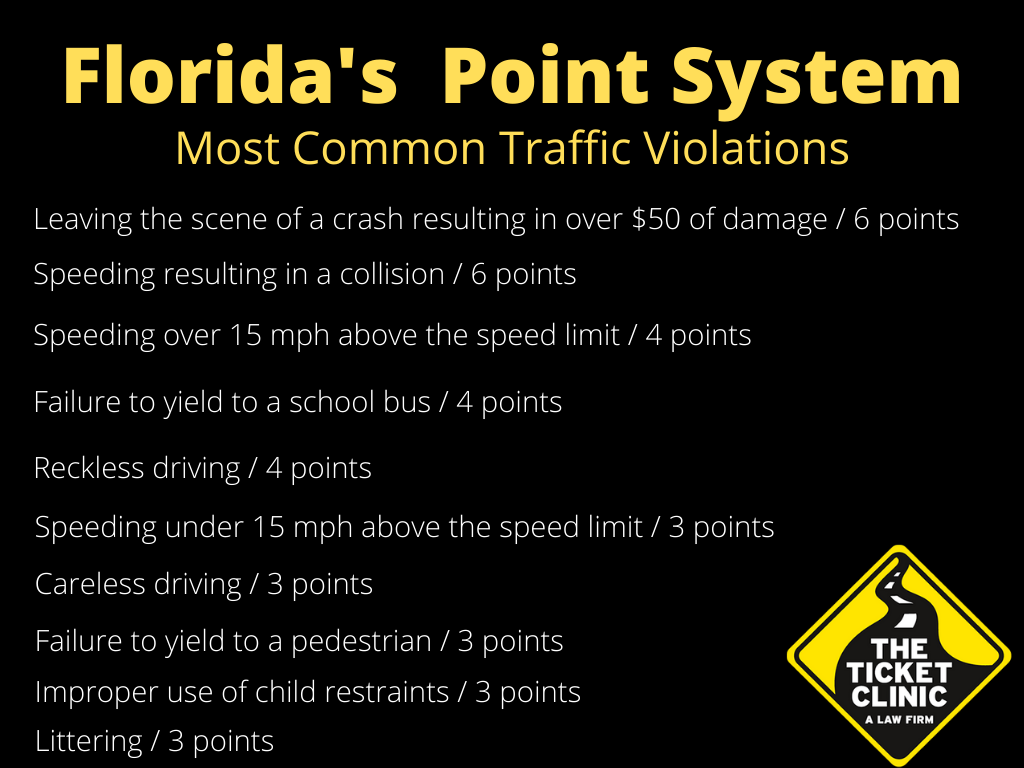
Florida assigns different point values based on the severity and nature of the moving violation. Here are some examples of common infractions and their associated points:
- 3 Points:
- Speeding (less than 15 mph over the limit)
- Careless driving
- Open container (driver)
- Child restraint violation
- Moving violation (not resulting in a crash)
- 4 Points:
- Speeding (15 mph or more over the limit)
- Reckless driving
- Passing a stopped school bus
- Failure to obey a traffic control device (e.g., stop sign, traffic light)
- Moving violation (resulting in a crash)
- 6 Points:
- Leaving the scene of an accident with property damage more than $50
- Speeding resulting in a crash
- Violations that result in a crash (for out-of-state drivers under certain conditions)
It’s important to note that certain severe offenses, such as Driving Under the Influence (DUI), do not directly accrue points but lead to automatic license suspension or revocation and hefty fines, demonstrating the state’s strict stance on road safety.
Official Methods to Access Your Driving Record
The FLHSMV is the official entity responsible for maintaining driving records in Florida. They provide several convenient methods for individuals to check their license points and review their driving history. Knowing these methods is crucial for both residents and visitors needing to monitor their record or verify information.
Online Through the FLHSMV Portal
The most convenient and quickest way to check your driving record in Florida is through the FLHSMV’s official online portal. You can typically purchase and download a copy of your driving record instantly. The FLHSMV offers different types of driving records:
- 3-Year Driving History: Provides information on traffic offenses and points for the past three years.
- 7-Year Driving History: Includes offenses and points from the past seven years, often required for insurance purposes or employment.
- Complete Driving History: Contains all recorded traffic offenses and points throughout your driving history in Florida.
You will need your driver’s license number, date of birth, and the last four digits of your Social Security number to access this service. A small fee is usually charged for obtaining the record, which can be paid with a credit or debit card. This online service offers immediate access, making it ideal for those needing quick verification or for tourists checking their record before or after a trip to Florida.
Requesting a Driving Record By Mail
For those who prefer a physical copy or cannot access the online system, requesting your driving record by mail is another viable option. You will need to complete a Driver Record Request Form (Form 71101), which is available on the FLHSMV website. This form requires your personal information, including your full name, date of birth, and driver’s license number. You must also specify the type of driving record you need (3-year, 7-year, or complete) and include the appropriate fee, usually payable by check or money order. The completed form and payment should be mailed to the FLHSMV central office in Tallahassee. While this method takes longer due to mailing times, it provides an official hard copy suitable for various formal requirements.
In-Person at a Local DMV Office
If you are a resident or have extended time in Florida, you can also obtain your driving record in person at any local Driver License Service Center (often referred to as the DMV or tax collector’s office that provides driver’s license services). You will need to present valid identification, such as your Florida driver’s license or ID card, and be prepared to pay the applicable fee. This method allows for immediate receipt of your record and the opportunity to ask questions directly to staff, making it useful for clarifying any complex issues or for those without internet access.
Interpreting Your Driving Record Report
Once you obtain your driving record, understanding the information presented is crucial. The report will list all recorded traffic offenses, their dates, and the points assessed for each. For a tourist, this report might confirm a clean record, offering peace of mind. For a resident, it can be a vital tool for understanding potential insurance increases or upcoming license actions.

Identifying Point Accumulation
Your driving record will clearly display each violation and the points associated with it. Pay close attention to the dates of these violations, as points typically remain active for 36 months from the conviction date. The report will also indicate if points have been reduced or removed due to completion of traffic school or other approved courses. Monitoring your total active points is key to preventing license suspension.
Understanding Suspension Thresholds
The FLHSMV has strict thresholds for license suspension based on point accumulation within specific timeframes:
- 12 points within 12 months: 30-day license suspension
- 18 points within 18 months: 3-month license suspension
- 24 points within 36 months: 1-year license suspension
For out-of-state drivers, Florida will typically report violations to your home state’s Department of Motor Vehicles, which may then apply points according to their own system or impose similar penalties. It is essential for visitors to be aware that even a single traffic stop in Florida can have repercussions far beyond its borders.
Strategies for Managing Points and Maintaining a Clean Record
Proactive management of your driving record is vital for ensuring uninterrupted access to Florida’s roads. There are several strategies available to mitigate the impact of accumulated points and maintain a clean driving history.
Electing Traffic School
In Florida, if you receive a traffic ticket for a non-criminal moving violation, you generally have the option to elect to attend traffic school instead of having points assessed against your license. This option is typically available once every 12 months, and a maximum of five times in your lifetime. By completing an approved basic driver improvement course, you can avoid the points from that specific violation appearing on your driving record. This is a highly recommended option for both residents and visitors who receive a minor traffic infraction, as it can save you from increased insurance premiums and prevent accumulation towards a license suspension.
Defensive Driving Courses
Beyond traffic school for specific tickets, taking general defensive driving courses can also contribute to a cleaner record. While these courses don’t always remove existing points, some insurance companies offer discounts to drivers who complete them, recognizing the reduced risk. More importantly, these courses equip drivers with advanced safety techniques, reducing the likelihood of future infractions. This commitment to safer driving practices benefits everyone on Florida’s roads, enhancing the overall experience for residents and tourists alike.
The Importance of Safe Driving Practices
The most effective strategy for managing points is, of course, safe and responsible driving. Adhering to speed limits, obeying traffic signals, avoiding distracted driving, and maintaining a safe following distance are fundamental practices that minimize the risk of violations. For tourists unfamiliar with Florida’s specific road rules or driving conditions, taking extra caution and planning routes can prevent unnecessary stress and potential tickets. Always be mindful of local laws, especially around school zones and construction areas, to ensure a pleasant and uninterrupted journey through the Sunshine State.
Navigating Out-of-State Licenses and Reciprocity
The rules concerning driver’s license points are not limited to Florida residents. Visitors driving in Florida with out-of-state licenses also need to understand how Florida handles violations and how those might impact their driving privileges back home.
How Out-of-State Violations Impact Florida Licenses
If you hold a Florida driver’s license and commit a traffic violation in another state, that violation may be reported back to the FLHSMV under interstate compacts like the Driver License Compact. Florida will then treat the out-of-state violation as if it occurred within Florida and may assess points accordingly. This means even if you’re on a road trip outside the state, your Florida driving record is still susceptible to point accumulation from infractions elsewhere.

Florida Violations for Non-Florida Drivers
Conversely, if you are visiting Florida with an out-of-state driver’s license and receive a traffic citation, Florida will typically report that violation to your home state’s Department of Motor Vehicles. Your home state will then decide how to handle the conviction and whether to apply points to your license based on their own laws and reciprocity agreements. This means a speeding ticket near Tampa Bay could still result in points on your New York or California license. Therefore, understanding and managing potential points is a crucial tip for all drivers, irrespective of their state of residence, ensuring a smooth and lawful experience when traveling through or relocating to the beautiful state of Florida.
LifeOutOfTheBox is a participant in the Amazon Services LLC Associates Program, an affiliate advertising program designed to provide a means for sites to earn advertising fees by advertising and linking to Amazon.com. Amazon, the Amazon logo, AmazonSupply, and the AmazonSupply logo are trademarks of Amazon.com, Inc. or its affiliates. As an Amazon Associate we earn affiliate commissions from qualifying purchases.