
Understanding the Fundamentals of Film Citation
The allure of cinema extends far beyond the silver screen; it deeply influences our understanding of culture, history, and even travel. When engaging with film academically or in informational contexts, proper citation is paramount. The Chicago Manual of Style offers a robust framework for citing various sources, including motion pictures. This guide delves into the nuances of citing films in Chicago style, ensuring your references are accurate, consistent, and contribute to the credibility of your work. Whether you’re referencing a documentary that inspired your next vacation destination or a historical drama that shaped your perception of a particular era, mastering film citation is an essential skill for any researcher or enthusiast.

Why Proper Citation Matters
In academic writing, travelogues, or even detailed blog posts about film-inspired journeys, accurate citation serves several critical purposes. Firstly, it acknowledges the intellectual property of the filmmakers and creative teams. Secondly, it allows your readers to locate the original source, verifying your claims and exploring the film further. This is particularly important when discussing films that have influenced perceptions of places like Paris or the history of the American West. Finally, it lends authority and credibility to your own writing, demonstrating thorough research and adherence to scholarly conventions.
The Core Components of a Film Citation
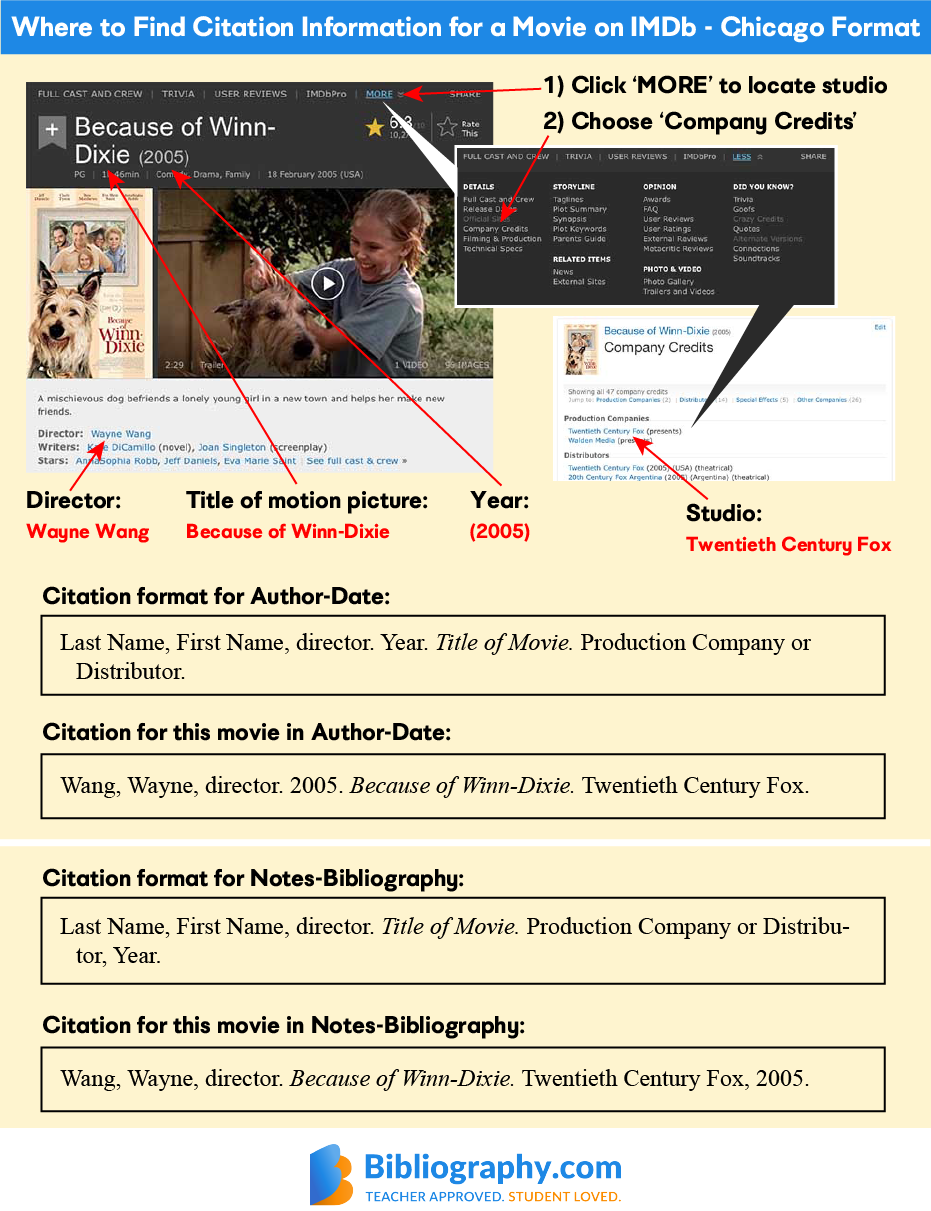
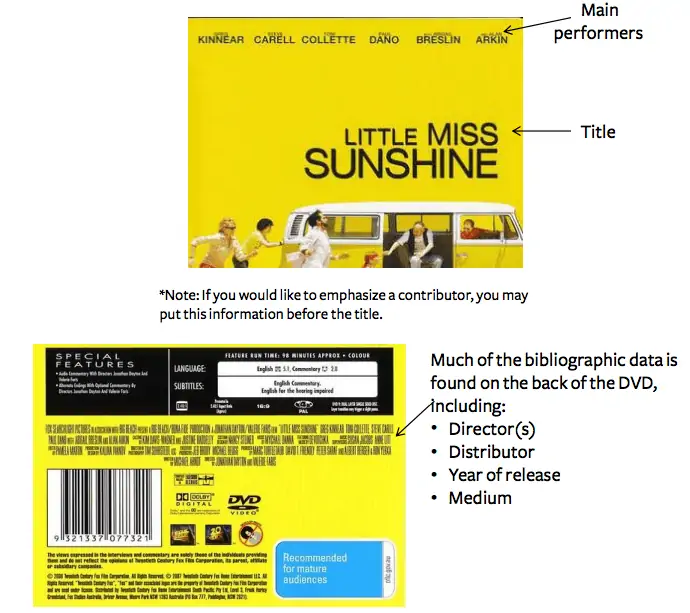
At its heart, a Chicago-style film citation requires key pieces of information to be comprehensive. While variations exist for different citation systems (notes versus bibliography), the fundamental elements remain consistent. These include:
- Title of the Film: The full, official title as it appears on the film’s release.
- Director(s): The primary individual(s) responsible for the creative vision.
- Producer(s): The individual(s) who oversaw the film’s production.
- Distributor: The company that released the film.
- Year of Release: The year the film was first publicly shown or distributed.
- Medium: Often indicated as “film” or “motion picture.”
Beyond these core elements, additional details can be included for greater specificity, such as key actors, screenwriters, or even the studio. The goal is to provide enough information for a reader to easily identify and find the exact version of the film you are referencing.
Citing Films in the Chicago Style Bibliography
The bibliography section of your Chicago-style paper or project is where you provide a comprehensive list of all sources consulted. For films, the bibliography entry aims to be a concise yet informative summary that allows easy identification.
Standard Bibliography Format for Films
The general format for citing a film in a Chicago-style bibliography is as follows:
Film Title. Directed by Director’s Name(s). Produced by Producer’s Name(s). Distributor, Year of Release. Medium.
Let’s break this down with an example. Suppose you are referencing the classic film that evokes images of grand train travel and opulent hotels:
- Film Title: The Grand Budapest Hotel
- Director: Wes Anderson
- Producers: Wes Anderson, Scott Rudin, Steven Rales, Jeremy Dawson
- Distributor: Fox Searchlight Pictures
- Year of Release: 2014
- Medium: Film
The bibliography entry would appear as:
The Grand Budapest Hotel. Directed by Wes Anderson. Produced by Wes Anderson, Scott Rudin, Steven Rales, and Jeremy Dawson. Fox Searchlight Pictures, 2014. Film.
Notice the use of italics for the film title and the specific punctuation. The director is usually listed first, followed by the producers, distributor, and release year. The medium “Film” is appended at the end.
Variations and Additional Details
Sometimes, you might want to highlight specific actors or the studio that produced the film, especially if they are central to your argument. In such cases, you can add this information to the entry. For instance, if you were focusing on the iconic performances in a film:
Lawrence of Arabia. Directed by David Lean. Produced by Sam Spiegel. Starring Peter O’Toole, Omar Sharif, Anthony Quayle, and Jack Hawkins. Columbia Pictures, 1962. Film.
Here, the “Starring” credit is added to highlight the principal actors. When dealing with documentaries, you might also include the screenwriter or narrator if they are particularly significant to the film’s content and your analysis.
Citing Different Versions or Releases
Films are often re-released, remastered, or available in various formats (e.g., theatrical cut, director’s cut, special edition). If the specific version or release you viewed is important for your research, it should be noted. For instance, if you are referencing a newly restored version of a silent film from the era of early filmmaking:
The General. Directed by Clyde Bruckman and Buster Keaton. Produced by Joseph M. Schenck. United Artists, 1926. Restored version, 2015. Film.
This clarifies that you are citing the restored version and its release year, which might differ from the original release.
Citing Films in Chicago Style Notes
In Chicago style, notes are used for in-text citations, typically appearing in footnotes or endnotes. These notes provide immediate reference to your source without disrupting the flow of your text.
First Note for a Film
The first time you cite a specific film in your notes, it requires a more detailed entry, similar to, but distinct from, the bibliography entry.
Format for the first note:
- Title of Film, directed by Director’s Name, with Actor’s Name(s) (if relevant) and Producer’s Name(s), Distributor, Year of Release, Medium.
Using our The Grand Budapest Hotel example again, the first note might look like this:
- The Grand Budapest Hotel, directed by Wes Anderson, produced by Wes Anderson, Scott Rudin, Steven Rales, and Jeremy Dawson, Fox Searchlight Pictures, 2014, film.
Note the use of commas to separate the elements and the absence of italics for the director and producer names in the note format. The medium is also included.
Subsequent Notes for a Film
Once a film has been cited in a full note, subsequent references to the same film can be shortened for brevity.
Format for subsequent notes:
- Film Title, abbreviated (if applicable).
- Film Title, Director’s Last Name.
For example, after the full citation above, subsequent notes for The Grand Budapest Hotel could be:
- The Grand Budapest Hotel, Anderson.
- The Grand Budapest Hotel.
The first option (Film Title, Director’s Last Name) is generally preferred as it provides a bit more context. If you are citing multiple films by the same director, you might need to use the full title in subsequent notes.
Citing Specific Scenes or Moments
Often, you won’t be citing the entire film but a particular scene, line of dialogue, or visual element. In this case, your note should include the specific timecode.
Format for citing a specific moment:
- Film Title, directed by Director’s Name, Distributor, Year, timecode.
For instance, if you are discussing a pivotal scene in a film that captures the spirit of a bygone era of travel, like a sequence depicting the elegance of travel aboard the Orient Express:
- Murder on the Orient Express, directed by Kenneth Branagh, 20th Century Fox, 2017, 00:45:10–00:48:30.
This entry directs the reader precisely to the section of the film you are referencing. The timecode format (hours:minutes:seconds) is standard.
Advanced Considerations in Film Citation
Beyond the basic formats, several advanced scenarios require specific attention to ensure accuracy and adherence to Chicago style guidelines. These can arise when dealing with films that have complex production histories, are part of larger collections, or are accessed through non-traditional means.
Citing Films Accessed Online
In the digital age, many films are accessed via streaming services or online archives. Chicago style provides guidance for these situations, emphasizing clarity about the source of access.
Format for online films:
- Title of Film, directed by Director’s Name, Distributor, Year. Accessed [Access Date]. URL.
For example, if you watched a historical documentary about Machu Picchu on a streaming platform:
- Secrets of the Incas, directed by Victor Vicas, National Geographic, 1985. Accessed October 26, 2023. https://www.streaming-service.com/film/secrets-of-the-incas.
It is crucial to include the access date and the specific URL. If the film is part of a subscription service, you might also note the service name.
Citing Films in Collections or Series
Some films are part of larger cinematic series or collections. When this is relevant to your citation, it should be noted.
Format for films in a series:
- Title of Film, directed by Director’s Name, in Series Title, Year of Release.
Consider citing a film that is part of a director’s retrospective or a themed cinematic series:
- The Conversation, directed by Francis Ford Coppola, American Zoetrope, 1974.
If the film is specifically part of a larger published collection, you might cite it as such.
Citing Screenplays and Scripts
When your research focuses on the written aspect of a film, such as dialogue or narrative structure, you may need to cite the screenplay or script.
Format for screenplays:
- Screenplay Title, by Screenwriter’s Name, dated [date of draft]. In Title of Film, directed by Director’s Name.
For example:
- Screenplay for Casablanca, by Howard Koch, Julius J. Epstein, and Philip G. Epstein, dated 1942. In Casablanca, directed by Michael Curtiz.
This distinguishes between the written work and the final cinematic product.
Integrating Film Citations into Your Travel Research
The connection between film and travel is undeniable. Movies have the power to transport us, to inspire wanderlust, and to shape our expectations of destinations, from the bustling streets of Tokyo to the serene landscapes of New Zealand. When documenting your journeys or writing about film-induced travel, accurate Chicago-style citation ensures your work is both engaging and academically sound.
Evoking Atmosphere and Setting
Films often excel at capturing the unique atmosphere and visual splendor of their filming locations. A classic example is how Out of Africa immortalized the breathtaking vistas of the Kenyan savanna. When discussing these aspects in your writing, citing the film correctly lends weight to your descriptions and allows readers to revisit these cinematic portrayals.
For instance, you might write: “The sweeping grasslands depicted in Out of Africa evoke a sense of untamed beauty, mirroring the very essence of the Masai Mara National Reserve (Out of Africa, directed by Sydney Pollack, Universal Pictures, 1985).” This brief note, supported by a full bibliography entry, seamlessly integrates the film reference.
Historical and Cultural Context
Movies can serve as powerful, albeit sometimes dramatized, windows into historical periods and cultural practices. Films like The Godfather offer a stylized glimpse into Italian-American culture, while Chariots of Fire brings the spirit of early 20th-century athleticism to life. When using such films to contextualize historical or cultural discussions related to your travels, proper citation is essential for academic integrity.
Imagine writing about the historical significance of a particular city: “The depiction of pre-war Berlin in Cabaret provides a vivid, albeit dark, portrayal of the era’s social and political tensions (Cabaret, directed by Bob Fosse, Allied Artists Pictures, 1972).” This connects the cinematic representation to a broader historical narrative.
Planning Film-Inspired Itineraries
For the dedicated cinephile traveler, movies can be a primary source for planning itineraries. Visiting the filming locations of your favorite movies can transform a standard trip into a deeply personal pilgrimage. When documenting these plans or experiences, citing the source of inspiration is key.
For a blog post or travel diary, you might note: “Our journey through the Scottish Highlands was heavily influenced by the epic landscapes featured in Braveheart (Braveheart, directed by Mel Gibson, Paramount Pictures, 1995).” This acknowledges the film’s role in shaping your travel choices.
By meticulously applying the principles of Chicago-style citation, you can elevate your travel writing, research, and personal documentation, ensuring that your engagement with the cinematic world is both appreciative and rigorously credited. This attention to detail not only respects the creators of these powerful works but also enhances the authority and richness of your own narrative.
LifeOutOfTheBox is a participant in the Amazon Services LLC Associates Program, an affiliate advertising program designed to provide a means for sites to earn advertising fees by advertising and linking to Amazon.com. Amazon, the Amazon logo, AmazonSupply, and the AmazonSupply logo are trademarks of Amazon.com, Inc. or its affiliates. As an Amazon Associate we earn affiliate commissions from qualifying purchases.