
The New York strip steak is a quintessential icon of American culinary culture. Renowned for its firm texture, bold beefy flavor, and the distinctive strip of fat along one edge, this cut—often sourced from the short loin—demands a respectful approach in the kitchen. Whether you are preparing a meal in a high-end Manhattan apartment or recreating the experience of a classic steakhouse dinner at home, mastering the New York strip is a rite of passage for any home cook. Understanding the interplay between heat, seasoning, and rest time is the key to elevating a simple piece of protein into a restaurant-quality feast.
Selecting the Perfect Cut of Beef
Before you even turn on your stove, the quality of your ingredients dictates the outcome. In a bustling metropolis like New York City, you have access to some of the finest butcher shops in the world, where sourcing matters as much as the cooking technique.
Marbling and Thickness
When shopping for a New York strip, look for abundant marbling—the fine white flecks of intramuscular fat. This fat renders during the cooking process, basting the steak from the inside out and providing the rich, buttery mouthfeel associated with top-tier cuts. Furthermore, aim for a thickness of at least one and a half inches. A thinner steak will overcook in the center before you can achieve a proper crust on the exterior, while a thick-cut steak offers more control over the internal temperature.
The Importance of Tempering
One of the most overlooked steps in steak preparation is tempering. Remove your steak from the refrigerator at least 45 minutes to an hour before you plan to cook it. Bringing the meat to room temperature ensures that the center cooks evenly without the exterior becoming burnt or gray. If you cook a cold steak, the temperature differential between the surface and the core results in an uneven gradient of doneness, leaving the middle raw and the edges overcooked.
Mastering the Sear: Stovetop to Oven
The most reliable method for a professional-grade steak is the pan-sear-and-finish technique. This approach balances the need for a deep, Maillard-reaction crust with the precision of gentle oven heat.
The Right Equipment
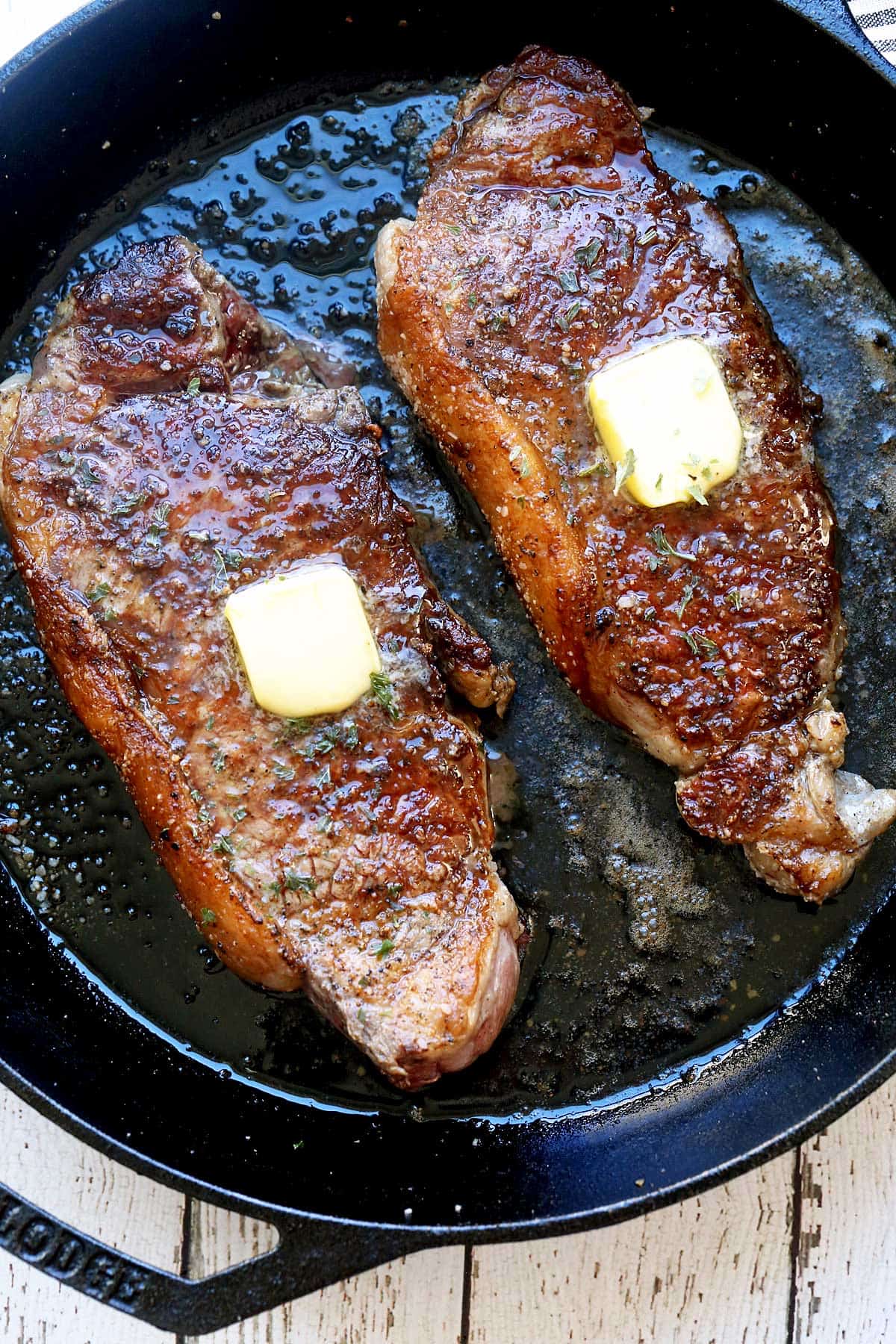
To achieve a deep, mahogany crust, you need heat retention. A heavy-duty cast-iron skillet is the gold standard for this task. It maintains temperature consistently, even when the cold steak hits the surface, preventing the meat from steaming in its own juices. Place your skillet over high heat and let it get smoking hot before adding a high-smoke-point oil, such as avocado or grapeseed oil.
The Sear and Baste
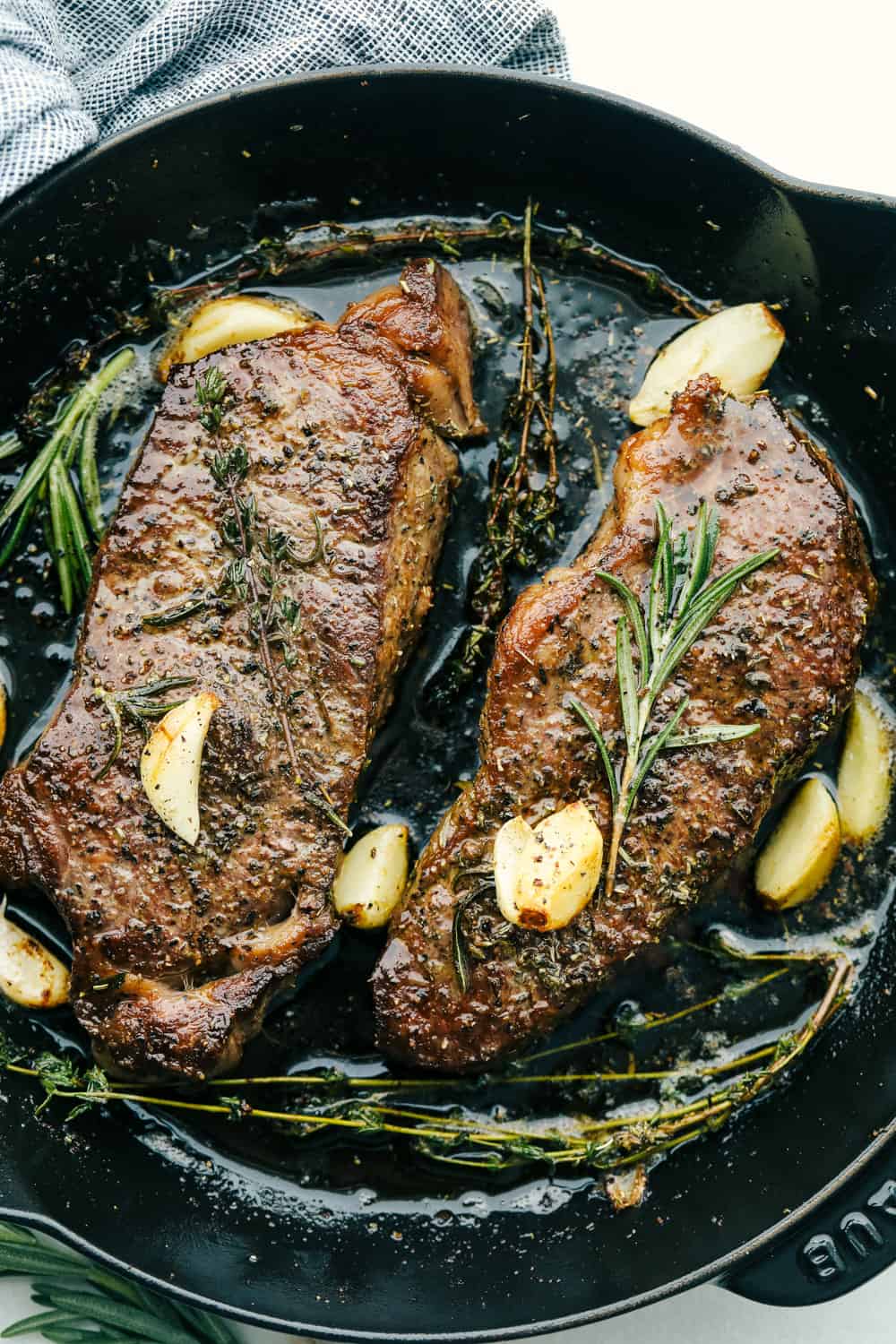
Season your steak liberally with kosher salt and freshly cracked black pepper just seconds before placing it into the hot pan. Press the steak down slightly to ensure maximum contact with the surface. Allow it to sear undisturbed for three to four minutes to develop a dark, crispy crust. Flip the steak and reduce the heat to medium. At this stage, many American chefs introduce aromatics: a knob of unsalted butter, a few cloves of smashed garlic, and sprigs of fresh rosemary or thyme. As the butter foams, tilt the pan and use a large spoon to baste the steak continuously with the infused fat. This technique adds an aromatic complexity that defines the classic steakhouse profile.
Achieving the Perfect Doneness
Cooking is as much about chemistry as it is about intuition. While touch tests exist, using an instant-read meat thermometer is the only way to guarantee perfection, especially when dealing with premium cuts.
Internal Temperature Guide
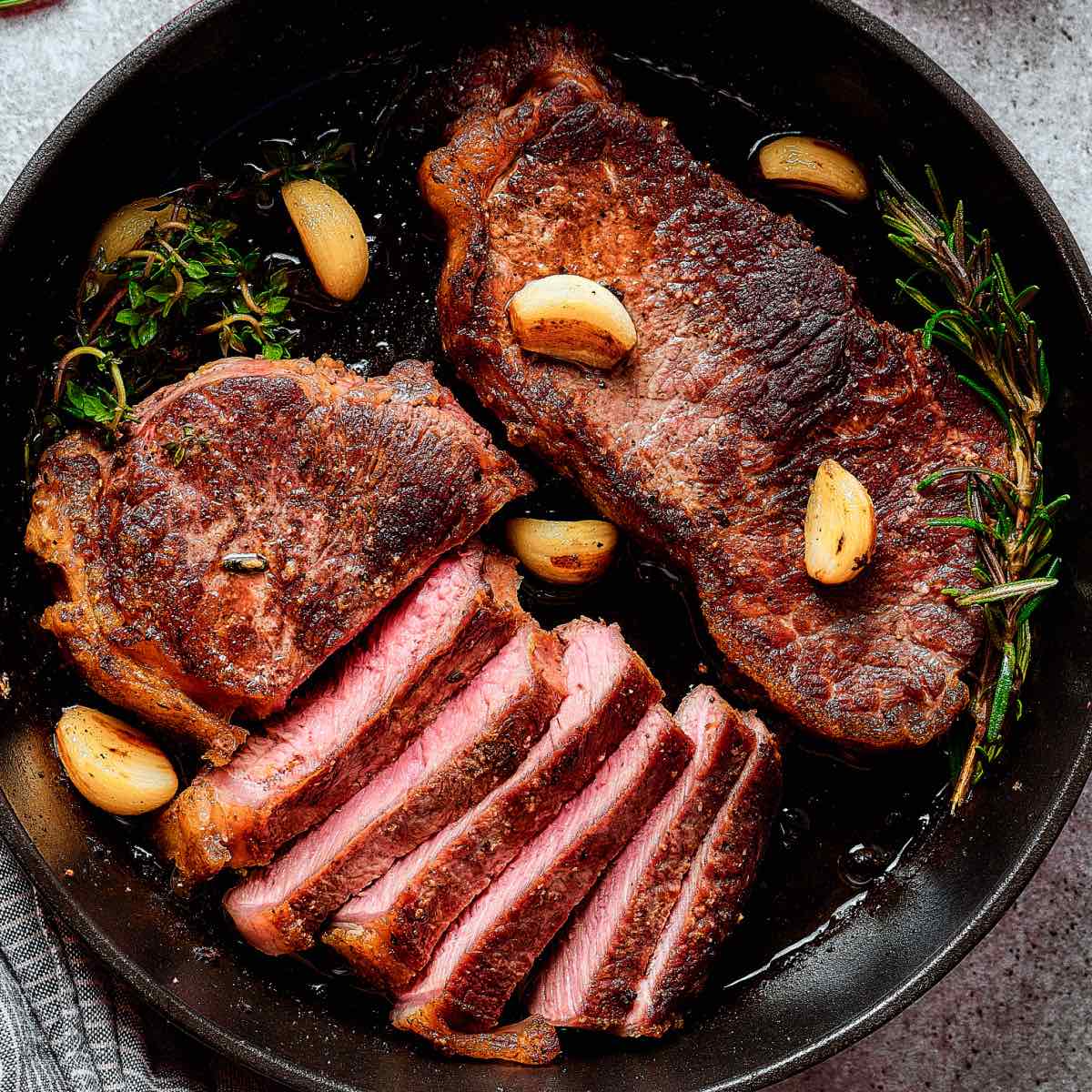
Insert your thermometer into the thickest part of the steak. For a perfect medium-rare, aim for an internal temperature of 125°F to 130°F (52°C to 54°C). Keep in mind that the temperature will continue to rise by about five degrees after you remove it from the heat—a phenomenon known as “carryover cooking.”
- Rare: 120°F (49°C)
- Medium-Rare: 130°F (54°C)
- Medium: 140°F (60°C)
The Mandatory Rest
Once your steak reaches the desired temperature, transfer it to a cutting board or a warm plate. Do not skip this step. Resting allows the muscle fibers to relax and reabsorb the juices that were forced toward the center during the high-heat cooking process. Let the steak rest for at least 8 to 10 minutes. If you cut into it too soon, those precious juices will run onto the board, leaving the steak dry and lackluster.
Pairing and Serving Suggestions
A New York strip steak possesses a robust flavor profile that pairs well with bold, acidic, or earthy accompaniments. While the steak is the star of the show, the side dishes provide the necessary balance to round out the meal.
Classic Steakhouse Sides
If you are channeling the spirit of a historic Brooklyn eatery, consider serving your steak with creamed spinach or a classic wedge salad. The bitterness of the greens and the tang of a blue cheese dressing cut through the richness of the beef. Roasted fingerling potatoes, crispy on the outside and fluffy on the inside, are another traditional choice.
Elevating with Finishing Touches
For an added layer of sophistication, consider a final sprinkle of flaky sea salt, like Maldon, over the sliced steak just before serving. Some cooks prefer a compound butter—a mixture of softened butter, minced shallots, and fresh parsley—placed atop the warm steak to melt slowly as it reaches the table.
Ultimately, cooking a New York strip is about confidence. By selecting high-quality meat, utilizing the power of a cast-iron skillet, and respecting the essential resting period, you can create a culinary masterpiece that rivals the finest dining experiences found across the United States. Whether it is a celebratory dinner or a quiet evening at home, this preparation method ensures the steak remains the highlight of the table, showcasing the bold, savory characteristics that have made it a favorite for generations of food lovers. As you continue to refine your technique, you will find that the simplicity of the process is its greatest strength, allowing the quality of the beef to speak for itself.
LifeOutOfTheBox is a participant in the Amazon Services LLC Associates Program, an affiliate advertising program designed to provide a means for sites to earn advertising fees by advertising and linking to Amazon.com. Amazon, the Amazon logo, AmazonSupply, and the AmazonSupply logo are trademarks of Amazon.com, Inc. or its affiliates. As an Amazon Associate we earn affiliate commissions from qualifying purchases.