
Establishing a Limited Liability Company (LLC) in Maine offers a streamlined approach for entrepreneurs looking to structure their businesses, providing a blend of personal liability protection and operational flexibility. This guide delves into the essential steps and considerations for forming an LLC within the Pine Tree State, ensuring a robust foundation for your venture. Understanding the nuances of business formation in Maine is crucial for navigating the legal landscape and fostering sustainable growth.
Understanding the Benefits of an LLC in Maine
An LLC is a popular business structure that combines the pass-through taxation of a partnership or sole proprietorship with the limited liability of a corporation. This means that the owners, known as members, are generally not personally responsible for the debts and liabilities of the business.
Limited Liability Protection
One of the primary advantages of forming an LLC is the shield it provides to your personal assets. If the business incurs debt or faces a lawsuit, your personal savings, home, and other assets are typically protected from creditors. This distinction between personal and business finances is a cornerstone of the LLC structure.
Pass-Through Taxation
Unlike traditional corporations, LLCs are not taxed as separate entities. Instead, the profits and losses of the LLC are passed through to the members and reported on their individual income tax returns. This avoids the potential for “double taxation” that can occur with C-corporations, where profits are taxed at the corporate level and then again when distributed to shareholders.
Operational Flexibility
LLCs offer a high degree of flexibility in terms of management and operational structure. Members can choose to manage the LLC directly, or they can appoint managers. This flexibility allows the business to adapt to its specific needs and growth trajectory without being constrained by rigid corporate governance rules.
Credibility and Professionalism
Operating as an LLC can enhance the perceived credibility and professionalism of your business. It signals a formal business structure to customers, suppliers, and potential investors, which can be advantageous in building trust and securing partnerships.
Step-by-Step Guide to Forming Your Maine LLC
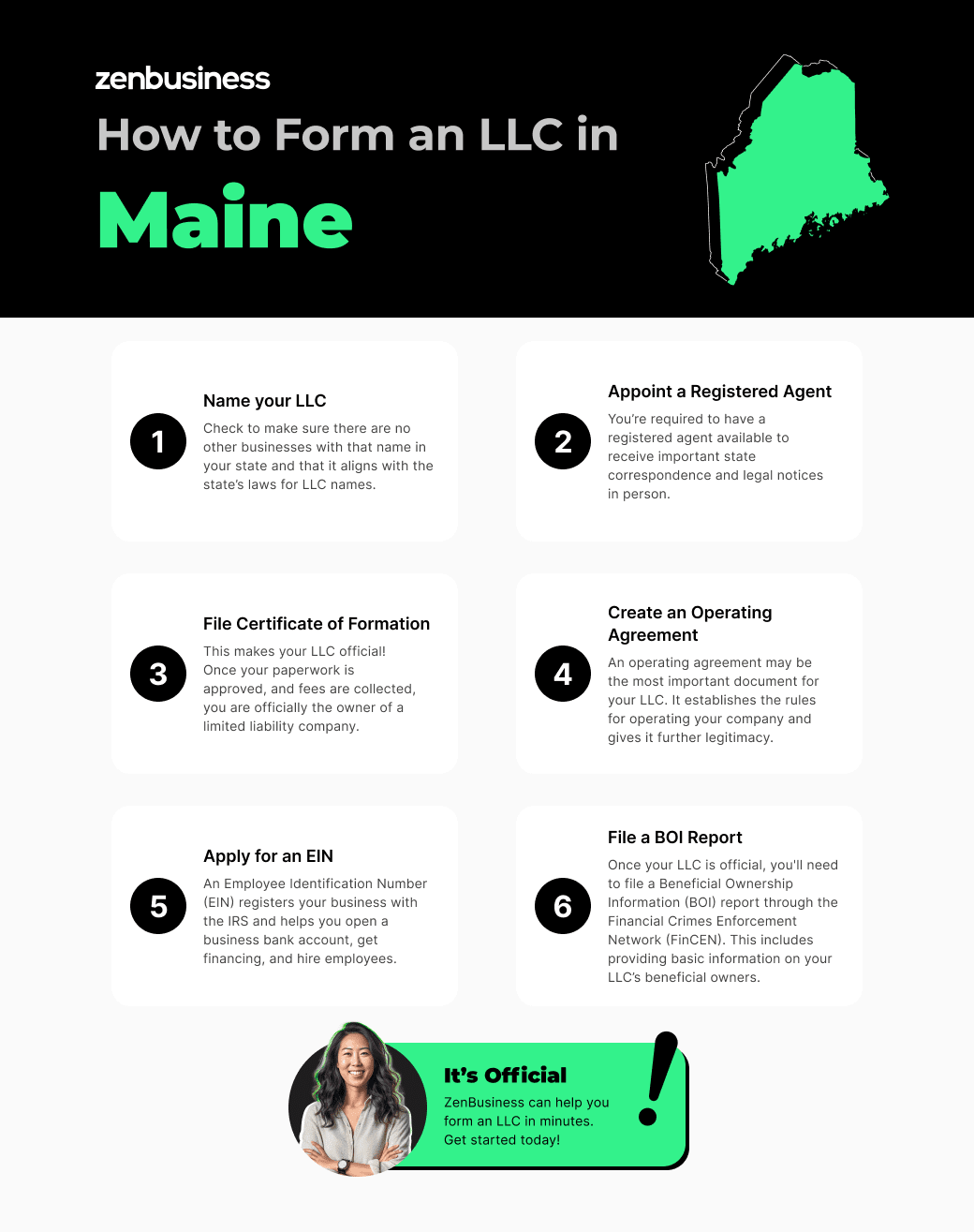
Creating an LLC in Maine involves a series of well-defined steps. While the process is generally straightforward, attention to detail is key to ensure compliance with state regulations.
Step 1: Choose a Business Name
Your LLC name must be unique and distinguishable from other registered business names in Maine. It must also include a designator that indicates it’s an LLC, such as “Limited Liability Company,” “LLC,” or “L.L.C.” You can check for name availability through the Maine Secretary of State’s website. It’s also advisable to check for trademark availability at the federal level if you plan to operate nationally.
Step 2: Designate a Registered Agent
A registered agent is an individual or a business entity that agrees to accept legal documents and official correspondence on behalf of your LLC. The registered agent must have a physical street address in Maine and be available during normal business hours. You can serve as your own registered agent if you meet these requirements, or you can hire a professional registered agent service.
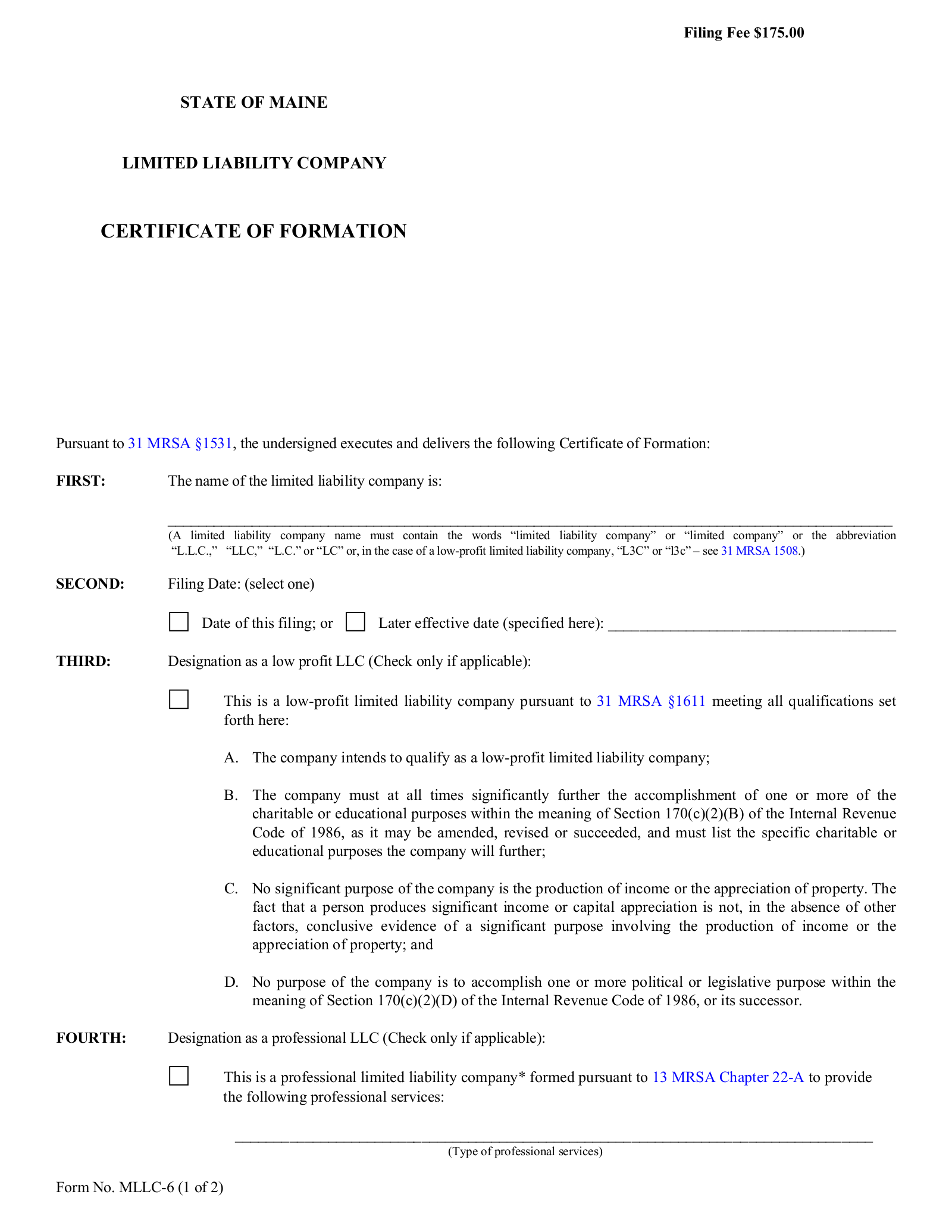
Step 3: File the Certificate of Formation
The core document for establishing your LLC is the Certificate of Formation. This document must be filed with the Maine Secretary of State’s office. It typically requires information such as:
- The name of your LLC.
- The name and address of your registered agent.
- The principal office address of your LLC.
- The names and addresses of the initial members or managers.
There is a filing fee associated with the Certificate of Formation, which can be paid online or by mail.
Step 4: Create an Operating Agreement
While not legally required by the state of Maine, an Operating Agreement is a crucial internal document that outlines the ownership structure, management responsibilities, and operational procedures of your LLC. It details how profits and losses will be allocated, how members can join or leave the company, and how disputes will be resolved. A well-drafted Operating Agreement can prevent future misunderstandings and disagreements among members.
Step 5: Obtain an EIN (Employer Identification Number)

If your LLC will have employees or operate as a corporation for tax purposes, you will need to obtain an Employer Identification Number (EIN) from the Internal Revenue Service (IRS). This number is like a Social Security number for your business and is used for tax filing and other federal purposes. You can apply for an EIN online for free through the IRS website.
Step 6: Comply with State and Local Regulations
Depending on your industry and location within Maine, you may need to obtain specific licenses and permits to operate legally. This could include federal, state, county, and municipal licenses. Researching and acquiring all necessary permits is vital to avoid penalties and ensure compliance.
Ongoing Compliance and Best Practices for Maine LLCs
Forming an LLC is just the beginning. Maintaining compliance and adhering to best practices are essential for the continued success and legal standing of your business.
Annual Reports
Maine requires LLCs to file an annual report with the Secretary of State. This report provides updated information about your business, such as its principal office address and the names of its members or managers. Filing on time is crucial to avoid late fees and potential dissolution of your LLC.
Business Licenses and Permits
As your business evolves or expands its operations, you may need to renew or acquire new licenses and permits. Regularly reviewing your business activities against current regulations will ensure you remain compliant.
Maintaining Separate Finances
It’s imperative to keep your business finances separate from your personal finances. This includes opening a dedicated business bank account and using it for all business transactions. Commingling funds can jeopardize your limited liability protection.
Adhering to Your Operating Agreement
Regularly review and adhere to the terms of your Operating Agreement. This document serves as a roadmap for your business and ensures that all members are operating under the same understanding and guidelines.
Tax Obligations
Understand your federal, state, and any local tax obligations. This includes income tax, sales tax, and employment taxes if applicable. Consulting with a tax professional can help you navigate these complexities and ensure timely and accurate filings.
Choosing the Right Structure: LLC vs. Other Business Entities
When embarking on a new business venture in Maine, understanding the various business structures available is paramount. While the LLC offers a compelling balance of benefits, it’s essential to compare it against other common options to ensure it aligns perfectly with your business goals.
Sole Proprietorship
A sole proprietorship is the simplest business structure, where the business is owned and run by one individual, and there is no legal distinction between the owner and the business. While it’s easy to set up, it offers no personal liability protection. This means the owner is personally responsible for all business debts and liabilities.
Partnership
Similar to a sole proprietorship, a partnership involves two or more individuals who agree to share in the profits or losses of a business. General partnerships also lack personal liability protection for the partners. Limited partnerships and limited liability partnerships (LLPs) offer some liability protection, but an LLC generally provides broader and more straightforward protection for all members.
Corporation (S-Corp and C-Corp)
Corporations are separate legal entities from their owners (shareholders).
- C-Corporations: Offer strong liability protection but are subject to corporate income tax, leading to potential double taxation of profits.
- S-Corporations: Allow profits and losses to be passed through directly to the owners’ personal income without being subject to corporate tax rates, similar to an LLC. However, S-corps have more stringent eligibility requirements and operational rules than LLCs.
The LLC often serves as a middle ground, providing the liability protection of a corporation with the tax simplicity of a partnership or sole proprietorship, making it an attractive choice for many small to medium-sized businesses in Maine.
Conclusion: Launching Your Maine LLC with Confidence
Forming an LLC in Maine is a strategic move that can provide significant benefits for your business. By carefully following the outlined steps, understanding ongoing compliance requirements, and considering your specific business needs, you can establish a solid legal framework that protects your personal assets while fostering growth and success for your enterprise in the beautiful state of Maine.
LifeOutOfTheBox is a participant in the Amazon Services LLC Associates Program, an affiliate advertising program designed to provide a means for sites to earn advertising fees by advertising and linking to Amazon.com. Amazon, the Amazon logo, AmazonSupply, and the AmazonSupply logo are trademarks of Amazon.com, Inc. or its affiliates. As an Amazon Associate we earn affiliate commissions from qualifying purchases.