
When individuals purchase real estate in New Mexico, they expect a seamless transfer of ownership. However, the legal reality of property law in the “Land of Enchantment” can occasionally become complicated by what is known as “defective conveyance.” A conveyance is the legal process of transferring interest in real property from one party to another. When that process is marred by errors—such as incorrect legal descriptions, missing signatures, improper notarization, or unreleased liens—the title is rendered “unmarketable” or “clouded.”
For those looking to settle down in historic cities like Santa Fe or the growing urban hub of Albuquerque, resolving these issues is paramount. If you discover a defect in your deed, you must act methodically to ensure your investment remains secure and your ownership rights are fully enforceable under state law.

Identifying the Nature of the Conveyance Defect
Before you can cure a defect, you must first identify what exactly has gone wrong. Title companies and real estate attorneys often categorize defects into several distinct buckets. Recognizing these allows you to choose the correct legal path toward a resolution.
Common Types of Title Clouds
- Errors in Legal Descriptions: A common mistake in New Mexico involves inaccurate metes-and-bounds descriptions or typos in section, township, and range coordinates.
- Improper Execution: A deed might be considered defective if it lacks the signature of all necessary grantors or if the acknowledgment by a notary public is expired or improperly performed.
- Outstanding Encumbrances: Undisclosed liens, such as mechanic’s liens, unpaid property taxes, or undischarged mortgages from a previous owner, can cloud a title.
- Chain of Title Gaps: Sometimes, there is a missing link in the recorded history of the property, such as an unrecorded probate decree or a missing deed in a sequence of transfers.
The Role of Title Insurance
If you purchased a title insurance policy during your acquisition of the property, your first step should be contacting your title company. Title insurance is designed specifically to protect property owners against losses arising from defects in the title that existed prior to the policy date. If the defect is “covered,” the title insurer will typically undertake the legal work necessary to “cure” the defect, saving you significant time and legal fees.
Legal Mechanisms to Cure Title Defects
In New Mexico, state statutes provide clear frameworks for correcting errors. Depending on the severity of the issue, you may need to pursue one of the following corrective actions to clear the record.

The Corrective Deed
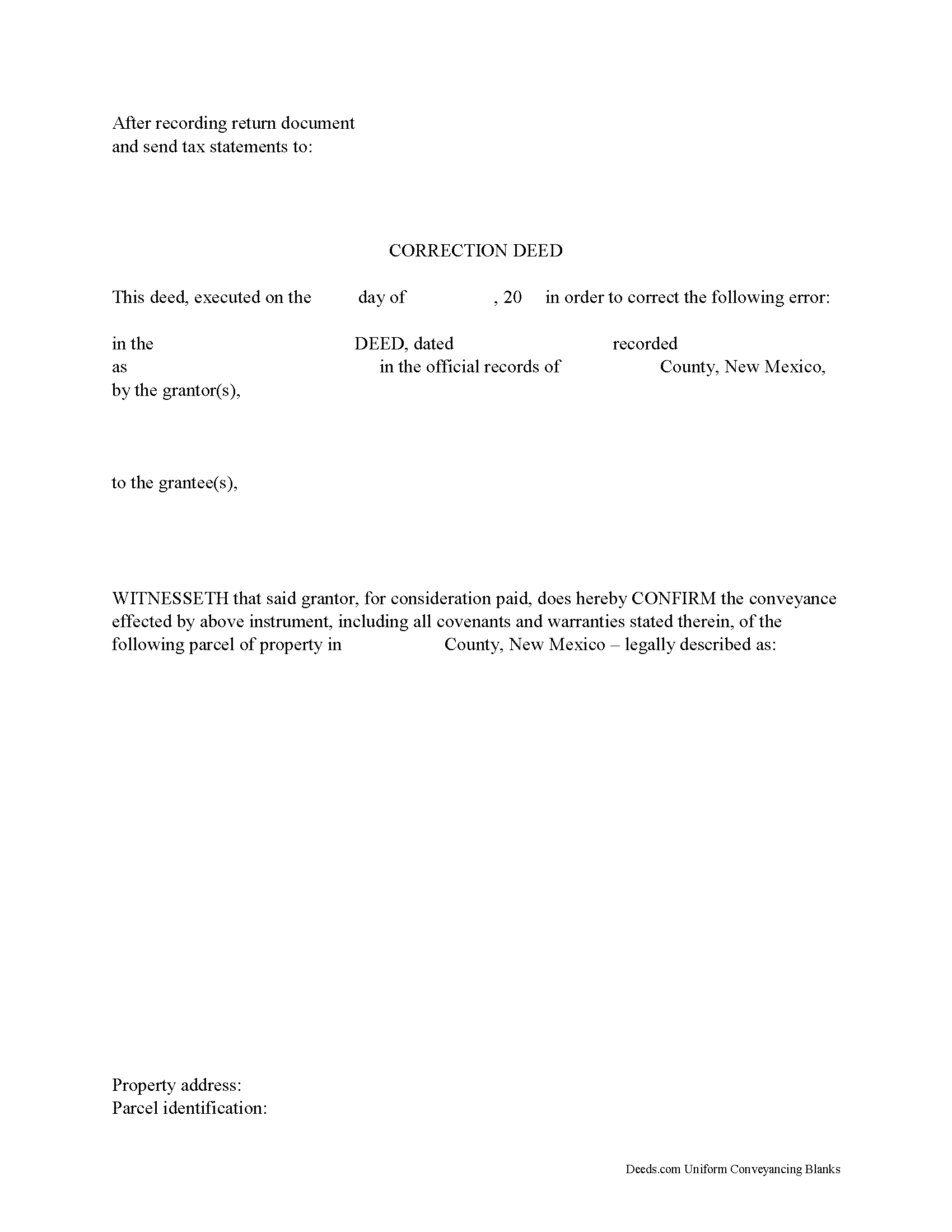
The most straightforward method for resolving minor clerical errors—such as a typo in a name or a slight error in a legal description—is the execution of a “Correction Deed” or “Corrective Deed.” This is a document signed by the original grantor that clarifies the intent of the original deed and amends the specific error. To be effective, the correction deed must be properly recorded in the county where the property is located, such as Bernalillo County or Santa Fe County.
Quiet Title Actions
When a defect is more substantial, such as an adverse claim of ownership by a third party or a long-standing boundary dispute that cannot be resolved through mutual agreement, a “Quiet Title” lawsuit is often the necessary remedy. This is a judicial proceeding filed in the district court. The goal is for a judge to issue a decree that “quiets” the title, effectively declaring the plaintiff as the sole, rightful owner and silencing any and all competing claims forever. This process is rigorous and typically requires the assistance of an experienced real estate attorney.
Affidavit of Scrivener’s Error
In certain instances, a simple “Affidavit of Scrivener’s Error” can be used. This is a sworn statement signed by the person who prepared the original document, acknowledging that a clerical error was made and providing the corrected information. While this is less formal than a court order, it must be recorded in the public land records and is generally accepted by title examiners as proof that the intent of the parties was consistent with the correction.
Strategic Considerations for Property Owners
Managing real estate in New Mexico requires a proactive approach to due diligence. Whether you are living in a historic adobe home in Taos or a modern condo near Las Cruces, the preservation of your deed’s integrity is an ongoing responsibility.
Preventing Future Issues
The best way to “cure” a defective conveyance is to ensure it never happens in the first place. Always insist on a professional survey if there is any ambiguity regarding property boundaries. Furthermore, never finalize a real estate transaction without a comprehensive title search conducted by a licensed title company. This search uncovers most potential clouds before you finalize the purchase and take possession.
When to Engage Legal Counsel
You should consult with a qualified attorney if:
- The original grantor of the property is deceased or cannot be located.
- The defect involves a dispute with a neighbor over easements or boundary lines.
- A lienholder refuses to provide a release or satisfaction of a mortgage that has already been paid.
- Your title insurance company denies the claim or refuses to take action to clear the title.
The Impact on Resale and Financing
It is vital to understand that a defective title is not just a theoretical problem; it has real-world consequences for your liquidity. If you attempt to sell your property or refinance your mortgage, any cloud on your title will be flagged by a lender’s title search. Banks are generally unwilling to issue a new mortgage on a property with a defective title, as the property cannot serve as clear collateral. By addressing these issues early—rather than waiting until you are under contract to sell—you maintain your leverage and ensure that your property remains a viable asset.
Ultimately, while the legal language surrounding “defective conveyance” can be daunting, the path to resolution is well-trodden. By utilizing the appropriate instruments—from corrective deeds to judicial quiet title actions—you can safeguard your interest in the beautiful landscapes and diverse communities that make New Mexico such a unique place to call home. Whether you are a long-term resident or a newcomer to the region, maintaining a clean chain of title is the most effective way to protect the value and the history of your property for years to come.
LifeOutOfTheBox is a participant in the Amazon Services LLC Associates Program, an affiliate advertising program designed to provide a means for sites to earn advertising fees by advertising and linking to Amazon.com. Amazon, the Amazon logo, AmazonSupply, and the AmazonSupply logo are trademarks of Amazon.com, Inc. or its affiliates. As an Amazon Associate we earn affiliate commissions from qualifying purchases.