
The New York Strip steak, a beloved cut renowned for its balance of tenderness and robust beefy flavor, is a cornerstone of classic American cuisine. Often found gracing the menus of steakhouses in bustling metropolises like New York City and beyond, this cut, also known as the strip loin, Kansas City strip, or hotel cut, offers a gratifying dining experience. While ordering a perfectly cooked steak from a reputable restaurant is always an option, mastering the art of cutting your own New York Strip at home can elevate your culinary prowess and unlock a deeper appreciation for this exceptional cut. This guide will walk you through the process, from selecting the finest steak to expertly portioning it for maximum enjoyment.
Understanding the New York Strip: Anatomy and Selection
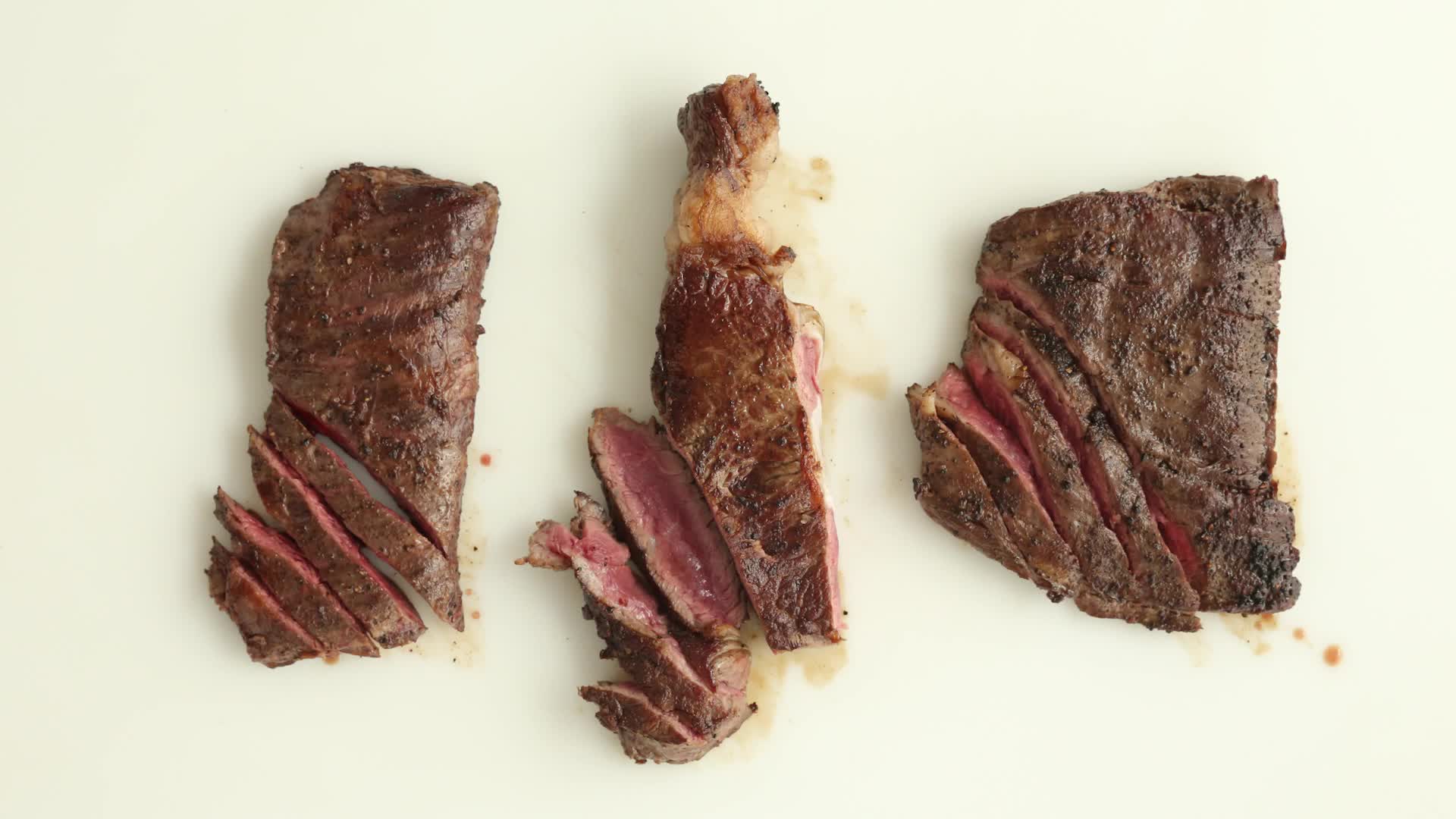
Before you can wield your knife, it’s crucial to understand what makes a New York Strip so special and how to identify a prime specimen. This cut originates from the short loin primal, a highly prized section of the cow known for its tenderness. The strip loin is located on the back of the cow, running from the ribs towards the sirloin. It’s a large, thick muscle that does relatively little work, contributing to its desirable texture.
The Characteristics of a Quality New York Strip
A superior New York Strip will exhibit several key characteristics. Look for a steak with a good degree of marbling – the thin streaks of intramuscular fat that render during cooking, basting the meat and imparting immense flavor and juiciness. The color should be a vibrant, cherry-red, indicating freshness. The thickness is also important; aim for steaks that are at least 1 to 1.5 inches thick. This allows for a better sear on the outside while ensuring the interior remains moist and tender, avoiding overcooking. The fat cap along one edge of the steak is another hallmark. While some prefer to trim it entirely, this fat renders during cooking and adds a significant depth of flavor and richness.
Sourcing Your Steak: From Butcher to Table
The quality of your starting product will directly influence the final outcome. For the best results, seek out a reputable butcher. A good butcher will not only be able to advise you on the best cuts but can also often pre-portion steaks to your desired thickness. They can also guide you on different grades of beef, such as USDA Prime, Choice, or Select, with Prime offering the highest degree of marbling and tenderness.
If purchasing pre-packaged steaks from a supermarket, inspect them carefully. Avoid packages with excessive liquid, which can indicate the meat has been sitting for a while or has been pumped with water. The steaks should look fresh, with firm texture and minimal bruising. Consider seeking out grass-fed options, which often have a slightly different flavor profile and are leaner than their grain-fed counterparts, or dry-aged steaks for an intensified flavor and a more tender texture, often available at specialty butcher shops in cities like Chicago or Los Angeles.
The Essential Tools for Precision Cutting
To effectively cut a New York Strip steak, you’ll need a few essential tools. The right equipment will not only make the job easier but will also ensure clean cuts that preserve the integrity of the meat and enhance its presentation.
The Unsung Hero: A Sharp Knife

The single most important tool in your arsenal is a sharp knife. A dull knife will tear through the meat, crushing the muscle fibers and resulting in a ragged cut that can negatively impact texture and moisture retention. For slicing steaks, a chef’s knife or a carving knife with a long, thin blade is ideal. The length allows for long, smooth strokes, while the thinness helps to glide through the meat without snagging. Ensure the blade is honed and sharp. If you’re unsure about your knife’s sharpness, it’s always better to sharpen it before you begin.
Essential Accessories for the Cutting Board
Beyond the knife, a stable cutting board is paramount. A large, sturdy cutting board made of wood or a high-quality composite material will provide a safe and stable surface. Wood is often preferred by chefs as it is gentler on knife blades and has natural antimicrobial properties. Ensure the board has a channel around the edge to catch any juices that may escape during cutting. While not strictly essential for the cutting itself, a plate or platter to hold your beautifully cut steaks is a practical addition.
The Art of Portioning: Cutting Your New York Strip
Once you have your quality steak and your sharp tools ready, it’s time to embark on the rewarding process of portioning. This involves not only dividing the steak into manageable servings but also understanding the grain of the meat to ensure the most tender eating experience.
Identifying the Grain of the Meat
Every cut of meat has a grain, which refers to the direction in which the muscle fibers are aligned. For the New York Strip, the grain typically runs lengthwise along the steak. To identify it, look closely at the surface of the uncooked steak. You’ll see parallel lines or striations. Understanding this grain is fundamental to slicing the steak correctly.
The Technique: Slicing Against the Grain
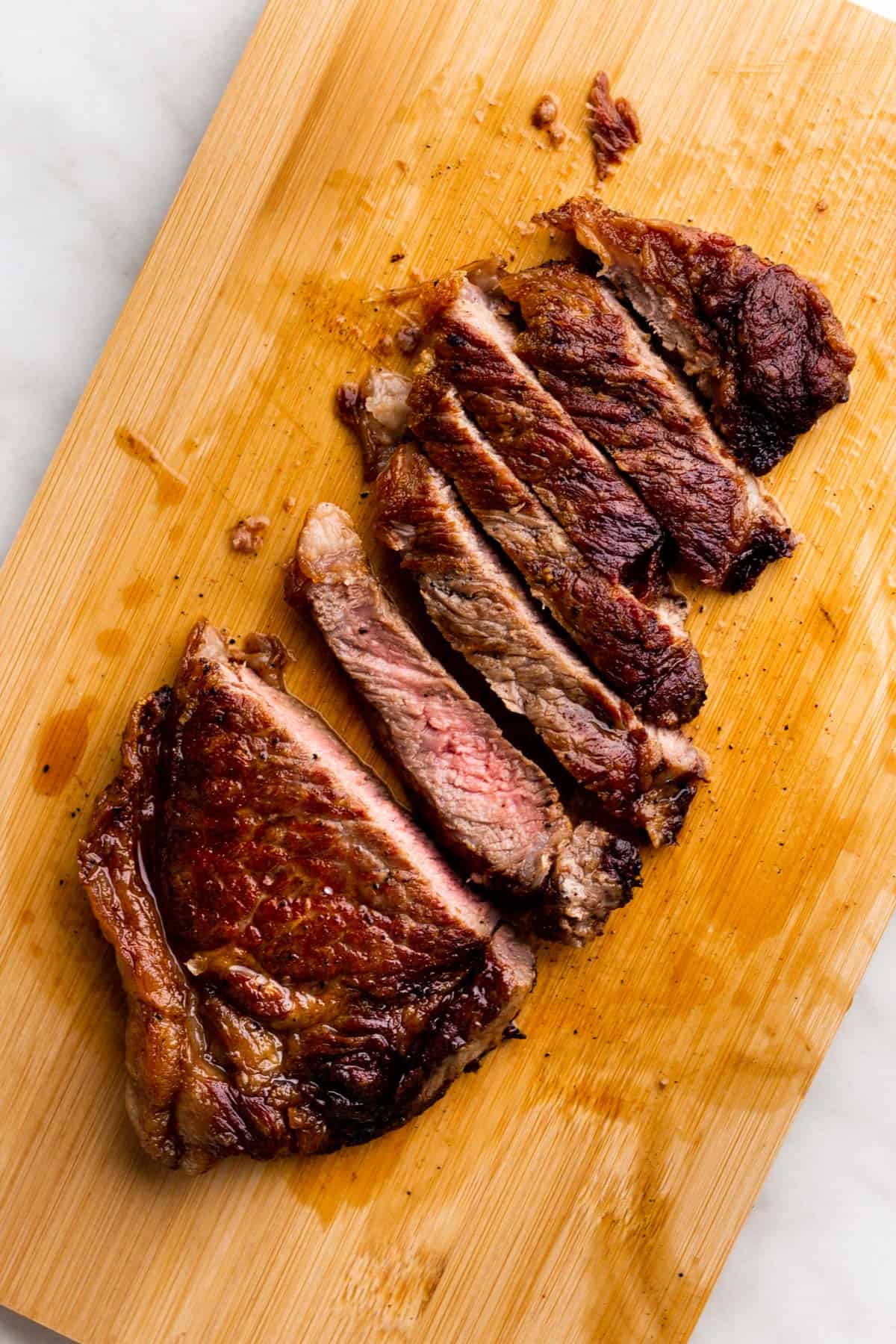
The cardinal rule of slicing any meat, especially steak, is to always cut against the grain. This means your knife strokes should be perpendicular to the direction of the muscle fibers. Cutting against the grain shortens the muscle fibers, making the meat much more tender and easier to chew. If you were to cut with the grain, you would be slicing along the length of these long, tough fibers, resulting in a chewy and less enjoyable bite.
To execute this, place your New York Strip steak on the cutting board with the grain running away from you. Hold the steak steady with your non-dominant hand, applying gentle pressure. Begin slicing from the edge closest to you, using a smooth, sawing motion with your sharp knife. Aim for slices that are about 1/4 to 1/2 inch thick, depending on your preference. If the steak is particularly thick, you can also consider slicing it in half lengthwise before cutting into individual portions. This makes handling easier and ensures even cooking if you’re serving multiple people.
Resting and Serving: The Final Touches
After cutting your New York Strip steaks, it’s crucial to let them rest. This is a critical step often overlooked by home cooks. Resting allows the juices, which have been pushed to the center during cooking, to redistribute throughout the steak. This results in a more moist and flavorful final product. A good rule of thumb is to let the sliced steaks rest for at least 5 to 10 minutes before serving. You can arrange the sliced steaks fanned out on a platter, making for an elegant presentation that rivals any fine dining establishment, whether you’re dining in Las Vegas or enjoying a quiet night in.
By mastering the simple yet impactful techniques of selecting and cutting your own New York Strip steaks, you unlock a new level of culinary confidence and the ability to recreate steakhouse-quality meals in your own home. This skill not only enhances your appreciation for this classic cut but also provides a deeply satisfying experience, turning a simple meal into a gourmet event.
LifeOutOfTheBox is a participant in the Amazon Services LLC Associates Program, an affiliate advertising program designed to provide a means for sites to earn advertising fees by advertising and linking to Amazon.com. Amazon, the Amazon logo, AmazonSupply, and the AmazonSupply logo are trademarks of Amazon.com, Inc. or its affiliates. As an Amazon Associate we earn affiliate commissions from qualifying purchases.