
Navigating the complexities of divorce is rarely an easy journey, and when that journey takes place in the sunshine state of Florida, a unique set of legal procedures and considerations comes into play. While the concept of divorce might seem daunting, understanding the process in Florida can demystify it, allowing individuals to approach this significant life change with more clarity and preparedness. This guide aims to break down the essential steps involved in obtaining a divorce in Florida, offering insights that can be beneficial whether you’re planning a tranquil escape to the Everglades after your proceedings or simply seeking to understand the legal landscape of your home state.

The foundation of divorce in Florida lies in its no-fault system. This means you do not need to prove that your spouse did something wrong to be granted a divorce. The law recognizes that marriages can irretrievably break down, and Florida allows for divorce based on this premise. This simplifies the initial filing and can lead to a less contentious process, focusing on equitable distribution of assets and responsibilities rather than assigning blame.
Understanding the Grounds for Divorce in Florida
As previously mentioned, Florida operates under a no-fault divorce system. This significantly streamlines the legal process by eliminating the need to prove marital misconduct. The primary grounds for divorce in Florida are:
-
Irretrievably Broken Marriage: This is the most common ground. It simply means that the marriage has reached a point where there is no reasonable prospect of reconciliation. You don’t need to specify why it’s irretrievably broken; the assertion itself is sufficient for the court to proceed, provided the other party agrees or a period of separation has occurred.
-
Mental Incapacity: In rarer cases, a spouse may seek a divorce based on the other spouse’s mental incapacity that has lasted for at least three years. This ground is less frequently used and requires substantial medical evidence.
The no-fault aspect of Florida divorce law is a significant departure from fault-based systems found in other states. It shifts the focus from assigning blame to resolving practical matters. This philosophical approach can be particularly helpful during what is already an emotionally charged period, allowing couples to concentrate on building their future, perhaps by planning a restorative stay at a Florida resort or exploring the vibrant culture of cities like Miami.
Residency Requirements for Filing Divorce in Florida
Before you can even begin the divorce process in Florida, you must meet specific residency requirements. This ensures that the state’s courts have the proper jurisdiction over your case.
-
At Least One Spouse Must Reside in Florida: For a Florida court to grant a divorce, either you or your spouse must have resided in the state for a minimum of six months immediately preceding the filing of the petition for dissolution of marriage.
-
Establishing Residency: Proving residency typically involves demonstrating a genuine intent to live in Florida. This can be supported by evidence such as a Florida driver’s license, voter registration, utility bills, or the lease or deed to a property in the state.
Meeting these residency requirements is a crucial first step. Without it, the Florida courts will not have the authority to finalize your divorce, regardless of other circumstances. This rule ensures that the state’s legal system is used efficiently and appropriately, preventing individuals from filing in Florida simply to gain a procedural advantage without a genuine connection to the state.
Types of Divorce Proceedings in Florida
Florida offers different pathways to divorce, each suited to varying levels of agreement and complexity between the spouses. The type of divorce proceeding you pursue will depend on factors such as whether you have minor children, the complexity of your assets and debts, and your ability to reach agreements with your spouse.
Simplified Dissolution of Marriage
This is the most straightforward and quickest way to get a divorce in Florida. It is designed for couples who meet very specific criteria and have a high degree of cooperation.
-
Eligibility Criteria: To qualify for a simplified dissolution of marriage, both spouses must:
- Agree that the marriage is irretrievably broken.
- Have no minor or dependent children and neither spouse is pregnant.
- Agree on how to divide their property and debts, and both parties have signed an agreement.
- Waive the right to alimony.
- Both parties must appear before the court for a final hearing.
- Each party must have lived in Florida for at least six months prior to filing.
-
Process: The process involves filing a joint petition, attending a brief final hearing, and then the court will issue a final judgment of dissolution. This method is often favored by couples who can communicate effectively and have a mutual desire for an amicable separation. It minimizes legal fees and the emotional toll of a prolonged court battle, allowing individuals to move forward with their lives, perhaps by planning future travels to places like Orlando or enjoying the beaches of Clearwater.
Uncontested Divorce
When spouses can agree on all major issues related to their divorce but do not meet the strict criteria for a simplified dissolution, an uncontested divorce is the next best option.
-
Agreement on Key Issues: In an uncontested divorce, spouses agree on all significant matters, including:
- Equitable distribution of marital assets and debts.
- Child custody and visitation schedules (if applicable).
- Child support and spousal support (alimony), if any.
-
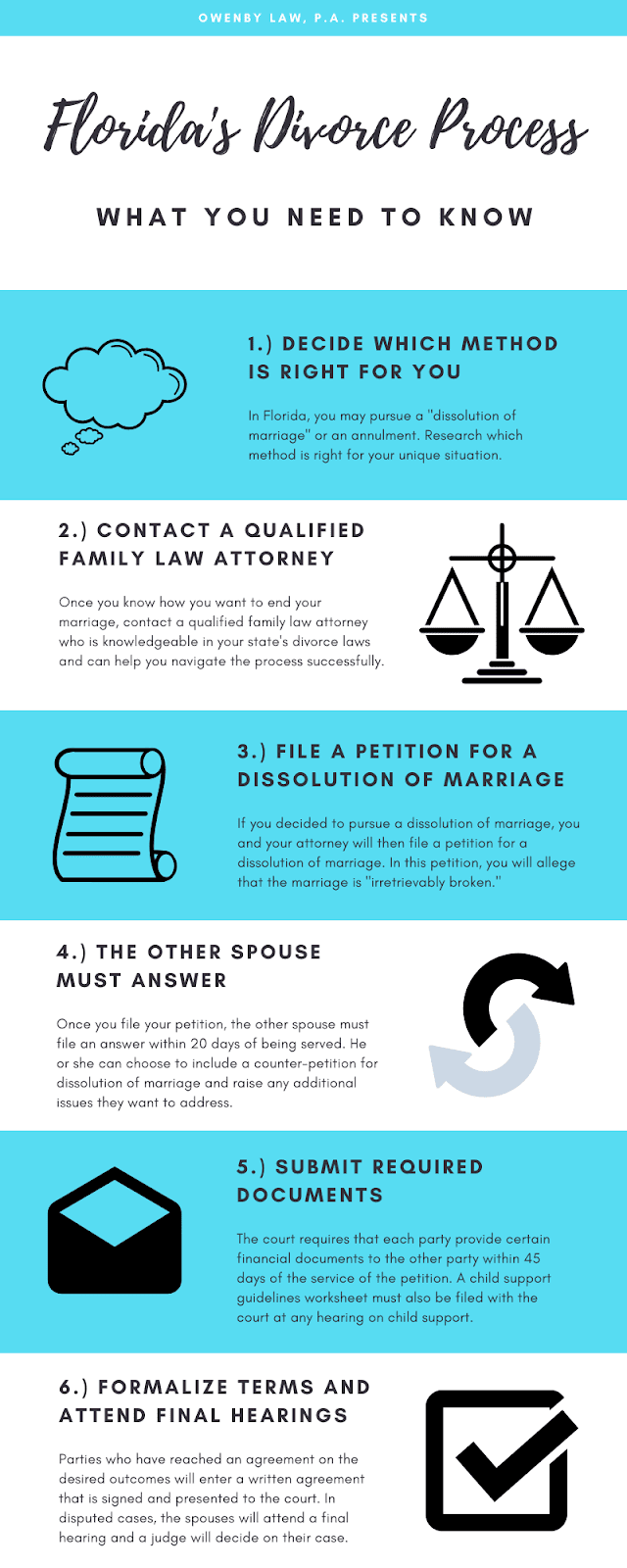
Filing and Finalization: One spouse files a petition for dissolution of marriage, and the other spouse files a response. Once a Marital Settlement Agreement (MSA) is drafted and signed by both parties, it is submitted to the court for approval. The court will review the agreement to ensure it is fair and equitable, especially concerning any minor children. If approved, the judge will sign a final judgment of dissolution. This process, while requiring more paperwork than a simplified dissolution, is still significantly less contentious and costly than a contested divorce. It allows couples to maintain a higher degree of control over the outcome, making it easier to plan future endeavors, such as booking a suite at a luxury resort in the Florida Keys or enjoying a family vacation to Disney World.
Contested Divorce
A contested divorce arises when spouses cannot agree on one or more key issues. This often requires court intervention to resolve disputes.
-
Disagreements on Major Issues: Common areas of contention include:
- Division of complex marital assets (e.g., businesses, retirement accounts, multiple properties).
- The amount and duration of spousal support (alimony).
- Child custody and visitation arrangements, especially if there are allegations of parental unfitness or significant disagreements over the children’s best interests.
- The allocation of significant debts.
-
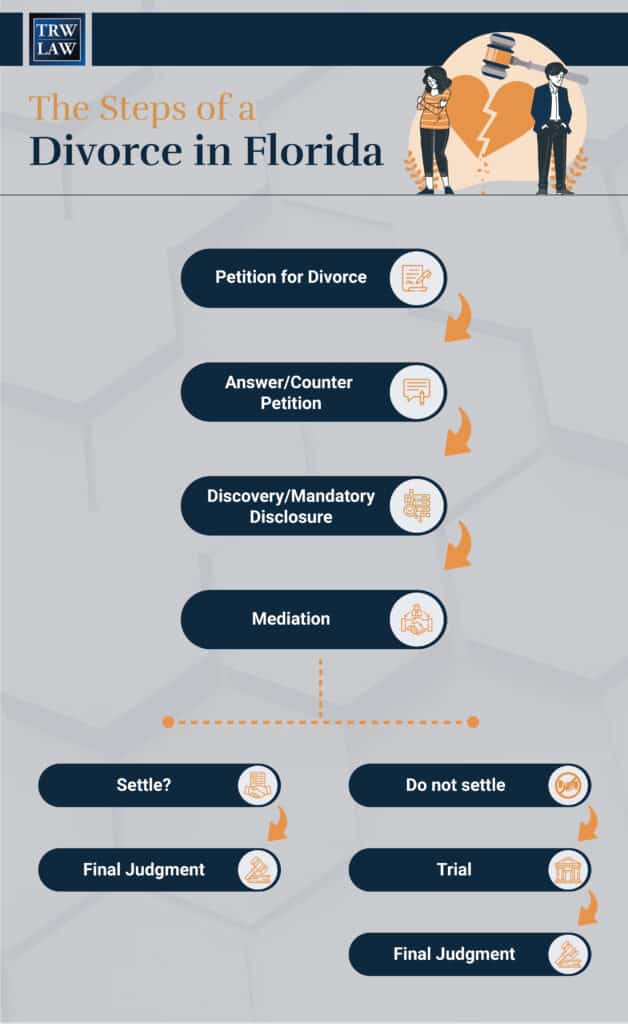
Litigation Process: In a contested divorce, the process can involve:
- Discovery: Exchanging financial information, interrogatories, depositions, and requests for admissions.
- Mediation: A mandatory step in many Florida counties, where a neutral third party helps the couple negotiate and reach agreements.
- Hearings and Trials: If mediation fails, the case may proceed to court hearings for temporary orders (e.g., temporary custody, alimony) and eventually to a final trial where a judge will make decisions on all unresolved issues.
- Legal Representation: Contested divorces often necessitate the involvement of attorneys for both parties, as navigating the legal system and advocating for one’s rights can be challenging. This type of divorce can be lengthy, expensive, and emotionally draining, significantly impacting one’s ability to focus on lifestyle choices like planning a business stay at the Fontainebleau Miami Beach or a budget travel adventure.
Key Legal Considerations in Florida Divorce
Beyond the procedural steps, several substantive legal issues must be addressed in any Florida divorce. These considerations often form the core of any agreement or judicial decision.
Equitable Distribution of Marital Assets and Debts
Florida follows the principle of equitable distribution, which means marital property and debts are divided fairly, though not necessarily equally, between the spouses.
- Marital vs. Non-Marital Property: The court first distinguishes between marital assets and debts (acquired during the marriage) and non-marital assets and debts (owned before the marriage, received as a gift or inheritance during the marriage, or designated as non-marital by a valid agreement).
- Factors for Equitable Distribution: When dividing marital property, judges consider various factors, including the economic circumstances of each spouse, the contribution of each spouse to the marriage (including homemaking and child-rearing), the desirability of awarding the family home to a spouse with custody of minor children, and the intentional dissipation or waste of marital assets by one spouse.
- Importance of Full Disclosure: Full and honest financial disclosure from both parties is crucial. Hiding assets can lead to severe penalties, including the court awarding a disproportionate share of the undisclosed assets to the wronged spouse. This meticulous process of valuing and dividing assets can be as complex as planning a luxury villa stay in Key West or managing a portfolio of investments.
Child Custody and Support
If a couple has minor children, custody and support arrangements are paramount. Florida law prioritizes the best interests of the child.
- Parental Responsibility and Time-Sharing: Instead of traditional “custody” and “visitation,” Florida law uses the terms “parental responsibility” and “time-sharing.”
- Shared Parental Responsibility: This is the standard in Florida, meaning both parents are involved in decision-making regarding the child’s upbringing (education, healthcare, religious upbringing).
- Time-Sharing Schedule: A detailed schedule outlines when the child will be with each parent. This schedule is crucial for day-to-day life and can range from one parent having primary physical custody to a more evenly divided schedule.
- Child Support Guidelines: Florida has statutory guidelines for calculating child support based on the income of both parents and the number of overnights each parent has with the child. The goal is to ensure the child’s financial needs are met.
- Modifications: Child custody and support orders can be modified if there is a substantial change in circumstances. This ensures that arrangements remain appropriate as children grow and life situations change, whether it’s planning a family trip to Universal Studios or adjusting to new living arrangements.
Alimony (Spousal Support)
Alimony, or spousal support, is financial assistance paid by one spouse to the other after a divorce. Florida law recognizes several types of alimony, designed to provide support and facilitate rehabilitation.
- Types of Alimony:
- Bridge-the-Gap Alimony: Intended to help a party transition from marriage to single life. It is typically short-term.
- Rehabilitative Alimony: Provided to help a spouse obtain education, training, or experience to increase their earning capacity.
- Durational Alimony: Awarded for a set period to provide economic assistance for a defined length of time.
- Permanent Alimony: Awarded for an indefinite period, typically in long-term marriages where one spouse is unable to become self-supporting.
- Factors for Awarding Alimony: When determining alimony, courts consider numerous factors, including the length of the marriage, the standard of living established during the marriage, the age and health of each spouse, the financial resources of each party, and the contributions each spouse made to the marriage. The aim is to ensure fairness and meet the reasonable needs of the receiving spouse while considering the ability of the paying spouse to contribute. This can impact future lifestyle choices, from vacation planning to long-term accommodation strategies.
In conclusion, divorcing in Florida involves understanding the no-fault system, meeting residency requirements, choosing the appropriate type of proceeding (simplified, uncontested, or contested), and diligently addressing critical legal considerations like equitable distribution, child custody and support, and alimony. While the legal aspects can be complex, a clear understanding of the process can empower individuals to navigate this transition with greater confidence, paving the way for a new chapter, whether it involves exploring the vibrant attractions of Tampa or settling into a new lifestyle. It is always advisable to consult with a qualified Florida attorney to ensure your rights are protected and that the process is handled efficiently and justly.
LifeOutOfTheBox is a participant in the Amazon Services LLC Associates Program, an affiliate advertising program designed to provide a means for sites to earn advertising fees by advertising and linking to Amazon.com. Amazon, the Amazon logo, AmazonSupply, and the AmazonSupply logo are trademarks of Amazon.com, Inc. or its affiliates. As an Amazon Associate we earn affiliate commissions from qualifying purchases.