
California, often referred to as the Golden State, offers an unparalleled wealth of iconic landmarks, from its distinctive geographical outline to its world-renowned natural wonders and man-made marvels. For artists, enthusiasts, or anyone looking to visually capture the essence of this diverse state, understanding how to depict these quintessential elements is key. Drawing California is not merely about replicating a map; it’s about interpreting its spirit through its most recognizable features. This guide delves into the techniques and considerations for bringing California’s landmarks to life on paper, focusing on precision, character, and artistic interpretation.
Capturing the Golden State’s Distinctive Outline
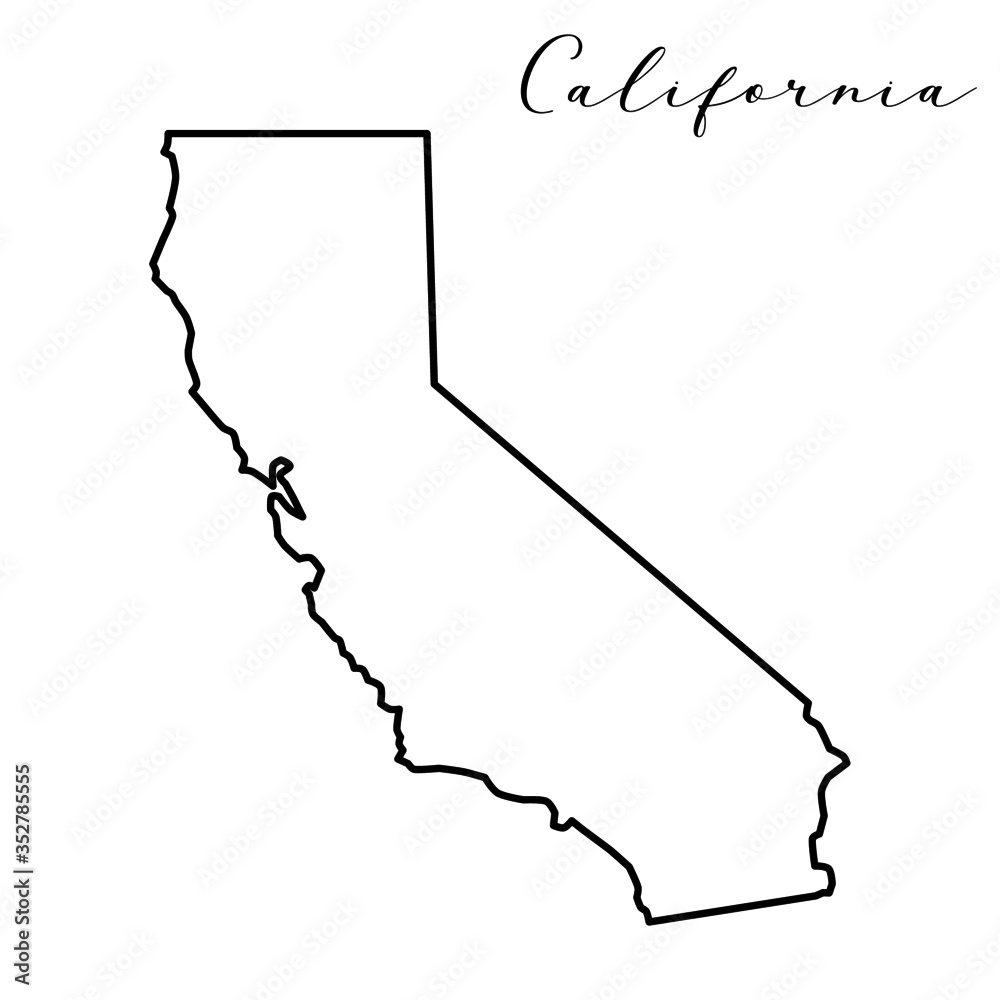
The geographical shape of California is, in itself, a significant and universally recognized landmark. Its long, slender form hugging the Pacific coastline, punctuated by mountains and deserts, tells a story of diverse geography. Mastering this outline is the foundational step in drawing the state.
The Iconic Shape: A Geographic Landmark
Begin by visualizing California’s boundaries. The western edge is defined by the smooth, undulating curve of the Pacific Ocean. This coastline stretches from the rugged northern region, near the border with Oregon, down to the warmer, more defined southern border with Mexico. Focus on the distinct “neck” near the San Francisco Bay Area and the gentle widening as it extends south.
The eastern border is more complex, marked by the Sierra Nevada mountain range to the east and south, transitioning into desert landscapes near Nevada and Arizona. Pay attention to the jagged peaks and valleys that characterize this boundary. A common mistake is to draw the eastern border as a simple straight line; understanding the subtle shifts reflecting mountain ranges and river systems will lend authenticity to your drawing. For instance, the panhandle extending towards the Colorado River in the southeast is a crucial detail.
Start with light, gestural lines to establish the overall proportion. Avoid pressing too hard, allowing for corrections as you refine the coastal curve and the more angular inland borders. Think of the outline as a silhouette; it needs to be immediately identifiable.
Essential Tools for Map Sketching
For accurate map sketching, a few tools are indispensable. Graphite pencils in varying hardness (e.g., 2H for light initial sketches, HB for definition, 2B for darker contours) provide versatility. A good quality eraser is crucial for refining lines without smudging. For those preferring digital art, a graphics tablet with pressure sensitivity allows for similar control and ease of correction. Reference maps are vital; consult topographical maps to understand the subtle nuances of the state’s shape, especially the variations in its eastern border and the intricacies of its coastline. Begin by lightly tracing a high-quality map, then gradually remove the underlying reference, relying on your own visual memory and understanding of the shapes. This iterative process helps internalize the form of California without direct copying.
Depicting California’s Natural Wonders
Beyond its outline, California is defined by its breathtaking natural landmarks, each offering unique artistic challenges and rewards. From towering mountains to dramatic coastlines and arid deserts, these features are central to the state’s identity.
The Majestic Peaks of Yosemite
Yosemite National Park is home to some of the most iconic natural landmarks in the world, including El Capitan and Half Dome. When drawing these granite monoliths, focus on their distinct geological formations. El Capitan is characterized by its sheer, almost vertical face, often depicted with subtle texture to suggest its immense scale and rock formations. Use long, confident strokes to capture its height, and varied shading to indicate its shadows and sunlit planes, which change dramatically throughout the day.
Half Dome, with its instantly recognizable sliced-dome appearance, requires attention to its rounded, smooth side contrasting with its abrupt, flat face. Sketch the overall curve first, then define the sharp, vertical cut. Consider the surrounding Yosemite Valley elements: the Merced River winding through, the cascading waterfalls like Yosemite Falls, and the framing evergreen forests. These elements provide context and scale, enhancing the grandeur of the main landmarks. Capturing the sense of depth and vastness is crucial, often achieved through atmospheric perspective where distant elements are lighter and less detailed.
Coastal Grandeur: Drawing the Big Sur Coastline
The Big Sur coastline is a masterpiece of rugged cliffs, crashing waves, and ancient redwoods. To draw this natural landmark effectively, emphasize the dramatic interplay of land and sea. Begin by sketching the undulating line of the cliffs, noting their irregular, broken contours. Use varied line weights to suggest the texture of weathered rock. The Pacific Ocean should be depicted with movement—using curving lines and subtle shading to imply waves and foam, especially where they meet the shore.
The Bixby Bridge, an architectural landmark within Big Sur, often serves as a focal point. Integrate its elegant arch gracefully into the powerful landscape. Behind the cliffs, the dense foliage of redwood forests adds depth. Use stippling or cross-hatching to create the texture of leaves and bark, conveying the dense, almost mystical quality of these ancient trees. The challenge here is balancing the immense power of the ocean with the steadfastness of the land and the delicate intricacy of the bridge.
Desert Landscapes: The Allure of Joshua Tree
The Mojave Desert, particularly Joshua Tree National Park, presents a distinct set of artistic challenges. The key elements are the unique Joshua Trees themselves and the vast, often surreal rock formations. When drawing Joshua Trees, focus on their gnarled, sculptural branches and spiky leaves. Each tree has a unique personality; avoid drawing them uniformly. Their irregular shapes and dense crowns offer interesting textural opportunities.
The massive monzogranite boulders, rounded and stacked, require attention to form and shadow. Use broad strokes to define their volume and then subtle shading to indicate their smooth, weathered surfaces. The desert floor, often sparse, can be represented with subtle textures for sand, gravel, and sparse vegetation. The sky in a desert drawing is often expansive, with dramatic cloud formations or the clear, intense blue that defines the region. Capturing the desolate beauty and stark contrasts of light and shadow is paramount to conveying the unique atmosphere of the Joshua Tree landscape.
Architectural Icons and Man-Made Marvels
California’s urban and structural landmarks are as compelling as its natural ones, each reflecting different eras of development, innovation, and culture.
The Engineering Feat: Golden Gate Bridge
The Golden Gate Bridge is arguably California’s most internationally recognized man-made landmark. Drawing it effectively requires precision and an understanding of its iconic structure. Start with the two main towers, ensuring their verticality and the correct taper. Use a ruler or digital guides for accuracy, as slight distortions can disrupt its majestic appearance.
Next, focus on the main suspension cables, depicting their elegant parabolic curve between the towers. These cables are crucial to the bridge’s visual identity. The vertical suspender ropes connecting the main cables to the bridge deck should be evenly spaced. The deck itself should convey a sense of perspective, whether seen from below, above, or head-on. Consider the surrounding elements: the often-foggy San Francisco Bay, the city skyline in the background, or the Marin Headlands. The bridge’s distinctive “International Orange” color, if you are using color, is also a vital identifier.
Hollywood’s Cinematic Landscape: The Hollywood Sign
The Hollywood Sign, perched on Mount Lee in the Santa Monica Mountains, is a cultural landmark synonymous with the global film industry. When drawing the sign, the most critical aspect is the letterforms themselves. Each letter (“H-O-L-L-Y-W-O-O-D”) has a specific sans-serif font and proportion. Accuracy in these shapes is paramount.
The sign is rarely seen perfectly head-on; it’s almost always viewed with some degree of perspective, often from below. This means the letters will appear to recede and diminish in size slightly. Pay attention to the subtle angles and overlaps created by this perspective. The hillside on which the sign rests is also an important element. Depict it with natural contours, hints of chaparral vegetation, and the access roads that wind around it. The background, often a clear Los Angeles sky, helps the white letters stand out boldly.
Spanish Colonial Heritage: Mission Architecture
California’s Spanish Colonial heritage is beautifully preserved in its historic missions, like Mission San Juan Capistrano or Mission Dolores. These architectural landmarks share common features that make them recognizable. Key elements to focus on include the distinct bell towers, often with multiple arches for bells; the red-tiled roofs; thick, white adobe walls; and enclosed courtyards with fountains.
When drawing mission architecture, emphasize the sturdy, earthy quality of the materials. Use textured lines for the adobe walls and a pattern of overlapping shapes for the roof tiles. The arches are a recurring motif, requiring careful attention to their curves and symmetry. The surrounding landscapes often feature olive trees, vineyards, and rose gardens, which can be incorporated to enhance the historical context. Capturing the serene, timeless atmosphere of these structures is central to their artistic representation.
Incorporating State Symbols and Cultural Landmarks
Beyond physical structures, California’s identity is also defined by its official symbols, which are cultural landmarks in their own right and frequently integrated into artistic representations of the state.
The California Bear Flag
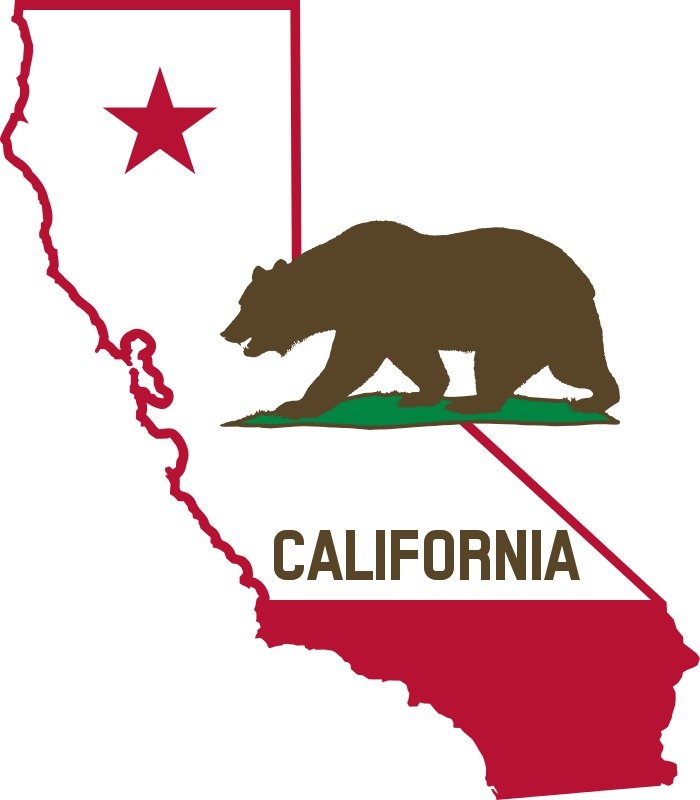
The California Bear Flag is a powerful symbol. To draw it, focus on its distinct components: the Grizzly Bear, the red star, the red stripe, and the words “CALIFORNIA REPUBLIC.” The Grizzly Bear should be depicted in a walking posture, facing left, with a strong, muscular build. Its fur can be rendered with short, textured strokes. The red star, positioned in the upper left, should be five-pointed and vibrant. The horizontal red stripe at the bottom contrasts with the white field, which makes up the majority of the flag. Pay attention to the proportions of each element to ensure an accurate and recognizable depiction. The flag, when drawn with a slight ripple, can add dynamic movement to your California-themed artwork.
The Poppy and the Redwood
California’s state flower, the California Poppy, with its brilliant orange-gold petals, is a beautiful and delicate landmark of the state’s flora. When drawing poppies, focus on their cup-shaped petals, which often have a slightly crinkled texture, and their slender stems. They frequently appear in fields, so depicting multiple poppies can convey the abundance of California’s spring.
The California Redwood, the state tree, is an imposing natural landmark. Drawing redwoods involves capturing their immense height, straight trunks, and dense, dark green foliage that often begins high above the ground. Use vertical lines to emphasize their stature, and texture to suggest their thick, reddish-brown bark. Grouping them, especially in misty settings, evokes the ancient and majestic groves found along the northern California coast.
Tips for Bringing Your California Sketch to Life
Perspective and Scale
When drawing California’s diverse landmarks, mastering perspective and scale is critical. For architectural structures like the Golden Gate Bridge or mission buildings, use linear perspective (one-point, two-point) to create depth and realistic proportions. For natural wonders like Yosemite’s peaks or Big Sur’s cliffs, atmospheric perspective—where distant objects appear lighter, less detailed, and bluer due due to atmospheric haze—is highly effective in conveying immense distances and grandeur. Always consider the viewer’s viewpoint and how that impacts the apparent size and relationship between different elements in your composition.
Color Palette Inspiration
Even if sketching in monochrome, understanding California’s characteristic color palettes can inform your shading and value choices. The vibrant “International Orange” of the Golden Gate Bridge, the golden hues of the California Poppy, the deep greens of redwood forests, the muted earth tones of desert landscapes, and the brilliant blues of the Pacific and clear California skies all contribute to its visual identity. In black and white, translate these colors into varying shades of grey, with warm colors often represented by lighter values and cool colors by darker ones, or vice versa, depending on the lighting conditions you aim to depict.
Developing Your Unique Artistic Vision
Ultimately, drawing California is an artistic journey. While accuracy in depicting landmarks is important, developing your unique artistic vision is what will make your work stand out. Experiment with different mediums, styles, and interpretations. Perhaps you prefer a detailed, realistic approach to the Yosemite landscape, or a more abstract, gestural rendition of the Big Sur waves. Capture the feeling and the narrative that these landmarks evoke in you. Whether you’re drawing for personal enjoyment or to share your appreciation of California with others, infuse your work with passion and originality. The Golden State, with its endless array of iconic sights, provides an inexhaustible source of inspiration for any artist.
LifeOutOfTheBox is a participant in the Amazon Services LLC Associates Program, an affiliate advertising program designed to provide a means for sites to earn advertising fees by advertising and linking to Amazon.com. Amazon, the Amazon logo, AmazonSupply, and the AmazonSupply logo are trademarks of Amazon.com, Inc. or its affiliates. As an Amazon Associate we earn affiliate commissions from qualifying purchases.