
Navigating the complexities of family relationships can be challenging, and sometimes, circumstances necessitate difficult decisions. When a family member is residing in your Texas home and the situation has become untenable, understanding the legal avenues for eviction is crucial. This guide aims to provide a clear and comprehensive overview of the eviction process in Texas for a family member, distinguishing it from typical landlord-tenant situations and highlighting the legal distinctions that apply. While the thought of evicting a loved one is emotionally taxing, knowing the legal framework can help you approach the situation with clarity and a plan.
It’s important to understand that the legal framework in Texas differentiates between a tenant and an occupant who is not paying rent or has no formal lease agreement. If your family member has been living with you without a lease and isn’t contributing financially, they might not be considered a tenant in the traditional sense. This distinction can significantly impact the eviction process. In many cases, the process might be more akin to removing a licensee or trespasser rather than a formal eviction under the landlord-tenant laws. However, the most common and often necessary route is still to initiate a formal eviction lawsuit, as it provides the clearest legal pathway to regain possession of your property.
Understanding the Legal Basis for Eviction
The primary legal basis for evicting anyone from your property in Texas, including a family member, is unlawful detainer. This is a legal action to recover possession of real property from someone who is wrongfully occupying it. Even if they are family, if they are occupying your property without your explicit permission or against your wishes, they are considered to be unlawfully detaining it.
Distinguishing Between Tenants and Occupants
In Texas, a tenant is typically defined by a lease agreement, whether written or oral, and usually involves the payment of rent. If your family member has a written lease, or even an oral agreement where they consistently pay rent, they are likely considered a tenant. In such cases, you would follow the standard landlord-tenant eviction procedures. This usually involves providing a formal notice to vacate, filing an eviction lawsuit in court, and obtaining a judgment for possession.
However, if your family member resides with you without a formal lease and without paying rent, they might be considered a licensee or a guest. A licensee is someone who has permission to be on the property, but that permission can be revoked. In such situations, the process can sometimes be more straightforward, potentially involving a notice to vacate based on the revocation of permission. However, for legal certainty and to avoid potential issues, initiating an eviction lawsuit is still the most advisable course of action. This ensures that you are following due process and that the eviction is legally sound. Trying to force someone out without a court order, even if they are family and don’t have a lease, can lead to legal trouble for you.
The Importance of Due Process
Regardless of the familial relationship, Texas law requires that you follow due process when seeking to remove someone from your property. This means you cannot simply change the locks, turn off utilities, or physically remove the person yourself. Such actions are illegal and can result in civil or even criminal penalties. The legal eviction process is designed to protect both the property owner and the occupant, ensuring that the removal is conducted lawfully and fairly. Even in emotionally charged situations, adhering to the legal procedures is paramount.
Initiating the Eviction Process in Texas
The eviction process in Texas, often referred to as a Forcible Entry and Detainer (FED) lawsuit, has several distinct stages. While the specifics can vary slightly by county, the general outline remains consistent.
Serving the Notice to Vacate
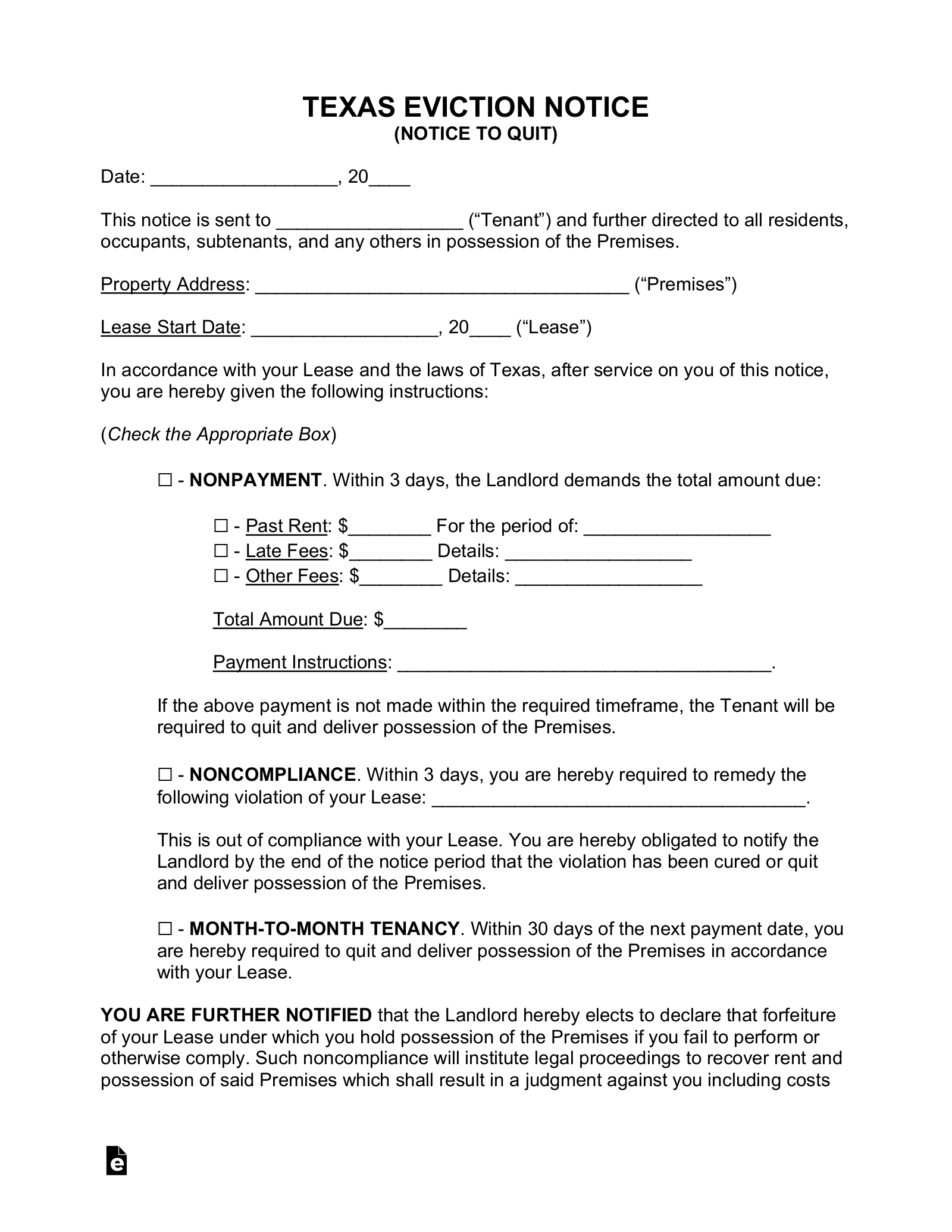
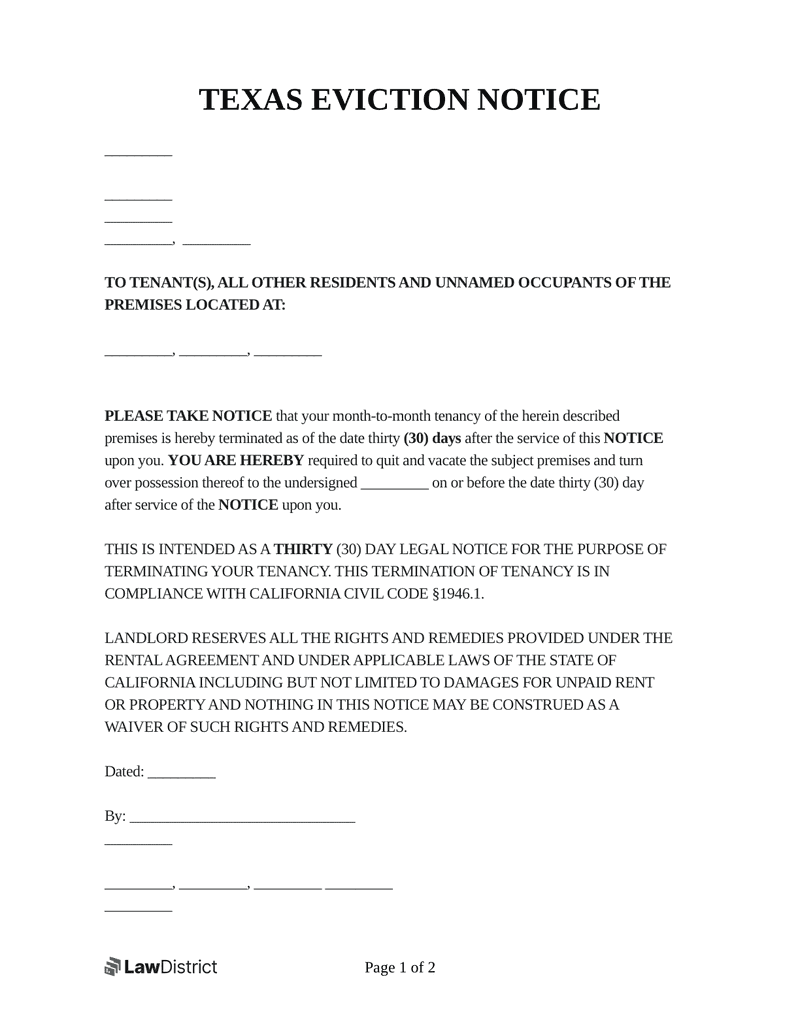
The first formal step in an eviction lawsuit is to serve the occupant with a written “Notice to Vacate.” This notice must be in writing and must state the date by which the occupant must move out. For a tenant, this notice period is typically three days, but it can be longer if stipulated in the lease agreement. If the family member is considered a licensee or guest, the notice period might be shorter, but adhering to a reasonable notice period (often 3 to 30 days, depending on circumstances and local court rules) is advisable.

The notice must clearly state the reason for the eviction, although in cases of family members without a lease, it can be as simple as stating that their permission to occupy the property has been revoked. The notice must be properly delivered. Texas law outlines specific methods for service, which usually include personal delivery to the occupant or posting the notice on the door and mailing a copy. It is crucial to document how and when the notice was served, as this will be evidence in court.
Filing the Eviction Lawsuit
If the family member does not vacate the property by the date specified in the Notice to Vacate, the next step is to file an eviction lawsuit with the Justice of the Peace court in the precinct where the property is located. You will need to fill out an “Original Petition for Eviction” and pay the required filing fees. This petition formally requests the court to order the occupant to leave the property.
The court will then issue a “Citation” and a “Notice of Lawsuit” that must be formally served on the occupant by a constable or a private process server. This ensures that the occupant is officially notified of the lawsuit and has the opportunity to respond. Proper service of these documents is critical to the validity of the lawsuit.
The Court Hearing and Judgment
Once the occupant has been served with the citation, they have a specific period to file an answer with the court. If they do not file an answer, you may be able to obtain a default judgment for possession. If they do file an answer, a court hearing will be scheduled.
Attending the Court Hearing
At the hearing, both you and your family member will have the opportunity to present your case to the judge. It is highly recommended to have legal representation, especially in situations involving family members, as the emotional aspects can complicate the presentation of facts. You will need to provide evidence to support your claim, such as proof of ownership of the property, a copy of the Notice to Vacate, and documentation of how it was served. If there was a lease or any form of agreement, that would also be relevant evidence.
The judge will listen to both sides and review the evidence. If the judge rules in your favor, they will issue a “Judgment for Possession.” This judgment officially grants you the legal right to regain possession of your property.
Writ of Possession
The Judgment for Possession is not the final step. If the occupant still refuses to leave after the judgment is issued, you will need to obtain a “Writ of Possession” from the court. This writ is an order directed to the constable or sheriff, commanding them to remove the occupant from the property and restore possession to you. The constable or sheriff will then schedule a date to execute the writ, physically removing the occupant if they have not left voluntarily.
It’s important to remember that even at this stage, the constable or sheriff is the only authority allowed to physically remove the occupant. Any attempt by you to do so could be considered illegal.
Seeking Legal Counsel
Given the emotional and legal complexities involved in evicting a family member in Texas, it is strongly recommended to consult with a qualified attorney. A lawyer specializing in landlord-tenant law or real estate law can guide you through the entire process, ensure that all legal requirements are met, and represent you in court. This can help prevent costly mistakes and ensure a smoother, legally sound resolution.
While the idea of legal action against a family member is difficult, sometimes it is a necessary step to protect your property and your well-being. Understanding the legal framework in Texas and following the prescribed procedures is the most effective way to navigate this challenging situation. If you’re facing such a dilemma, consider reaching out to legal professionals who can provide expert advice and support tailored to your specific circumstances.
LifeOutOfTheBox is a participant in the Amazon Services LLC Associates Program, an affiliate advertising program designed to provide a means for sites to earn advertising fees by advertising and linking to Amazon.com. Amazon, the Amazon logo, AmazonSupply, and the AmazonSupply logo are trademarks of Amazon.com, Inc. or its affiliates. As an Amazon Associate we earn affiliate commissions from qualifying purchases.