
In the dynamic world of travel and accommodation, where property owners, investors, and lifestyle enthusiasts often navigate the complexities of managing diverse properties, understanding local legal frameworks is paramount. Whether you own a charming vacation rental in the heart of Austin, a bustling apartment complex in Houston catering to long-term stays, or a serene rural retreat near San Antonio as part of your lifestyle investment portfolio, the necessity of knowing how to protect your asset from unauthorized occupancy or breach of agreement is undeniable. Texas, a state renowned for its sprawling landscapes, vibrant cities, and booming economy, also has specific and stringent laws governing the landlord-tenant relationship, particularly concerning eviction.
This guide is tailored for the discerning property owner or manager within our community – individuals who might be juggling international travel with property management, those expanding their portfolio of unique accommodations, or simply seeking to ensure their investment in the Lone Star State remains secure. Understanding the eviction process in Texas is not merely a legal chore; it’s a vital aspect of responsible property management, ensuring seamless operations for your guests, protecting your financial interests, and upholding the integrity of your accommodation business.
Navigating the Texas Legal Landscape: Who is a Tenant and Why it Matters
Before delving into the step-by-step process of eviction, it’s crucial to establish a foundational understanding of what constitutes a tenancy in Texas and why this distinction is so important. For those managing properties that serve both transient travelers and long-term residents, clarity here is key to avoiding legal pitfalls and ensuring compliance.
The Nuance of Occupancy: Guests vs. Tenants
In the realm of hotels, resorts, and short-term vacation rentals, individuals are typically classified as guests or licensees, not tenants. A guest, by definition, occupies a property for a short, agreed-upon period, often with amenities and services akin to a hotel stay. Their occupancy is temporary, and they generally do not possess the same legal rights or protections as a tenant. For instance, if a guest overstays their welcome at a Dallas boutique hotel or an Austin Airbnb, the process to remove them is generally less complex than an eviction, often involving security personnel or even law enforcement, as they are considered trespassers once their booking expires.
However, once an individual establishes residency – typically defined by receiving mail, keeping personal belongings, and having exclusive possession of a distinct living space for an extended period, often under a written or implied agreement to pay rent – they transform into a tenant. Even without a formal written lease, an oral agreement to pay rent for a property can create a landlord-tenant relationship in Texas. This transition is critical because, as a tenant, they are afforded significant legal protections under Texas Property Code, and their removal must follow a strict, court-supervised eviction process. This distinction is especially important for properties that might shift between short-term vacation rentals and long-term accommodation options, appealing to a broader lifestyle market.
The Indispensable Lease Agreement: Your Blueprint for Accommodation
For any property offering accommodation beyond transient hotel stays, a robust and legally sound lease agreement is the cornerstone of effective property management. This document, much like a meticulously planned travel itinerary, sets the expectations, rules, and consequences for both parties. For investors in Texas properties, whether a multi-unit dwelling or a single-family home rented out to digital nomads or families seeking extended stays, a well-drafted lease protects your investment and streamlines potential disputes.
A comprehensive Texas lease agreement should clearly define:
- The Parties: Landlord (or property manager) and tenant(s).
- Property Description: The specific address and unit being rented.
- Term of Lease: Start and end dates.
- Rent: Amount, due date, payment methods, and late fees.
- Security Deposit: Amount, conditions for return, and allowable deductions.
- Maintenance Responsibilities: Who is responsible for repairs (e.g., plumbing issues in a Houston apartment, or garden upkeep at a Dallas home).
- Rules and Regulations: Pet policies, noise restrictions, guest policies, use of common areas (crucial for resort-style living or properties with shared amenities).
- Default Clauses: What constitutes a breach of the lease (e.g., non-payment, unauthorized occupants, property damage) and the landlord’s remedies.
Without a clear lease, navigating issues like non-payment of rent or property damage becomes significantly more challenging, potentially impacting your property’s profitability and reputation within the accommodation sector. It’s an essential tool for any property owner, from the smallest San Antonio bed and breakfast expanding into long-term stays to the largest resort investor in United States.
The First Formal Step: Delivering the Notice to Vacate
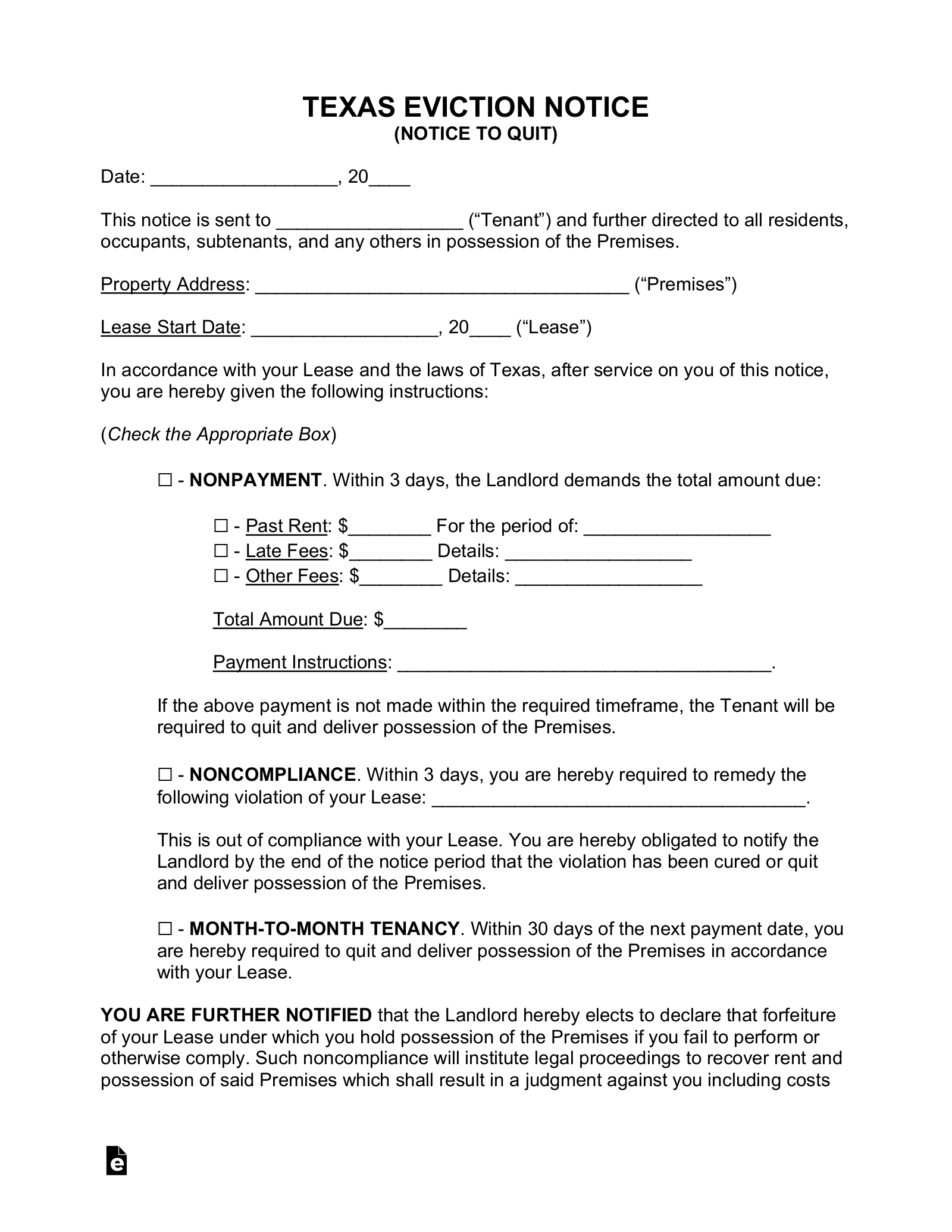
Once a tenant has breached the lease agreement or their tenancy period has ended, the eviction process in Texas officially begins with the delivery of a written “Notice to Vacate.” This is a mandatory prerequisite before filing an eviction lawsuit in court. It serves as the landlord’s formal communication, demanding the tenant vacate the premises and often providing an opportunity to cure the violation.
Grounds for Eviction in Texas
In Texas, a landlord can initiate an eviction for specific, legally recognized reasons. Understanding these grounds is crucial for property owners engaged in managing accommodation, ensuring any action taken is both lawful and justified. The primary grounds include:
- Non-Payment of Rent: This is the most common reason. If a tenant fails to pay rent on time, and often after a grace period specified in the lease, a Notice to Vacate can be issued. For those managing long-term accommodation for digital nomads or business travelers, consistent rent collection is vital for operational cash flow.
- Breach of Lease Agreement: This covers a wide range of violations beyond just rent. Examples include unauthorized occupants (perhaps a long-term guest brought in without approval, affecting occupancy rates or exceeding capacity limits in a Dallas condo), keeping unauthorized pets in a no-pet property, significant property damage beyond normal wear and tear, or engaging in illegal activities on the premises. For properties marketed for specific lifestyles (e.g., quiet retreats, family-friendly resorts), breaches related to noise or disruption are particularly relevant.
- Holdover Tenants: This applies when a tenant remains on the property after their lease has expired and they have not renewed or moved out. Even if they continue to pay rent, they may be considered a holdover tenant if the landlord does not accept the rent as a continuation of the lease. This scenario is common when a property owner intends to repurpose the accommodation, perhaps converting a long-term rental back into a short-term vacation unit or renovating for sale.
- Tenant at Will/Sufferance: Less common but equally valid, these tenants occupy the property without a formal lease or agreement, but with the landlord’s permission. If that permission is revoked, they can be asked to vacate.
Crafting and Delivering the Notice: Precision is Key
The Notice to Vacate is a formal legal document, and its proper drafting and delivery are critical to the success of an eviction. Any errors can lead to delays or even dismissal of the lawsuit, costing valuable time and resources for property managers.
- Content of the Notice: The notice must clearly state:
- The tenant’s name and the address of the rental property.
- The specific reason(s) for eviction (e.g., “failure to pay rent due on [date],” “breach of clause X of the lease agreement regarding pets”).
- The number of days the tenant has to vacate the premises. In Texas, this is typically three days for most evictions (including non-payment of rent), unless the lease specifies a longer period (e.g., 5 or 10 days). For evictions where the landlord-tenant relationship has ended (e.g., holdover tenants without specific lease terms), a 30-day notice might be appropriate, especially if the lease states so.
- A statement that if the tenant does not move out, the landlord will file an eviction lawsuit (forcible detainer suit).
- Crucially, for non-payment of rent cases, the notice should give the tenant the option to pay the overdue rent to avoid eviction, if the lease allows for it.
- Method of Delivery: Texas law mandates specific ways to deliver the Notice to Vacate:
- In Person: Delivering the notice directly to the tenant or to anyone 16 years or older residing at the premises.
- Certified Mail: Sending it via certified mail with a return receipt requested. This provides proof of mailing and delivery.
- Affixing to the Inside of the Main Entrance: If personal delivery or certified mail attempts fail (e.g., tenant is absent), the notice can be securely affixed to the inside of the main entrance door, provided a copy is also sent via regular mail. This method is often a last resort and has specific procedural requirements.
Maintaining meticulous records of when and how the notice was delivered (e.g., photographic evidence, mail receipts, witness affidavits) is essential for any future court proceedings. For property owners managing multiple accommodations across Texas, a standardized, documented process for notice delivery is a hallmark of efficient operations.
Escalating to Legal Action: Filing an Eviction Lawsuit
If, after the notice period expires, the tenant has neither vacated the property nor remedied the breach (if applicable), the next step is to file an eviction lawsuit. In Texas, this is known as a Forcible Detainer Lawsuit and is heard in the Justice Court (also known as a Small Claims Court or JP Court) in the precinct where the property is located.
The Forcible Detainer Lawsuit: Your Day in Justice Court

Filing a forcible detainer lawsuit is a formal legal process. It involves submitting specific paperwork to the Justice Court Clerk. The lawsuit seeks an order from the court for the tenant to vacate the property, as well as, in some cases, a judgment for unpaid rent and attorney’s fees. For property managers, particularly those overseeing diverse portfolios of accommodation properties, understanding this judicial step is paramount.
- The Petition: The landlord (or their attorney) must complete and file a “Petition for Eviction” with the Justice Court. This document details:
- The names of the landlord and tenant.
- The address of the rental property.
- The specific reasons for eviction (referencing the grounds from the Notice to Vacate).
- The date and method of delivery of the Notice to Vacate.
- The relief requested (possession of the premises, unpaid rent, court costs, attorney’s fees if stipulated in the lease).
- The filing fee for the petition must also be paid at this time. These fees vary by county across Texas.
- The Citation and Service of Process: Once the petition is filed, the court issues a “Citation,” which is the official court document informing the tenant of the lawsuit and requiring them to appear in court. This citation must be formally “served” to the tenant by a constable or sheriff. Proper service is critical; without it, the court cannot hear the case. Service typically occurs:
- Personal Service: Handing the citation directly to the tenant.
- Substituted Service: If personal service is not possible after multiple attempts, the court may allow service by affixing the citation to the front door of the property and mailing a copy. This method requires court approval.
The period between filing the petition and the court hearing is usually short, often within 10-21 days, emphasizing the swift nature of eviction proceedings in Texas Justice Courts.
Preparing for Court: Documentation and Evidence
For any property owner or manager, success in an eviction case hinges on thorough preparation. Treat this court appearance with the same diligence you would apply to negotiating a major property acquisition or planning a significant travel experience.
- Gather All Relevant Documents:
- The Lease Agreement: The original, signed lease is your primary piece of evidence.
- Notice to Vacate: A copy of the notice and proof of its delivery (certified mail receipt, affidavit of service, photos).
- Rent Ledgers/Payment Records: Detailed records showing payments made, dates due, and any outstanding balances. This is crucial for non-payment cases.
- Correspondence: Any emails, texts, or letters exchanged with the tenant regarding lease violations or attempts to resolve issues.
- Photos/Videos: Evidence of property damage, unauthorized occupants, or lease violations. This is particularly important for owners of unique accommodation properties where specific aesthetic or occupancy rules apply.
- Organize Your Case: Presenting a clear, concise, and logical case to the judge is vital. Have your documents organized in chronological order and be ready to articulate the facts of the case, referring directly to the lease agreement and your evidence.
- Witnesses: If there are witnesses to lease violations (e.g., a property manager, a neighbor), consider bringing them to court, or obtaining sworn affidavits from them.
- Be Prepared to Counter Defenses: Tenants may present defenses such as inadequate notice, retaliatory eviction, or issues with the property’s condition. Being familiar with these potential arguments and having counter-evidence ready is beneficial.
The Court Hearing and Judgment: What to Expect
The eviction hearing in Texas Justice Court is typically informal but follows proper legal procedures. The judge will hear testimony from both the landlord (or their representative) and the tenant.
The Hearing Process in Justice Court
- Opening Statements: The judge will typically ask the landlord to present their case first, outlining the grounds for eviction.
- Presentation of Evidence: Both parties will have the opportunity to present their documents and testimony. The judge may ask questions. It’s crucial to be factual, calm, and refer to your organized evidence. For property owners managing high-value accommodations, maintaining professionalism is key, even when dealing with frustrating situations.
- Cross-Examination: Each party may have the chance to question the other.
- Closing Arguments: Brief summaries of each party’s position.
- The Judge’s Decision: The judge will issue a ruling, either immediately or shortly after the hearing.
The Eviction Judgment and Appeals
If the judge rules in favor of the landlord, a Judgment for Possession will be granted, ordering the tenant to vacate the property. The judgment will also state whether any unpaid rent or fees are awarded. The tenant usually has five days to appeal the decision to the County Court.
- Appeal Process: If the tenant appeals, the case moves to a higher court, the County Court. The appeal process involves new court fees and may require the tenant to pay a “supersedeas bond” or make rent payments into the court registry to remain in possession during the appeal. Landlords should be prepared for this possibility, as it can extend the eviction timeline, impacting their ability to re-rent the accommodation.
If the tenant does not appeal within the five-day window, or if the appeal is unsuccessful, the landlord can proceed to the final stage.
The Final Stage: The Writ of Possession
The Writ of Possession is the final legal instrument in the eviction process, authorizing law enforcement to physically remove a tenant and their belongings from the property. This is the ultimate step when all other legal avenues have been exhausted.
When a Writ of Possession is Issued
A Writ of Possession can be requested by the landlord after:
- The Justice Court has issued a Judgment for Possession in the landlord’s favor.
- The five-day appeal period has expired without the tenant filing an appeal.
- The tenant has not voluntarily vacated the property.
The landlord must apply for the writ through the Justice Court clerk, paying an additional fee for its issuance and service. This typically happens on the sixth day after the judgment, if no appeal is filed.
Executing the Writ and Removing Property
Once the Writ of Possession is issued, it is delivered to the constable or sheriff’s office. Their role is to enforce the court order.
- Posting the Writ: The constable will typically post a 24-hour warning notice on the tenant’s door, informing them of the impending physical removal. This gives the tenant one last opportunity to vacate voluntarily and remove their belongings.
- Physical Removal: After the 24-hour notice period, if the tenant is still on the premises, the constable will return to physically remove the tenant and their possessions. The landlord (or their representative) must be present at this time, along with locksmiths and movers, if necessary, to secure the property and handle the tenant’s belongings.
- Handling Tenant Property: Texas law has specific rules regarding the removal and storage of a tenant’s personal property left behind after an eviction. Generally, the landlord must allow the tenant access to collect their property or store it in a safe place, although the landlord can charge reasonable storage fees. Abandoned property procedures must be followed diligently to avoid further legal issues. This step underscores the importance of a clear and legally compliant approach, even at the very end of a difficult situation.

Conclusion: Protecting Your Investment and Ensuring Seamless Accommodation Experiences in Texas
For those invested in the vibrant travel, accommodation, and lifestyle economy of Texas, mastering the eviction process is a critical skill. While it is undoubtedly a challenging and often emotionally taxing experience, understanding each legal phase – from the initial Notice to Vacate to the final Writ of Possession – empowers property owners to protect their assets, maintain the integrity of their operations, and ensure a stable environment for future guests and residents.
By carefully vetting tenants, maintaining clear lease agreements, and adhering strictly to Texas Property Code, you minimize the risks associated with long-term accommodation management. When disputes do arise, approaching the eviction process with knowledge, precision, and appropriate legal counsel allows you to navigate these waters effectively, safeguarding your investment and preserving your peace of mind, whether your property is a luxury suite in Dallas or a sprawling ranch in the Texas Hill Country. Ultimately, a clear understanding of these legal frameworks enables you to focus on what you do best: providing exceptional accommodation experiences and enjoying the bountiful opportunities that the Lone Star State offers to the discerning global traveler and investor.
LifeOutOfTheBox is a participant in the Amazon Services LLC Associates Program, an affiliate advertising program designed to provide a means for sites to earn advertising fees by advertising and linking to Amazon.com. Amazon, the Amazon logo, AmazonSupply, and the AmazonSupply logo are trademarks of Amazon.com, Inc. or its affiliates. As an Amazon Associate we earn affiliate commissions from qualifying purchases.