
Navigating the complexities of legal disputes can be daunting, especially when you’re dealing with issues that impact your daily life, travel plans, or business endeavors. In California, small claims court offers an accessible and relatively straightforward avenue for resolving financial disagreements without the need for costly legal representation. This guide illuminates the process, specifically tailoring advice for individuals and small businesses encountering common lifestyle-related disputes, from issues with service providers during a California trip to disagreements over property rentals or consumer purchases. Understanding how to leverage this system effectively can be crucial for protecting your interests and recovering what you are owed.
Understanding Small Claims Court in California
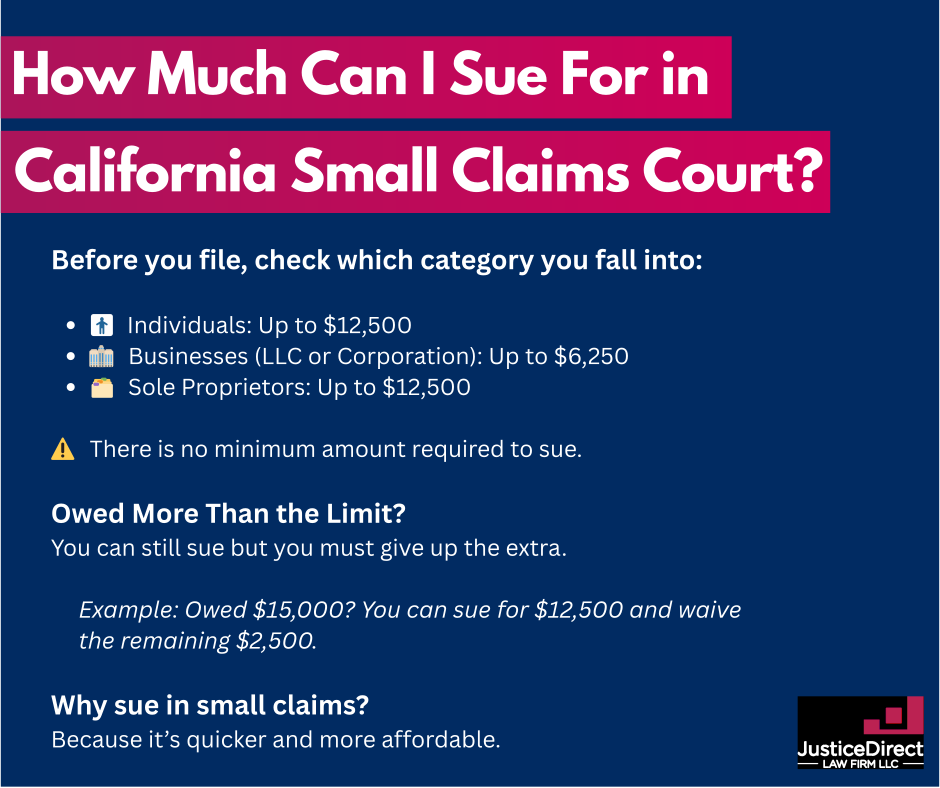
Small claims court in California is designed for individuals and businesses seeking to recover money up to a certain limit. For individuals, the maximum amount you can sue for is $12,500. For businesses, the limit is generally $6,250. This forum provides an informal, fast, and inexpensive way to resolve disputes, making it particularly suitable for consumer complaints, landlord-tenant issues, and breaches of contract that are too small to justify a full-scale lawsuit. It’s a court of limited jurisdiction, meaning it can only hear certain types of cases, primarily those involving money or the return of personal property.
Common scenarios relevant to a lifestyle context that often lead to small claims include disputes over security deposits from short-term rentals, unreimbursed expenses from canceled travel plans due to a service provider’s fault, property damage claims against rental car companies, unfulfilled promises by tour operators, or issues with home improvement services. For instance, if a hotel in California overcharged your credit card and refused a refund, or a local service you booked for a family trip failed to deliver as promised, small claims court might be your best recourse. The court encourages self-representation, simplifying procedures so that ordinary people can present their cases without extensive legal training.
Pre-Filing Steps: Due Diligence and Demand Letters
Before you even consider filing a claim, a series of preparatory steps can significantly strengthen your position and, in some cases, resolve the issue without court intervention. This phase is about gathering all pertinent information and making a good-faith effort to settle the matter directly.
Gathering Evidence
Documentation is paramount in any dispute. For lifestyle-related claims, this might include:
- Contracts and Agreements: Booking confirmations for hotels or flights, rental agreements, service contracts, and receipts for purchases.
- Communication Records: Emails, text messages, letters, or detailed notes of phone calls with dates, times, and summaries of conversations with the opposing party (e.g., a short-term rental host, a tour company, or a business you patronized).
- Photographs and Videos: Visual evidence of damages, conditions of property, or lack of services provided. For instance, photos of a damaged rental car or a substandard hotel room.
- Financial Records: Bank statements, credit card statements, invoices, and proof of payment showing the amount of money you paid or lost.
- Witness Information: Names and contact details of anyone who witnessed the events related to your claim.
Organize all this information systematically. A chronological binder or digital folder can be invaluable when preparing your case.
Attempting Amicable Resolution
California courts generally expect parties to try and resolve their dispute before resorting to litigation. Reach out to the individual or business you have a grievance against. Clearly state your issue, explain the damages or losses you’ve incurred, and propose a specific solution. This could be a refund, repair, or monetary compensation. Keep detailed records of all these attempts, including dates, names of people you spoke with, and the outcome of the discussions.
Sending a Demand Letter
If direct communication fails, send a formal demand letter. This written communication outlines your claim, the amount you are seeking, and a deadline for payment or action before you pursue legal action. A well-crafted demand letter serves several purposes:
- Formal Notice: It provides clear, documented notice of your intent to sue.
- Negotiation Tool: It might prompt the other party to take your claim seriously and negotiate a settlement.
- Evidence in Court: If you do end up in court, the demand letter serves as proof that you attempted to resolve the issue amicably.
The letter should be clear, concise, and professional. State the facts, reference supporting documents, and specify the exact amount of money you are requesting. Send it via certified mail with a return receipt requested, so you have proof it was received.
The Filing Process in California
Once you’ve exhausted pre-filing options, the next step is to formally file your claim with the court. This involves selecting the correct court, completing necessary forms, and ensuring proper notification to the defendant.
Finding the Right Court
You must file your claim in the proper small claims court. In California, this is typically in the county where:
- The defendant lives or where the business operates.
- The contract was signed, or the agreement was to be performed.
- The injury or damage occurred.
- Property involved in the lawsuit is located.
For example, if you had a dispute with a hotel in San Francisco during a business stay, you would likely file your claim in San Francisco County Superior Court.
Completing the Forms
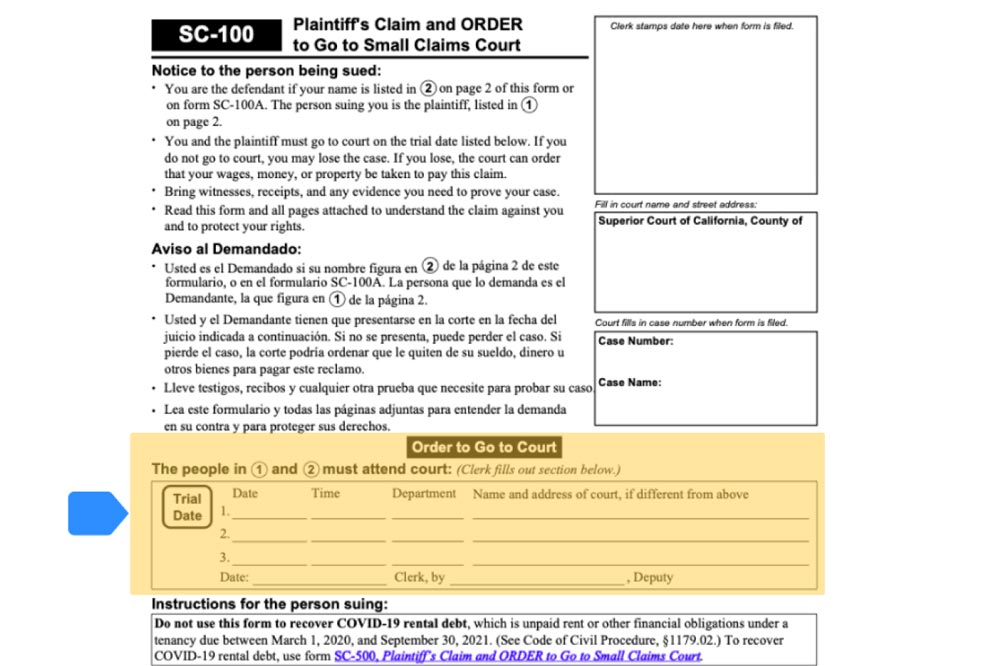
The primary form for initiating a small claims case is the “Plaintiff’s Claim and Order to Go to Small Claims Court” (Form SC-100). This form requires you to:
- Identify yourself as the plaintiff and the person or entity you are suing as the defendant.
- Clearly state the amount of money you are claiming.
- Provide a brief, factual explanation of why the defendant owes you money. Be specific about dates, locations, and the nature of the dispute (e.g., “defendant failed to refund a security deposit for a short-term rental at [address] from [date] to [date] as per agreement, causing damages of $[amount]”).
Additional forms may be required, such as “Request to Waive Court Fees” (Form FW-001) if you cannot afford the filing fees. All necessary forms and detailed instructions are available on the California Courts website or at your local courthouse.
Filing Fees and Fee Waivers
There are filing fees associated with small claims cases. The amount depends on the size of your claim and how many times you have filed in the past 12 months. If you have a low income or receive public benefits, you may qualify for a fee waiver. Submitting a fee waiver request (Form FW-001) along with your SC-100 form can allow you to proceed without upfront costs.
Serving the Defendant
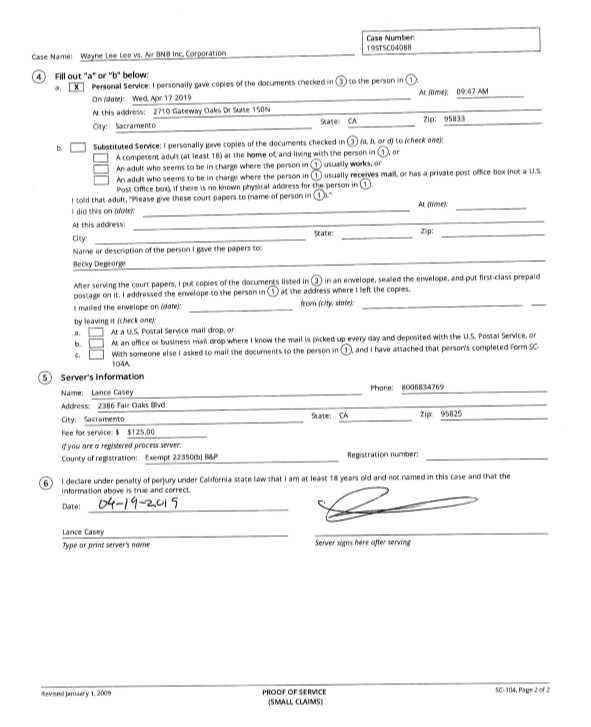
After your claim is filed, the defendant must be officially notified of the lawsuit. This legal notification is called “service.” Proper service is critical; if the defendant is not served correctly, your case cannot proceed. Service cannot be done by you. It must be carried out by someone else who is at least 18 years old and not a party to the case. Options include:
- Personal Service: Handing the defendant the forms directly.
- Substituted Service: Leaving the forms with a competent person at the defendant’s home or business, followed by mailing.
- Certified Mail Service: Using the court’s clerk to mail the forms.
- Registered Process Server: Hiring a professional to serve the papers.
Ensure the “Proof of Service” form (SC-104) is completed and filed with the court after the defendant has been served.
Preparing for Your Day in Court
Your court date is your opportunity to present your case. Thorough preparation is key to a successful outcome.
Organizing Your Evidence
Bring all your evidence to court, neatly organized. Consider creating multiple copies: one for yourself, one for the judge, and one for the defendant. Visual aids, such as enlarged photographs, can be very effective. Have your documents arranged chronologically and logically, making it easy for the judge to follow your story.
Identifying and Preparing Witnesses
If you have witnesses, ensure they are available and willing to testify. Briefly discuss their testimony with them to ensure they understand what they will be asked and how it relates to your case. Witnesses could include fellow travelers, employees of a service provider (if they agree), or experts who can attest to damages or poor service.
Presenting Your Case
When your case is called, you will have a chance to tell your side of the story. Speak clearly and concisely, focusing on the facts. Present your evidence in a logical order, referring to documents you’ve brought. Emphasize how the defendant’s actions (or inactions) directly caused your financial loss. Avoid emotional appeals and stick to the verifiable facts. The defendant will also have an opportunity to present their side and any counterclaims.
Exploring Mediation
Many California small claims courts offer mediation services, often free of charge, before or on the day of your hearing. Mediation involves a neutral third party helping you and the defendant reach a mutually agreeable settlement. This can be a valuable option, particularly for lifestyle disputes where maintaining a good relationship or avoiding the uncertainty of a court judgment might be desirable. A mediated agreement can be legally binding and can often provide a quicker resolution than a court hearing.
After the Judgment: Enforcement and Collection
Winning your case is only half the battle; collecting the money owed is the next crucial step.
If You Win
If the judge rules in your favor, the court will issue a “Judgment.” The defendant is legally obligated to pay you the awarded amount, plus court costs. However, the court does not automatically collect the money for you. If the defendant doesn’t pay voluntarily, you will need to take steps to enforce the judgment. These steps can include:
- Wage Garnishment: Taking money directly from the defendant’s wages.
- Bank Levy: Freezing and collecting money from the defendant’s bank accounts.
- Property Lien: Placing a lien on the defendant’s real estate or other property.
These enforcement methods require additional court forms and procedures, which can be complex. The California Courts website provides detailed guides on judgment enforcement.
If You Lose
If you lose your case, you generally have a right to appeal the decision. The appeal process involves filing a “Notice of Appeal” (Form SC-135) within a specific timeframe (usually 30 days from the date the clerk mails you the Notice of Entry of Judgment). The appeal will involve a new trial in a higher court (Superior Court), where you can present your case again. However, in small claims, only the defendant can appeal if they lose; the plaintiff generally cannot appeal if they lose their own claim (though they can appeal a counterclaim made by the defendant).
Navigating small claims court in California can be a powerful tool for individuals and small businesses to resolve disputes efficiently. By meticulously preparing your case, understanding the court’s procedures, and proactively pursuing judgment enforcement, you can effectively protect your rights and ensure fair outcomes in a variety of lifestyle-related disagreements.
LifeOutOfTheBox is a participant in the Amazon Services LLC Associates Program, an affiliate advertising program designed to provide a means for sites to earn advertising fees by advertising and linking to Amazon.com. Amazon, the Amazon logo, AmazonSupply, and the AmazonSupply logo are trademarks of Amazon.com, Inc. or its affiliates. As an Amazon Associate we earn affiliate commissions from qualifying purchases.