
Navigating the legal landscape can often feel daunting, especially when dealing with disputes that, while significant to individuals, don’t warrant the complexity or cost of a full-blown civil lawsuit. For residents of the Sunshine State seeking resolution for monetary disagreements, Florida’s small claims courts offer an accessible and efficient avenue. This guide aims to demystify the process, providing a clear roadmap for filing a small claims suit in Florida. Whether you are seeking to recover a debt, resolve a dispute over property damage, or address a breach of contract, understanding the procedural steps is crucial for a successful outcome.
Understanding Small Claims Court in Florida
Florida’s small claims courts are designed to handle civil disputes where the amount of money in controversy is relatively small. The primary goal is to provide a forum for individuals to resolve their grievances without the need for legal representation, though it is not prohibited. This accessibility is a cornerstone of the system, ensuring that justice is attainable for a broader segment of the population.
Monetary Limits and Jurisdiction
The jurisdiction of Florida’s small claims courts is primarily determined by the amount of money being claimed. As of the most recent legislative updates, the maximum amount that can be sought in a Florida small claims court is $5,000. This limit applies to the principal amount of the claim, excluding interest, court costs, and attorney fees that might be awarded by the court in certain circumstances.
It is imperative to ensure your claim falls within this monetary threshold. If your dispute exceeds $5,000, you may need to consider filing in a county court or circuit court, which have higher jurisdictional limits but also involve more complex procedures and potentially higher costs. Conversely, if your claim is for a lesser amount, small claims court is likely the appropriate venue.
The geographical jurisdiction is generally tied to the county where the defendant resides or where the incident giving rise to the lawsuit occurred. For instance, if you are suing a resident of Miami-Dade County for damages sustained in an accident that happened there, you would typically file in the small claims court of Miami-Dade County.
Types of Cases Handled
Small claims courts are designed to resolve a variety of civil disputes. Common types of cases include:
- Debt Collection: Recovering money owed for goods sold or services rendered.
- Property Damage: Seeking compensation for damage to personal property, such as due to an accident or negligence.
- Breach of Contract: Disputes arising from a failure to fulfill the terms of an agreement, whether written or oral.
- Landlord-Tenant Disputes: Matters such as unpaid rent or security deposit disputes, though eviction cases are typically handled in county court.
- Consumer Disputes: Issues with faulty goods or services purchased from businesses.
It is important to note that small claims courts cannot issue injunctions (court orders to do or stop doing something) or handle cases involving divorce, bankruptcy, or disputes over title to real estate.
The Filing Process: Step-by-Step
Initiating a small claims lawsuit in Florida involves several distinct steps, each requiring careful attention to detail. Adhering to these procedures is essential for the validity of your claim and to ensure it moves forward smoothly.
Step 1: Pre-Suit Considerations and Demand Letter
Before filing, it is often advisable to attempt to resolve the dispute amicably. This might involve direct communication with the other party to discuss the issue and propose a solution. If these efforts are unsuccessful, sending a formal demand letter is a crucial preliminary step.
A demand letter is a written communication that clearly outlines your grievance, the amount of money you are seeking, and a deadline by which you expect to receive payment or resolution. It should be sent via certified mail with a return receipt requested. This serves two important purposes: it provides evidence that you attempted to resolve the matter before litigation, and it puts the defendant on formal notice of your intent to sue if the issue is not addressed. While not strictly mandatory in all situations, a well-crafted demand letter can sometimes prompt a settlement and serves as valuable documentation if the case proceeds to court.
Step 2: Obtaining and Completing the Necessary Forms
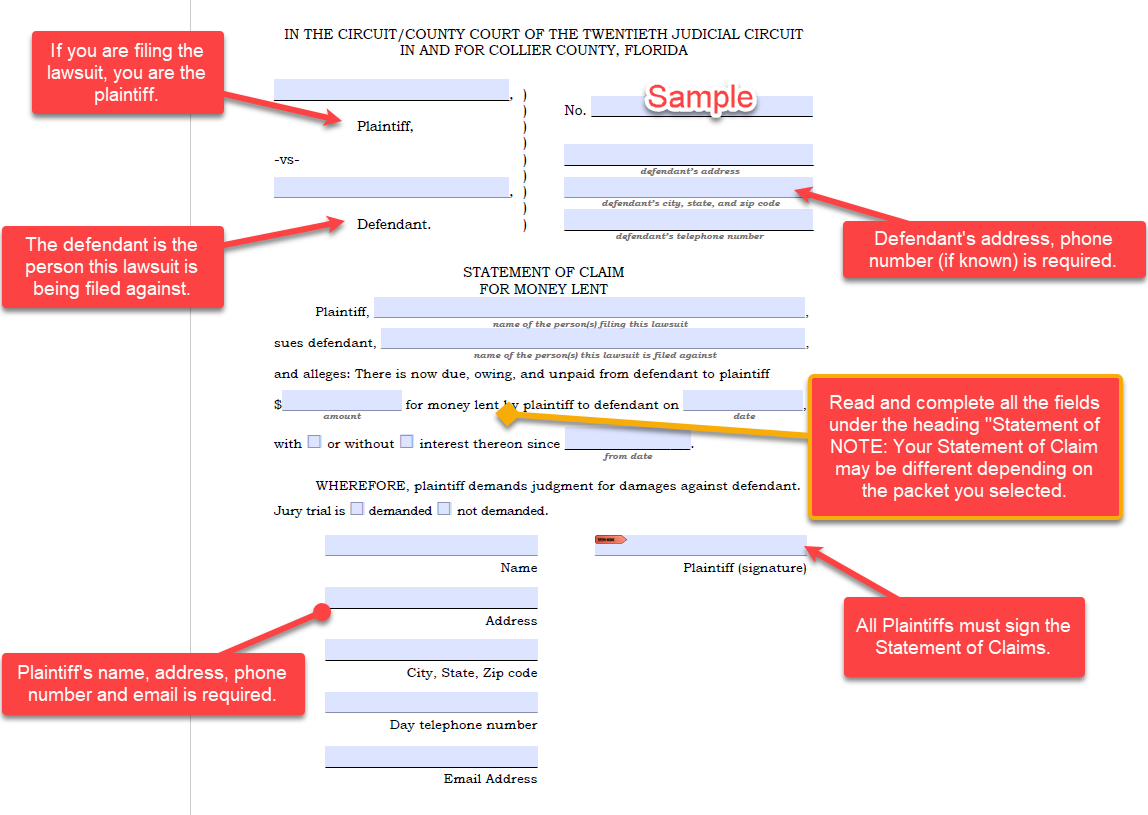
The primary document for initiating a small claims suit is the Statement of Claim, often referred to as a complaint. This form is available from the clerk of the circuit court in the county where you intend to file. Many Florida counties also make these forms available for download from their court clerk’s websites.
The Statement of Claim form will require you to provide essential information, including:
- Your Name and Address: As the plaintiff (the person filing the suit).
- Defendant’s Name and Address: The person or entity you are suing. Accuracy here is paramount for proper service.
- Amount of Money Claimed: The precise sum you are seeking, ensuring it does not exceed the $5,000 limit.
- Basis of the Claim: A concise explanation of why you believe the defendant owes you money. This should be a clear, factual summary of the events that led to the dispute. Avoid legal jargon and focus on the core facts.
- Supporting Documentation: You may be asked to attach copies of relevant documents, such as contracts, invoices, receipts, photographs, or correspondence.
It is crucial to fill out the form completely and accurately. Any omissions or errors could lead to delays or even dismissal of your case.
Step 3: Filing the Statement of Claim and Paying Fees
Once the Statement of Claim is completed, you will need to file it with the clerk of the circuit court in the appropriate county. You can typically do this in person at the courthouse or, in some counties, electronically.
Upon filing, you will be required to pay a filing fee. The amount of this fee varies by county but is generally modest, reflecting the accessible nature of small claims court. If you cannot afford the filing fee, you may be eligible to file a “Petition to Sue as an Indigent Person,” which, if granted, can waive the fees. You will need to provide detailed financial information to support such a request.
After filing, the clerk will issue a summons, which is a formal legal document notifying the defendant that a lawsuit has been filed against them.
Service of Process: Notifying the Defendant
A critical stage in any lawsuit is the proper “service of process,” which ensures that the defendant is officially notified of the legal action against them. In small claims court, this process is designed to be straightforward.
Methods of Service
The primary method of service in Florida small claims court is by the sheriff or a certified process server. Once the Statement of Claim and summons are filed, the court will typically forward these documents to the sheriff’s office in the county where the defendant resides or can be found. The sheriff will then attempt to personally deliver the documents to the defendant.
Alternatively, many jurisdictions allow for service by a private process server. This can sometimes be faster, especially if the sheriff’s office is experiencing a backlog. The chosen process server must be authorized to serve process in Florida.
The rules for service are strict. The defendant must be properly served with a copy of the Statement of Claim and the summons. The summons will inform the defendant of the deadline by which they must respond to the lawsuit.
Proof of Service
After service is completed, the sheriff or process server will file a “Return of Service” with the court. This document serves as official proof that the defendant was served and indicates the date and method of service. This is vital evidence for the court, demonstrating that due process has been followed. If service cannot be completed (e.g., the defendant cannot be located), the court may allow for alternative methods of service, such as service by publication, but these are typically more complex and require court approval.
Responding to the Lawsuit and Preparing for Court
Once served, the defendant has a limited time to respond to the Statement of Claim. The rules vary slightly by county, but generally, the defendant must file a written response, known as an Answer, or appear in court on a specified date, often referred to as a “mediator’s call” or “pretrial conference.”
The Defendant’s Options
The defendant has several options:
- File an Answer: The defendant can file a written response denying the plaintiff’s claims or raising defenses.
- Counterclaim: If the defendant believes the plaintiff owes them money, they can file a counterclaim within the small claims court. However, a counterclaim cannot exceed the $5,000 limit.
- Mediation: Many small claims courts encourage or require mediation to attempt to resolve the dispute outside of a formal hearing.
- Failure to Respond: If the defendant fails to respond or appear by the deadline, the plaintiff may be able to obtain a default judgment against them.
Preparing for a Hearing or Trial
If the case does not settle through mediation or other means, it will proceed to a hearing or trial. While small claims court is informal, thorough preparation is still essential.
- Gather Evidence: Organize all relevant documents, photographs, correspondence, and any other evidence that supports your claim. Make copies for yourself and for the judge.
- Witnesses: If you have witnesses who can testify on your behalf, ensure they are available to attend the hearing.
- Know Your Case: Understand the facts of your case thoroughly and be prepared to explain them clearly and concisely to the judge.
- Be Punctual and Respectful: Arrive at court on time and address the judge and opposing party with respect.
The hearing itself is typically brief. Both parties will have an opportunity to present their case, introduce evidence, and call witnesses. The judge will listen to both sides and make a decision based on the evidence presented and applicable law.
After the Judgment: Collection and Enforcement
Winning a judgment in small claims court is a significant achievement, but it does not automatically result in payment. The plaintiff is responsible for collecting the awarded amount.
Collection Methods
If the defendant does not voluntarily pay the judgment, you may need to pursue collection actions. These can include:
- Garnishment: This involves obtaining a court order to seize funds from the defendant’s bank account or a portion of their wages.
- Levy on Property: In some cases, the court can authorize the seizure and sale of the defendant’s property to satisfy the judgment.
These collection processes often involve additional court filings and fees. It is advisable to consult with the clerk of court or seek legal advice for specific guidance on collection procedures in your jurisdiction.

Appeals
If either party believes the judge made a legal error, they may have the option to appeal the decision. The process and timelines for appeals are strictly defined by Florida law and usually involve filing a notice of appeal with the court within a specific timeframe after the judgment is entered. Appeals are generally limited to errors of law, not simply disagreements with the judge’s findings of fact.
By understanding these steps and preparing diligently, individuals can effectively utilize Florida’s small claims courts to resolve their disputes and seek justice for monetary claims within the established limits.
LifeOutOfTheBox is a participant in the Amazon Services LLC Associates Program, an affiliate advertising program designed to provide a means for sites to earn advertising fees by advertising and linking to Amazon.com. Amazon, the Amazon logo, AmazonSupply, and the AmazonSupply logo are trademarks of Amazon.com, Inc. or its affiliates. As an Amazon Associate we earn affiliate commissions from qualifying purchases.