
Navigating the process of filing for disability benefits in Oklahoma can seem like a daunting task. Whether you’re applying for Social Security Disability Insurance (SSDI) or Supplemental Security Income (SSI), understanding the requirements, gathering necessary documentation, and submitting a well-prepared application are crucial steps. This guide aims to demystify the process, providing a clear roadmap for individuals seeking disability benefits in the Sooner State.
Understanding Disability Benefits in Oklahoma
Oklahoma residents may be eligible for two primary federal disability programs: Social Security Disability Insurance (SSDI) and Supplemental Security Income (SSI). While both programs are administered by the Social Security Administration (SSA), they have distinct eligibility criteria based on work history and financial need.

Social Security Disability Insurance (SSDI)
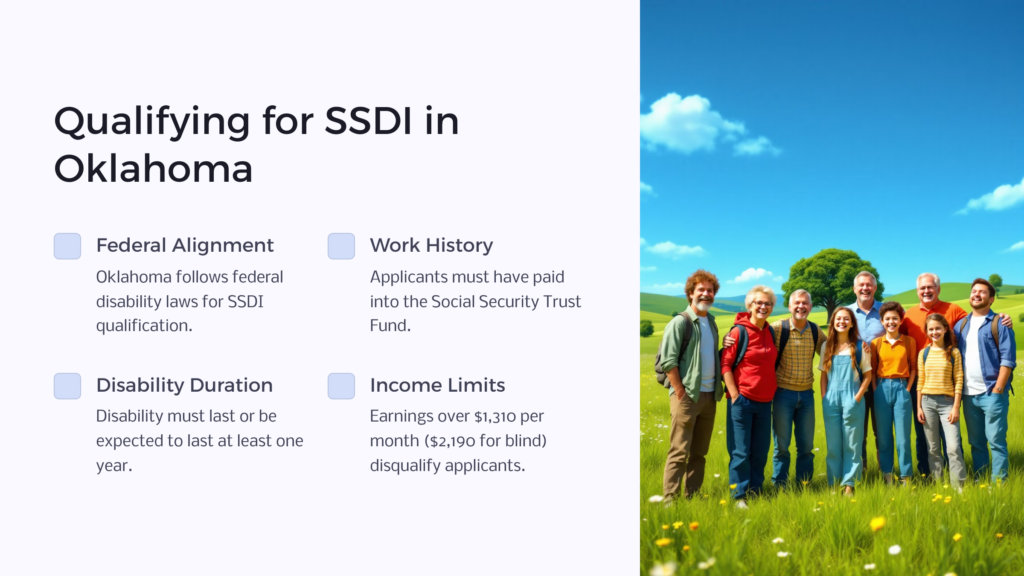
SSDI is an earned benefit. To qualify, you must have worked and paid Social Security taxes for a certain number of years. The SSA uses a “work credits” system, and the number of credits needed depends on your age at the time you become disabled. Generally, you need 40 work credits, with at least 20 earned in the last 10 years before you become disabled. If you are a younger worker, you may need fewer credits.
The SSA defines disability as the inability to engage in any substantial gainful activity (SGA) due to a medically determinable physical or mental impairment that is expected to last for at least 12 months or result in death. The SGA amount for 2024 is $1,550 per month for non-blind individuals and $2,590 for blind individuals.
Supplemental Security Income (SSI)
SSI is a needs-based program. It provides monthly payments to adults and children with a disability or blindness who have very limited income and resources. Unlike SSDI, SSI is not based on your work history. You do not need to have paid Social Security taxes to be eligible.
Eligibility for SSI also requires meeting the SSA’s definition of disability, blindness, or old age (65 or older). However, the SSA also strictly limits the amount of income and resources an individual or couple can have to qualify. For 2024, the federal benefit rate for an individual is $943 per month, and for an eligible couple, it is $1,415 per month. These amounts may be reduced based on your countable income.
Preparing Your Disability Application
A well-prepared application significantly increases your chances of approval. The process involves several key steps, from initial application to gathering medical evidence and understanding the SSA’s evaluation criteria.
Gathering Essential Information
Before you begin, it’s vital to collect all the necessary personal and medical information. This includes:
- Personal Identification: Your Social Security number, birth certificate, and information about your spouse and any dependent children.
- Work History: Details about all jobs you’ve held in the past 15 years, including job titles, dates of employment, duties performed, and earnings. This helps the SSA determine if you have enough work credits for SSDI and assess your ability to perform past work.
- Medical Records: This is perhaps the most crucial component of your application. You’ll need to provide information about all your doctors, hospitals, clinics, and therapists you’ve seen for your disabling condition. This includes names, addresses, phone numbers, and dates of treatment. You should also list all medications you’ve taken and any assistive devices you use (e.g., wheelchairs, canes).
- Education and Training: Information about your highest level of education completed and any vocational training you have received.
- Proof of Citizenship or Legal Residency: If you are not a U.S. citizen, you’ll need documentation proving your legal status.
The SSA’s Five-Step Evaluation Process
The SSA uses a five-step sequential evaluation process to determine if you are disabled. This process is applied to both SSDI and SSI claims.
- Substantial Gainful Activity (SGA): The SSA first determines if you are currently engaging in SGA. If you are earning above the SGA limit, you are not considered disabled.
- Severe Impairment: The SSA then assesses if your medical condition is “severe.” A severe impairment is one that significantly limits your ability to perform basic work activities.
- Listing of Impairments: The SSA checks if your impairment meets or medically equals one of their “Listing of Impairments.” These are conditions that are presumed to be disabling because they are severe enough to prevent a person from doing any kind of work. If your condition meets a listing, you will be found disabled.
- Past Relevant Work: If your impairment does not meet a listing, the SSA will assess your Residual Functional Capacity (RFC). This is the maximum amount of work you can still do despite your limitations. The SSA will then determine if your RFC allows you to perform any of your past relevant work.
- Other Work: If you cannot perform your past relevant work, the SSA will consider your RFC, age, education, and work experience to determine if you can perform any other type of work that exists in significant numbers in the national economy.
Filing Your Application in Oklahoma

Oklahoma residents can file for disability benefits through several channels. It’s generally recommended to start the process as soon as possible after becoming unable to work.
Online Application
The most convenient way to file an initial application for SSDI is through the Social Security Administration‘s website. You can also start an application for SSI online. The online application allows you to save your progress and return to it later. Once you submit the initial application online, you will likely be contacted by the SSA to schedule an interview or complete additional forms.
In-Person or by Phone
If you prefer to apply in person or by phone, you can contact your local Social Security Administration office. You can find the nearest office by using the SSA’s online office locator tool. It’s advisable to call ahead to schedule an appointment, especially if you plan to visit in person, to minimize wait times.
Reconsideration and Appeals
If your initial application is denied, do not be discouraged. Many applicants are initially denied, and a significant number are eventually approved after appealing the decision. You have a specific timeframe (usually 60 days from the date you receive the denial letter) to file an appeal.
The appeals process typically involves several stages:
- Reconsideration: This is a review of your claim by someone at the SSA who was not involved in the original decision. You will have the opportunity to submit new evidence or clarify existing information.
- Hearing before an Administrative Law Judge (ALJ): If your reconsideration is denied, you can request a hearing before an ALJ. This is your opportunity to present your case in person, often with legal representation. This is a crucial stage where many successful appeals occur.
- Appeals Council Review: If the ALJ denies your claim, you can ask the Appeals Council to review the decision.
- Federal Court Review: As a final step, you can file a lawsuit in federal district court.
Working with a Disability Attorney or Advocate in Oklahoma
Given the complexity of the disability application and appeals process, many individuals choose to seek assistance from a disability attorney or advocate. These professionals specialize in Social Security disability law and can be invaluable resources.
Benefits of Hiring Representation
- Expertise: Attorneys and advocates understand the SSA’s rules, regulations, and evaluation criteria. They know what evidence is most persuasive and how to present your case effectively.
- Time Savings: They handle much of the administrative burden, including filling out forms, gathering medical records, and communicating with the SSA.
- Increased Likelihood of Approval: Statistics often show that individuals with legal representation have a higher success rate, especially at the hearing level.
- Navigating Appeals: If your claim is denied, an experienced representative can guide you through the complex appeals process, ensuring you meet deadlines and present your strongest case.
How They Are Paid
Most disability attorneys and advocates work on a contingency fee basis. This means they only get paid if you win your case. Their fee is typically a percentage of the back benefits you are awarded, capped at a certain amount by law. This arrangement makes legal representation accessible to everyone, regardless of their current financial situation.
When choosing a representative in Oklahoma, look for individuals with a proven track record and a strong understanding of Oklahoma’s specific disability landscape. Many are members of organizations like the National Organization of Social Security Claimants’ Representatives (NOSSCR).
Key Takeaways for Oklahoma Residents
Filing for disability in Oklahoma requires patience, thoroughness, and an understanding of the process. By gathering all necessary documentation, accurately detailing your medical history and limitations, and considering professional representation, you can significantly improve your chances of a successful outcome. Remember that the SSA’s definition of disability is strict, focusing on your inability to perform SGA due to a medically verifiable condition.
Whether you are applying for SSDI based on your work history or SSI based on financial need, the journey can be challenging. However, with careful preparation and the right support, you can navigate the system and secure the benefits you need and deserve.
LifeOutOfTheBox is a participant in the Amazon Services LLC Associates Program, an affiliate advertising program designed to provide a means for sites to earn advertising fees by advertising and linking to Amazon.com. Amazon, the Amazon logo, AmazonSupply, and the AmazonSupply logo are trademarks of Amazon.com, Inc. or its affiliates. As an Amazon Associate we earn affiliate commissions from qualifying purchases.