
Navigating the legal landscape of divorce can be an intricate and emotionally charged process. For those residing in the Sunshine State, understanding the procedural nuances of filing for divorce in Florida is the crucial first step towards resolution. This guide aims to demystify the process, providing a clear pathway for individuals seeking to initiate divorce proceedings within the state. From understanding residency requirements to preparing essential documentation, a methodical approach ensures a smoother journey through what is often a challenging life transition.
Understanding Florida Divorce Laws and Residency Requirements
Before embarking on the journey of filing for divorce in Florida, it is imperative to grasp the foundational legal principles and meet the specific residency prerequisites. Florida operates under a no-fault divorce system, meaning that a spouse does not need to prove wrongdoing by the other party to obtain a divorce. Instead, the grounds for divorce are typically cited as the marriage being irretrievably broken, or mental incapacity of one of the spouses for a specified period. This simplifies the initial legal hurdle, focusing the proceedings on the practical aspects of separation rather than assigning blame.

Residency Prerequisites
To file for divorce in Florida, at least one of the spouses must have resided in the state for a minimum of six months immediately preceding the filing of the petition for dissolution of marriage. This residency requirement is strictly enforced, and proof of this duration will be necessary. This typically involves demonstrating that you have established a domicile, or permanent home, in Florida. This can be substantiated through various forms of evidence, such as a driver’s license, voter registration, utility bills, or lease agreements that reflect your established presence within the state for the required period. Failure to meet this residency criterion will result in the court lacking jurisdiction to grant the divorce.
Grounds for Divorce
As previously mentioned, Florida is a no-fault divorce state. This means you do not need to allege or prove that your spouse did something wrong to cause the marriage to end. The two primary grounds for divorce are:
- Irretrievably Broken Marriage: This is the most common ground. It signifies that there is no reasonable prospect of reconciliation, and the marital relationship has permanently deteriorated.
- Mental Incapacity: If one spouse has been mentally incapacitated for a period of at least three years, this can also serve as grounds for divorce. This ground requires significant medical evidence and is less frequently used than the irretrievably broken marriage.
Understanding these grounds ensures that the initial petition accurately reflects the legal basis for seeking a dissolution of marriage.
The Divorce Filing Process in Florida
The actual process of filing for divorce in Florida involves several distinct steps, beginning with the preparation and submission of the initial legal document, known as the Petition for Dissolution of Marriage. This document formally initiates the legal proceedings and outlines the basic information about the marriage and the parties involved.
Preparing the Petition for Dissolution of Marriage
The Petition for Dissolution of Marriage is the cornerstone of any divorce filing. It must contain specific information, including:
- The names and birth dates of both spouses.
- The date and place of marriage.
- The names and birth dates of any minor children born or adopted during the marriage.
- A statement confirming that the residency requirements have been met.
- The grounds for divorce (e.g., irretrievably broken).
- Requests regarding alimony, child support, child custody (parenting plan), and equitable distribution of marital assets and liabilities.
It is highly recommended to consult with a qualified attorney to ensure the petition is accurately drafted and includes all necessary provisions. Errors or omissions in the initial petition can lead to delays and complications later in the process.
Filing the Petition with the Court
Once the Petition for Dissolution of Marriage is complete, it must be filed with the Clerk of the Circuit Court in the county where at least one of the spouses resides. There will be a filing fee associated with this process, which varies by county. If you are unable to afford the filing fee, you may be eligible to file a “Motion to Proceed as a Poor Person,” which, if granted, will waive the fee.
Service of Process
After filing the petition, the other spouse, referred to as the Respondent, must be formally notified of the divorce proceedings. This is accomplished through “service of process.” Typically, this involves a sheriff’s deputy or a certified process server personally delivering a copy of the filed petition and a summons to the Respondent. The summons informs the Respondent of their legal obligations and the timeframe within which they must respond to the petition. Proper service is critical; without it, the court cannot proceed. If the Respondent cannot be located for personal service, alternative methods of service, such as publication, may be permitted by the court, but these are generally more complex and require court approval.
Types of Divorce Proceedings in Florida
Florida recognizes several types of divorce proceedings, each designed to accommodate different circumstances and levels of agreement between the divorcing parties. The path chosen can significantly impact the duration and complexity of the divorce.
Uncontested Divorce
An uncontested divorce occurs when both spouses agree on all issues related to their separation. This includes the division of property and debts, alimony, and matters concerning children, such as custody and child support. In an uncontested divorce, the parties can often draft a Marital Settlement Agreement (MSA) themselves or with the assistance of attorneys, which is then submitted to the court for approval. This route is generally faster, less expensive, and less adversarial than a contested divorce.
Contested Divorce
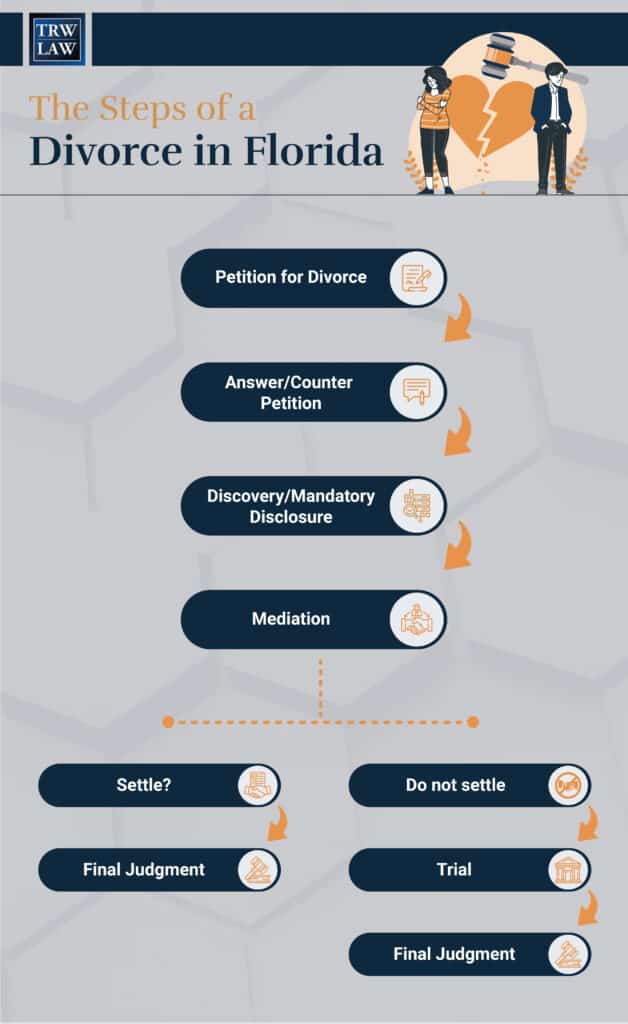
A contested divorce arises when spouses cannot agree on one or more key issues. In such cases, the court will become involved in resolving the disputes. This often involves discovery (exchanging information and evidence), negotiations, mediation, and potentially a trial where a judge will make the final decisions. Contested divorces can be lengthy, emotionally taxing, and significantly more costly than uncontested ones.
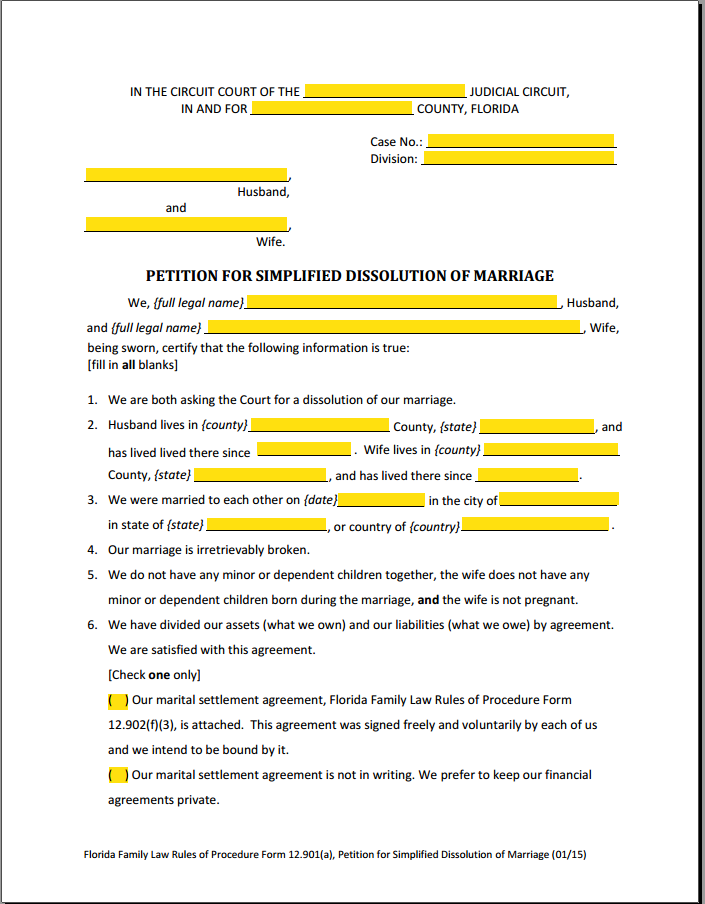
Simplified Dissolution of Marriage
Florida also offers a “Simplified Dissolution of Marriage” option for couples who meet specific criteria. To qualify for this streamlined process, both parties must agree that the marriage is irretrievably broken, have no minor or dependent children, and agree on how to divide all marital assets and liabilities. Both parties must also waive their rights to alimony. This process involves filing a joint petition and attending a brief final hearing. It is designed for straightforward cases where mutual consent and a lack of complex issues are present.
Key Issues to Address During Divorce Proceedings
Regardless of whether a divorce is contested or uncontested, several critical issues must be addressed and resolved before a final judgment can be entered. These issues form the backbone of the divorce decree and have long-lasting implications for both parties and any children involved.
Equitable Distribution of Marital Assets and Liabilities
In Florida, marital property is subject to equitable distribution. This does not necessarily mean an equal division, but rather a fair division based on various factors considered by the court. Marital assets and liabilities include anything acquired during the marriage, regardless of whose name is on the title. Separate property, acquired before the marriage, during the marriage by gift or inheritance, or excluded by a valid written agreement, is generally not subject to equitable distribution.
Alimony
Alimony, or spousal support, may be awarded to one spouse by the other. Florida law recognizes several types of alimony, including bridge-the-gap, rehabilitative, durational, and permanent alimony. The court considers numerous factors when determining whether to award alimony and in what amount, such as the length of the marriage, the needs of each spouse, the ability of each spouse to pay, the standard of living enjoyed during the marriage, and the contributions of each spouse to the marriage.
Child Custody and Support
When minor children are involved, determining a parenting plan (which addresses time-sharing and decision-making authority) and child support is paramount. Florida courts prioritize the best interests of the child in all custody and support matters. Child support is calculated based on statutory guidelines that consider the income of both parents and the amount of time each parent spends with the child. A parenting plan outlines how major decisions regarding the child’s education, healthcare, and religious upbringing will be made and how the parents will share responsibility for the child’s welfare.
Finalizing Your Divorce in Florida
The culmination of the divorce process is the final judgment, which is the court order that legally dissolves the marriage and outlines all the terms agreed upon by the parties or decided by the judge. Ensuring all procedural requirements are met is essential for a successful and legally binding conclusion.
Mediating Disputes and Reaching Agreements
Mediation is often a mandatory step in Florida divorce cases, especially when children are involved. A neutral third-party mediator helps the spouses communicate and negotiate to reach mutually acceptable agreements on contested issues. Successful mediation can lead to a settlement agreement, avoiding the need for a trial.
The Final Hearing and Final Judgment
If an agreement is reached, the parties will submit a Marital Settlement Agreement to the court for approval. If the case proceeds to trial, the judge will hear evidence from both sides and make rulings on all outstanding issues. The final judgment, signed by the judge, officially ends the marriage and incorporates the terms of the settlement or the court’s decisions. It is crucial to review this document carefully before it is signed by the judge to ensure it accurately reflects all agreements and court orders.
Post-Divorce Modifications
It is important to understand that certain aspects of a divorce judgment, particularly those related to child custody, child support, and sometimes alimony, can be modified in the future if there is a substantial change in circumstances. This might include a significant change in income, relocation, or the needs of a child. However, the division of marital assets and liabilities is generally considered final and not subject to modification.
Filing for divorce in Florida is a significant undertaking that requires careful attention to detail and adherence to legal procedures. By understanding the residency requirements, grounds for divorce, the filing process, and the key issues that need resolution, individuals can approach this challenging time with greater clarity and preparedness, ultimately striving for a fair and equitable outcome.
LifeOutOfTheBox is a participant in the Amazon Services LLC Associates Program, an affiliate advertising program designed to provide a means for sites to earn advertising fees by advertising and linking to Amazon.com. Amazon, the Amazon logo, AmazonSupply, and the AmazonSupply logo are trademarks of Amazon.com, Inc. or its affiliates. As an Amazon Associate we earn affiliate commissions from qualifying purchases.