
Navigating the complexities of divorce can be a daunting prospect, especially when considering the financial and emotional toll of legal representation. Fortunately, for those in Oklahoma, it is possible to file for divorce without engaging an attorney, a process often referred to as an “uncontested divorce” or “do-it-yourself divorce.” This path can offer a more streamlined and cost-effective solution for couples who have reached a mutual agreement on all aspects of their separation. While it requires careful attention to detail and a thorough understanding of the legal procedures, successfully navigating this process can empower individuals to take control of their divorce proceedings.

The core principle behind filing for divorce without a lawyer in Oklahoma hinges on mutual agreement. This means both spouses must concur on all significant matters, including the division of marital property, spousal support (alimony), child custody, child support, and any other pertinent issues. If disagreements exist, or if there are complex financial entanglements, seeking legal counsel from a qualified Oklahoma divorce attorney is highly recommended. However, for amicable separations, a DIY approach can be a viable and often less stressful alternative. This article will guide you through the essential steps and considerations for filing for divorce in Oklahoma without legal representation, focusing on clarity and actionable advice.
The journey of a DIY divorce in Oklahoma mirrors that of a traditional divorce in many respects, but it places the onus of preparation and submission of legal documents squarely on the individuals involved. It’s a process that demands diligence, patience, and a commitment to understanding the requirements of the Oklahoma court system. By arming yourself with the right information and approaching each step systematically, you can effectively manage your divorce proceedings and achieve a resolution that reflects your mutual understanding.
Understanding the Fundamentals of an Uncontested Divorce in Oklahoma
An uncontested divorce in Oklahoma is defined by the absence of significant disputes between the spouses. This doesn’t necessarily mean the divorce is easy, but rather that the parties have successfully negotiated and agreed upon all terms. These terms will form the basis of your final divorce decree.
The Pillars of Agreement: What Must Be Decided
Before embarking on the filing process, it is crucial to have a clear and comprehensive agreement on the following key areas:
-
Division of Marital Property and Debts: This encompasses all assets and liabilities acquired during the marriage. This could include real estate, vehicles, bank accounts, retirement funds, credit card debt, and mortgages. Oklahoma is an equitable distribution state, meaning marital property is divided fairly, though not necessarily equally. A written agreement detailing the division of each asset and debt is paramount. For example, if you and your spouse jointly owned a vacation home in Gatlinburg, Tennessee, the agreement must specify who will retain ownership and how any associated debts will be handled. Similarly, if you both had investments in the Fidelity Investments 401(k) plans, a clear plan for their division must be outlined.
-
Child Custody and Visitation: If minor children are involved, custody arrangements are a critical component. This includes legal custody (decision-making authority regarding health, education, and welfare) and physical custody (where the child primarily resides). A detailed visitation schedule, often referred to as a parenting plan, must be established, outlining when each parent will have the children. The agreement should be specific, covering holidays, school breaks, and regular weekend visitation. This ensures consistency and minimizes future disputes. For instance, a specific agreement might state that the children spend alternating Thanksgiving holidays and have a set summer visitation schedule with the non-custodial parent.
-
Child Support: Oklahoma has specific guidelines for calculating child support based on parental income and custody arrangements. Even if you agree on a different amount, the court may scrutinize it to ensure it is in the child’s best interest and adheres to statutory guidelines. The agreement must clearly state the amount of child support to be paid, the frequency of payments, and the duration of these payments.
-
Spousal Support (Alimony): If one spouse financially supported the other during the marriage, spousal support may be a consideration. This is not automatic and is determined by various factors, including the length of the marriage, each spouse’s earning capacity, and the standard of living during the marriage. If an agreement is reached, the terms regarding the amount, duration, and conditions of spousal support must be clearly documented.
-
Other Relevant Matters: This can include decisions about health insurance for children, life insurance policies, and the disposition of jointly owned businesses.
Achieving a complete agreement on these matters is the first and most crucial step towards a successful DIY divorce. This agreement will eventually be formalized into a Marital Settlement Agreement, a legally binding document that becomes part of your final divorce decree.
The Importance of the Parenting Plan (If Children Are Involved)
When minor children are part of the marriage, a comprehensive Parenting Plan is not just recommended; it’s often a mandatory requirement by the courts. This document goes beyond basic custody and visitation; it provides a detailed roadmap for raising children post-divorce. A well-crafted Parenting Plan should address:
-
Legal Custody: Who makes major decisions regarding the child’s education, healthcare, religious upbringing, and extracurricular activities. This can be joint, where both parents share decision-making, or sole, where one parent has the final say.
-
Physical Custody: The day-to-day living arrangements for the child, including the primary residence and the schedule for the other parent.
-
Visitation Schedule: This is the most detailed section, outlining specific days and times for each parent to have the child. It should account for weekdays, weekends, holidays (both state and religious holidays like Christmas and Easter), school breaks, and summer vacations. It’s beneficial to include provisions for transportation during exchanges and communication methods between parents regarding the child.
-
Holidays and Special Occasions: A clear rotation or division of major holidays and significant family events. This prevents confusion and conflict.
-
Communication: Guidelines on how parents will communicate with each other regarding the child’s well-being and progress.
-
Relocation: Provisions for what happens if one parent wishes to move a significant distance with the child, often requiring court permission or the other parent’s consent.
-
Health Insurance and Expenses: Who will provide health insurance for the children and how uninsured medical expenses will be shared.
-
Education: How educational decisions will be made and how parents will stay informed about the child’s schooling.
Creating a thorough Parenting Plan demonstrates to the court that you and your spouse have thoughtfully considered the best interests of your children, which is a primary concern for any judge. It can also prevent future disputes and the need for court intervention to modify existing orders. While you can find templates for Parenting Plans, tailoring it to your specific family situation is crucial.
Initiating the Divorce Process: Filing the Necessary Paperwork
Once a complete agreement is reached, the next step involves preparing and filing the official legal documents with the appropriate court. This is where precision and adherence to court rules are essential.
Key Documents to Prepare
The primary documents you will need to file are:
-
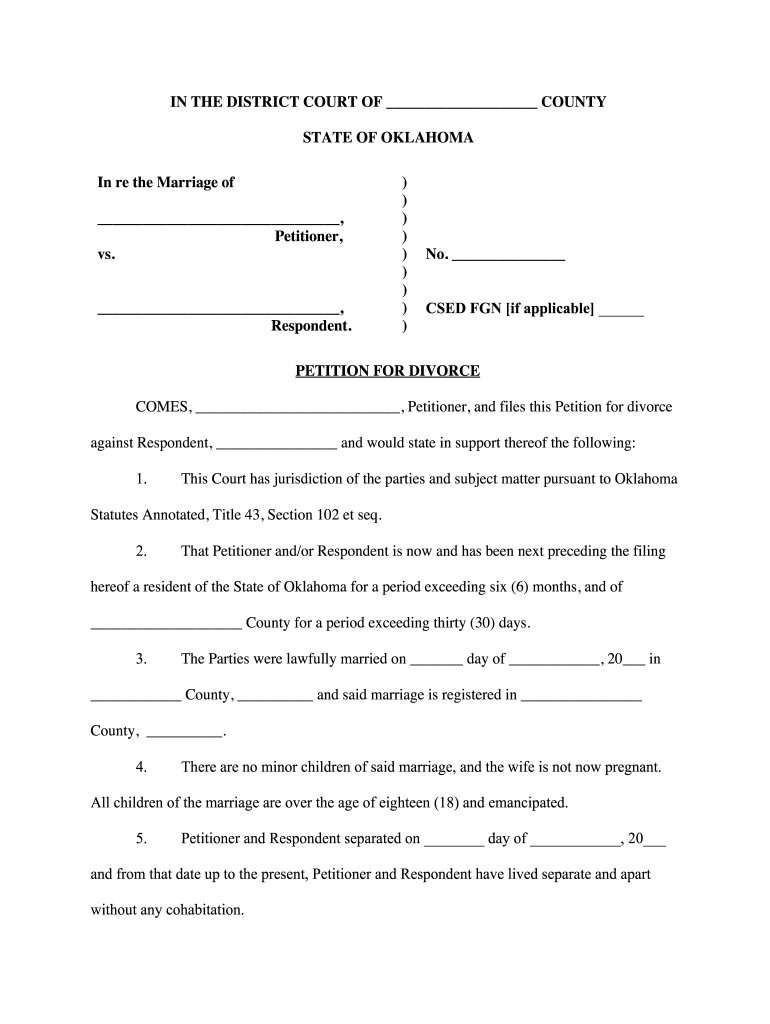
Petition for Divorce: This is the initial document that formally requests the court to grant a divorce. It outlines basic information about you, your spouse, the date of marriage, the grounds for divorce (in Oklahoma, irreconcilable differences is the most common ground), and a brief overview of the agreed-upon terms.
-
Summons: This document officially notifies your spouse that a divorce action has been filed against them.
-
Acceptance of Service or Waiver of Summons: If your spouse is cooperative, they can sign this document, acknowledging they have received the Petition and waiving the formal service of the Summons. This significantly speeds up the process.
-
Marital Settlement Agreement: This is the comprehensive document detailing all your agreements on property division, child custody, child support, spousal support, and any other relevant matters. It must be signed by both parties.
-
Final Decree of Divorce: This is the court order that legally terminates your marriage and incorporates the terms of your Marital Settlement Agreement.
-
Other potential documents: Depending on your specific situation, you might need additional forms such as a child support worksheet, a child custody affidavit, or documents related to the division of specific assets like a property in Broken Arrow or bank accounts with Chase Bank.
Filing and Service of Documents
The Petition for Divorce and Summons are filed with the District Court clerk in the county where you or your spouse have resided for at least 60 days. You will need to pay a filing fee at the time of submission.
Service of process is a critical legal requirement. If your spouse does not sign an Acceptance of Service, you must have them formally served with the divorce papers by a sheriff’s deputy or a private process server. This ensures they are legally notified of the proceedings.
Once the Petition is filed and service is completed (or waived), there is typically a waiting period in Oklahoma, usually 30 days, after which the divorce can be finalized, provided all other requirements are met.
The entire process can feel like navigating a labyrinth of legal jargon and procedures. However, by utilizing resources like the Oklahoma Supreme Court’s self-help section or local court clerk’s offices, you can often find guidance and the necessary forms. Remember, while a lawyer is not required, understanding the legal framework is crucial. Resources like the Oklahoma Bar Association website can offer general information and referrals if you encounter specific legal questions you feel unqualified to answer yourself.
Finalizing Your Divorce: The Decree and Beyond
The culmination of the DIY divorce process is the finalization of your divorce through the signing of the Final Decree of Divorce by the judge. This document legally dissolves your marriage and formalizes all the agreements you have made.
The Role of the Final Decree of Divorce
The Final Decree of Divorce is the legally binding court order that:
- Officially terminates the marriage.
- Incorporates the terms of your Marital Settlement Agreement, making them legally enforceable.
- Specifies the division of all marital property and debts.
- Outlines the child custody and visitation arrangements.
- Establishes child support and spousal support obligations.
It is imperative that the Final Decree of Divorce accurately reflects your Marital Settlement Agreement. Any discrepancies can lead to significant problems down the line.

After the Divorce: What Comes Next
Once the divorce is finalized, it’s important to understand that certain actions may need to be taken to fully implement the terms of the decree. This could include:
-
Refinancing or transferring titles: If you’ve agreed to divide real estate or vehicles, you may need to refinance loans or formally transfer titles. For example, if you owned a property in Norman, Oklahoma, and it was awarded to your spouse, the deed will need to be updated.
-
Dividing retirement accounts: This often requires a specific court order called a Qualified Domestic Relations Order (QDRO) to divide 401(k)s or pensions.
-
Updating beneficiaries: On life insurance policies, wills, and other financial accounts.
-
Changing your name: If you wish to revert to a maiden name or a previous married name, the Final Decree of Divorce will typically include this provision, and you will need to present it to the Social Security Administration and other relevant agencies.
-
Maintaining communication: Especially if children are involved, it is crucial to maintain open and respectful communication with your former spouse regarding the children’s well-being and adherence to the parenting plan.
While filing for divorce without a lawyer in Oklahoma is achievable, it demands a commitment to meticulous preparation and a clear understanding of the legal requirements. For couples who can reach a full and amicable agreement, it offers a pathway to a less adversarial and more cost-effective resolution. However, it is always wise to consult with an attorney if any aspect of the process feels overwhelming or if complex issues arise. The goal is to achieve a fair and lasting resolution that allows both parties to move forward constructively. This journey, while personal, is underpinned by the legal structures of the Oklahoma court system, and navigating it successfully requires diligence, understanding, and a commitment to fairness.
LifeOutOfTheBox is a participant in the Amazon Services LLC Associates Program, an affiliate advertising program designed to provide a means for sites to earn advertising fees by advertising and linking to Amazon.com. Amazon, the Amazon logo, AmazonSupply, and the AmazonSupply logo are trademarks of Amazon.com, Inc. or its affiliates. As an Amazon Associate we earn affiliate commissions from qualifying purchases.