
The decision to file for divorce, or the dissolution of marriage, is rarely made lightly. It represents a significant life transition, often accompanied by a complex emotional landscape and intricate legal proceedings. For individuals residing in the State of Florida, understanding the specific legal framework and procedural steps is paramount to navigating this challenging journey effectively. This comprehensive guide aims to demystify the divorce process in Florida, offering a clear, professional, and insightful overview to help individuals approach this pivotal moment with knowledge and confidence.
Understanding Florida’s Divorce Landscape
Before embarking on the formal process, it’s crucial to grasp the foundational principles governing divorce in the Sunshine State. Florida is a “no-fault” divorce state, meaning that petitioners are not required to prove marital misconduct (such as adultery or abandonment) to obtain a divorce. This simplifies the initial filing, allowing couples to focus on resolving the practicalities of separation rather than assigning blame.

Residency Requirements
To file for divorce in Florida, at least one of the parties must have resided in the state for a minimum of six months immediately preceding the filing of the petition. This requirement ensures that the Florida courts have proper jurisdiction over the case. Evidence of residency can include a Florida driver’s license, voter registration, or testimony from a corroborating witness. Failing to meet this residency requirement can lead to the dismissal of the case, delaying the entire process. It’s not uncommon for individuals to move to Florida for various lifestyle reasons, and understanding this prerequisite is essential for anyone considering a divorce here, whether they’ve been lifelong residents of Jacksonville or recently relocated to Miami-Dade County.
Grounds for Dissolution of Marriage
As a no-fault state, Florida recognizes two primary grounds for the dissolution of marriage:
- Irretrievably Broken Marriage: This is the most common ground cited. It simply means that the marriage is beyond repair, and there is no reasonable prospect of reconciliation. The court does not delve into the reasons why the marriage broke down, only that it has.
- Mental Incapacity of One of the Parties: If one spouse has been adjudged mentally incapacitated for a period of at least three years, this can also serve as a ground for divorce. This is a more complex and less frequently used ground, requiring specific medical evidence and legal procedures.
These straightforward grounds aim to streamline the process, focusing court resources on equitable distribution of assets, parental responsibilities, and support arrangements rather than prolonged evidentiary battles over marital fault.
The Initial Steps: Preparing to File
Once residency requirements are met and grounds are established, the practical steps of initiating the divorce begin. This phase demands careful organization and a clear understanding of legal documentation.
Gathering Necessary Information and Documents
Preparation is key to an efficient divorce process. Before filing, individuals should begin compiling a comprehensive set of financial and personal documents. This typically includes:
- Financial Records: Bank statements, investment accounts, retirement plans, tax returns (past several years), pay stubs, loan applications, credit card statements, and detailed lists of assets and debts.
- Property Information: Deeds to real estate (e.g., a home in Orlando or Tampa), vehicle titles, appraisals of significant assets, and business ownership documents.
- Child-Related Information (if applicable): Birth certificates of children, school records, medical records, and details of current parental schedules.
- Marriage Certificate: The original or a certified copy of the marriage certificate.
- Other Legal Documents: Any prenuptial or postnuptial agreements, wills, or trusts.
Having these documents organized from the outset can significantly reduce the time and expense associated with discovery later in the process. It also helps in accurately assessing the marital estate for division.
Filing the Petition for Dissolution of Marriage
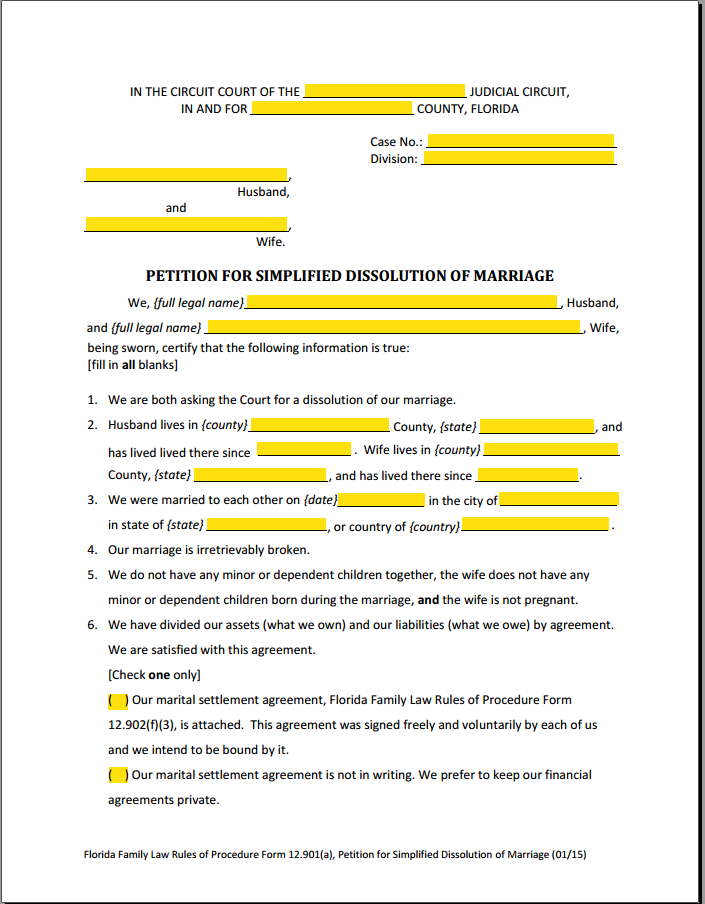
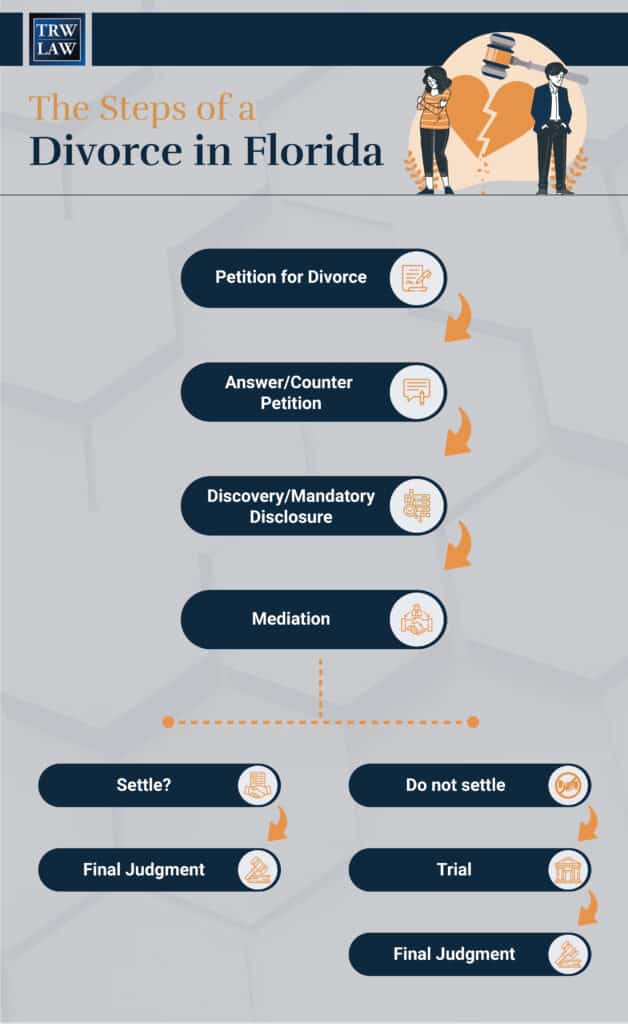
The formal divorce process commences with the filing of a “Petition for Dissolution of Marriage” with the circuit court in the county where one or both parties reside (e.g., Broward County, Hillsborough County, Duval County). The petition outlines basic information about the marriage, the parties, any children, and the desired relief from the court (e.g., property division, parental responsibility, alimony).
Once filed, the petition must be legally served to the other spouse. Proper service of process is critical; without it, the court cannot proceed with the divorce. Service typically occurs through a sheriff’s deputy or a private process server. If the other spouse is agreeable, they may sign a “Waiver of Service” to acknowledge receipt of the petition voluntarily, often seen in uncontested cases. This initial filing sets the legal wheels in motion for a life-altering change.
Navigating Key Issues in Florida Divorce
Beyond the initial filing, the core of any divorce lies in resolving the substantive issues that arise from the separation. Florida law provides a framework for addressing these critical areas.
Child Custody and Support
For couples with minor children, parental responsibility (custody) and child support are often the most sensitive and crucial aspects of the divorce. Florida law prioritizes the “best interests of the child.”
- Parental Responsibility: The courts generally favor shared parental responsibility, meaning both parents retain full parental rights and responsibilities and are expected to confer with each other to make major decisions affecting the child’s welfare, education, healthcare, and moral upbringing. Sole parental responsibility is rarely granted unless one parent is deemed unfit or poses a threat to the child.
- Time-Sharing (Visitation): Florida courts refer to visitation as “time-sharing” and require a detailed “Parenting Plan” to be established. This plan outlines the schedule for each parent’s time with the children, holiday schedules, communication methods, and other specifics.
- Child Support: Calculated based on statutory guidelines, child support is determined by factors such as each parent’s net income, the number of overnights each child spends with each parent, health insurance costs, and childcare expenses. The goal is to ensure children continue to receive financial support from both parents, irrespective of the marital dissolution.
Property Division and Alimony
Florida is an “equitable distribution” state. This means that marital assets and liabilities (those acquired during the marriage) are to be divided fairly, though not necessarily equally. The court considers various factors when determining equitable distribution, including the length of the marriage, each spouse’s contribution to the marriage (including homemaking), economic circumstances, and any intentional dissipation of marital assets.
Alimony, or spousal support, is not guaranteed and is determined on a case-by-case basis. The court considers factors such as:
- The standard of living established during the marriage.
- The duration of the marriage.
- The age and physical and emotional condition of each party.
- The financial resources of each party.
- The earning capacity, educational level, vocational skills, and employability of each party.
- The contribution of each party to the marriage, including services as a homemaker or contributions to the career or education of the other party.
- Any other factor necessary to do equity and justice between the parties.
There are different types of alimony in Florida, including temporary, bridge-the-gap, rehabilitative, durational, and permanent alimony, each serving a specific purpose. For instance, bridge-the-gap alimony might help a spouse transition to single life, while rehabilitative alimony could fund education or training to improve earning capacity.
The Role of Mediation
Mediation is a mandatory step in most Florida divorce cases, especially when there are contested issues. During mediation, a neutral third-party mediator facilitates discussions between the spouses, aiming to help them reach mutually agreeable solutions on all outstanding issues, such as parental responsibility, time-sharing, child support, property division, and alimony.
Mediation is a cost-effective and less adversarial alternative to litigation. If successful, the agreement reached in mediation is drafted into a “Marital Settlement Agreement,” which is then submitted to the court for approval, becoming part of the final judgment. Even in cases of significant conflict, a skilled mediator can often guide parties toward common ground, preserving financial resources and emotional well-being that would otherwise be spent in court battles. Many cases are settled in mediation, avoiding the need for a trial, which is beneficial for all parties involved, particularly if children are part of the equation.
Contested vs. Uncontested Divorce
The path a divorce takes can differ significantly based on the level of agreement between the spouses.
Streamlining the Uncontested Process
An uncontested divorce occurs when both spouses agree on all terms of the divorce, including property division, child custody, support, and alimony. This is the simplest and most cost-effective route. In such cases, the parties typically work together (often with the assistance of legal counsel) to draft a comprehensive Marital Settlement Agreement and, if applicable, a Parenting Plan. Once these documents are signed by both parties, they are filed with the court along with the Petition for Dissolution of Marriage. The court will then hold a brief, non-adversarial final hearing where the judge reviews the agreement and enters the Final Judgment of Dissolution of Marriage. This process can be completed relatively quickly, often within a few months, depending on court dockets.
The Path of Contested Litigation
A contested divorce arises when the spouses cannot agree on one or more key issues. This typically leads to a more prolonged and expensive process involving discovery (exchanging financial documents, depositions), motions, temporary hearings, and potentially a final trial before a judge. While lawyers strive to settle cases outside of court, sometimes litigation becomes necessary to protect a party’s rights and interests. The goal remains to resolve disputes through negotiation, but the court’s involvement becomes more extensive. This path often includes status conferences and potentially multiple mediation attempts as the case progresses through the judicial system in places like Tallahassee or Palm Beach County.
The Final Judgment and Beyond
The culmination of the divorce process is the entry of the Final Judgment, but understanding its implications and the steps that follow is equally important.
Court Hearings and Final Orders
Whether contested or uncontested, a judge must sign a Final Judgment of Dissolution of Marriage. In uncontested cases, this is usually after a short hearing confirming the agreement is fair and equitable. In contested cases, the Final Judgment follows a trial where the judge makes decisions on all disputed matters. The Final Judgment is a legally binding document that officially terminates the marriage and outlines all court orders regarding parental responsibility, time-sharing, child support, alimony, and property division. Once entered, both parties are legally divorced in the eyes of the United States and Florida law, and must adhere to its terms.
Life After Divorce in Florida
Divorce is not merely a legal ending; it’s a new beginning. While the legal process concludes with the Final Judgment, the emotional and practical adjustments continue. It’s important to update personal records, such as names on bank accounts, driver’s licenses, passports, and beneficiary designations on insurance policies and retirement accounts. Reworking budgets, establishing new living arrangements, and adapting to new family dynamics are all part of the post-divorce lifestyle. Seeking support from therapists, financial advisors, and support groups can be invaluable during this transition, helping individuals rebuild their lives and thrive in their new circumstances within the diverse communities of Florida.
Navigating divorce in the State of Florida requires patience, diligence, and a clear understanding of the legal landscape. By approaching the process informed and prepared, individuals can strive for an outcome that allows them to move forward confidently into the next chapter of their lives. While this guide provides a general overview, seeking counsel from a qualified Florida family law attorney is always recommended to address the specifics of any individual case.
LifeOutOfTheBox is a participant in the Amazon Services LLC Associates Program, an affiliate advertising program designed to provide a means for sites to earn advertising fees by advertising and linking to Amazon.com. Amazon, the Amazon logo, AmazonSupply, and the AmazonSupply logo are trademarks of Amazon.com, Inc. or its affiliates. As an Amazon Associate we earn affiliate commissions from qualifying purchases.