
The question of when the United States annexed Hawaii is one that opens a window into a complex era of 19th-century diplomacy, revolution, and architectural transformation. While the formal annexation occurred in 1898, the story is etched into the very stones of Honolulu and the surrounding islands. To understand the timeline of how these islands in the Pacific Ocean became an American territory, one must look toward the landmarks that stood witness to the transition from a sovereign kingdom to a strategic global outpost.
The Prelude to Annexation: The Fall of the Kingdom at Iolani Palace
The formal annexation of Hawaii was the culmination of years of political upheaval. The most significant site associated with this transition is Iolani Palace. Located in downtown Honolulu on the island of Oahu, this structure remains the only royal palace on American soil. It served as the official residence of the Hawaiian monarchs until the overthrow of the monarchy in 1893.

The Architectural Significance of Iolani Palace
Completed in 1882 by King Kalakaua, Iolani Palace was a symbol of the Kingdom of Hawaii as a modern, sovereign nation. The architecture, known as American Florentine, blended Italian Renaissance elements with local influences. For visitors today, the palace is a somber landmark. It was here that Queen Liliuokalani, the last reigning monarch, was placed under house arrest following a coup d’état by a group of sugar planters and businessmen supported by U.S. Marines. The palace stands as a silent witness to the moment when the indigenous government was dismantled, paving the way for eventual annexation.
Aliiolani Hale and the Legal Shift
Directly across the street from the palace stands Aliiolani Hale. Today, it houses the Hawaii State Supreme Court, but in the late 1800s, it was the seat of the government for the Kingdom of Hawaii. It was on the steps of this building that the Committee of Safety—the group responsible for the overthrow—proclaimed the establishment of a Provisional Government in 1893. The architecture of Aliiolani Hale mirrors the neoclassical styles found in Washington DC, signaling the Western influence that was rapidly reshaping the political landscape of North America and its neighbors.
The Strategic Pivot: Pearl Harbor and the Newlands Resolution of 1898
The actual annexation of Hawaii did not happen immediately after the monarchy fell. For five years, the islands existed as the Republic of Hawaii. The turning point came with the outbreak of the Spanish-American War in 1898. The United States needed a mid-Pacific coaling station to support its fleet in the Philippines and Guam, which were then under the control of Spain.
The Role of Pearl Harbor in Territorial Ambitions
Long before it was a site of tragedy in World War II, Pearl Harbor was the central reason for American interest in the islands. Known to the Hawaiians as Wai Momi, this natural harbor offered deep-water access that was unmatched in the Pacific Ocean. The Reciprocity Treaty of 1875 had already granted the United States exclusive rights to use the harbor, but full annexation ensured that no other foreign power—particularly Japan or the United Kingdom—could claim the strategic site. Today, the Pearl Harbor National Memorial serves as a landmark that connects the history of annexation to the broader 20th-century history of the United States.
The Newlands Resolution and Washington DC
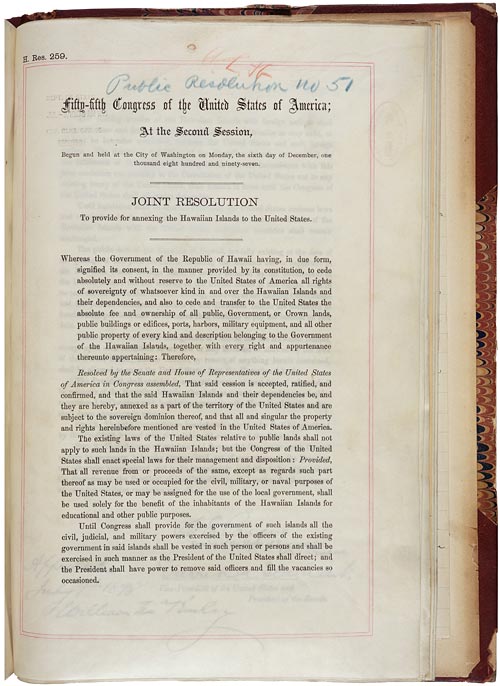
In July 1898, President William McKinley signed the Newlands Resolution, which officially annexed Hawaii to the United States. This was a joint resolution of Congress, a move that remains controversial because it bypassed the traditional treaty process. While the legislative work happened in Washington DC, the physical transfer of power took place at Iolani Palace on August 12, 1898. The Hawaiian flag was lowered, and the American flag was raised, marking the formal beginning of the Territory of Hawaii.
Preserving the Royal Legacy: Landmarks of Resistance and Remembrance
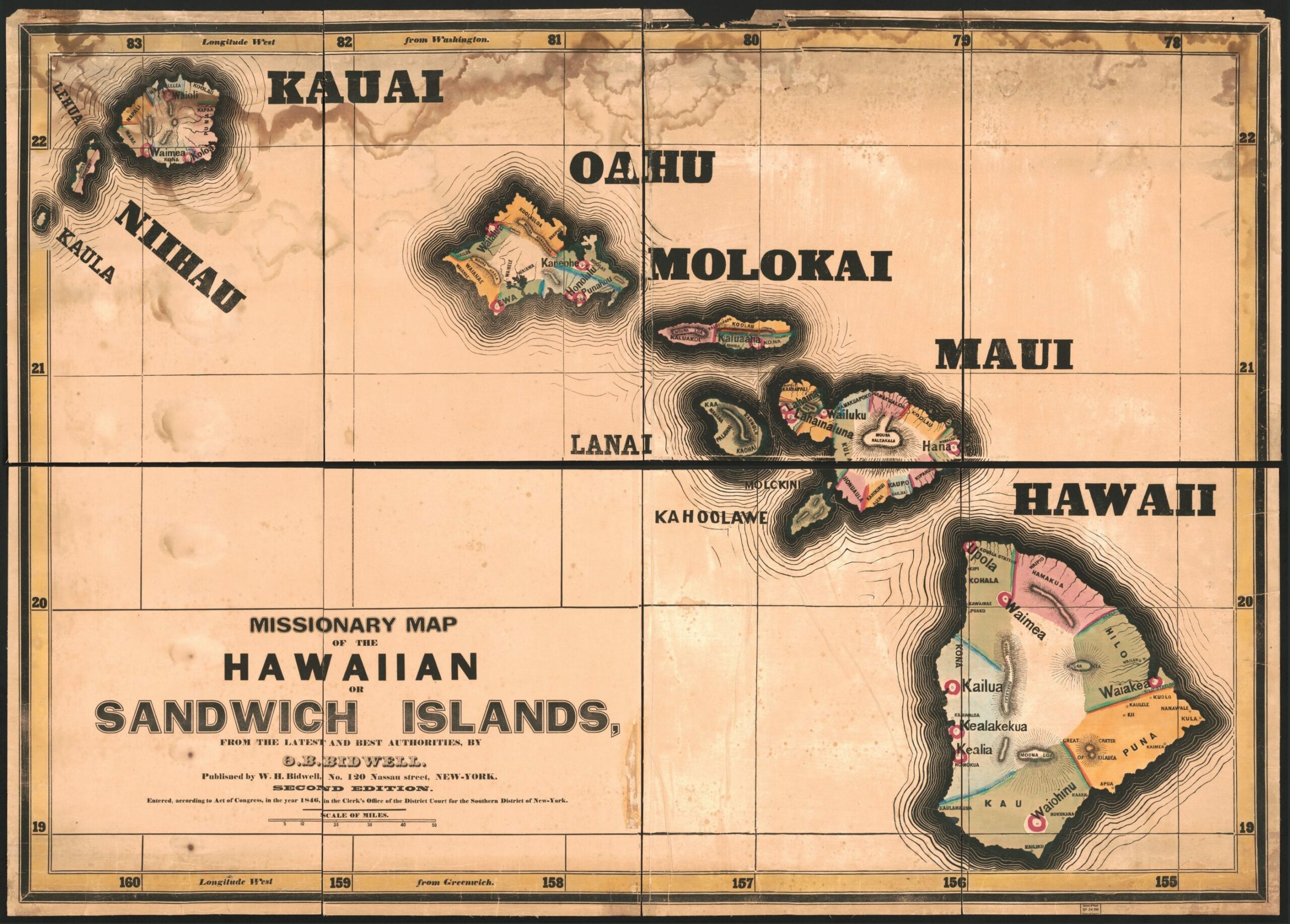
While the political annexation was finalized at the end of the century, the cultural landmarks of the islands serve as a reminder of the indigenous history that preceded it. From Maui to Kauai, various sites commemorate the royal era.
The King Kamehameha I Statue and Hawaiian Sovereignty
Standing tall in front of Aliiolani Hale is the King Kamehameha I Statue. This landmark honors the monarch who first unified the islands into a single kingdom in 1810. The statue is a focal point for the local community, especially on Kamehameha Day, when it is draped in long strands of floral lei. It serves as a visual counter-narrative to the Americanization of the islands, reminding residents and visitors of the deep-seated heritage of Polynesia.
The Bishop Museum: A Repository of Kingdom History
For those seeking a deeper insight into the artifacts of the monarchy and the era of annexation, the Bishop Museum in Honolulu is the premier landmark. Founded in 1889 by Charles Reed Bishop in honor of his late wife, Princess Bernice Pauahi Bishop, the museum holds the world’s largest collection of Hawaiian cultural artifacts. The museum itself is an architectural marvel of the late Victorian era, featuring dark basalt stone and intricate wood carvings that tell the story of the Big Island and its people before and during the annexation period.
Modern Landmarks and the Transition to Statehood
The annexation was not the end of Hawaii’s journey. The islands remained a territory for over 60 years before becoming the 50th state in 1959. This transition brought a new wave of architecture and landmarks to Oahu and Waikiki.
The Hawaii State Capitol and Contemporary Governance
Located near the historic royal grounds, the Hawaii State Capitol is a landmark of mid-century modern design. Completed in 1969, its architecture is deeply symbolic: the columns represent palm trees, the two legislative chambers are shaped like volcanoes, and the building is surrounded by a reflecting pool, symbolizing the Pacific Ocean. This site marks the final evolution of the Hawaiian political identity within the United States.
Washington Place: From Royal Residence to Governor’s Mansion
Another landmark essential to the annexation story is Washington Place. Built by the father-in-law of Queen Liliuokalani, it later became her private residence until her death in 1917. Following the annexation and the transition to statehood, it served as the official residence of the Governor of Hawaii. Today, it stands as a museum and a historic house that bridges the gap between the royal past and the American present.
Exploring the Natural Landmarks of the Annexation Era
Beyond the man-made structures, the natural landmarks of the islands were also affected by the annexation. The vast tracts of land used for sugar and pineapple plantations—such as those on Lanai and in the central plains of Oahu—changed the ecology of the islands forever.
Diamond Head and the Coastal Defenses
Diamond Head, the iconic volcanic tuff cone overlooking Waikiki, was transformed following annexation. The United States government recognized its strategic value for coastal defense. Fort Ruger was established there in 1906, and tunnels and bunkers were carved into the crater’s walls. Today, the hike to the summit of Diamond Head offers panoramic views of the Pacific Ocean and stands as a reminder of the military-driven motivations behind the 1898 annexation.
Foster Botanical Garden
In the heart of Honolulu, the Foster Botanical Garden offers a glimpse into the tropical flora that fascinated Westerners during the 19th century. Some of the oldest trees in the garden were planted during the reign of the Hawaiian monarchy. As the islands were annexed and integrated into the United States, these botanical spaces were preserved, serving as living landmarks of the islands’ original beauty amidst the rapid urban development of the 20th century.
The annexation of Hawaii in 1898 remains one of the most significant events in the history of North America. By visiting landmarks like Iolani Palace, Aliiolani Hale, and Pearl Harbor, one can trace the timeline of a kingdom lost and a state gained. These sites provide an insightful look into the complex legacy of the 50th state, ensuring that the history of how Hawaii became part of the United States is never forgotten. Whether standing before the King Kamehameha I Statue or walking the halls of the Bishop Museum, the story of the annexation is present in every corner of these historic islands.
LifeOutOfTheBox is a participant in the Amazon Services LLC Associates Program, an affiliate advertising program designed to provide a means for sites to earn advertising fees by advertising and linking to Amazon.com. Amazon, the Amazon logo, AmazonSupply, and the AmazonSupply logo are trademarks of Amazon.com, Inc. or its affiliates. As an Amazon Associate we earn affiliate commissions from qualifying purchases.