
Navigating the legal landscape of Alabama can be a daunting task, especially when confronted with the distressing experience of harassment. This guide aims to demystify the process of filing harassment charges within the state, offering a clear and comprehensive overview for those seeking legal recourse. Understanding your rights and the procedural steps involved is paramount to ensuring your safety and well-being, and to holding perpetrators accountable for their actions. This article focuses exclusively on the legal framework for addressing harassment within Alabama, providing actionable information for residents and those affected by such behavior within its borders.
Understanding Harassment in Alabama Law
Before initiating any formal action, it is crucial to understand what constitutes harassment under Alabama law. Harassment is not a single, universally defined crime but rather encompasses a range of behaviors that can be addressed through different legal avenues, including civil and criminal proceedings. Generally, harassment involves a course of conduct directed at a specific person that causes substantial emotional distress, fear of immediate or future harm, or annoyance that serves no legitimate purpose. The severity and nature of the conduct will dictate the appropriate legal classification and the steps required to file a charge.
Defining Different Forms of Harassment
In Alabama, harassment can manifest in various ways, each with specific legal implications:
- Criminal Harassment: This typically involves intentional conduct that serves no legitimate purpose and causes or attempts to cause the victim to suffer substantial emotional distress. This can include repeated phone calls, unwanted persistent contact, or threats that instill fear. Alabama Code § 13A-11-8 provides definitions and penalties for offenses related to harassment.
- Civil Harassment: This category often pertains to actions that, while not criminal, create a hostile environment or cause significant distress. This could include stalking, repeated unwelcome contact through electronic means, or offensive behavior that infringes upon an individual’s peace. Civil actions may seek restraining orders or injunctions to prevent further harassment.
- Workplace Harassment: This is a specific type of harassment occurring in employment settings, often involving unwelcome conduct based on protected characteristics such as race, religion, gender, or national origin. It can include sexual harassment, which involves unwelcome sexual advances, requests for sexual favors, and other verbal or physical harassment of a sexual nature. Federal laws like Title VII of the Civil Rights Act of 1964, enforced by the Equal Employment Opportunity Commission (EEOC), and Alabama state laws govern workplace harassment.
- Domestic Violence and Harassment: Harassment that occurs within a domestic relationship (e.g., between spouses, former spouses, cohabitants, or individuals with a child in common) may fall under domestic violence laws, which often have specific procedures and protections. Alabama Code § 13A-6-60 et seq. addresses domestic violence.
Key Elements to Prove Harassment
Regardless of the specific type, a successful harassment charge generally requires demonstrating several key elements:
- Intent: The perpetrator must have acted with the intent to cause distress or annoyance, or their actions must be such that such intent can be reasonably inferred.
- Course of Conduct: Harassment usually involves a pattern of behavior, not isolated incidents, though a single severe incident can sometimes qualify, particularly in cases of threats or violence.
- Lack of Legitimate Purpose: The conduct engaged in must not serve any lawful or legitimate purpose.
- Emotional Distress: The victim must have suffered, or be reasonably likely to suffer, substantial emotional distress as a result of the conduct. This can include fear, anxiety, or a disruption to one’s daily life.
Steps to File Harassment Charges in Alabama
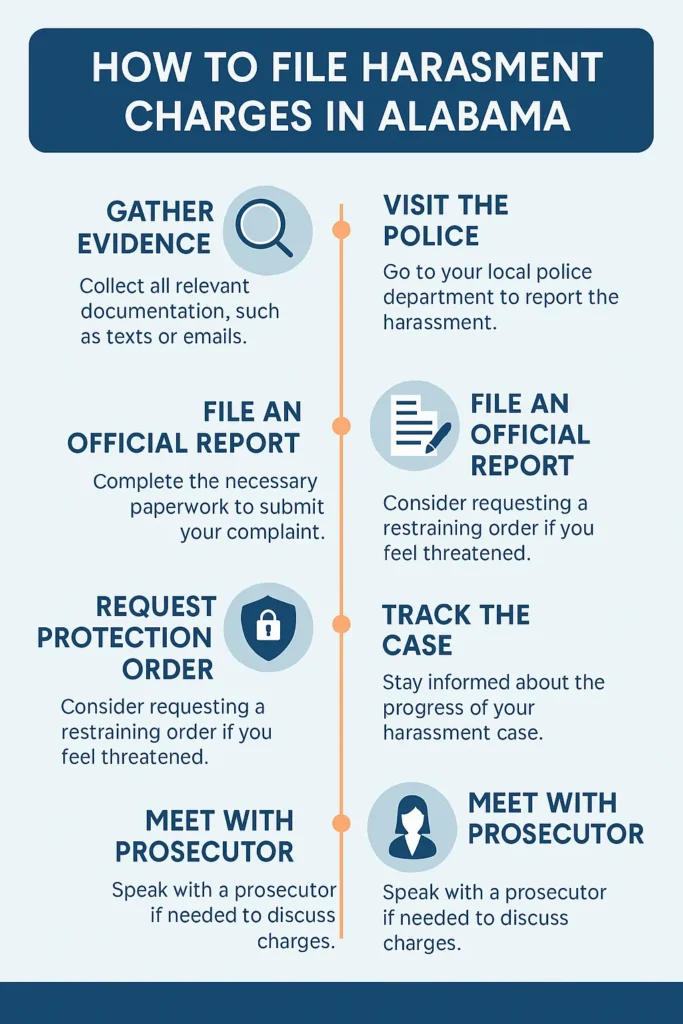
The process for filing harassment charges in Alabama varies depending on whether you are pursuing a criminal or civil action, or addressing workplace or domestic harassment. However, several fundamental steps are common to most situations.
Documenting the Harassment
The cornerstone of any successful harassment case is robust documentation. Without clear evidence, it can be challenging to substantiate your claims.
- Keep a Detailed Log: Record every incident of harassment. Include the date, time, location, a precise description of what happened, who was involved, and any witnesses present. Note the emotional and physical impact the incident had on you.
- Preserve Communications: Save all emails, text messages, voicemails, social media messages, and any other form of communication that constitutes harassment. Do not delete anything, as even seemingly innocuous messages can form part of a larger pattern.
- Gather Physical Evidence: If there are any physical manifestations of harassment, such as damaged property or threatening notes, preserve them carefully.
- Witness Information: Identify and obtain contact information for anyone who witnessed the harassment. Their testimony can significantly strengthen your case.
- Medical Records: If the harassment has led to physical or psychological harm, seek medical attention and ensure your medical records reflect the impact of the harassment.
Seeking Legal Counsel
Consulting with an attorney specializing in harassment law, civil rights, or criminal defense in Alabama is highly advisable. An experienced lawyer can:
- Assess Your Case: Provide an informed opinion on the strength of your claim and the best legal avenues to pursue.
- Explain Legal Options: Clarify the differences between civil and criminal proceedings and guide you toward the most appropriate path.
- Assist with Paperwork: Help you prepare and file the necessary legal documents accurately and efficiently.
- Represent You: Advocate on your behalf in court, negotiations, or with law enforcement.
- Protect Your Rights: Ensure your rights are protected throughout the legal process.
You can find legal aid services or private attorneys through the Alabama State Bar Association or local bar associations.
Filing a Criminal Harassment Charge
If you believe the harassment constitutes a criminal offense, you will typically need to involve law enforcement.
- Contact Local Law Enforcement: Go to your local police department or sheriff’s office to file a report. Be prepared to provide all the documentation you have gathered.
- File a Complaint: Law enforcement officers will take your statement and may conduct an investigation. If they find probable cause, they will file a criminal complaint.
- Prosecution: The district attorney’s office will then review the case. If they decide to prosecute, the alleged perpetrator will be charged and face criminal proceedings in court.
It is important to note that the decision to press criminal charges often rests with the prosecutor, not solely with the victim.
Filing a Civil Harassment Claim (Restraining Orders)

In cases where criminal charges are not appropriate or desired, or to supplement criminal proceedings, you can pursue a civil claim, often through a restraining order or injunction.
- Petition for a Protection Order: In Alabama, you can seek a Protection From Abuse (PFA) Order, even if the harassment is not accompanied by physical violence, if it involves abuse as defined by law, or a civil harassment restraining order. You will need to file a petition with the civil court in the county where you or the abuser resides.
- Temporary Order: The court may issue a temporary ex parte order (granted without the other party present) immediately if it finds sufficient grounds to believe immediate and irreparable harm may occur.
- Hearing: A formal hearing will be scheduled where both parties have the opportunity to present evidence and arguments. The judge will then decide whether to issue a permanent order.
- Enforcement: A Protection Order or restraining order legally prohibits the restrained person from contacting or coming near the petitioner. Violations can lead to arrest and criminal charges.
Addressing Workplace Harassment
If you are experiencing harassment at work, you have several options:
- Internal Reporting: Most employers have policies and procedures for reporting harassment. Follow your employer’s protocol, usually by reporting to your supervisor, human resources department, or a designated company official.
- File a Complaint with the EEOC or State Agency: If your employer does not take adequate action or if you fear retaliation, you can file a charge of discrimination with the federal Equal Employment Opportunity Commission (EEOC) or the Alabama Department of Industrial Relations (if applicable). There are strict time limits for filing such charges.
- Legal Action: After exhausting administrative remedies with the EEOC, you may be able to file a lawsuit in state or federal court.
Specific Considerations for Harassment in Alabama
The legal framework in Alabama has specific provisions that victims of harassment should be aware of. Understanding these nuances can significantly impact the effectiveness of your legal action.
Protection From Abuse Orders vs. Harassment Restraining Orders
While often used interchangeably, Alabama law distinguishes between Protection From Abuse (PFA) Orders and civil harassment restraining orders.
- Protection From Abuse (PFA) Orders: These are typically sought in cases of domestic violence, stalking, or when there is a relationship between the victim and perpetrator (e.g., family members, current or former dating partners, individuals with children in common). PFA Orders offer broad protections, including prohibiting contact, ordering the abuser to vacate a shared residence, and granting temporary custody of children.
- Civil Harassment Restraining Orders: These are available when there is no domestic relationship but harassment is occurring. The criteria for obtaining these orders may differ, and they might not offer the same breadth of protective measures as PFA Orders.
Statute of Limitations
Each type of legal action in Alabama has a statute of limitations, which is the maximum time after an event within which legal proceedings may be initiated. For criminal charges, these vary by the severity of the offense. For civil claims, like filing for a restraining order, there are also specific timeframes. Failing to file within these periods can result in the loss of your right to seek legal remedy. It is crucial to consult with an attorney as soon as possible to ensure you do not miss critical deadlines.
Retaliation
It is illegal for an employer to retaliate against an employee for reporting harassment or participating in an investigation. Similarly, individuals seeking legal protection against harassment should be aware of laws that protect them from further adverse actions by the alleged perpetrator. If you experience retaliation, document it thoroughly and report it to the appropriate authorities or your attorney.
Moving Forward After Filing Charges
Filing harassment charges is a significant step, and the aftermath can be emotionally and legally challenging. It is important to have a support system and to continue prioritizing your safety and well-being.
Ongoing Safety Planning
If you have obtained a restraining order or are under threat, develop a safety plan. This may include:
- Informing trusted friends, family, or neighbors about the situation.
- Varying your routines.
- Keeping important documents, such as the restraining order, readily accessible.
- Knowing emergency contact numbers, including law enforcement and domestic violence hotlines like the Alabama Coalition Against Domestic Violence.
Emotional and Psychological Support
The process of dealing with harassment and legal proceedings can take a toll on your mental health. Seek support from:
- Mental Health Professionals: Therapists, counselors, or psychologists can provide coping strategies and emotional support.
- Support Groups: Connecting with others who have similar experiences can be incredibly beneficial.
- Trusted Friends and Family: Lean on your personal support network for comfort and encouragement.

Understanding the Legal Process
Be patient with the legal system. Investigations and court proceedings can take time. Stay in regular contact with your attorney and respond promptly to any requests for information or action. Understanding the stages of the legal process—from initial filing to potential trial—can help manage expectations and reduce anxiety.
Filing harassment charges in Alabama is a process that requires diligence, documentation, and often, legal expertise. By understanding the definitions of harassment, the procedural steps involved, and the specific legal provisions within the state, individuals can more effectively seek justice and protection. Remember, your safety and emotional well-being are paramount throughout this challenging journey.
LifeOutOfTheBox is a participant in the Amazon Services LLC Associates Program, an affiliate advertising program designed to provide a means for sites to earn advertising fees by advertising and linking to Amazon.com. Amazon, the Amazon logo, AmazonSupply, and the AmazonSupply logo are trademarks of Amazon.com, Inc. or its affiliates. As an Amazon Associate we earn affiliate commissions from qualifying purchases.