
The Texas Rig is a cornerstone technique in bass fishing, a simple yet incredibly effective method for presenting soft plastic lures to wary fish. Whether you’re a seasoned angler looking to refine your skills or a beginner eager to master a foundational rig, understanding the nuances of the Texas Rig can significantly boost your success on the water. This versatile setup is a go-to for anglers exploring various fishing destinations, from the vast reservoirs of Lake Fork to the intricate weed beds of smaller, local lakes. Its ability to navigate through dense cover with minimal snags makes it a prime choice for targeting bass lurking in their natural habitats.
The allure of the Texas Rig lies in its inherent simplicity and its remarkable effectiveness. It’s a rig that allows you to fish through thick vegetation, submerged timber, and other potentially snag-prone areas without constant frustration. This opens up vast swathes of water that might otherwise be inaccessible with more delicate presentations. Imagine casting your bait into the heart of a lily pad field, a known bass haven, and knowing that your lure will glide through the dense foliage, enticing a strike. That’s the power of the Texas Rig. It’s not just a knot and a weight; it’s a philosophy of accessing where the fish live.
The Essential Components of a Texas Rig
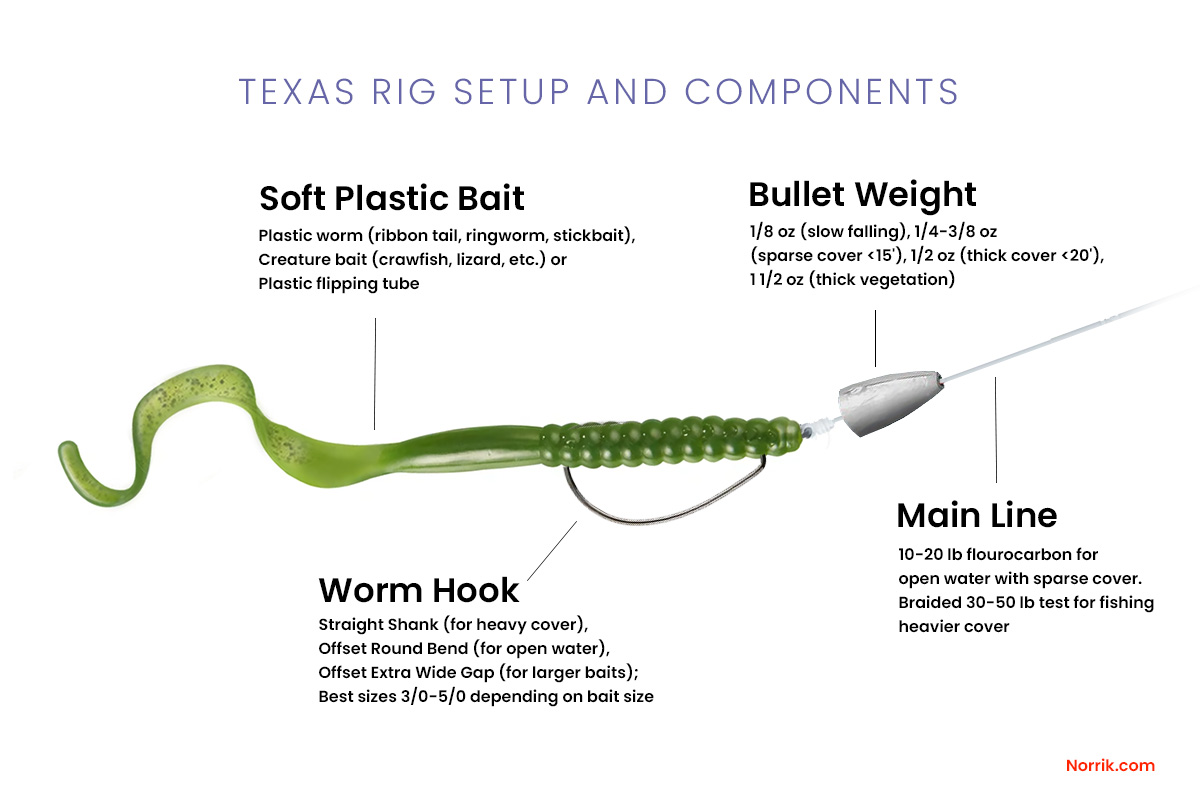
To effectively deploy a Texas Rig, you’ll need a few key pieces of equipment. Each component plays a crucial role in the rig’s performance, from its weedless nature to its ability to detect subtle bites. Selecting the right gear can mean the difference between a frustrating day of casting and reeling in a trophy bass. This setup is as fundamental as choosing the right hotel for your fishing expedition, ensuring your comfort and preparedness for the adventure ahead.
The Hook: Choosing the Right J-Hook
The heart of the Texas Rig is its hook. Typically, a worm hook or a straight-shank hook is used. These hooks are designed with a wide gap, which is essential for effectively burying the point into the soft plastic and ensuring a solid hookset. The gauge of the hook is also important; a heavier gauge hook will offer more strength and durability, especially when battling larger fish or when fishing in heavy cover. For most soft plastic baits, a hook size between 3/0 and 5/0 is a common starting point, but this can be adjusted based on the size of your lure and the species you’re targeting.
When selecting your hooks, consider the bend. A worm hook often features an offset shank, which helps to keep the bait in a more natural, “wiggling” position on the hook. This subtle action can be the key to triggering a strike from a hesitant fish. The straight-shank option also works well, especially with certain types of baits or when you want a slightly different presentation. The goal is to have the hook point readily available for a swift and sure penetration into the bass’s jaw.
The Weight: Sliders and Bullet Weights
The weight is what allows your bait to sink and also aids in its ability to penetrate cover. The most common weight used for a Texas Rig is a bullet weight, named for its shape, which easily slides through weeds and along the bottom. These weights are typically made of lead, though tungsten weights are gaining popularity due to their smaller size and increased sensitivity. Tungsten weights are also more environmentally friendly in some areas.
The weight size can vary greatly depending on the depth of the water, the current, and the type of lure you’re using. Lighter weights (1/8 to 1/4 ounce) are ideal for shallow water, calmer conditions, or when you want a slower, more natural fall. Heavier weights (3/8 to 1 ounce or more) are used in deeper water, strong currents, or when fishing through thick vegetation where you need the bait to punch through. The weight is threaded onto the fishing line before the hook is tied.
Some anglers opt for slip sinkers or egg sinkers for their Texas Rig, which are essentially bullet weights with a hole through them. These can also work, but the bullet shape generally navigates cover more efficiently. The key is to choose a weight that allows your bait to present naturally and reach the desired depth without being too heavy, which can spook fish or impede the bait’s action.
The Soft Plastic Bait: Versatility is Key
The beauty of the Texas Rig is its compatibility with an enormous variety of soft plastic baits. From classic plastic worms in various lengths and colors to creature baits, crawfish imitations, flukes, and even soft plastic swimbaits, almost any soft plastic can be rigged Texas style. The choice of bait often depends on the conditions, the time of year, and what the bass are feeding on.
For beginners, a 6- to 8-inch straight-tail plastic worm is an excellent starting point. Colors like watermelon, junebug, black, and green pumpkin are perennial favorites. Creature baits, with their numerous appendages that create action and vibration, are also very effective. Experimentation is crucial; observing what the bass are biting on in different bodies of water, like Lake Powell or the renowned fishing grounds of the Florida Everglades, can provide valuable insights into bait selection.
The way you rig the soft plastic onto the hook is critical for making the Texas Rig weedless. The hook point is inserted into the nose of the bait, threaded down its body, and then the hook point is buried back into the plastic, just shy of breaking through the skin. This creates a weedless presentation where the hook is concealed within the bait.
The Art of Rigging: A Step-by-Step Guide
Rigging a Texas Rig is a straightforward process, but attention to detail ensures its effectiveness. This method is favored by anglers exploring diverse fishing landscapes, from the arid beauty of the American Southwest to the lush waterways of Louisiana. The simplicity allows for quick re-rigging, meaning more time casting and less time fiddling with tackle.
Step 1: Threading the Weight
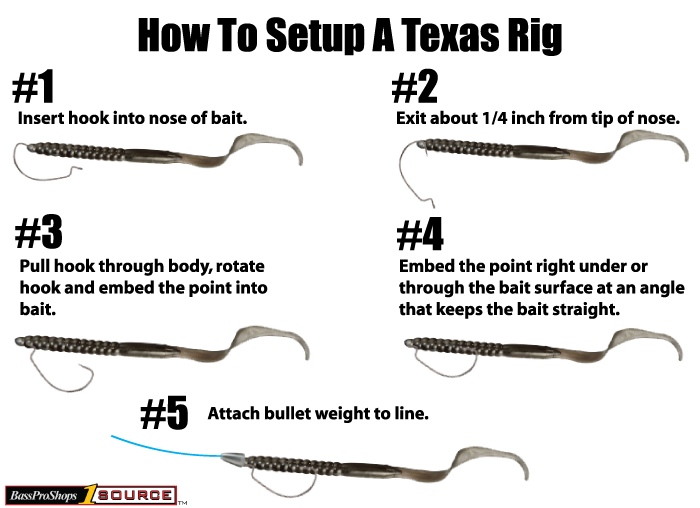
Begin by threading your chosen bullet weight onto your fishing line. The weight should slide freely on the line. If you’re using a weight with a plastic or metal insert, ensure it’s smooth to prevent line abrasion. The weight will sit above your hook.
Step 2: Attaching the Hook
Next, tie your hook to the end of the line using a reliable fishing knot. The Palomar knot or the Trilene knot are excellent choices for their strength and ease of tying. Ensure the knot is snugged down tight against the weight or the back of the bait once rigged.
Step 3: Inserting the Bait
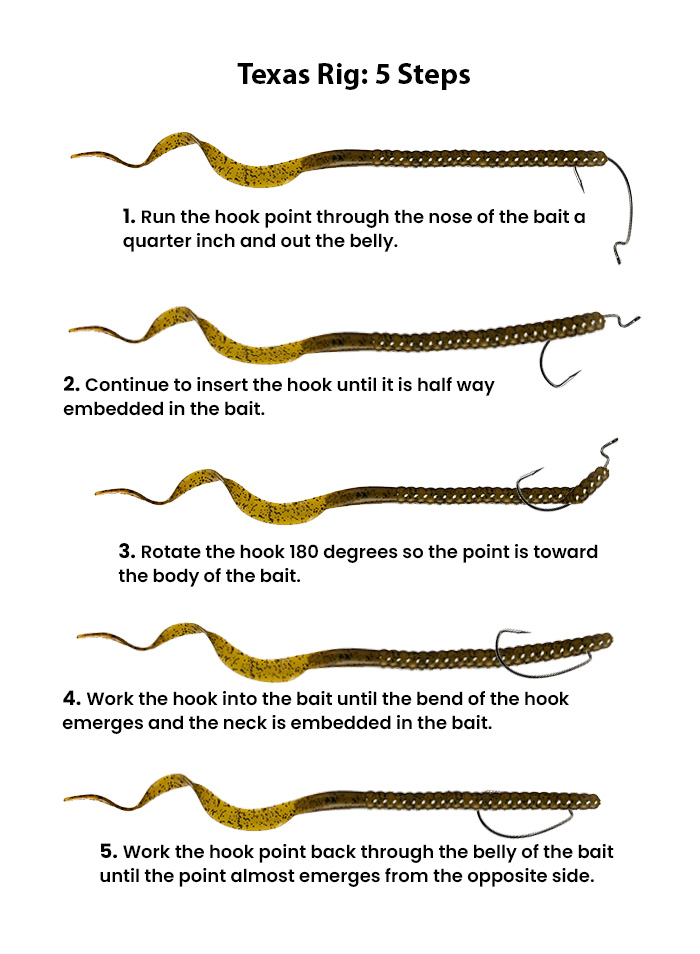
Take your soft plastic bait and begin inserting the hook point into the very tip or nose of the bait. Push the hook point in about a quarter of an inch, then bend the bait so the hook point is perpendicular to the line.
Step 4: Burying the Hook Point
Now, continue to thread the bait onto the hook shank, ensuring it’s seated snugly. The goal is to have the bait straight and aligned on the hook. Once the bend of the hook is covered by the bait, carefully push the hook point back into the plastic bait itself. You want the hook point to be embedded just under the surface of the plastic, creating a smooth surface that will slide over cover rather than catching on it. The exact depth will depend on the thickness of your bait. The hook should be flush with the outside of the bait.
A perfectly rigged Texas Rig will have the bait sitting straight on the hook with no visible hook point. This weedless design is what makes the rig so effective in areas with heavy cover, allowing you to fish confidently where other rigs would get snagged. It’s a system designed to bring your bait directly to the fish, unhindered by the environment.
When and Where to Employ the Texas Rig
The Texas Rig is a year-round, all-conditions bait, but it truly shines in certain scenarios and locations. Anglers often rely on it when exploring new fishing spots, from the famed Mississippi River to the tranquil lakes of the Canadian Rockies. Its adaptability makes it a go-to for almost any freshwater bass fishing situation.
Targeting Weed Beds and Submerged Cover
The primary advantage of the Texas Rig is its ability to penetrate and fish through heavy cover. This includes thick weed beds, lily pad fields, submerged timber, brush piles, and laydown logs. Bass use these structures as ambush points, and the weedless nature of the Texas Rig allows you to present your bait directly to them without getting hung up. Casting into the middle of a dense weed mat and feeling for that subtle “tick” is a classic Texas Rig scenario.
Fishing the Bottom
The weight of the Texas Rig ensures that your bait will reach the bottom quickly and stay there. This makes it ideal for targeting bass that are holding and feeding on the bottom, especially during cooler water temperatures or during midday when fish may retreat deeper. Dragging a Texas Rigged bait slowly along the bottom can imitate a crawfish or a wounded baitfish, triggering reaction strikes.
All Seasons and Conditions
While particularly effective in warmer months when bass are active in shallow cover, the Texas Rig can be used effectively throughout the year. In colder months, a slower retrieve with a heavier weight can entice lethargic bass. The rig’s versatility extends to various water clarity conditions. In stained water, brighter or darker colors might be more effective, while in clear water, natural hues and a more subtle presentation can be key. This adaptability is why it’s a staple for anglers exploring diverse locations, from the sun-drenched shores of Florida to the cool, deep waters of the Great Lakes.
Tips for Mastering the Texas Rig
Beyond the basic rigging and retrieval, a few advanced techniques can elevate your Texas Rig fishing. These tips are honed by anglers who have spent countless hours perfecting their craft in diverse fishing environments, from the celebrated bass fisheries of North America to serene angling spots in Europe.
The Importance of the Hookset
Because the hook point is buried in the plastic, you need a firm and deliberate hookset to drive the hook through the bait and into the fish’s mouth. When you feel a bite, don’t just reel up slack; give the rod a strong, sweeping motion to ensure a solid connection. Many bites on a Texas Rig will feel like a slight tick or a sudden weight, so set the hook immediately.
Varying Your Retrieve
Don’t be afraid to experiment with your retrieve. A common technique is to cast the rig out, let it sink to the bottom, and then slowly drag it along, pausing frequently. You can also impart action by twitching your rod tip, making the bait hop or wiggle. Another effective method is a “yo-yo” retrieve, where you reel in a bit, then let the bait fall, repeating this action. The best retrieve often depends on the type of bait you’re using and the behavior of the fish.
Using Different Soft Plastics
As mentioned, the Texas Rig is compatible with a wide array of soft plastics. Don’t limit yourself to just worms. Try creature baits with multiple appendages that create a lot of water disturbance, or soft plastic crawfish imitations that mimic the natural prey of bass. The color and profile of your bait can be adjusted based on water clarity, forage, and time of year. For example, in murky water, a bright chartreuse or a dark black might be more visible. In clear water, natural colors like green pumpkin or watermelon can be more effective.
Line and Rod Considerations
A medium-heavy to heavy action casting rod is generally recommended for Texas Rig fishing, especially when targeting larger bass or fishing in heavy cover. This provides the backbone needed for powerful hooksets and controlling strong fish. Braided line (20-50 lb test) is a popular choice for its strength and lack of stretch, allowing for sensitive bite detection and superior hooksetting power. Fluorocarbon line is another excellent option, particularly in clearer water, as it offers excellent sensitivity and abrasion resistance. The choice between braid and fluorocarbon often comes down to personal preference and specific fishing conditions. When fishing with braid, an experienced angler might tie on a fluorocarbon leader for added stealth.
By mastering the Texas Rig, you gain a potent tool in your fishing arsenal, one that will undoubtedly enhance your angling adventures, whether you’re exploring the celebrated fishing lodges of Montana or the bustling waterways near a major metropolis. It’s a technique that embodies the spirit of resourceful angling, allowing you to connect with fish in their natural, often challenging, environments.
LifeOutOfTheBox is a participant in the Amazon Services LLC Associates Program, an affiliate advertising program designed to provide a means for sites to earn advertising fees by advertising and linking to Amazon.com. Amazon, the Amazon logo, AmazonSupply, and the AmazonSupply logo are trademarks of Amazon.com, Inc. or its affiliates. As an Amazon Associate we earn affiliate commissions from qualifying purchases.