
Establishing a Limited Liability Company (LLC) in California can be a strategic move for entrepreneurs and small business owners seeking to combine personal asset protection with the operational flexibility of a partnership. The Golden State, known for its vibrant economy and innovative spirit, offers numerous opportunities, but navigating its specific regulatory environment requires careful attention. For those embracing a lifestyle that involves business ventures, whether from a home office or during extended business stays, understanding the intricacies of California LLC formation is paramount to success.
Understanding the California LLC Landscape
Before diving into the procedural steps, it’s crucial to grasp what an LLC entails in California and why it might be the ideal structure for your entrepreneurial pursuits.
Why Choose an LLC in the Golden State?
An LLC offers a hybrid business structure that blends the limited liability protection of a corporation with the pass-through taxation benefits of a partnership or sole proprietorship. This means that, as an LLC owner (member), your personal assets are generally protected from business debts and liabilities. This separation of personal and business finances is a significant advantage, particularly for individuals who prioritize a distinct boundary between their professional endeavors and their personal lifestyle. Furthermore, LLCs offer considerable flexibility in management structure, allowing owners to decide how the company will be run, whether by its members or by designated managers. For those who engage in business activities that might involve frequent travel or remote operations, the clear legal framework provided by an LLC offers peace of mind and simplifies many aspects of business administration.
Key Regulatory Bodies
In California, several state agencies play a role in the formation and ongoing compliance of LLCs. The primary body you’ll interact with is the California Secretary of State. This office is responsible for registering your LLC’s formation documents and maintaining official records. Additionally, the California Franchise Tax Board (FTB) handles state income and franchise taxes for businesses, including LLCs. Understanding the distinct roles of these bodies is fundamental to ensuring your LLC remains compliant from its inception.
The Step-by-Step Formation Process
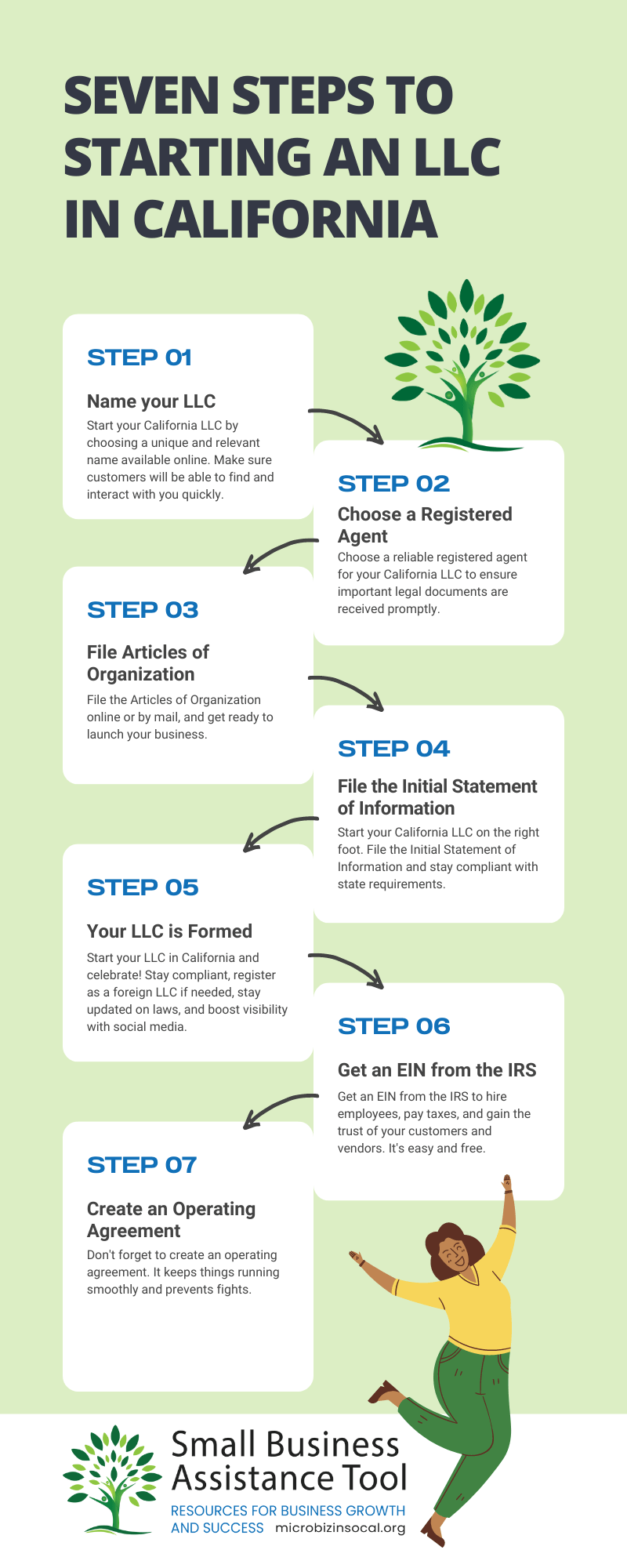
Forming an LLC in California involves a series of sequential steps, each requiring careful attention to detail.
Naming Your California LLC
The first critical step is choosing a unique and compliant name for your LLC. California law requires that your chosen name be distinguishable from other registered business entities. It must also include “Limited Liability Company,” “LLC,” or “L.L.C.” You can check the availability of your desired name through the California Secretary of State’s business search tool. While you can reserve a name for up to 60 days by mail, it’s often more practical for entrepreneurs to simply file their formation documents once they’ve confirmed name availability.
Appointing a Registered Agent
Every California LLC must designate a registered agent for service of process. This individual or corporate entity must have a physical street address in California (not a P.O. Box) and be available during regular business hours to accept legal documents and official correspondence on behalf of your LLC. The registered agent plays a crucial role in ensuring your business receives important legal notices promptly. While you can serve as your own registered agent if you meet the requirements, many business owners opt to hire a professional registered agent service, especially if their lifestyle involves frequent travel or if they prefer to maintain a level of privacy regarding their personal address.
Filing the Articles of Organization
The official formation document for a California LLC is the Articles of Organization (Form LLC-1). This document must be filed with the California Secretary of State. It typically includes your LLC’s name, its street address, the name and address of your registered agent, and a statement regarding management structure (member-managed or manager-managed). The filing fee is generally modest, and once approved, your LLC officially comes into existence. Submitting these articles accurately and completely is vital to avoid delays in your business launch.
Crafting Your Operating Agreement
Although not required to be filed with the state, an Operating Agreement is perhaps the most important internal document for your California LLC. This legally binding agreement outlines the ownership percentages, rights, and responsibilities of each member, as well as the LLC’s management structure, profit and loss distributions, and procedures for admitting new members or dissolving the company. For entrepreneurs operating a business as part of a specific lifestyle choice, a well-drafted Operating Agreement provides clarity and helps prevent future disputes, ensuring smooth operations even when members are geographically dispersed or have varying levels of involvement. It is strongly recommended to consult with a legal professional to draft an Operating Agreement tailored to your specific business needs.

Obtaining an EIN
Once your LLC is officially formed and you have an Operating Agreement in place, you will likely need a Federal Employer Identification Number (EIN). This nine-digit number, issued by the IRS (Internal Revenue Service), is essentially your LLC’s social security number. You will need an EIN if your LLC has more than one member, has employees, or chooses to be taxed as a corporation. Even single-member LLCs without employees may opt for an EIN for banking purposes or to simplify tax filings. Applying for an EIN is a free and relatively straightforward process that can be completed online through the IRS website.
Post-Formation Compliance and Ongoing Requirements
Forming the LLC is just the beginning. Maintaining its good standing in California requires adherence to several ongoing compliance obligations.
Initial and Annual Statement of Information
All California LLCs are required to file a Statement of Information (Form LLC-12) with the California Secretary of State. The initial statement is due within 90 days of filing your Articles of Organization. Subsequent statements are due annually during the six-month period ending on the last day of the anniversary month of your LLC’s formation. This statement updates the state’s records with current information about your LLC’s principal office address, registered agent, and the names and addresses of its members or managers. Failure to file can result in penalties and potentially lead to the suspension of your LLC’s operating privileges.
California Franchise Tax
Perhaps one of the most significant ongoing costs for a California LLC is the annual minimum franchise tax. Regardless of income or activity, every LLC registered or doing business in California must pay an annual minimum tax to the California Franchise Tax Board (FTB). This tax is currently set at $800 and is due by the 15th day of the fourth month after your LLC files its Articles of Organization, and annually thereafter. Additionally, if your LLC’s net income exceeds a certain threshold, it will be subject to an annual LLC fee based on its total income from California sources. Proper planning and budgeting for these taxes are essential for the financial health of your LLC.
Business Licenses and Permits
Depending on the nature of your business and its location within California, your LLC may need to obtain specific state and local business licenses and permits. For instance, a business operating in Los Angeles might need different permits than one in San Francisco or a rural area. These can include general business licenses, professional licenses, seller’s permits (if you sell tangible goods), and zoning permits. It is crucial to research the specific requirements for your industry and locality to ensure full compliance. Many online resources and local chambers of commerce can help identify the necessary licenses and permits for your particular business activity.
Financial and Legal Considerations
Beyond the administrative steps, sound financial management and adherence to legal principles are vital for a thriving California LLC.
Separate Bank Accounts
One of the foundational principles of maintaining limited liability protection is keeping your LLC’s finances separate from your personal finances. This means opening a dedicated business bank account for your LLC. Commingling funds can “pierce the corporate veil,” potentially exposing your personal assets to business liabilities. This separation is also crucial for accurate bookkeeping and tax preparation, making it easier to track your business’s financial performance, a key aspect of any sustainable business lifestyle.
Understanding Tax Obligations
While an LLC offers flexibility in management, its tax treatment can vary. By default, a single-member LLC is taxed as a disregarded entity (like a sole proprietorship), and a multi-member LLC is taxed as a partnership. In both cases, profits and losses are “passed through” to the owners’ personal income tax returns. However, an LLC can also elect to be taxed as an S-corporation or a C-corporation, which may offer different tax advantages depending on your specific circumstances. Understanding these options and their implications for both federal and state taxes is critical. Consulting with a qualified tax professional is highly recommended to determine the most advantageous tax election for your California LLC.

Professional Advice
Forming an LLC, while seemingly straightforward, involves legal and financial complexities. Seeking guidance from legal counsel and tax professionals specializing in California business law is a wise investment. Attorneys can assist with drafting your Operating Agreement and ensuring overall compliance, while accountants can advise on tax implications, bookkeeping best practices, and help you navigate the state’s unique tax landscape, including the annual franchise tax. This professional support can provide clarity, mitigate risks, and allow you to focus more effectively on the core aspects of running your business and enjoying the lifestyle it supports.
LifeOutOfTheBox is a participant in the Amazon Services LLC Associates Program, an affiliate advertising program designed to provide a means for sites to earn advertising fees by advertising and linking to Amazon.com. Amazon, the Amazon logo, AmazonSupply, and the AmazonSupply logo are trademarks of Amazon.com, Inc. or its affiliates. As an Amazon Associate we earn affiliate commissions from qualifying purchases.