
Securing an alcohol license in Florida is a crucial step for any business looking to serve or sell alcoholic beverages. Whether you’re opening a new restaurant in Miami, a bar in Tampa, a convenience store in Orlando, or a hotel with a bar in Key West, understanding the process and requirements is paramount to a smooth and legal operation. This guide will navigate you through the essential steps, from initial preparation to final approval, ensuring your establishment can legally offer a full range of alcoholic beverages.
Understanding Florida’s Alcohol Licensing Framework
The regulatory body overseeing alcohol licenses in Florida is the Division of Alcoholic Beverages and Tobacco (DBT), part of the Department of Business and Professional Regulation. The state operates a quota system for certain types of licenses, meaning the number of licenses available in a particular county is limited. This often necessitates purchasing a license from an existing holder, adding a layer of complexity and cost.
Types of Alcohol Licenses in Florida
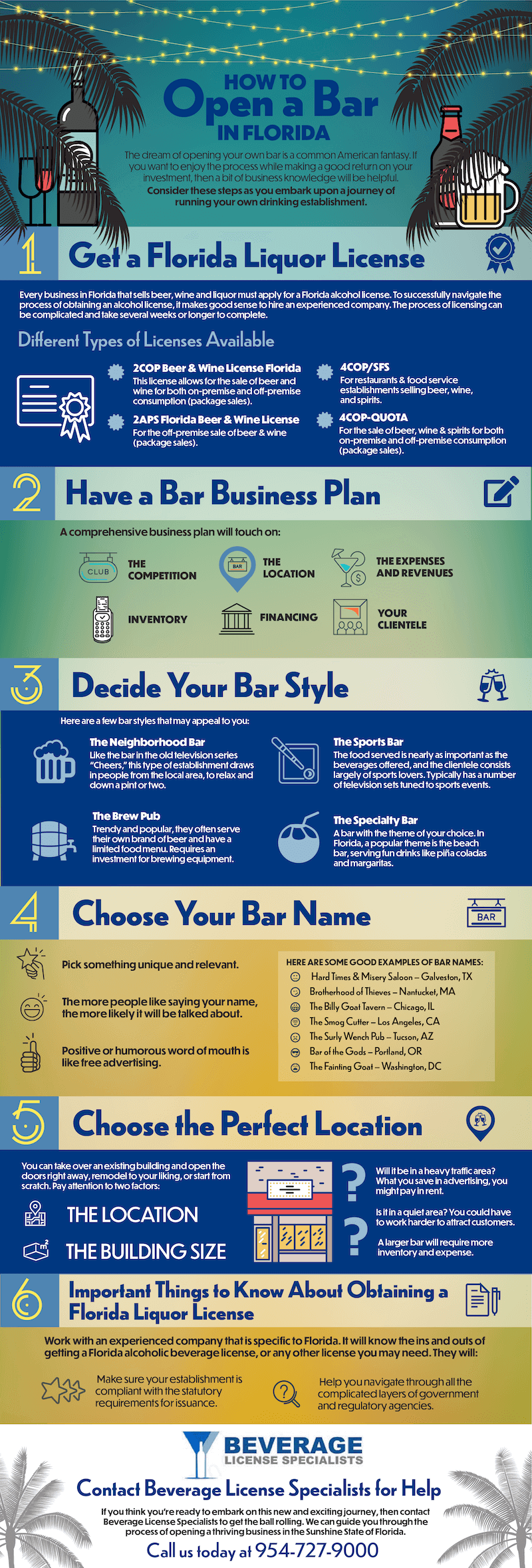
Florida offers a variety of alcohol licenses, each catering to different business models and types of establishments. Identifying the correct license is the first critical step.
For Restaurants and Eateries
- Beer and Wine (Quota License): This license allows for the sale of beer and wine for consumption on or off the premises. It’s often a starting point for many food service establishments.
- Full Liquor (Quota License): This is the most comprehensive license, permitting the sale of spirits, wine, and beer. To qualify for a full liquor license in many counties, a business must derive at least 51% of its gross revenue from the sale of food and non-alcoholic beverages. This is a significant factor for restaurants aiming to serve a complete bar menu.
For Bars and Nightclubs
- Full Liquor (Quota License): This is the standard for establishments whose primary business is the sale of alcoholic beverages. The 51% food sales requirement may be waived or modified for specific types of establishments, such as nightclubs, but it’s essential to verify with the DBT.
For Retail Establishments
- Package Stores (Quota License): Licenses for businesses that sell alcohol for off-premise consumption, such as liquor stores or convenience stores.
- Convenience Stores and Grocery Stores: These often qualify for beer and wine licenses for off-premise consumption.
For Hotels and Hospitality Venues
- Hotel Licenses: Florida offers specific licenses for hotels and motels, which can be advantageous. These licenses may have different requirements regarding food sales and can often allow for the sale of all types of alcohol on the premises. A prominent example is a resort like The Breakers Palm Beach, which would require appropriate licensing for its numerous dining and bar outlets.
- Club Licenses: For private clubs that meet specific membership and operational criteria.
Other License Types
- Brewpub Licenses: For establishments that brew their own beer for sale on-premise.
- Catering Licenses: For businesses that cater events and serve alcohol off-site.
- Special Event Licenses: For temporary events like festivals or private parties.
Understanding the Quota System
Many of the most sought-after licenses, particularly the full liquor (4COP) and beer/wine (2COP) quota licenses, are limited in number per county. This means that if a county has reached its quota, you cannot simply apply for a new license; you must purchase one from an existing license holder. This process involves the sale and transfer of the license itself, which has its own set of legal and financial considerations, including DBT approval. The number of licenses is determined by the population of the county, with specific ratios set by state law.
The Application Process: Step-by-Step
Navigating the application process requires meticulous attention to detail and adherence to all DBT regulations.
Step 1: Determine Your Business Structure and License Type
Before you begin filling out forms, clearly define your business entity (sole proprietorship, LLC, corporation) and precisely which type of alcohol license you need. Consult with legal counsel specializing in alcohol beverage law to ensure you select the most appropriate license for your specific business model and location.
Step 2: Verify Location and Zoning Requirements
Ensure your chosen business location is properly zoned for the sale of alcohol. Local county and city ordinances may have additional restrictions on alcohol sales, such as proximity to schools, churches, or residential areas. Contact your local zoning department for confirmation. The DBT will also conduct its own review of the proposed location.
Step 3: Obtain Necessary Federal, State, and Local Permits
Before applying for an alcohol license, you’ll likely need:
- Federal Alcohol Administration Act (FAA) Basic Permit: Required for businesses involved in manufacturing, importing, or wholesaling alcoholic beverages.
- Employer Identification Number (EIN): From the Internal Revenue Service if your business is a corporation or partnership.
- State Sales Tax Registration: From the Florida Department of Revenue.
- Local Business Tax Receipt (formerly Occupational License): From the city or county where your business is located.
- Food Service Establishment Permit: If you are operating a restaurant, this is crucial.
Step 4: The Application Submission
The application for an alcohol license in Florida is submitted to the Division of Alcoholic Beverages and Tobacco (DBT). The application form will vary depending on the license type, but it generally requires comprehensive information about your business, its ownership, and its intended operations.
Required Documentation
Expect to provide:
- Proof of Business Registration: Articles of incorporation, operating agreement, etc.
- Ownership Information: Details of all individuals with a financial interest in the business, including background checks and fingerprints.
- Lease or Deed: For the business premises.
- Floor Plan: Showing the layout of the establishment.
- Financial Records: To demonstrate solvency and the ability to operate the business.
- Sales Tax Registration Number.
- Federal EIN (if applicable).
- Food Service Permit (if applicable).
- Zoning Approval.
Step 5: Investigation and Review
Once submitted, the DBT will conduct a thorough investigation. This includes:
- Background Checks: On all principals and key personnel to ensure they meet eligibility requirements.
- Premises Inspection: To verify compliance with zoning, health, and safety regulations.
- Public Notice: For certain license types, a public notice may be required to inform the community and allow for objections.
Step 6: Licensing Fee and Payment
Each license type has a corresponding annual fee. The amount varies significantly based on the license classification. Quota licenses, due to their limited availability, often have a much higher initial cost when purchased from a third party, in addition to the annual renewal fees.
Step 7: License Issuance
Upon successful completion of the investigation and review process, and payment of all fees, the DBT will issue your alcohol license. This license must be prominently displayed at your establishment.
Navigating Quota Licenses and Transfers
For many businesses, the most challenging aspect of obtaining a full liquor license or a beer and wine quota license is the quota system.
Purchasing a Quota License
When a county has reached its quota, you must acquire an existing license from a seller. This process involves:
- Finding a Seller: This can be done through brokers, legal professionals, or industry contacts.
- Negotiating the Price: The price of a quota license can fluctuate based on demand, location, and the specific county. It can range from tens of thousands to hundreds of thousands of dollars.
- Due Diligence: It is imperative to conduct thorough due diligence on the license itself. Ensure it is in good standing with the DBT, free of liens or encumbrances, and that the seller has clear title to it.
- DBT Transfer Application: Both the buyer and seller must complete and submit the necessary transfer applications to the DBT. This process requires detailed documentation, including purchase agreements and proof of funds.
- DBT Approval: The DBT must approve the transfer of ownership and the new location (if applicable). This can take several weeks or months.
Understanding the “Sitting” License
Sometimes, a license may not be actively “in use” by a business but is still considered “sitting.” If you intend to operate a new establishment at a different location, you will need to transfer the license to your new premises. The DBT has specific rules about how long a license can remain inactive before it might be subject to forfeiture.
Maintaining Your License and Compliance
Obtaining the license is just the beginning. Ongoing compliance with Florida laws and DBT regulations is essential to avoid penalties, fines, or license revocation.
Key Compliance Areas
- Responsible Vendor Training: Florida mandates that employees who sell or serve alcohol complete a Responsible Vendor Training program. This training covers topics like identifying underage drinkers, recognizing signs of intoxication, and preventing service to intoxicated individuals. Businesses that implement a Responsible Vendor program may benefit from certain legal protections in the event of violations.
- Age Verification: Strict adherence to age verification policies is critical. Serving alcohol to individuals under 21 is a serious offense with severe consequences.
- Hours of Sale: Be aware of and comply with all local and state restrictions on hours for alcohol sales.
- Record Keeping: Maintain accurate records of all alcohol purchases and sales as required by the DBT.
- No Sales to Intoxicated Persons: This is a fundamental aspect of responsible service.
- License Renewal: Alcohol licenses are typically valid for one year and must be renewed annually. Failure to renew on time can lead to lapse and potential forfeiture.
Common Violations and Penalties
The DBT enforces strict penalties for violations, which can include:
- Fines: Monetary penalties that can range from a few hundred to thousands of dollars.
- Suspension: Temporary loss of the license, preventing alcohol sales for a specified period.
- Revocation: Permanent cancellation of the alcohol license, effectively shutting down the business’s ability to sell alcohol.
- Criminal Charges: In severe cases, individuals involved can face criminal prosecution.

Seeking Professional Assistance
Given the complexity of Florida’s alcohol licensing laws, it is highly recommended to engage the services of an attorney specializing in alcohol beverage law. These professionals can:
- Guide you through the entire application process.
- Assist with purchasing and transferring quota licenses.
- Ensure all documentation is accurate and complete.
- Represent you in any dealings with the DBT.
- Advise on ongoing compliance strategies.
By understanding the intricacies of the licensing framework, diligently following the application procedures, and committing to ongoing compliance, businesses can successfully obtain and maintain their alcohol licenses in Florida, paving the way for a thriving hospitality or retail venture.
LifeOutOfTheBox is a participant in the Amazon Services LLC Associates Program, an affiliate advertising program designed to provide a means for sites to earn advertising fees by advertising and linking to Amazon.com. Amazon, the Amazon logo, AmazonSupply, and the AmazonSupply logo are trademarks of Amazon.com, Inc. or its affiliates. As an Amazon Associate we earn affiliate commissions from qualifying purchases.