
Obtaining a birth certificate is a fundamental administrative task, often more complex than one might initially assume. While seemingly a simple piece of paper, a birth certificate serves as your foundational identity document, crucial for countless life events—from enrolling in school and applying for a passport to claiming benefits and even proving lineage. For those living in or planning a move to Colorado, understanding the specific process to acquire this vital record is paramount. This guide aims to demystify the steps involved, offering a professional, insightful, and engaging walkthrough for residents and newcomers alike. Whether you’re replacing a lost document, needing one for a child, or simply securing your records, navigating the official channels requires precision and knowledge.
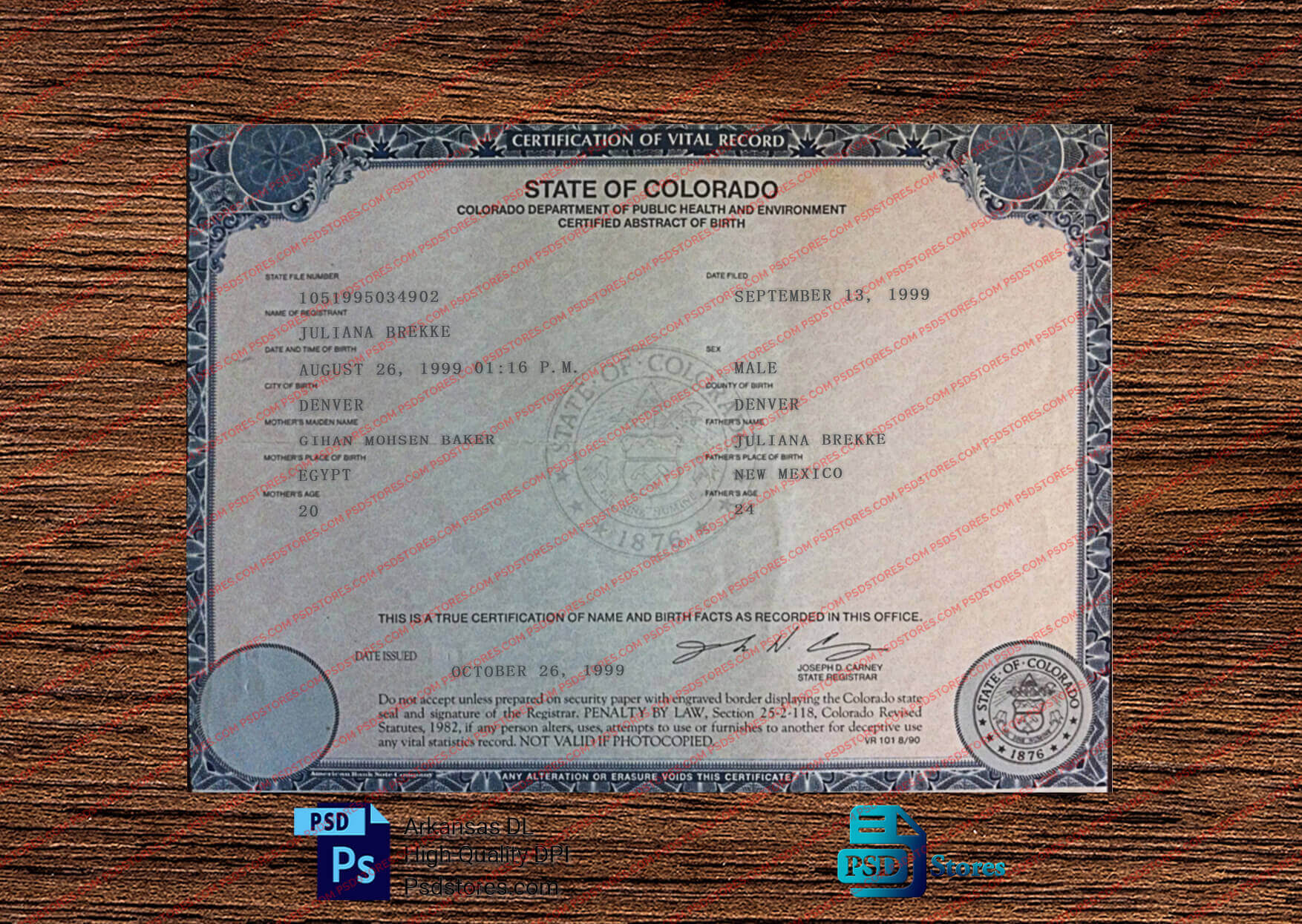
Understanding the Importance of Your Birth Certificate
A birth certificate is far more than just a record of your birth date and location; it’s the cornerstone of your personal identity. In today’s interconnected world, where proof of identity is consistently required, this document becomes indispensable for many aspects of daily life and long-term planning. For individuals and families establishing a lifestyle in Colorado, ensuring easy access to this document is a key component of organized living.
Why You Need This Vital Document
Your birth certificate is the primary legal record of your birth, establishing your identity and citizenship. It’s universally accepted as proof of age, parentage, and place of birth. Without it, many essential services and rights can become inaccessible. Imagine trying to apply for a driver’s license, enroll in college, or even get married without this foundational document. For families, securing birth certificates for children is crucial for everything from medical care enrollment to future educational opportunities. It’s also a key document for international travel, as it is often a prerequisite for obtaining a passport, allowing you to explore destinations beyond Colorado’s majestic mountains.
Common Scenarios Requiring a Birth Certificate
The scenarios where a birth certificate is required are extensive and varied. Here are some of the most common instances:
- Passport Applications: To travel internationally, a U.S. passport is essential, and a certified copy of your birth certificate is a primary requirement for proving citizenship.
- Driver’s License or State ID: While not always required after the initial application, a birth certificate can be used to establish identity for a new driver’s license or state identification card, particularly for first-time applicants.
- Social Security Card Applications: Obtaining a Social Security card, whether for a newborn or an adult, necessitates a birth certificate.
- School Enrollment: Children enrolling in public or private schools often need a birth certificate to verify age and identity.
- Marriage Licenses: When planning a wedding, both parties typically need to present their birth certificates to obtain a marriage license.
- Claiming Benefits: For certain government benefits, pensions, or insurance claims, proof of age and identity via a birth certificate may be required.
- Military Enlistment: Joining the armed forces requires comprehensive identification, with the birth certificate being a core document.
- Adoption Proceedings: For adoptive parents, the child’s birth certificate is a critical piece of the legal puzzle.
Understanding these frequent needs underscores why keeping your birth certificate accessible and current is a vital part of managing your personal and family lifestyle.
Navigating the Process in Colorado
Obtaining a birth certificate in Colorado is a standardized process managed by the Colorado Department of Public Health and Environment (CDPHE) through its Vital Records Section. While the process is generally straightforward, it involves specific requirements regarding eligibility and documentation to protect against fraud and ensure the integrity of vital records.
Who Can Request a Birth Certificate?
To prevent unauthorized access to sensitive personal information, Colorado law restricts who can request a certified copy of a birth certificate. Generally, eligible individuals include:
- The Person Named on the Certificate: If you are the individual whose birth is recorded, you can request your own certificate.
- A Parent Listed on the Certificate: Only parents whose names appear on the birth certificate can request a copy for their child.
- A Legal Guardian: Guardians must provide court documents demonstrating legal guardianship.
- A Grandparent: Grandparents are often able to request a certificate, especially if they are involved in the child’s care, though additional documentation might be required.
- A Step-Parent: Step-parents may be eligible under specific circumstances, usually requiring proof of marriage to the biological parent.
- A Legal Representative: Attorneys representing eligible individuals can obtain copies, provided they submit documentation of their legal representation.
- A Party With a Direct and Tangible Interest: This category is broader and can include individuals or agencies with a court order or other legal justification for needing the certificate.
It’s crucial to confirm your eligibility before initiating an application to avoid delays or rejection. The CDPHE website provides detailed guidance on this, ensuring you meet all legal prerequisites.
Required Documentation and Information
When applying for a birth certificate in Colorado, you’ll need to provide specific information about the individual whose certificate is being requested, as well as proof of your identity and your relationship to that individual. This meticulous approach safeguards sensitive information and ensures accurate record-keeping.
Essential information required for the birth record itself includes:
- Full Name at Birth: The complete name of the individual as it appears on the original birth record.
- Date of Birth: The exact day, month, and year of birth.
- Place of Birth: The city or county in Colorado where the birth occurred (e.g., Denver, Boulder County, El Paso County).
- Parents’ Full Names: The full names of both parents, including the mother’s maiden name.
In addition to this information, you, as the applicant, must provide:
- Valid Photo Identification: Acceptable forms of ID typically include a state-issued driver’s license, a state identification card, a military ID, or a passport. The ID must be current and clearly show your photo and signature.
- Proof of Relationship (if not the individual): Depending on your relationship to the person on the certificate (e.g., parent, grandparent, legal guardian), you may need to submit supporting documents such as your own birth certificate, a marriage certificate, or court orders. These documents establish your legal right to obtain the record.
- Application Form: A completed and signed application form, which can usually be downloaded from the CDPHE website or obtained at a local Vital Records office.
Gathering all necessary documents and information beforehand will significantly streamline your application process and prevent common hold-ups.
Step-by-Step Guide to Obtaining Your Colorado Birth Certificate
The Colorado Department of Public Health and Environment offers several convenient methods for obtaining a birth certificate, catering to different needs and preferences. Whether you prefer the speed of an online request, the traditional mail-in approach, or the directness of an in-person visit, each option has its own set of guidelines to follow.
Online Application Process
For many, the online application is the quickest and most convenient method. Colorado utilizes authorized third-party services to process online orders for vital records, such as VitalChek.
- Visit the CDPHE Website: Start by visiting the official CDPHE Vital Records section to find the link to their authorized online vendor.
- Access the Online Portal: You’ll be redirected to a secure third-party website (e.g., VitalChek) dedicated to vital record requests.
- Complete the Application: Fill out the online application form with all the required information about the birth record and yourself as the applicant.
- Upload Identification: You will be prompted to upload clear copies of your valid photo ID and any other supporting documentation proving your eligibility.
- Pay Fees: Submit payment using a credit or debit card. There will typically be a standard fee for the birth certificate plus a processing fee charged by the online service.
- Review and Submit: Carefully review all entered information before final submission.
- Track Your Order: Most online services provide an order tracking number, allowing you to monitor the status of your request.
Online applications are generally processed faster than mail-in requests, and they offer the convenience of applying from anywhere.
Mail-In Application Process
If you prefer a traditional approach or do not have access to online services, applying by mail is a reliable option.
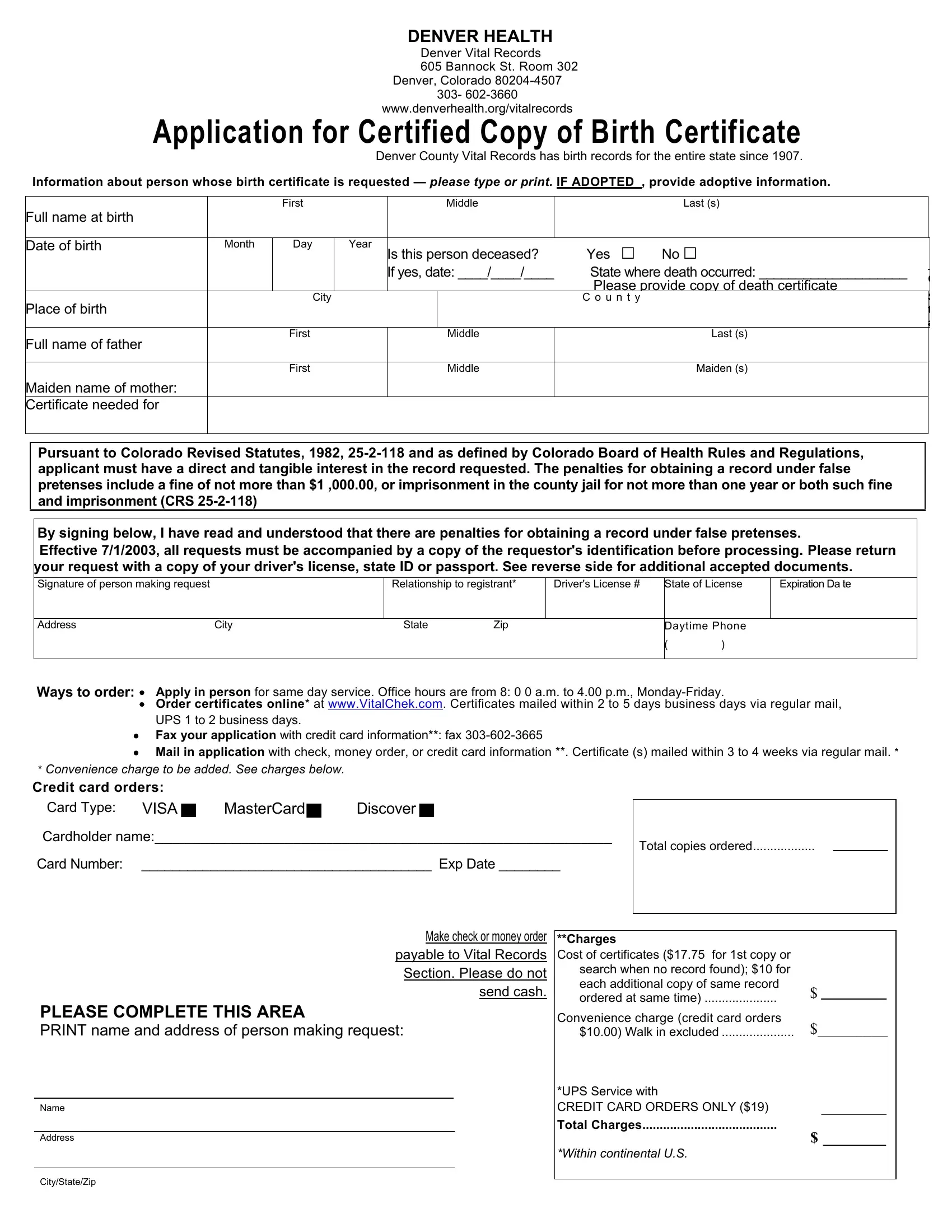
- Download the Application Form: Obtain the official “Application for a Colorado Birth Certificate” form from the Colorado Department of Public Health and Environment website.
- Complete the Form: Fill out the application form legibly and completely, providing all requested details.
- Gather Supporting Documents: Make clear photocopies of your valid photo ID and any necessary proof of relationship documents. Do not send original documents, as they may not be returned.
- Prepare Payment: Include a check or money order payable to “CDPHE Vital Records” for the correct fee. Ensure the amount is accurate to avoid delays.
- Mail Your Application: Send the completed form, photocopies of ID/documents, and payment to the address provided on the application form. Typically, this is the Vital Records Section in Denver. Consider using certified mail for tracking purposes.
Mail-in requests generally have longer processing times, so plan accordingly, especially if you have an upcoming deadline.
In-Person Application Options
For those who need a birth certificate urgently or prefer direct interaction, in-person applications are available at specific locations.
- State Vital Records Office: The primary location for in-person requests is the Colorado Department of Public Health and Environment Vital Records Section in Denver.
- Location: Check the CDPHE website for the current physical address and operating hours.
- Requirements: Bring your completed application form (or fill one out there), your original valid photo ID, and any original supporting documents. You will also need to pay the fee, often with cash, check, money order, or credit/debit card.
- Processing: If all documentation is in order, certificates can often be issued on the same day.
- Local County Health Departments: Many local county health departments in Colorado, such as those in El Paso County or Boulder County, are also authorized to issue birth certificates for births that occurred within their jurisdiction, or even statewide.
- Check Local Availability: It’s essential to call ahead or visit the specific county health department’s website to confirm their services, hours, required documents, and accepted payment methods. Availability can vary by county.
- Benefits: Applying locally can be more convenient for residents outside of Denver and often results in same-day issuance.
Regardless of the method chosen, careful adherence to instructions and prompt submission of all required materials will ensure a smoother experience.
Fees, Processing Times, and Expedited Services
Understanding the financial and temporal aspects of obtaining a birth certificate in Colorado is crucial for planning. While the process aims to be efficient, certain factors can influence how quickly you receive your document and how much it costs.
Standard Fees and Payment Methods
The fee for a certified copy of a birth certificate in Colorado is standardized, though it can vary slightly based on the application method. As of current guidelines, the fee for the first certified copy is typically around $20, with additional copies requested at the same time costing less, often around $13 per extra copy. These figures are subject to change, so always verify the latest fees on the Colorado Department of Public Health and Environment (CDPHE) website.
Payment methods generally include:
- Checks or Money Orders: Payable to “CDPHE Vital Records” for mail-in applications.
- Credit/Debit Cards: Accepted for online applications (often with an additional processing fee from the third-party vendor like VitalChek) and usually for in-person requests at the state office or county health departments.
- Cash: Typically accepted only for in-person applications.
Ensure your payment is for the correct amount to prevent delays in processing.
Anticipating Processing Times
Processing times can vary significantly based on the application method and the volume of requests.
- Online Applications (via VitalChek): These are generally the fastest. After verification of documents, delivery can range from a few business days to 1-2 weeks, depending on the shipping option selected.
- In-Person Applications: At the Colorado Department of Public Health and Environment Vital Records office in Denver or participating county health departments, certificates are often issued the same day, provided all documentation is complete and accurate.
- Mail-In Applications: This method typically has the longest processing time, ranging from 2 to 4 weeks, excluding mailing time. It’s crucial to factor this into your plans, especially if you have an urgent need.
These timelines are estimates and can be affected by peak request periods or unforeseen administrative issues.
When and How to Expedite Your Request
For urgent needs, such as last-minute travel or critical deadlines, expedited services are available:
- Online Expedited Shipping: When applying online through VitalChek or similar services, you can usually opt for expedited shipping (e.g., overnight or 2-day delivery) for an additional fee. This significantly reduces delivery time after the certificate has been processed.
- In-Person Application: This is inherently the most expedited option for receiving the physical document. If you require a certificate immediately, visiting the state Vital Records office in Denver or a local county health department is your best bet, assuming you have all required documentation.
- No Expedited Processing for Mail: Generally, there is no option to expedite the processing of a mail-in application. The only way to speed up delivery is by using an expedited shipping service for the return mail, which must be arranged separately and is not always guaranteed by the Vital Records office itself.
Always consider your timeline carefully and choose the application method that best aligns with your urgency and personal circumstances.
Essential Tips and Common Pitfalls to Avoid
Navigating administrative processes, even those as seemingly straightforward as obtaining a birth certificate, can present unexpected challenges. Being prepared and proactive can save you time, frustration, and potential rejections. For anyone embracing the lifestyle Colorado offers, mastering these small administrative hurdles contributes to a smoother overall experience.
Verifying Information Before Submission
One of the most frequent causes of delays or rejection is inaccurate or incomplete information. Before you submit your application, meticulously cross-reference every detail.
- Review All Fields: Double-check the spelling of all names (first, middle, last, and maiden names), dates, and locations. Even a single letter or number error can render your application incorrect.
- Ensure Legibility: If filling out a paper form, write clearly and legibly. Use black ink.
- Check ID Expiration: Verify that your photo identification is current and not expired. An expired ID will lead to rejection.
- Confirm Relationship Proof: If providing supporting documents to prove your relationship, ensure they are current, accurate, and clearly show the connection (e.g., a marriage certificate proving you are the spouse of the parent listed).
- Read Instructions Thoroughly: The Colorado Department of Public Health and Environment website and application forms contain detailed instructions. Reading them carefully can prevent many common mistakes.
A few extra minutes of verification can prevent weeks of delays.
What to Do If You Encounter Issues
Despite careful planning, issues can sometimes arise. Knowing how to address them can alleviate stress and help you resolve the situation efficiently.
- Application Rejection: If your application is rejected, the Vital Records office will typically provide a reason. Carefully read their explanation, correct the identified error, gather any missing documents, and resubmit your application.
- Lost or Delayed Mail: For mail-in applications, if the expected processing time has passed and you haven’t received your certificate, contact the CDPHE Vital Records section. If you used certified mail, provide your tracking number.
- Incorrect Information on Certificate: If you receive your birth certificate and find an error on it, contact the Vital Records office immediately. There is a specific process for correcting vital records, which often requires additional documentation and forms. Do not attempt to alter the certificate yourself.
- Contact CDPHE: For any questions or concerns during the process, the Colorado Department of Public Health and Environment Vital Records section is your primary point of contact. Their website provides contact information, including phone numbers and email addresses.
Patience and persistence are key when resolving administrative hurdles.
Keeping Your Document Secure
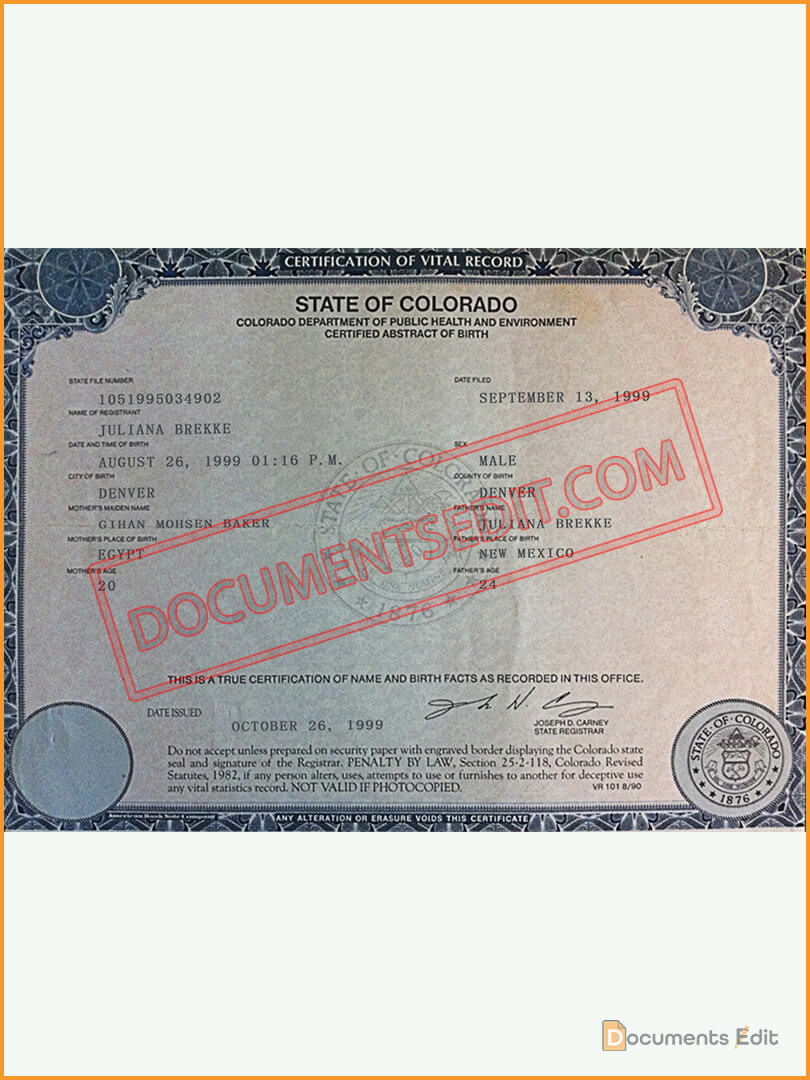
Once you have obtained your certified birth certificate, safeguarding it is paramount. This document is irreplaceable proof of your identity and citizenship.
- Secure Storage: Store your original birth certificate in a safe and secure location, such as a fireproof safe, a secure bank safe deposit box, or a locked filing cabinet.
- Avoid Carrying Originals: Do not carry your original birth certificate with you unless absolutely necessary. For most everyday purposes, a photocopy (if accepted) or other forms of ID (like a driver’s license or passport) are sufficient.
- Make Copies: Keep several photocopies of your birth certificate in a separate, secure location. These can be helpful for applications that only require non-certified copies, or as a reference if you ever need to replace the original.
- Digital Backups (Securely): Consider scanning a copy and storing it in an encrypted, secure digital folder or cloud service. Ensure strong passwords and multi-factor authentication for any digital storage.
- Review Periodically: It’s a good practice to periodically review your important documents to ensure they are still in good condition and all information is accurate.
A birth certificate is a lifelong document. Treating it with the importance it deserves ensures it will be there for you whenever life’s journey, within Colorado or beyond, demands it. By following these guidelines, you can navigate the process of obtaining and securing your Colorado birth certificate with confidence and ease, leaving you free to focus on the vibrant lifestyle the state has to offer.
LifeOutOfTheBox is a participant in the Amazon Services LLC Associates Program, an affiliate advertising program designed to provide a means for sites to earn advertising fees by advertising and linking to Amazon.com. Amazon, the Amazon logo, AmazonSupply, and the AmazonSupply logo are trademarks of Amazon.com, Inc. or its affiliates. As an Amazon Associate we earn affiliate commissions from qualifying purchases.