
Embarking on a hunting expedition in the diverse landscapes of Florida offers an unparalleled connection with nature and the thrill of the chase. From the vast cypress swamps to the rolling pine forests, the Sunshine State provides a rich tapestry for sportsmen and women. However, before you can legally pursue game, understanding and obtaining the correct hunting license is paramount. This guide will navigate you through the essential steps, requirements, and considerations for acquiring your Florida hunting license, ensuring your outdoor adventure is both rewarding and compliant with state regulations.
Understanding Florida Hunting Licenses
Florida manages its wildlife resources through a comprehensive licensing system administered by the Florida Fish and Wildlife Conservation Commission (FWC). This system ensures that hunting activities are sustainable, ethical, and contribute to the conservation efforts of the state’s diverse fauna. Understanding the different types of licenses available is the first step in this process.
Types of Hunting Licenses
The FWC offers a variety of hunting licenses, catering to different needs and durations. The most common licenses include:
- Resident Hunting License: For individuals who have resided in Florida for at least six consecutive months and can prove it with documentation.
- Non-Resident Hunting License: For individuals who do not meet the residency requirements for a resident license. These are generally more expensive.
- Annual Licenses: Valid for a full 12 months from the date of purchase.
- Short-Term Licenses: Available for 1-day, 3-day, 7-day, or 10-day periods, often ideal for visitors or those planning brief hunting trips.
- Lifetime Licenses: A significant investment that covers hunting privileges for the rest of a resident’s life, with different options available for various age groups.
Beyond the basic hunting license, additional permits, often referred to as “stamps” or “endorsements,” are required for specific types of game or hunting activities. These may include:
- Archery Stamp: Required when hunting with a bow and arrow during certain seasons.
- Muzzleloader Stamp: Required when hunting with a muzzleloading firearm during specific seasons.
- Alligator Hunting Permit: A highly specialized permit for alligator hunting, which is strictly regulated.
- Specialty Permits: For hunting specific game like wild hogs in certain areas or during particular times.
It is crucial to identify which game you intend to pursue and during which seasons, as this will determine the specific combination of licenses and permits you will need. The FWC website is an invaluable resource for detailed information on seasons, bag limits, and required endorsements for each species.
Residency Requirements
To qualify for a resident hunting license in Florida, you must have lived in the state for at least six consecutive months prior to purchasing your license. Proof of residency is typically required and can include:
- A valid Florida driver’s license or state identification card.
- A voter registration card from Florida.
- A statement from a Florida bank or financial institution showing a checking or savings account in your name.
- A homestead exemption for property owned in Florida.
- For active-duty military personnel stationed in Florida, proof of assignment to a Florida duty station is sufficient.
Failure to meet these residency requirements will necessitate the purchase of a more expensive non-resident license.
The Application Process: Step-by-Step
Obtaining your Florida hunting license is a straightforward process, designed for accessibility for both residents and non-residents.
Step 1: Determine Your Needs
Before you begin the application, clearly define what you intend to hunt and for how long. Consider:
- Target Game: Deer, turkey, waterfowl, small game, or a combination?
- Hunting Method: Rifle, shotgun, bow, or muzzleloader?
- Duration of Hunt: A weekend trip, a week-long excursion, or multiple visits throughout the year?
- Residency Status: Are you a Florida resident or a non-resident?
Step 2: Gather Necessary Information and Documentation
You will need to provide personal information, including:
- Full legal name
- Date of birth
- Physical address
- Mailing address
- Contact information (phone number, email address)
- Proof of residency (if applying for a resident license)
- Hunter education certification (if required)
Step 3: Complete a Hunter Education Course (If Applicable)

In Florida, individuals born on or after June 1, 1975, are required to complete a hunter education course to obtain a hunting license. This course is designed to teach safe firearm handling, ethical hunting practices, wildlife conservation, and survival skills.
- Course Options: The FWC offers both online and in-person hunter education courses. Online courses provide flexibility, allowing you to learn at your own pace, while in-person courses offer hands-on instruction and interaction with certified instructors.
- Certification: Upon successful completion of either course, you will receive a certification card. You will need to present this certification when purchasing your hunting license. It’s advisable to complete this course well in advance of your hunting trip to avoid last-minute delays.
Step 4: Purchase Your License
There are several convenient ways to purchase your Florida hunting license:
- Online: The official Florida Fish and Wildlife Conservation Commission (FWC) website is the most convenient and recommended method. You can browse license options, select your permits, make payment, and print your license immediately. The website is user-friendly and provides all necessary information.
- In Person: Licenses can be purchased at various authorized license agents across the state. These agents include tax collector offices, bait and tackle shops, sporting goods stores, and some government offices. You can find a list of authorized agents on the FWC website.
- By Phone: While less common, some FWC services may be available by phone. It’s best to check the FWC website for the most current contact information and options.
Step 5: Carry Your License and Applicable Permits
Once purchased, it is a legal requirement to carry your hunting license and any necessary permits on your person at all times while hunting. This includes electronic copies displayed on a mobile device, but physical copies are often preferred and can prevent issues with electronic failures. You must be able to present these documents to any law enforcement officer or FWC wildlife officer upon request.
Additional Considerations for Hunters
Beyond the basic licensing process, several other factors contribute to a successful and responsible hunting experience in Florida.
Understanding Regulations and Seasons
Florida hunting seasons are carefully managed to ensure the health and sustainability of wildlife populations. It is imperative to consult the official FWC hunting regulations brochure for the current year. This brochure details:
- Opening and Closing Dates: Specific dates for each hunting season for different game species.
- Bag Limits: The maximum number of animals a hunter can legally take per day or per season.
- Legal Hunting Hours: The specific times of day when hunting is permitted.
- Legal Methods of Take: Permitted firearms, archery equipment, and other hunting methods.
- Licensing and Permitting Requirements: Detailed breakdown of all necessary licenses and stamps.
- Specific Area Regulations: Some wildlife management areas (WMAs) or specific parcels of land may have unique rules and regulations.
Familiarizing yourself with these regulations not only ensures legal compliance but also promotes ethical hunting practices and contributes to wildlife conservation.
Public Hunting Lands and Wildlife Management Areas (WMAs)
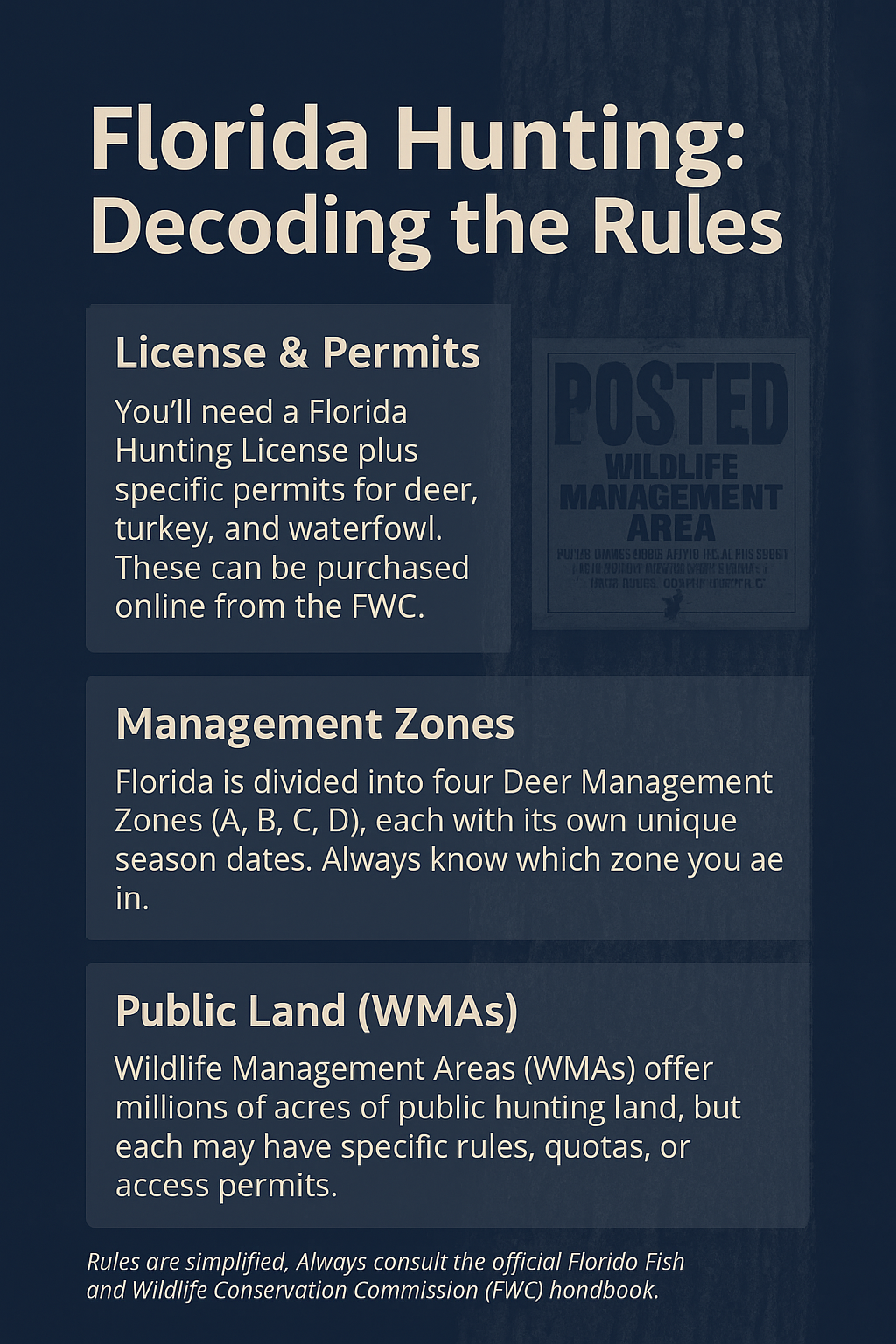
Florida offers a vast network of public hunting lands and Wildlife Management Areas (WMAs) that are open to licensed hunters. These areas are managed by the FWC to provide hunting opportunities while protecting habitats and wildlife.
- Researching WMAs: Before heading out, research the specific WMAs that interest you. Each WMA may have different seasons, quotas, access points, and specific regulations. Some WMAs require special permits or quotas obtained through a lottery system.
- Scouting: It is highly recommended to scout WMAs in advance to familiarize yourself with the terrain, identify potential game sign, and understand access points.
- Respecting Private Property: Always be mindful of private property boundaries to avoid trespassing.
Ethical Hunting Practices
Ethical hunting is a cornerstone of responsible sportsmanship. This includes:
- Safety First: Always treat firearms with respect, be aware of your surroundings, and ensure you can positively identify your target.
- Know Your Target: Never shoot at anything you cannot positively identify as legal game.
- Respect for Wildlife: Harvest animals cleanly and humanely. Make every effort to retrieve downed game.
- Respect for Habitat: Leave the land as you found it, or better. Pack out all trash and avoid damaging vegetation.
- Fair Chase: Hunt in a manner that respects the animal and its natural behavior.
Resources and Support
The Florida Fish and Wildlife Conservation Commission (FWC) is your primary resource for all things related to hunting in the state. Their website offers:
- Online License Sales Portal: For purchasing licenses and permits.
- Hunting Regulations Brochures: Downloadable PDFs of the latest regulations.
- Interactive Maps: For locating WMAs and public hunting lands.
- Hunter Education Information: Details on course schedules and online registration.
- Contact Information: For questions and assistance from FWC staff.
Additionally, numerous hunting clubs, conservation organizations, and experienced mentors can provide invaluable advice and guidance to new and seasoned hunters alike.
Obtaining your Florida hunting license is the gateway to experiencing the rich outdoor heritage of the Sunshine State. By understanding the requirements, diligently preparing, and adhering to all regulations and ethical practices, you can ensure a safe, enjoyable, and memorable hunting adventure.
LifeOutOfTheBox is a participant in the Amazon Services LLC Associates Program, an affiliate advertising program designed to provide a means for sites to earn advertising fees by advertising and linking to Amazon.com. Amazon, the Amazon logo, AmazonSupply, and the AmazonSupply logo are trademarks of Amazon.com, Inc. or its affiliates. As an Amazon Associate we earn affiliate commissions from qualifying purchases.