
Navigating the process of obtaining a license plate in Texas is a fundamental step for any new resident or vehicle owner. While it might seem like a straightforward administrative task, understanding the requirements and procedures ensures a smooth and efficient experience. This guide aims to demystify the process, covering everything from initial vehicle registration to obtaining your official Texas license plates. Whether you’ve just moved to the Lone Star State or purchased a new vehicle, this comprehensive walkthrough will equip you with the knowledge needed to comply with state regulations and proudly display your new plates.

Understanding Vehicle Registration in Texas
Before you can acquire license plates, your vehicle must be registered with the Texas Department of Motor Vehicles (DMV), officially known as the Texas Department of Transportation (TxDMV). This registration process involves verifying vehicle ownership, ensuring it meets state safety standards, and paying applicable fees and taxes.
Initial Registration Requirements
For a new resident bringing a vehicle into Texas, there are specific initial registration requirements. You generally have 30 days from the date you establish residency or purchase a vehicle to register it. The primary documents you will need include:
- Proof of Ownership: This is typically a title, or a Manufacturer’s Certificate of Origin (MCO) for a brand-new vehicle. If you have a lien on the vehicle, the lender will likely hold the title, but you will still need proof of ownership, such as a title application receipt or a statement from the lienholder.
- Proof of Insurance: Texas mandates minimum liability insurance coverage for all registered vehicles. You’ll need to present an insurance card or policy declaration page showing that your coverage meets the state’s requirements (currently $30,000 for bodily injury per person, $60,000 for bodily injury per accident, and $25,000 for property damage).
- Vehicle Inspection Report (VIR): Most vehicles registered in Texas require a passing safety inspection. Since 2015, Texas has implemented a “Two Steps, One Sticker” program, meaning your vehicle will have a state inspection sticker, and the registration renewal notice will serve as proof of inspection. You must have a valid VIR from an authorized inspection station. This inspection verifies that your vehicle’s safety equipment is in good working order.
- Proof of Residency: For new residents, documents like a utility bill, lease agreement, or driver’s license with a Texas address can serve as proof of residency.
- Odometer Disclosure Statement: This is required for most vehicles when ownership is transferred, particularly when registering a vehicle that is less than 10 years old.
Fees and Taxes
When you register your vehicle, you will be responsible for paying various fees and taxes. These typically include:
- Registration Fee: This fee varies based on the type and weight of your vehicle.
- Title Fee: A one-time fee for processing the vehicle’s title.
- Motor Vehicle Inventory Tax (MVIT): Also known as a “new vehicle tax,” this is a tax on new vehicles purchased in Texas and registered for the first time. It is calculated based on the vehicle’s MSRP.
- Late Fees: If you fail to register your vehicle within the stipulated timeframe, late fees will be assessed.
It’s advisable to check the official TxDMV website or contact your local county tax assessor-collector’s office for the most current fee schedule.
The Process of Obtaining License Plates
Once you have gathered all the necessary documentation and are ready to register your vehicle, the process typically begins at your local county tax assessor-collector’s office. These offices serve as the primary point of contact for vehicle registration and title services within Texas.
Visiting Your Local County Tax Assessor-Collector’s Office
The county tax assessor-collector’s office is where you will officially register your vehicle and receive your license plates. It is recommended to schedule an appointment if your local office offers this service, as wait times can vary significantly.
When you arrive, you will need to present all the required documents mentioned previously. A deputy registrar or clerk will review your paperwork to ensure everything is in order. They will process the title application, register your vehicle, and collect the applicable fees and taxes.
Upon successful completion of the registration process and payment of all dues, you will be issued your official Texas license plates. You will also receive a registration certificate and a new registration sticker to affix to your rear license plate.
Types of License Plates Available
Texas offers a variety of license plate designs to cater to different preferences and needs.
- Standard Plates: The most common type, featuring the Texas state seal and the slogan “The Lone Star State.” These are issued to most vehicle owners upon initial registration.
- Personalized Plates: Also known as “vanity plates,” these allow you to choose your own combination of letters and numbers, subject to availability and state guidelines. There is an additional annual fee for personalized plates. You can apply for these online through the My Plates program administered by the TxDMV.
- Specialty Plates: Texas offers a wide array of specialty plates that support various causes, organizations, or interests. These can include plates for military veterans, educational institutions, professional sports teams, and environmental organizations. A portion of the fee for these plates often goes towards the designated cause. Some popular examples include plates supporting the Texas Parks and Wildlife Department or breast cancer awareness.
- Disability Plates: For individuals with qualifying disabilities, there are specific disability license plates and parking placards available. These require a medical certification from a physician.
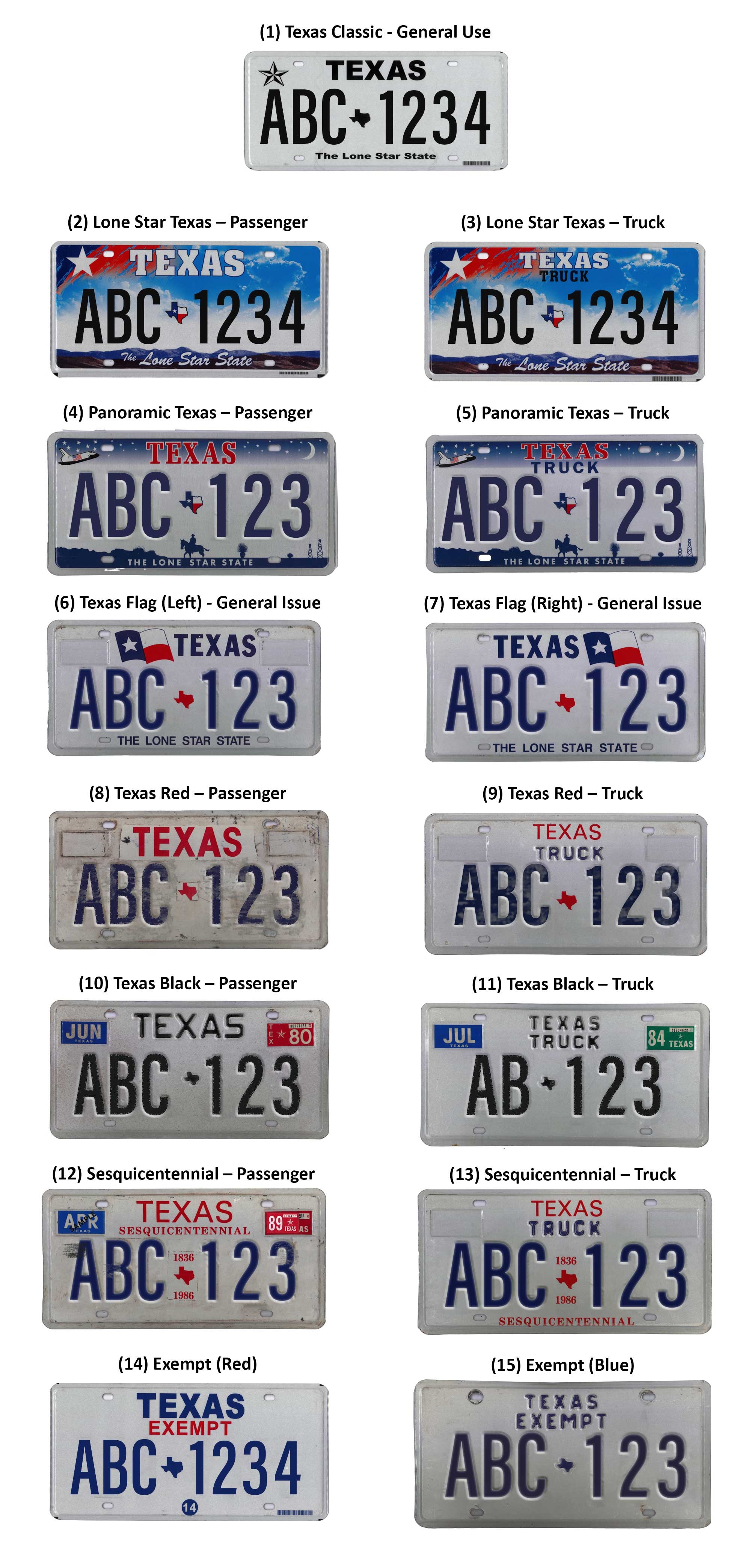
When you register your vehicle, you will be presented with the available standard plate options. If you are interested in personalized or specialty plates, you will need to pursue those options separately, often through online applications or specific forms at the tax assessor-collector’s office.
Renewing Your Vehicle Registration and Plates
Vehicle registration in Texas is typically valid for one year. You will receive a renewal notice from the TxDMV approximately 60 days before your current registration expires. It is crucial to renew your registration before it lapses to avoid penalties and ensure you are operating your vehicle legally.
Renewal Options
Texas offers several convenient methods for renewing your vehicle registration:
- Online Renewal: This is often the quickest and most convenient method. You can renew your registration online through the TxDMV website or a third-party vendor. You will need your license plate number, renewal notice code, and a valid credit or debit card. Your new registration sticker will be mailed to you.
- By Mail: You can mail your renewal form and payment to the address provided on your renewal notice. Ensure you allow ample time for mail delivery and processing.
- In Person: You can visit your local county tax assessor-collector’s office to renew your registration in person. This is also an opportunity to ask any questions you may have.
- Renewal Stations: Some retail locations, such as grocery stores and other businesses, are designated as renewal stations. You can renew your registration at these locations by presenting your renewal notice and payment.
“Two Steps, One Sticker” Program
As mentioned earlier, Texas uses the “Two Steps, One Sticker” program. This means that after passing your vehicle’s safety inspection, you will receive an inspection sticker. Your registration renewal notice then acts as the second “sticker” for your vehicle’s registration. Once you have completed your renewal, you will receive a new registration certificate and a sticker to affix to your rear license plate, which serves as proof of your current registration.
It is important to keep your vehicle inspection up-to-date, as a valid inspection is a prerequisite for renewing your registration. If your inspection has expired, you will need to get your vehicle inspected before you can complete the renewal process.
Specific Scenarios and Considerations
While the general process for obtaining license plates is consistent, there are a few specific scenarios that may require additional steps or documentation.
Purchasing a Used Vehicle
When buying a used vehicle from a private seller in Texas, you will need to ensure that the seller properly transfers the title to you. You will then take the signed-over title, along with proof of insurance, a VIR, and your proof of residency, to the county tax assessor-collector’s office to register the vehicle and obtain new license plates in your name. It’s advisable to ensure the seller has completed the necessary paperwork to remove the vehicle from their ownership and registration records.
Out-of-State Vehicles
For vehicles previously registered in another state and now being brought into Texas for registration, you will need to obtain a Texas title first. This typically involves surrendering your out-of-state title to the Texas DMV. You may also need a VIN (Vehicle Identification Number) inspection conducted by law enforcement or an authorized inspection station to verify the vehicle’s identity. Once you have your Texas title, you can proceed with registration at the county tax assessor-collector’s office as outlined previously.
New Vehicle Purchases from Dealerships
If you purchase a new vehicle from a dealership, they will typically handle much of the initial paperwork for you. The dealership will usually process the title application and registration on your behalf and may even provide you with temporary tags. They will then either mail you your permanent license plates and registration documents or have you pick them up from the dealership once they are ready. Ensure you understand the timeline and process with your specific dealership.

Lost or Damaged Plates
If your license plates are lost, stolen, or damaged, you will need to apply for replacements. You can do this at your local county tax assessor-collector’s office. You will likely need to fill out a specific form (e.g., Application for Replacement Plates) and pay a fee for the replacement plates. It’s important to report stolen plates to local law enforcement as well.
By understanding these steps and requirements, obtaining your Texas license plates can be a straightforward and stress-free process, allowing you to legally and proudly drive your vehicle throughout the Lone Star State.
LifeOutOfTheBox is a participant in the Amazon Services LLC Associates Program, an affiliate advertising program designed to provide a means for sites to earn advertising fees by advertising and linking to Amazon.com. Amazon, the Amazon logo, AmazonSupply, and the AmazonSupply logo are trademarks of Amazon.com, Inc. or its affiliates. As an Amazon Associate we earn affiliate commissions from qualifying purchases.