
Embarking on a career in real estate in Arizona can be a rewarding venture, offering the potential for financial independence and the satisfaction of helping clients navigate one of life’s most significant transactions. The Grand Canyon State boasts a dynamic real estate market, fueled by a growing population, a favorable business climate, and an attractive lifestyle. To legally represent buyers and sellers, you’ll need to obtain a real estate license from the Arizona Department of Real Estate (AZDRE). This comprehensive guide will walk you through the essential steps, requirements, and considerations for acquiring your Arizona real estate license.
Understanding the Arizona Real Estate Licensing Requirements
Before diving into the application process, it’s crucial to understand the fundamental eligibility criteria set forth by the AZDRE. These requirements are designed to ensure that aspiring real estate professionals possess the necessary knowledge, integrity, and commitment to serve the public effectively.
Age and Education
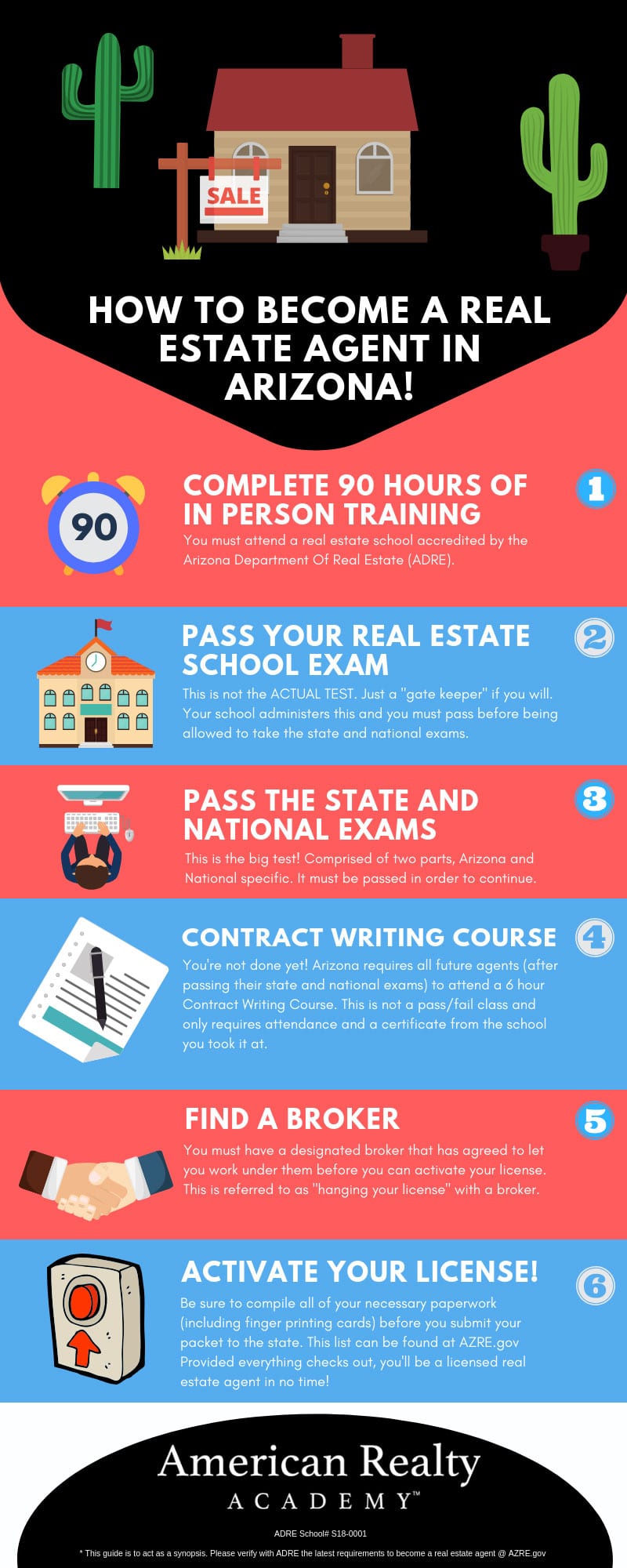
To be eligible for an Arizona real estate license, you must be at least 18 years of age. Beyond this basic age requirement, you will need to complete a specific number of pre-licensing education hours from an AZDRE-approved school. For an Associate Broker license, this typically involves 180 hours of coursework. For a Salesperson license, the requirement is 90 hours. These courses cover essential topics such as real estate principles, practices, law, contracts, ethics, and agency relationships, providing a solid foundation for your future career.
Background Check and Fingerprinting
Honesty and trustworthiness are paramount in the real estate industry. As part of the licensing process, all applicants are required to undergo a background check, which includes fingerprinting. The AZDRE will review any criminal history to determine your suitability for a license. Certain convictions may disqualify an applicant, while others might require further review or disclosure. It is advisable to address any potential concerns proactively by obtaining a copy of your criminal record and, if necessary, consulting with the AZDRE regarding specific offenses.
Residency and Social Security Number
While you don’t necessarily need to be a resident of Arizona to obtain a real estate license there, you will need to provide a valid Social Security number. This is a standard requirement for most professional licensing in the United States.
Completing Your Pre-Licensing Education
The pre-licensing education is a cornerstone of the Arizona real estate licensing process. It equips you with the knowledge and understanding of real estate principles and practices necessary to pass the state licensing exam and operate ethically and legally.
Choosing an Approved Education Provider
The AZDRE maintains a list of approved real estate schools that offer the required pre-licensing courses. It is imperative to select a provider that is recognized by the department. These schools offer various formats, including in-person classes, online courses, and hybrid options, allowing you to choose the learning style that best suits your needs and schedule. When selecting a provider, consider factors such as instructor experience, course materials, pass rates on the licensing exam, and student reviews. Some popular options include schools located in major cities like Phoenix and Tucson, as well as online providers accessible throughout the state.
Course Content and Structure
The 90-hour salesperson pre-licensing course typically covers a broad range of topics essential for real estate practice. These include:
- Real Estate Principles and Practices: This foundational module delves into the nature of real estate, property rights, land descriptions, types of ownership, and common real estate terms.
- Real Estate Law: You’ll learn about contract law, deeds, mortgages, liens, easements, landlord-tenant laws, and fair housing regulations specific to Arizona.
- Real Estate Finance: Understanding financing options, loan types, appraisal methods, and the principles of mortgage lending is crucial.
- Real Estate Contracts and Forms: Proficiency in preparing and understanding various real estate contracts, such as purchase agreements, listing agreements, and lease agreements, is vital.
- Agency and Disclosure: This section focuses on the legal and ethical duties of real estate agents to their clients, including fiduciary responsibilities and disclosure requirements.
- Ethics and Professional Conduct: Maintaining a high standard of ethical behavior and professional conduct is paramount in building trust and a successful career.
The 180-hour Associate Broker course builds upon the salesperson curriculum, introducing more advanced concepts in brokerage management, property management, investment analysis, and supervision of other licensees.
Final Course Examinations
Upon completion of your pre-licensing courses, you will typically need to pass an internal examination administered by the education provider. Passing this exam is a prerequisite for being eligible to take the official Arizona Real Estate License Examination.
Passing the Arizona Real Estate License Examination
Once you have successfully completed your pre-licensing education, the next significant hurdle is passing the official Arizona Real Estate License Examination. This exam is administered by a third-party testing service, currently Pearson VUE.
Scheduling Your Exam
After receiving confirmation from your education provider that your course completion has been submitted to the AZDRE, you can schedule your exam appointment with Pearson VUE. You will typically receive an eligibility ID or code to use when booking your test. It is recommended to schedule your exam as soon as possible after completing your coursework to ensure the information is fresh in your mind. Pearson VUE has testing centers located throughout Arizona, including in major metropolitan areas.

Exam Content and Format
The Arizona Real Estate License Examination is divided into two sections: a national portion and a state portion.
- National Portion: This section covers general real estate principles and practices that are common across the United States. Topics include property ownership, deeds, encumbrances, financing, contracts, agency relationships, and fair housing laws.
- State Portion: This section focuses specifically on Arizona real estate laws, regulations, and practices. It will cover state-specific contract forms, disclosure requirements, licensing laws, and local market nuances.
The exam is typically administered via computer and consists of multiple-choice questions. The number of questions and passing score can vary, so it’s essential to consult the official Arizona Real Estate Candidate Handbook provided by Pearson VUE for the most up-to-date information.
Preparing for the Exam
Effective preparation is key to passing the licensing exam. Most pre-licensing courses include practice exams and study materials. In addition to your course resources, consider utilizing:
- Practice Exams: Taking numerous practice exams under timed conditions can help you identify your weak areas and get accustomed to the exam format.
- Study Guides and Flashcards: Summarizing key concepts and creating flashcards for important terms and definitions can aid memorization.
- Reviewing the Candidate Handbook: The official handbook is an invaluable resource that outlines the exam structure, content, and policies.
- Study Groups: Collaborating with other aspiring agents can provide different perspectives and reinforce learning.
Failing the exam is not uncommon, and if you do not pass, you will have the opportunity to retake it after a waiting period.
Submitting Your License Application and Getting Licensed
With your pre-licensing education completed and the licensing exam passed, you are on the cusp of becoming a licensed real estate professional in Arizona. The final steps involve submitting your application and undergoing the necessary checks.
The Application Process
After passing the exam, you will need to submit a formal license application to the Arizona Department of Real Estate. This application will require you to provide information about your education, exam results, and background check. You will also need to pay the required licensing fees. It is crucial to complete the application accurately and thoroughly to avoid delays. You can typically find the application forms and instructions on the AZDRE website.
Broker Sponsorship
As a newly licensed salesperson in Arizona, you cannot operate independently. You must be sponsored by a licensed real estate broker. This means you will need to find a brokerage firm that is willing to hire you and allow you to work under their supervision. The broker is responsible for your actions and will provide guidance, training, and support as you begin your career. When choosing a brokerage, consider factors such as their reputation, training programs, commission structures, and company culture. Many brokerages in areas like Scottsdale and Tempe actively recruit new agents.
Receiving Your License
Once your application is approved, your background check is cleared, and your broker sponsorship is confirmed, the AZDRE will issue your real estate license. You will typically receive an official license certificate that you can display at your brokerage office. Congratulations, you are now a licensed real estate salesperson in Arizona!
Maintaining Your License and Continuing Your Education
Obtaining your real estate license is just the beginning of your journey. To remain a licensed professional and to stay current with industry trends and legal changes, you will need to fulfill ongoing education requirements and adhere to ethical standards.
Continuing Education (CE) Requirements
Arizona real estate licensees are required to complete a certain number of Continuing Education (CE) hours every two years to renew their licenses. These CE courses are designed to keep licensees informed about changes in real estate law, market trends, and best practices. The specific number of hours and the types of courses required can be found on the AZDRE website. It is essential to complete your CE hours with an approved provider before your license expiration date to avoid any lapses in licensure.
Broker Responsibilities and Supervision
As mentioned earlier, salespersons must work under the supervision of a licensed broker. This relationship is critical for ensuring compliance with real estate laws and regulations. Brokers are responsible for overseeing their agents’ activities, ensuring that all transactions are handled ethically and legally, and providing ongoing training and support.

Ethical Conduct and Professionalism
Maintaining a high standard of ethical conduct is not only a legal requirement but also a cornerstone of a successful and reputable real estate career. This includes honesty, integrity, transparency, and acting in the best interests of your clients. Adhering to the Arizona Association of REALTORS® Code of Ethics will guide your professional interactions. Building trust with clients and colleagues is essential for long-term success in the competitive Arizona real estate market.
Becoming a licensed real estate agent in Arizona is a structured process that demands dedication and adherence to regulations. By understanding and diligently following these steps, you can successfully obtain your license and embark on a fulfilling career in the vibrant Arizona real estate landscape.
LifeOutOfTheBox is a participant in the Amazon Services LLC Associates Program, an affiliate advertising program designed to provide a means for sites to earn advertising fees by advertising and linking to Amazon.com. Amazon, the Amazon logo, AmazonSupply, and the AmazonSupply logo are trademarks of Amazon.com, Inc. or its affiliates. As an Amazon Associate we earn affiliate commissions from qualifying purchases.