
Obtaining a real estate license in Oregon opens the door to a dynamic and rewarding career in property sales, leasing, and management. The journey requires dedication, adherence to specific educational prerequisites, and the successful completion of licensing exams. This guide meticulously outlines the steps involved, providing a clear roadmap for aspiring real estate professionals in the Beaver State. Understanding and navigating the Oregon Real Estate Agency’s requirements is paramount to a smooth and successful licensure process.
Understanding the Oregon Real Estate License Requirements
Before embarking on the path to becoming a licensed real estate broker or salesperson in Oregon, it’s crucial to familiarize yourself with the fundamental eligibility criteria set forth by the Oregon Real Estate Agency (ORA). These foundational requirements ensure that all licensed professionals possess a baseline of knowledge and integrity necessary to serve the public effectively and ethically.
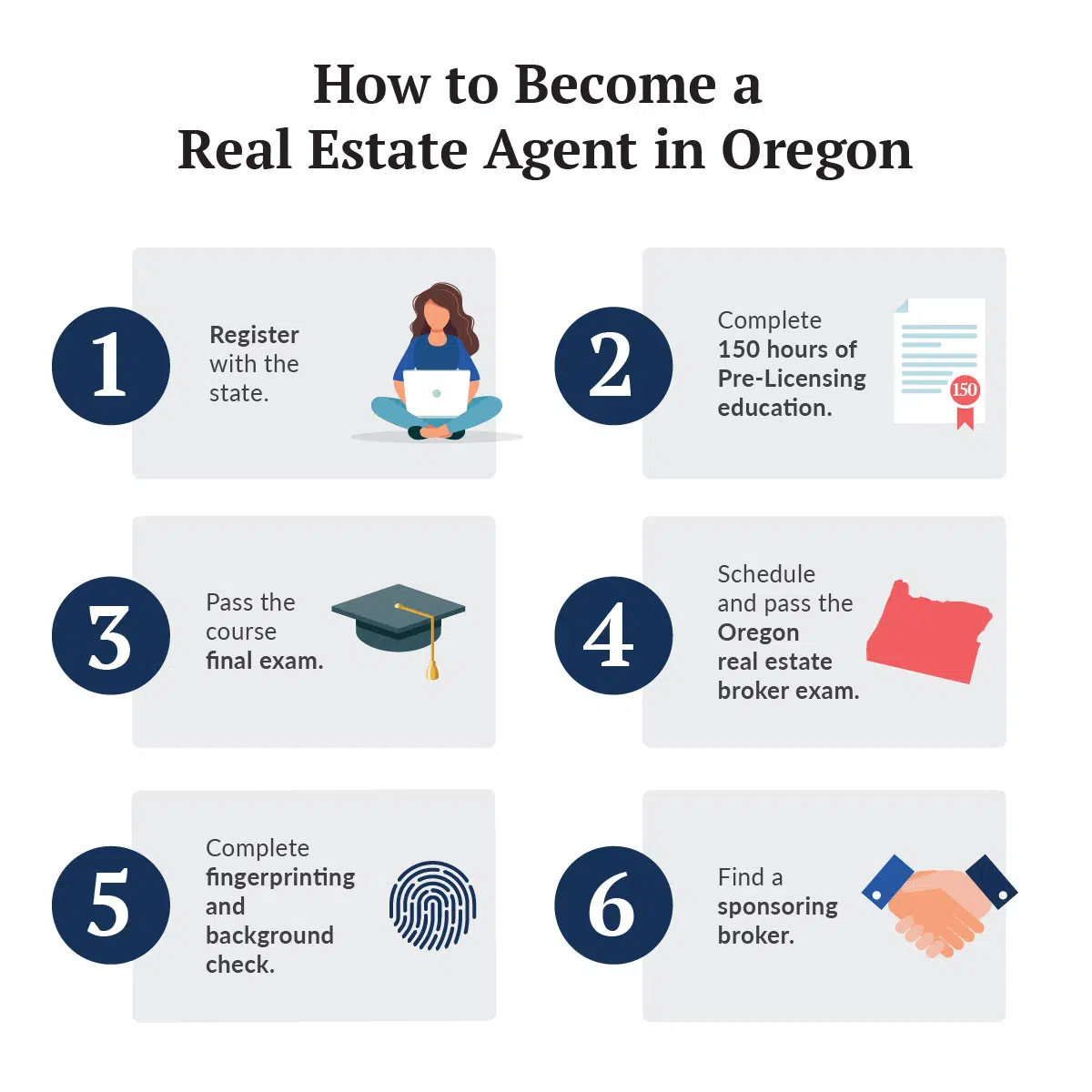
Eligibility Criteria
To be considered for a real estate license in Oregon, candidates must meet the following core eligibility requirements:
- Age: Applicants must be at least 18 years of age.
- Honesty and Integrity: Candidates must demonstrate honesty, integrity, and trustworthiness. The ORA will conduct a background check, including fingerprinting, to assess an applicant’s suitability. Any criminal convictions, particularly those related to fraud, dishonesty, or crimes of moral turpitude, can impact eligibility. Applicants with past convictions should be prepared to provide detailed explanations and evidence of rehabilitation.
- Legal Residency: While not explicitly stated as a citizenship requirement, applicants must generally be legally able to work in the United States. The ORA may require proof of legal residency status.
Types of Real Estate Licenses in Oregon
Oregon offers several types of real estate licenses, each with its own scope of practice and associated requirements. For most individuals entering the profession, the primary pathways are for salespersons and brokers.
Real Estate Salesperson License
A real estate salesperson license is the entry-level credential. Salespersons work under the supervision of a licensed real estate broker. They are authorized to assist clients with buying, selling, or renting properties. This license is the most common starting point for new real estate professionals.
Real Estate Broker License
A real estate broker license signifies a higher level of experience and responsibility. To obtain a broker license, an individual must first hold a valid salesperson license for a specified period and complete additional education and experience requirements. Brokers can operate independently, establish their own real estate firms, and supervise other salespersons.
Property Manager License
Oregon also offers a specific license for property managers, which allows individuals to manage residential or commercial properties on behalf of owners. This license has its own set of educational and examination requirements, distinct from salesperson and broker licenses.
The Educational Pathway to Your Oregon Real Estate License
A cornerstone of obtaining a real estate license in Oregon is completing the required pre-licensing education. This curriculum is designed to equip you with the fundamental knowledge of real estate principles, law, ethics, and practices specific to the state.
Pre-Licensing Course Requirements
Aspiring real estate salespersons in Oregon must successfully complete a minimum of 150 hours of approved pre-licensing education. This education is typically delivered through accredited real estate schools, either online or in a traditional classroom setting. The curriculum is standardized by the ORA and covers a broad spectrum of topics, including:
- Real Estate Principles and Practices: This covers fundamental concepts such as property ownership, types of estates, land descriptions, agency relationships, and contract law.
- Real Estate Law: A significant portion of the education focuses on Oregon real estate law, including landlord-tenant laws, fair housing regulations, disclosure requirements, and agency law.
- Real Estate Finance: Understanding mortgage lending, types of loans, appraisal principles, and closing procedures is vital.
- Real Estate Ethics and Professional Conduct: Emphasis is placed on ethical practices, fiduciary duties, and maintaining professional standards in client interactions.
- Real Estate Marketing and Sales: This module covers listing properties, advertising, negotiation strategies, and closing the transaction.
Choosing an Accredited Real Estate School
Selecting a reputable and ORA-approved real estate school is a critical first step. Look for schools that offer comprehensive course materials, experienced instructors, and flexible scheduling options. Many schools provide practice exams and study guides to help you prepare for the state licensing exam. Popular choices among aspiring agents include Kaplan Real Estate Education and OnlineEd.
Broker Pre-Licensing Education
For those aspiring to become brokers, the educational requirements are more extensive. In addition to the 150 hours of salesperson pre-licensing education, broker applicants must complete an additional 90 hours of approved broker-specific pre-licensing coursework. This advanced curriculum delves deeper into topics such as brokerage management, business law, property management, and advanced real estate principles.
Continuing Education
Once licensed, real estate professionals are required to complete continuing education (CE) courses to maintain their license. The ORA mandates a specific number of CE hours every two years, including mandatory courses on Oregon real estate law and agency ethics. Staying current with legislative changes and best practices is essential for ongoing success and compliance.
Passing the Oregon Real Estate Licensing Exam
Successfully completing the pre-licensing education is only part of the process. The next significant hurdle is passing the official Oregon real estate licensing exam. This comprehensive examination is designed to assess your understanding of real estate principles, practices, and Oregon-specific laws.
Exam Structure and Content
The Oregon real estate licensing exam is administered by Pearson VUE, the state’s designated testing provider. The exam consists of two sections:

- National Portion: This section covers general real estate principles and practices that are applicable across the United States. It assesses your knowledge of real estate law, finance, ethics, property management, and market analysis.
- State Portion: This section is specific to Oregon and focuses on state laws, regulations, and agency procedures. It covers topics such as disclosure requirements, agency relationships in Oregon, contract forms, and fair housing laws as they apply within the state.
The exam is typically delivered in a computer-based format, and candidates are given a specific amount of time to complete it. Passing scores are determined by the ORA.
Scheduling and Taking the Exam
After completing your pre-licensing education, you will receive instructions on how to register and schedule your licensing exam with Pearson VUE. It is advisable to schedule your exam as soon as possible after finishing your coursework while the material is still fresh in your mind.
On the day of the exam, arrive at the testing center early to allow for check-in. You will need to bring a valid form of identification. During the exam, read each question carefully and consider all the answer choices before making a selection. If you encounter a question you are unsure about, it is often best to mark it for review and return to it later if time permits.
Preparing for the Exam
Effective preparation is key to passing the licensing exam. Beyond completing your pre-licensing courses, consider the following strategies:
- Review Course Materials Thoroughly: Go back through your textbooks, notes, and any study guides provided by your real estate school.
- Utilize Practice Exams: Many real estate schools offer mock exams that simulate the actual test environment. These are invaluable for identifying areas where you need further study and for getting accustomed to the question format.
- Focus on Oregon-Specific Law: Pay special attention to the state portion of the exam, as this is where Oregon-specific knowledge is tested.
- Understand Key Concepts: Don’t just memorize facts; strive to understand the underlying principles and how they apply in real-world scenarios.
- Form Study Groups: Collaborating with other aspiring licensees can provide different perspectives and reinforce learning.
Applying for Your License and Next Steps
Once you have successfully passed the licensing exam, the final steps involve submitting your application to the Oregon Real Estate Agency and preparing to begin your professional journey.
Submitting Your Application
After passing the exam, you will receive instructions on how to submit your official license application to the ORA. This application will require you to provide information about your education, exam results, and personal background. You will also need to pay the applicable licensing fees.
Key components of the application typically include:
- Proof of completed pre-licensing education.
- Your exam score report.
- A completed background check authorization form and fingerprint submission.
- Payment of the license application fee.
The ORA will review your application and conduct the necessary background checks. If everything is in order, your real estate license will be issued.
Finding a Sponsoring Broker
For individuals applying for a salesperson license, it is a requirement to be associated with a licensed Oregon real estate broker. You cannot legally practice real estate independently with a salesperson license. Therefore, one of the crucial steps after passing your exam is to secure a sponsoring broker.
- Research Brokerages: Investigate different real estate agencies in your desired market. Consider their reputation, company culture, training programs, commission structures, and the types of properties they specialize in.
- Network: Attend industry events, connect with established agents, and let people know you are looking for a sponsoring broker.
- Interview Potential Brokers: Treat finding a sponsoring broker like a job interview. Prepare questions about their business, how they support new agents, and their expectations.
- Understand the Agreement: Carefully review any independent contractor agreement or employment contract offered by a brokerage before signing.
The Brokerage Experience
Your sponsoring broker will provide guidance, mentorship, and the necessary infrastructure to begin your real estate career. They will help you understand office policies, transaction management, and the practical aspects of the business. Working under an experienced broker is an invaluable learning experience that will shape your initial years in the industry.
Broker License Progression
After gaining experience as a licensed salesperson, you may choose to pursue a broker license. This typically involves meeting specific experience requirements (e.g., holding an active salesperson license for a certain number of years) and completing the additional broker pre-licensing education and passing the broker licensing exam. Becoming a broker allows for greater autonomy and business ownership opportunities.
Launching Your Real Estate Career in Oregon
With your Oregon real estate license in hand and a sponsoring broker secured, you are ready to embark on a fulfilling career. Success in real estate is built on a combination of knowledge, dedication, strong work ethic, and excellent client service.
Building Your Business
The initial phase of your career will involve building your client base and establishing your reputation. This requires a proactive approach to marketing, networking, and providing exceptional service to every client.
- Develop a Business Plan: Outline your goals, target market, marketing strategies, and financial projections.
- Leverage Your Network: Inform friends, family, and acquaintances that you are now a licensed real estate professional. They can be your first clients or refer you to others.
- Embrace Technology: Utilize social media, professional websites, and CRM systems to manage leads and communicate with clients.
- Master Your Market: Become an expert in your chosen geographic area, understanding local market trends, property values, and neighborhood amenities.
- Provide Stellar Service: Every client interaction is an opportunity to build trust and generate referrals. Go the extra mile to ensure client satisfaction.

Ethical Practice and Professional Development
Maintaining a high standard of ethical conduct is paramount in real estate. Adhering to the ORA’s Code of Ethics and fostering trust with clients and colleagues will be the foundation of your long-term success.
- Stay Informed: Continuously engage in professional development by attending workshops, seminars, and industry conferences.
- Seek Mentorship: Continue to learn from experienced brokers and agents.
- Understand Oregon Regulations: Stay up-to-date with any changes in real estate laws and regulations in Oregon.
By diligently following these steps and committing to ongoing learning and ethical practice, you can build a successful and rewarding career in the vibrant Oregon real estate market.
LifeOutOfTheBox is a participant in the Amazon Services LLC Associates Program, an affiliate advertising program designed to provide a means for sites to earn advertising fees by advertising and linking to Amazon.com. Amazon, the Amazon logo, AmazonSupply, and the AmazonSupply logo are trademarks of Amazon.com, Inc. or its affiliates. As an Amazon Associate we earn affiliate commissions from qualifying purchases.