
Navigating the intricacies of business operations in California often involves understanding and acquiring specific documentation that streamlines transactions and ensures compliance with state regulations. Among these, the resale certificate holds a pivotal role for businesses engaged in the resale of tangible personal property. This document, often referred to as a seller’s permit, resale permit, or exemption certificate, allows businesses to purchase goods for resale without paying sales tax at the time of acquisition. This exemption is crucial for maintaining healthy profit margins and fostering a competitive business environment. Obtaining one is a relatively straightforward process, but it requires careful attention to detail and an understanding of the relevant requirements set forth by the California Department of Tax and Fee Administration (CDTFA). This guide will walk you through the essential steps, common pitfalls, and best practices for securing your resale certificate in the Golden State, empowering you to conduct your business with confidence and fiscal responsibility.
Understanding the Resale Certificate and Its Importance
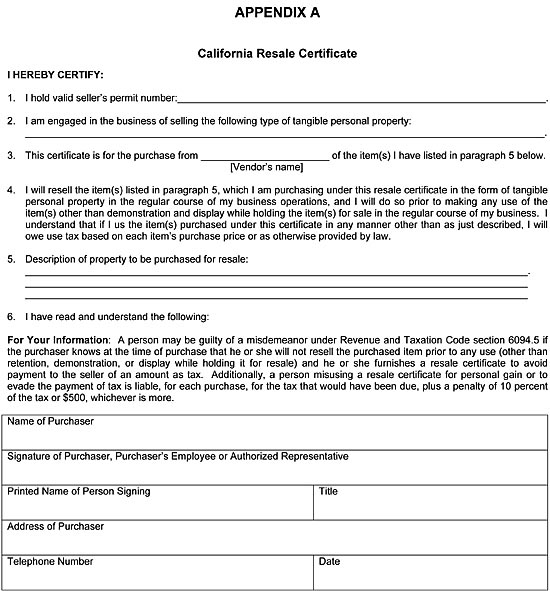
A resale certificate is a legally binding document issued by the California Department of Tax and Fee Administration (CDTFA) that allows a retailer to purchase goods from a wholesaler or distributor for the purpose of reselling them to an end consumer. The key principle behind the resale certificate is tax deferral. Instead of the retailer paying sales tax on every item they purchase for inventory, they can present a valid resale certificate to their supplier. This signifies that the goods will eventually be subject to sales tax when they are sold to the final consumer.
Who Needs a Resale Certificate?
Any individual or business entity that purchases tangible personal property for the purpose of reselling it to another person or business in the ordinary course of business must obtain a resale certificate. This includes a wide array of operations, from brick-and-mortar retail stores and online e-commerce businesses to wholesalers, manufacturers who sell their own products, and even service providers who occasionally sell tangible goods.
For example, a clothing boutique in Los Angeles purchasing garments from a fashion distributor needs a resale certificate. Similarly, an online seller on platforms like Etsy or Shopify sourcing inventory from manufacturers requires this document. Even a restaurant that sells branded merchandise, such as t-shirts or coffee mugs, should have a resale certificate for those specific items.
Benefits of Having a Resale Certificate
The primary benefit of possessing a valid resale certificate is the exemption from paying sales tax on inventory purchases. This significantly impacts a business’s cash flow, as it frees up capital that would otherwise be tied up in sales tax payments. It also simplifies accounting processes, as the business is not required to track and reclaim sales tax paid on inventory.
Furthermore, using a resale certificate correctly demonstrates compliance with California tax laws. Failure to obtain and properly use a resale certificate can lead to penalties, back taxes, and interest charges, which can be substantial and detrimental to a business’s financial health. The CDTFA actively audits businesses to ensure compliance, making the resale certificate an essential tool for maintaining good standing with the state.
The Application Process: Step-by-Step
Obtaining a resale certificate in California is primarily managed through the CDTFA. The process is largely online, designed for efficiency and accessibility.
Step 1: Obtain a Seller’s Permit
Before you can apply for a resale certificate, you must first have a valid seller’s permit, also known as a seller’s license. This permit identifies your business with the CDTFA and allows you to collect and remit sales tax on taxable sales. If you have not yet obtained a seller’s permit, you will need to do so first. The application for a seller’s permit is also completed through the CDTFA website. You will need to provide information about your business, including your business name, address, ownership structure (sole proprietorship, partnership, corporation, LLC), and the types of products you will be selling.
Step 2: Register with the CDTFA Online
The CDTFA provides an online portal for businesses to manage their tax accounts. You will need to create an online account or log in to your existing account on the CDTFA website. This platform is where you will initiate the process of obtaining your resale certificate.
Step 3: Complete the Resale Certificate Application
Once logged into your CDTFA account, navigate to the section for obtaining or managing resale certificates. You will be prompted to provide specific details about your business and the nature of your resale activities. This typically includes:
- Business Name and Address: The legal name and physical address of your business.
- Seller’s Permit Number: Your existing seller’s permit number.
- Type of Business: A description of your business operations, clearly indicating that you are purchasing goods for resale.
- Purchasing Details: Information about the types of goods you intend to purchase for resale. It’s important to be accurate and specific here.
- Supplier Information (Optional but Recommended): While not always mandatory for the initial application, having information about your primary suppliers can be helpful.
Step 4: Submit and Await Approval
After completing the application form, you will submit it electronically through the CDTFA portal. The CDTFA will review your application. If all information is accurate and complete, and your business meets the criteria for holding a resale certificate, approval is usually granted promptly. In many cases, you will be able to download a temporary or official copy of your resale certificate directly from the portal shortly after approval.
Types of Resale Certificates and Their Usage
It’s important to understand that while the term “resale certificate” is often used generically, California has specific forms and applications that serve this purpose, primarily under the umbrella of seller’s permits and exemption claims.
The Seller’s Permit as the Foundation
In California, the seller’s permit is the foundational document that allows a business to engage in taxable sales and also enables the purchase of goods for resale. When you apply for a seller’s permit, you are essentially registering your business as a seller who will be responsible for collecting and remitting sales tax. This permit number is what you provide to your suppliers when you are purchasing items for resale.
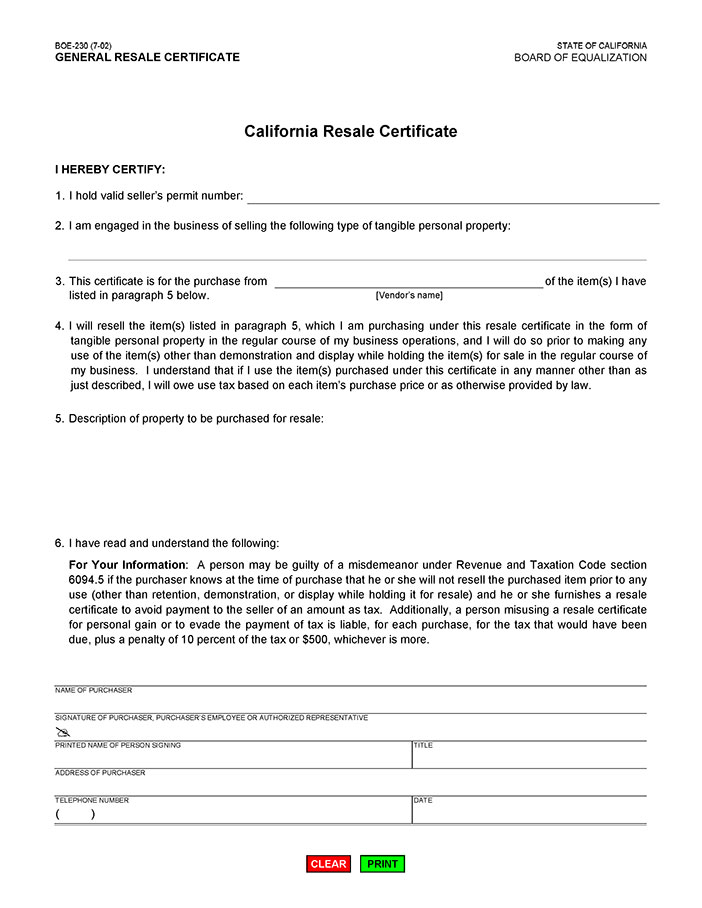
CDTFA-541-REV (Resale Certificate)
While there isn’t a singular “resale certificate” form distinct from the seller’s permit in the way some other states might have, the CDTFA provides specific guidance and forms related to claiming exemptions for resale. When a business presents its seller’s permit number to a supplier for goods intended for resale, it acts as a declaration of their intent to resell these items.
Some suppliers may provide their own “Resale Certificate” forms for you to fill out, which you then provide back to them. These forms often reiterate the buyer’s declaration that the purchased items are for resale and that they hold a valid seller’s permit. The CDTFA also offers templates or guidance on what constitutes a valid resale certificate declaration, which can be helpful for both buyers and sellers.
Proper Use and Documentation
The crucial aspect is the correct usage of your seller’s permit information when making wholesale purchases. When you buy goods from a supplier for resale, you must provide them with your seller’s permit number and, if requested, complete a resale certificate form that they provide. This document serves as proof to the CDTFA that the transaction was indeed a wholesale transaction exempt from sales tax at that stage.
You, as the business owner, must maintain records of all resale certificates you provide to your suppliers, as well as the resale certificates you receive from your customers (if applicable, for specific exemptions). This documentation is essential for audits and for demonstrating compliance.
Maintaining Compliance and Avoiding Pitfalls
Acquiring a resale certificate is only the first step. Proper and ongoing compliance is paramount to avoid legal and financial repercussions.
Understanding Taxable vs. Non-Taxable Purchases
A common misconception is that a resale certificate exempts all purchases from sales tax. This is not accurate. A resale certificate only exempts the purchase of tangible personal property that you intend to resell in the ordinary course of your business.
Purchases of items for your business’s own use, such as office supplies, furniture, equipment, or vehicles, are generally subject to sales tax. If you use your resale certificate to purchase items for your own use, you are essentially committing sales tax fraud and can face significant penalties.
Record-Keeping Requirements
The CDTFA requires businesses to maintain detailed records to substantiate their claims for sales tax exemptions, including those made through resale certificates. For every transaction where you claim an exemption based on a resale certificate:
- Sales to Customers: You must retain records of sales made to customers for which you collected sales tax. This includes receipts, invoices, and sales tax reports.
- Purchases from Suppliers: You must keep records of all purchases made for resale. This includes invoices from your suppliers that clearly indicate the items purchased and the fact that sales tax was not charged due to the resale exemption.
- Resale Certificates Provided: Maintain copies of all resale certificates provided to your suppliers.
- Resale Certificates Received (if applicable): If you have customers who provide you with resale certificates (e.g., for certain types of exempt organizations or for items they will be reselling), keep these records as well.
These records should be kept for at least four years, or longer if a notice of assessment has been issued.
Audits and Penalties
The CDTFA conducts audits to ensure that businesses are complying with sales and use tax laws. If you are audited and it is found that you have improperly used your resale certificate (e.g., for personal purchases) or failed to collect sales tax on taxable sales to consumers, you can face:
- Back Taxes: You will be liable for the sales tax that should have been collected.
- Penalties: These can include penalties for failure to pay, negligence, or fraud, which can be a significant percentage of the unpaid tax.
- Interest: Interest will be charged on the unpaid tax and penalties from the date they were due.
It is therefore crucial to understand the scope of your resale certificate and to meticulously document all transactions. If you are unsure about the taxability of a particular item or transaction, it is always best to consult with the CDTFA or a qualified tax professional.
Staying Updated with CDTFA Regulations
Tax laws and regulations are subject to change. The CDTFA website is the authoritative source for the most current information regarding sales and use tax in California. Regularly visiting their site, subscribing to their newsletters, or checking for updates on forms and policies will help you stay informed and compliant.
By diligently following these steps and maintaining a proactive approach to compliance, businesses can effectively leverage the resale certificate to their advantage, ensuring smooth and legally sound operations within the vibrant California marketplace.
LifeOutOfTheBox is a participant in the Amazon Services LLC Associates Program, an affiliate advertising program designed to provide a means for sites to earn advertising fees by advertising and linking to Amazon.com. Amazon, the Amazon logo, AmazonSupply, and the AmazonSupply logo are trademarks of Amazon.com, Inc. or its affiliates. As an Amazon Associate we earn affiliate commissions from qualifying purchases.