
Navigating the intricate world of business in the Sunshine State often involves understanding specific legal and financial documents. For businesses that purchase goods for resale, a resale certificate is not just a helpful tool, but a crucial requirement. This document, often referred to as a sales tax exemption certificate, allows businesses to purchase items free of sales tax, provided those items are intended for resale to end consumers. This exemption is a cornerstone of fair commerce, preventing the double taxation of goods. Florida, like other states, has its own set of procedures and requirements for obtaining and using these certificates.
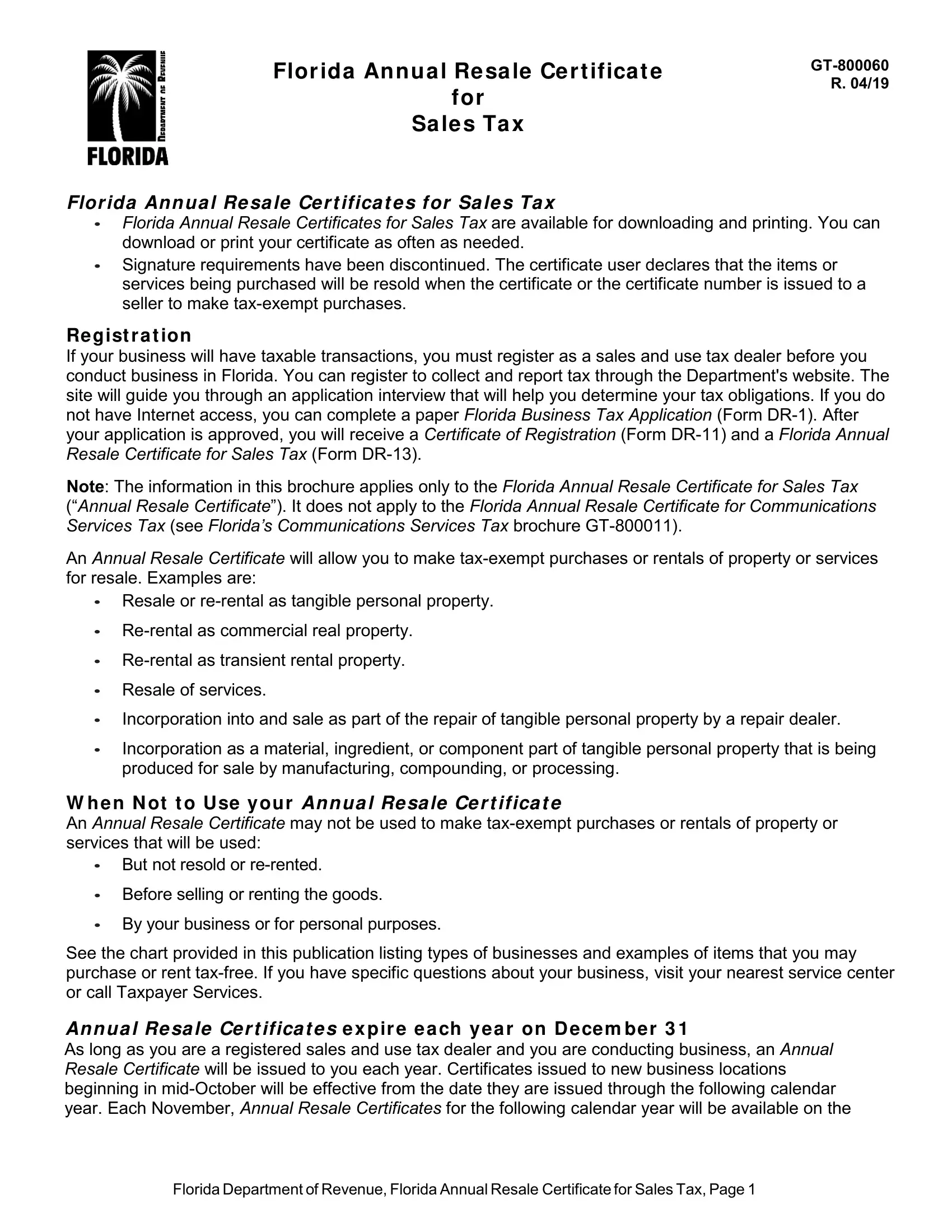
The primary purpose of a resale certificate is to exempt businesses from paying sales tax on inventory they intend to sell. Without one, a business purchasing wholesale goods would have to pay sales tax on those purchases, then collect and remit sales tax again when they sell those goods to the final customer. This would create an unfair tax burden and hinder the competitiveness of Florida-based businesses. The state of Florida, through its Department of Revenue, oversees the issuance and regulation of these certificates to ensure they are used appropriately and to prevent tax evasion. Understanding the nuances of this process is vital for any entrepreneur or business owner operating within Florida’s dynamic economy.
The concept of a resale certificate is rooted in the principle of avoiding cascading sales taxes. Imagine a furniture store in Miami. If they had to pay sales tax on every table, chair, and sofa they bought from their manufacturers, that tax would inevitably be factored into the final price for the customer. However, the customer buying the furniture would then pay sales tax on the entire purchase price. The resale certificate ensures that the sales tax is only collected and remitted once – at the point of sale to the end consumer. This streamlined approach benefits both businesses and consumers, fostering a more efficient marketplace.
Understanding the Florida Resale Certificate
In Florida, the resale certificate is officially known as the Florida Requisition for Sales and Use Tax. This document serves as a declaration by the buyer (the business) that the tangible personal property or services purchased will be resold or are otherwise exempt from sales tax. The seller, in turn, relies on this certificate to justify not collecting sales tax on that specific transaction. It is a legally binding document, and both parties have responsibilities regarding its proper use. Misuse or fraudulent use of resale certificates can lead to penalties, including fines and interest.
The Florida Department of Revenue is the governing body responsible for sales and use tax administration in the state. They provide detailed guidelines, forms, and resources to help businesses understand their obligations and obtain the necessary documentation. For businesses engaged in tourism, a significant sector in Florida, understanding these tax regulations is particularly important. Whether you’re a boutique hotel in Orlando needing to purchase linens and toiletries for your guests, a tour operator in the Florida Keys buying supplies for boat excursions, or a souvenir shop near Walt Disney World stocking up on trinkets, a valid resale certificate is essential.
What Exactly is a Resale Certificate and Why Do You Need One?
At its core, a resale certificate is a document that proves a business is eligible to purchase goods or services without paying Florida sales tax. This exemption applies when the purchased items are intended for one of two primary purposes: to be resold to a customer in the ordinary course of business, or to be used in a way that is exempt from sales tax, such as being incorporated into a product that will be resold. For example, a restaurant in Tampa can use a resale certificate to purchase food items that will be prepared and sold to customers, or to buy disposable packaging materials that are part of the final sale to the customer.
The necessity of a resale certificate is paramount for maintaining profitability and operational efficiency. Without it, businesses would be overpaying taxes, which would either eat into their profit margins or necessitate higher prices for their goods and services, making them less competitive. For instance, a dive shop in Key West offering snorkeling tours needs to purchase equipment like masks, fins, and wetsuits. By presenting a valid resale certificate to their suppliers, they avoid paying sales tax on this equipment, which can represent a significant cost saving over time. This saving can then be reinvested in the business or passed on to customers in the form of more attractive pricing for their tours and experiences.
Furthermore, the resale certificate is a key tool for the state to track economic activity and ensure that sales tax is ultimately collected from the end consumer. It creates a clear audit trail. When a seller accepts a resale certificate, they are essentially transferring the responsibility of collecting and remitting the sales tax to the next business in the supply chain. This prevents tax leakage and ensures that the state revenue is collected appropriately. The system is designed to capture tax at the final point of sale to an individual who is not going to resell the item.
Eligibility Criteria for Obtaining a Resale Certificate
To be eligible to obtain and use a resale certificate in Florida, a business must first be registered with the state and possess a valid Florida seller’s permit. This permit is essentially a license to collect and remit sales tax. The process of obtaining a seller’s permit involves registering your business with the Florida Department of Revenue and providing information about your business operations, including your Federal Employer Identification Number (FEIN) or Social Security Number (if you are a sole proprietor).
Businesses must also be engaged in the business of reselling tangible personal property or taxable services. This means that the primary function of your business is to sell goods or services to customers. For example, a company that manufactures custom jewelry in St. Petersburg and sells it directly to consumers through its retail store would qualify. Similarly, a hotel in Fort Lauderdale that provides lodging services, which are generally taxable in Florida, can use a resale certificate to purchase items like furniture, linens, and cleaning supplies that are directly used to provide the taxable service.
It’s important to note that not all purchases made by a business are eligible for resale. For example, office supplies, such as pens, paper, and computer equipment that are used for the general operation of the business and not directly resold, are generally subject to sales tax. A business cannot use a resale certificate to avoid paying sales tax on its own operational expenses. The certificate is strictly for goods and services that will be resold or are directly consumed in the provision of a taxable service.
The Application and Registration Process
The process of obtaining a resale certificate in Florida is intertwined with the application for a seller’s permit. When you register your business with the Florida Department of Revenue to collect sales tax, you are essentially applying for the authority to issue and accept resale certificates. The application is typically done online through the Florida Department of Revenue’s website. This online portal allows businesses to register, manage their tax accounts, and file their tax returns efficiently.
The application will require detailed information about your business, including its legal structure (sole proprietorship, partnership, LLC, corporation), business address, contact information, and estimated gross sales. You will also need to provide information about the owners of the business. Once your application is processed and approved, you will be issued a Florida seller’s permit number. This number is your unique identifier for sales tax purposes and is crucial for using resale certificates.
Step-by-Step Guide to Obtaining Your Resale Certificate
-
Determine Your Business Structure and Obtain Necessary Registrations: Before applying for a seller’s permit, ensure your business is properly registered with the state of Florida. This might include registering your business name with the Florida Department of State, especially if you are operating as an LLC or corporation. Sole proprietors may not need this additional step if they are operating under their own name.
-
Register with the Florida Department of Revenue: The primary step is to register your business with the Florida Department of Revenue. You can do this online through their website. You will need to create an account if you don’t already have one. The registration process is comprehensive and designed to gather all necessary information for tax administration.
-
Complete the Application for a Seller’s Permit: During the registration process, you will be prompted to complete an application for a seller’s permit. This application will ask for details about your business, including your FEIN or Social Security number, business activity codes, and projected sales figures. You will also need to specify the type of business you operate (e.g., retail store, restaurant, hotel, service provider).
-
Receive Your Seller’s Permit Number: Upon successful approval of your application, the Florida Department of Revenue will issue your business a unique seller’s permit number. This number is essential. It is your authorization to collect and remit sales tax and to issue resale certificates.
-
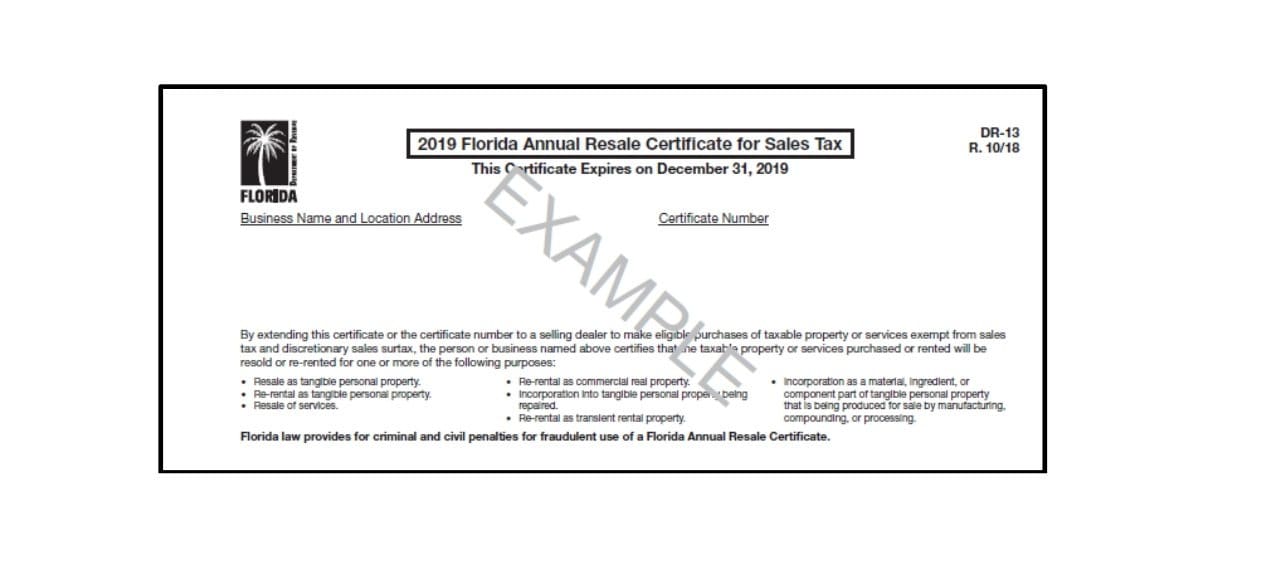
Understand and Utilize Resale Certificates: With your seller’s permit in hand, you are now authorized to use resale certificates. You can download blank resale certificate forms from the Florida Department of Revenue website or use your own custom forms as long as they contain all the required information. When you make a qualifying purchase for resale, you will complete a resale certificate, sign it, and provide it to your supplier.
It’s crucial to keep accurate records of all resale certificates issued and received. Suppliers will keep the certificates you provide them as documentation for why they did not collect sales tax from you. Likewise, you should maintain copies of any resale certificates you accept from your own suppliers. This documentation is vital in case of an audit by the Florida Department of Revenue.
When and How to Use Your Resale Certificate
A resale certificate should only be used when you are purchasing tangible personal property or taxable services with the intent to resell them to your customers in the normal course of business. For example, a hotel operating in Naples can use a resale certificate to purchase towels, sheets, and toiletries that will be provided to guests as part of the room service. They can also use it to buy furniture or decorative items that are part of the hotel’s décor and are intrinsically linked to the service of providing accommodation.
When making a qualifying purchase, you will present your valid Florida seller’s permit number and a completed resale certificate to your supplier. The certificate requires specific information, including your business name, address, seller’s permit number, and a description of the items being purchased for resale. You must also sign the certificate, attesting to the truthfulness of the information provided. The supplier will then keep this certificate on file as their proof of exemption.
Conversely, if your business provides taxable goods or services, and a customer who intends to resell those goods or services approaches you, they should present you with a valid resale certificate. In this scenario, you would accept the certificate, record their seller’s permit number, and keep the certificate on file. This exempts you from collecting sales tax on that particular transaction. For instance, a wholesaler of gourmet coffee beans in Jacksonville would accept a resale certificate from a coffee shop owner who intends to brew and sell the coffee to their customers.
The key principle is that the tax should only be collected at the final point of sale to the ultimate consumer. If a business is part of the chain of distribution, acting as an intermediary before the final sale to an individual, they can utilize the resale certificate to defer the sales tax. This system is crucial for the smooth functioning of businesses that rely on purchasing inventory for resale, such as retailers, wholesalers, manufacturers, and many service providers.
Maintaining Compliance and Avoiding Penalties
Compliance with Florida’s sales tax laws, including the proper use of resale certificates, is essential for any business. The Florida Department of Revenue actively audits businesses to ensure adherence to tax regulations. Failure to comply can result in significant financial penalties, including back taxes, interest, and fines. Understanding the rules and maintaining meticulous records are your best defenses against potential issues.
The Department of Revenue provides numerous resources to help businesses stay compliant. Their website is a treasure trove of information, including publications, FAQs, and contact information for their support services. Attending workshops or seminars offered by the Department or by professional organizations can also provide valuable insights into tax compliance. For businesses in the travel and hospitality sector, where the use of resale certificates is common for a variety of purchases, staying informed about any changes in tax law is particularly important.
Record-Keeping Best Practices for Resale Certificates
Meticulous record-keeping is not just a suggestion; it’s a requirement and a critical component of maintaining tax compliance in Florida. For every resale certificate you issue, you must retain a copy of the certificate and evidence of your seller’s permit number. This documentation serves as your proof that you are purchasing items for resale and are therefore exempt from paying sales tax on those specific transactions. If the Florida Department of Revenue audits your business, they will scrutinize these records.
Similarly, for every resale certificate you accept from a customer, you must maintain a copy of that certificate and the customer’s seller’s permit number. This is your justification for not collecting sales tax from that customer. The certificates should be organized and readily accessible. Many businesses choose to maintain digital records, scanning and storing all certificates in secure, easily searchable folders. This practice not only aids in audits but also simplifies tracking inventory and supplier information.
Regularly review your records to ensure that resale certificates are being used appropriately. Cross-reference your purchase invoices with the items listed on your resale certificates. If you find any discrepancies or instances where a resale certificate was improperly used, it’s crucial to address these issues promptly. This might involve amending past tax filings or correcting internal procedures to prevent future errors. For businesses that operate in multiple locations, such as hotel chains with properties across the state, ensuring consistent application of resale certificate policies is vital.

Common Pitfalls and How to Avoid Them
One of the most common pitfalls is the misuse of resale certificates for personal purchases or for items that are not intended for resale. For example, using a resale certificate to buy office furniture for your administrative staff or a new laptop for your personal use is illegal and can lead to severe penalties. Remember, the certificate is strictly for inventory that will be resold or for items directly consumed in the provision of a taxable service.
Another common mistake is accepting invalid resale certificates. If a customer presents you with a resale certificate without a valid seller’s permit number, or if the information on the certificate is incomplete or appears fraudulent, you should not accept it. In such cases, you are obligated to collect sales tax. It’s essential to train your staff to recognize the signs of an invalid certificate and to follow proper procedures.
Failing to maintain adequate records is another major pitfall. Without proper documentation, you cannot defend yourself during an audit. This includes not only keeping the certificates themselves but also ensuring they are properly filled out and include all required information. A missing signature, an illegible seller’s permit number, or an unclear description of the items purchased can render the certificate invalid in the eyes of the Department of Revenue.
Finally, staying up-to-date with changes in Florida’s sales tax laws is crucial. Tax regulations can evolve, and what was permissible one year may not be the next. Businesses that actively engage with resources from the Florida Department of Revenue and consult with tax professionals are much less likely to fall into these common pitfalls. By prioritizing understanding and diligent record-keeping, businesses can confidently navigate the process of obtaining and using resale certificates in Florida, ensuring both compliance and operational efficiency.
LifeOutOfTheBox is a participant in the Amazon Services LLC Associates Program, an affiliate advertising program designed to provide a means for sites to earn advertising fees by advertising and linking to Amazon.com. Amazon, the Amazon logo, AmazonSupply, and the AmazonSupply logo are trademarks of Amazon.com, Inc. or its affiliates. As an Amazon Associate we earn affiliate commissions from qualifying purchases.