
For decades, the enigmatic lyrics of The Eagles’ iconic song, “Hotel California,” have captivated audiences worldwide, sparking a perpetual quest to uncover the true identity of the mysterious hotel at its heart. Is it a real place, a tangible landmark nestled somewhere along the sun-drenched coast of California, or a masterful metaphor for a darker side of the American dream? This enduring mystery has fueled countless discussions among fans, travelers, and music historians alike, transforming the song from a rock anthem into a cultural phenomenon that beckons us to explore the intersection of music, travel, and the human imagination.
The pursuit of the “Hotel California” transcends a mere fan’s curiosity; it speaks to a deeper fascination with discovery, much like the allure of uncovering hidden gems in travel, exploring unique accommodation options, or delving into the rich tapestry of local culture. Whether you’re a seasoned globetrotter seeking iconic landmarks or a casual traveler planning your next getaway, the story behind “Hotel California” offers a compelling narrative that blends musical artistry with the tangible world of hotels, resorts, and unforgettable destinations.
The Enduring Mystery of “Hotel California”
Released in 1976 as the title track of their fifth studio album, “Hotel California” quickly ascended to legendary status, lauded for its intricate guitar solos, haunting vocals, and cryptic narrative. The song tells the story of a weary traveler who pulls off a dark desert highway into a seemingly luxurious, yet sinister, hotel. From the “warm smell of colitas, rising up through the air” to the unsettling revelation that “you can check out any time you like, but you can never leave,” the lyrics paint a vivid picture of a captivating trap, a gilded cage that promises paradise but delivers perdition.
The ambiguity of the lyrics was deliberate, a hallmark of The Eagles’ songwriting, primarily driven by Don Henley and Glenn Frey. They aimed to evoke a sense of unease and reflection, rather than pinpoint a specific location. Yet, the human mind craves concrete answers, especially when presented with such evocative imagery. This desire to ground the fantastical in reality is precisely what has propelled the search for the real “Hotel California” for nearly half a century.
Decoding the Lyrics: A Glimpse into the Song’s Soul
The lyrics of “Hotel California” are a masterclass in symbolism, inviting listeners to interpret its meaning through various lenses. While many initially searched for a literal hotel, the band members themselves have offered deeper, more metaphorical explanations. Don Henley once described the song as their “interpretation of the high life in Los Angeles,” and “a statement about the dark underbelly of the American dream and about excess in America, which is something we knew a lot about.”
The narrative follows a traveler seduced by the glitz and glamour of a place that ultimately proves inescapable. This journey from naive optimism to trapped disillusionment resonates deeply, reflecting anxieties about consumerism, fame, and the pursuit of superficial pleasures. The “pink champagne on ice,” the “mirrors on the ceiling,” and the “sweet summer sweat” conjure images of opulence and hedonism, elements often associated with luxurious resorts and vibrant nightlife. However, the unsettling refrain, “we haven’t had that spirit here since nineteen sixty-nine,” hints at a loss of innocence or a past ideal, adding layers of melancholy to the perceived decadence.
The Allure of the Myth: Why We Search for a Real Place
The human tendency to seek tangible connections to art is powerful. We want to walk in the footsteps of our heroes, visit the places described in our favorite stories, and feel the history embedded in famous landmarks. This impulse is at the core of tourism itself, driving millions to explore everything from ancient ruins to modern architectural marvels. The “Hotel California” phenomenon is no different.
The mystique surrounding the song creates a powerful draw. Travelers are often inspired by music, literature, and film to visit certain destinations. Imagine the thrill of discovering the very hotel that inspired such a legendary track! This quest for a physical manifestation of a musical masterpiece fuels dreams of unique travel experiences and often leads to unexpected journeys, even if the ultimate discovery is a metaphorical one. It highlights how art can shape our perception of places and influence our travel guides and itineraries.
Real-World Candidates and Urban Legends
Despite the band’s insistence on the song’s metaphorical nature, various real-world establishments have, over the years, been rumored or mistaken to be the inspiration for the infamous hotel. These theories often stem from architectural similarities, historical context, or simply a desire to concretize the elusive dreamscape of the lyrics. Exploring these potential candidates offers a fascinating glimpse into the landscape of California and beyond, from iconic luxury hotels to quaint, historic inns.
The Mission San Juan Capistrano Theory
One prominent theory suggests that the line “mission bells were ringing” refers to the historic Mission San Juan Capistrano, located in Orange County, California. Founded in 1776, this mission is famous for its beautiful architecture, swallows that return each spring, and, of course, its historic bells. While the mission itself is not a hotel, its proximity to Los Angeles and its historical significance made it a compelling candidate for a lyrical reference.
Visitors flock to Mission San Juan Capistrano annually, drawn by its serene courtyards, ancient stone structures, and a tangible connection to California’s colonial past. It offers a rich cultural experience, providing a stark contrast to the bustling modernity of nearby cities. While it doesn’t house a “Hotel California,” it certainly embodies a sense of timelessness and a certain faded grandeur that could fit within the song’s aesthetic. Exploring such historic sites is a cornerstone of deep travel and tourism, allowing us to connect with the narratives of bygone eras.
The Pink Palace: Beverly Hills Hotel and Its Parallels
Perhaps the most famous real-world association is with The Beverly Hills Hotel, often dubbed the “Pink Palace.” Located on Sunset Boulevard in Beverly Hills, this opulent hotel has been a playground for Hollywood stars and the ultra-rich since 1912. Its distinctive pink exterior, lavish suites, lush gardens, and legendary poolside cabanas perfectly embody the kind of extravagant lifestyle depicted in the song.
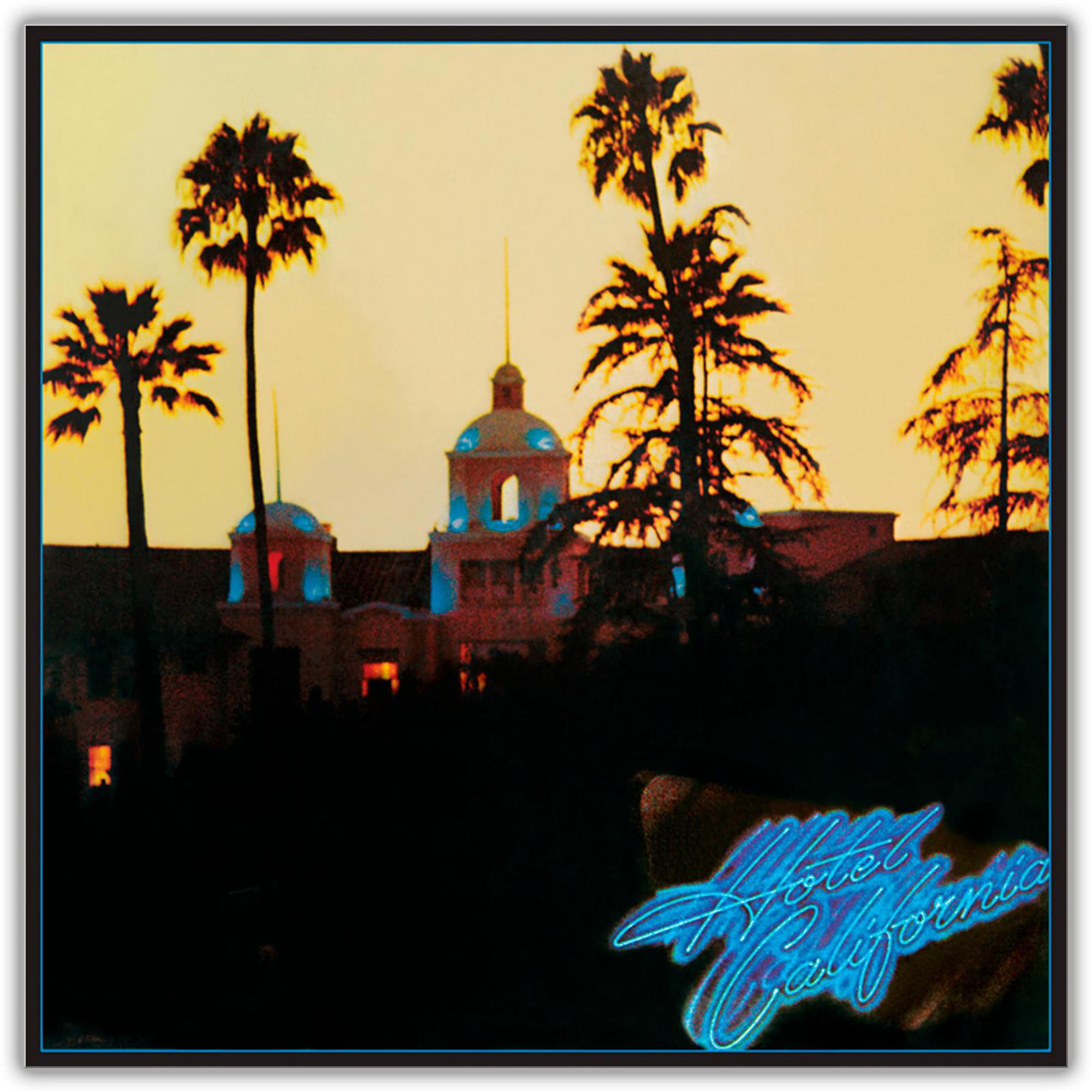
The Eagles themselves were based in Los Angeles during the height of their fame and were undoubtedly familiar with The Beverly Hills Hotel. The album’s inner gatefold photograph even features a picture of the hotel’s courtyard, taken from above, further solidifying this connection in the public’s mind. While the band members have consistently denied that it was the direct inspiration, the hotel’s reputation for glamorous excess, its status as a symbol of Hollywood decadence, and its undeniable allure make it a compelling doppelgänger for the song’s fictional counterpart. For those seeking a taste of luxury travel and a glimpse into celebrity culture, a stay or visit to The Beverly Hills Hotel offers a quintessential Los Angeles experience. It represents the pinnacle of hotel amenities and service, appealing to those who appreciate refined accommodation.

Other Contenders: From San Francisco to Baja California Sur
While The Beverly Hills Hotel remains the most popular theory, other establishments have also been drawn into the “Hotel California” orbit.
One lesser-known but historically significant theory points to the Grand Hyatt Hotel in San Francisco (formerly the Regency Hyatt House). The song’s opening line, “On a dark desert highway, cool wind in my hair,” doesn’t immediately evoke San Francisco’s foggy landscape. However, the hotel’s distinctive architecture, particularly its atrium design with “mirrors on the ceiling,” and its location in a city known for its vibrant counter-culture in the late 60s and early 70s, offered some parallels to the song’s themes of societal reflection and self-indulgence. While less convincing than the Beverly Hills connection, it showcases the lengths to which fans will go to connect lyrics to physical spaces.
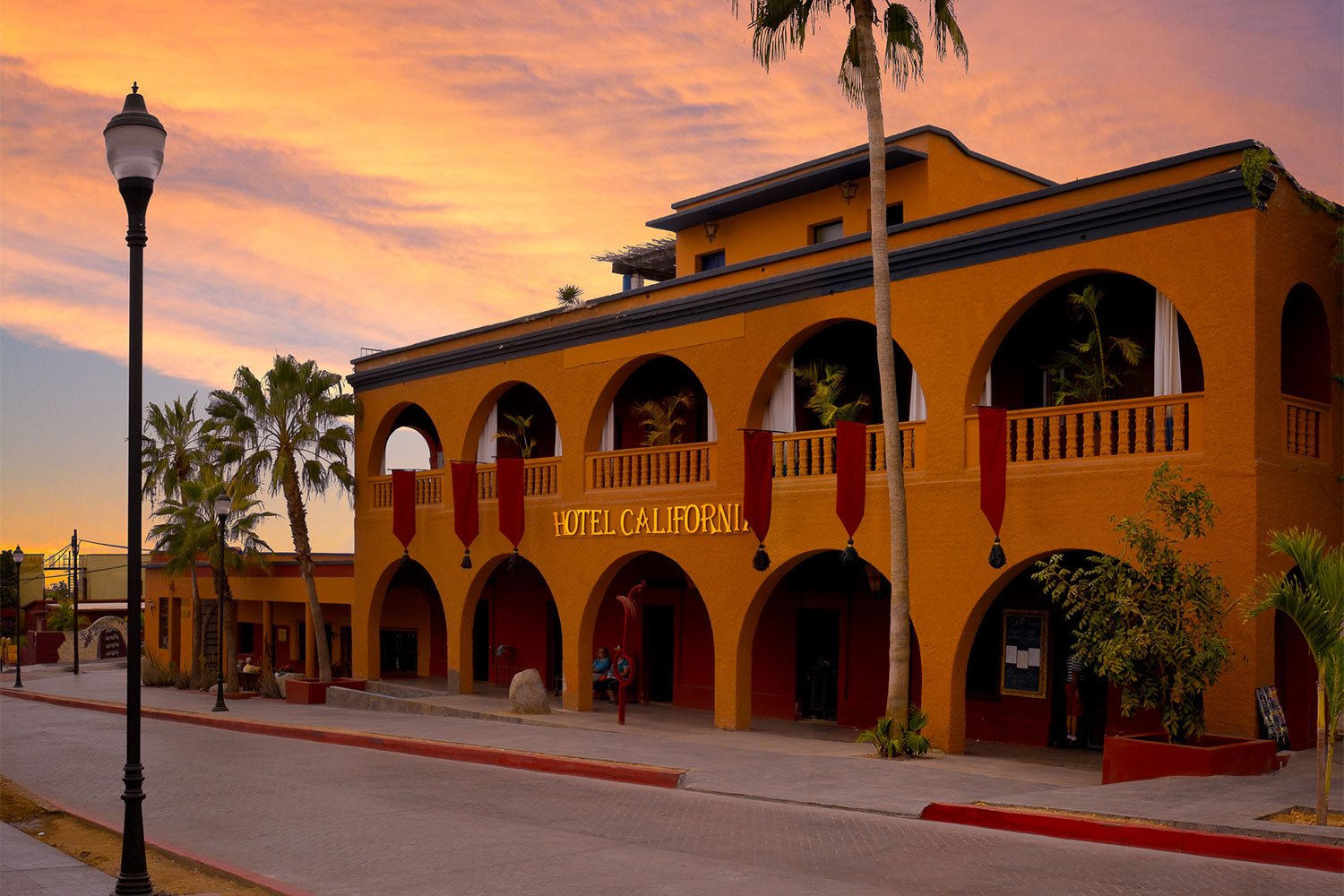
Further afield, a genuine Hotel California actually exists in Todos Santos, Baja California Sur, Mexico. This charming colonial-style hotel, founded in 1948, capitalized on the song’s fame decades later, adopting the name “Hotel California” in 1970 and later changing it back and forth before settling on it permanently. While it has no historical connection to The Eagles’ song – the band never stayed there, and the song was released years after the hotel was originally named – its existence fuels the myth. The owners have been careful to state that they are not the subject of the song, but the coincidence draws in countless tourists eager for a photo opportunity and a chance to experience a piece of the legend. This demonstrates how even accidental connections can become powerful tourism attractions, creating unique travel experiences for visitors. Booking a stay here, despite the lack of a direct link, still offers a distinct and memorable experience for fans.
The Metaphorical “Hotel California”: More Than Just Bricks and Mortar
Ultimately, the most widely accepted and artistically resonant explanation for “Hotel California” is that it is not a physical place at all, but a powerful metaphor. The band intended the song to be a commentary, a social critique wrapped in a compelling narrative, rather than a travelogue. Understanding this deeper meaning enriches our appreciation of the song and offers a different lens through which to view travel and the pursuit of meaning in our journeys.
A Symbol of Excess and the Dark Side of the American Dream
As Don Henley articulated, “Hotel California” symbolizes the unchecked materialism and self-indulgence prevalent in Los Angeles and, by extension, within the broader American society of the 1970s. The song paints a picture of a seductive trap, where the promise of ultimate freedom and luxury leads instead to spiritual emptiness and an inability to escape. This resonated deeply with a generation grappling with the aftermath of the 1960s’ idealism and the growing cynicism of the Watergate era.
The “Hotel California” represents any place or state of mind where one is drawn into a cycle of excess, where choices made for instant gratification lead to long-term entrapment. It speaks to the illusion of choice – “you can check out any time you like” – versus the reality of consequence – “but you can never leave.” This metaphor extends beyond Hollywood decadence to any sphere of life where external glamour masks internal decay. It serves as a cautionary tale, prompting reflection on the true costs of certain lifestyles and the search for authentic experiences over superficial ones, a theme relevant even in today’s world of curated travel photos and instant gratification.
Personal Interpretation and the Traveler’s Experience
The beauty of “Hotel California” lies in its open-ended nature, allowing each listener to imbue it with personal meaning. For a traveler, the song can evoke a myriad of feelings: the allure of a new, exotic destination; the potential for unexpected twists and turns during a journey; or even the bittersweet feeling of leaving a place that has captured one’s heart, yet knowing a piece of it will always remain.
When we embark on a trip, whether it’s a budget travel adventure or a luxury escape, we seek more than just new sights. We seek experiences, stories, and connections. The “Hotel California” experience, even if purely metaphorical, encourages us to look beyond the surface of the places we visit. It challenges us to consider the underlying narratives of cities like New York City or Paris, the history of ancient landmarks like the Colosseum in Rome, or the cultural nuances of bustling markets in Kyoto. It’s about recognizing that every place, like every song, has multiple layers waiting to be uncovered.
Experiencing “Hotel California” Through Travel
While the exact location of The Eagles’ “Hotel California” may remain a poetic mystery, the spirit of its quest inspires a richer approach to travel. It reminds us that whether we’re drawn to grand resorts or charming boutique hotels, the true value of an accommodation lies not just in its physical amenities, but in the stories it tells, the history it holds, and the experiences it enables.
Iconic Hotels and Their Stories: Beyond the Song
Inspired by the search for “Hotel California,” travelers can explore other iconic hotels around the world that have their own legends and allure. From the historic elegance of The Plaza Hotel in New York City, which has featured in numerous films and novels, to the otherworldly charm of ice hotels in Scandinavia or treehouse resorts in the Amazon rainforest, each offers a unique narrative.
Consider the Raffles Hotel in Singapore, a colonial masterpiece synonymous with luxury and literary history, or the Hotel del Coronado near San Diego, California, a Victorian architectural marvel said to be haunted. These establishments, much like the mythical “Hotel California,” transcend their physical structures to become characters in their own right, offering guests a chance to step into a living story. Seeking out hotels with history or those renowned for their unique architecture can transform a simple stay into a memorable cultural immersion and an exciting part of any itinerary.
Seeking Unique Accommodation and Cultural Immersion
The quest for “Hotel California” encourages us to think beyond standard hotel chains and explore a diverse range of accommodation options that offer a deeper connection to the local environment and culture. This could mean staying in a traditional ryokan in Japan, a charming bed and breakfast in the English countryside, or a remote eco-lodge in Costa Rica. Each choice presents an opportunity for unique experiences and insights into different lifestyles.
When planning your next trip, whether for business stays or family trips, consider:
- Boutique hotels: Often independently owned, offering personalized service and unique design, telling a distinct story.
- Apartment rentals: Providing a sense of local living and typically more space for long-term stays.
- Villas or Homestays: Offering privacy and an intimate connection to the local community, especially appealing for cultural tourism.
- Eco-lodges: For the environmentally conscious traveler, integrating sustainable practices with unique nature experiences.
By choosing accommodation that reflects the character of your destination, you don’t just find a place to sleep; you find a deeper entry point into the local way of life. This is the essence of meaningful tourism – moving beyond mere sightseeing to truly experience a place. The pursuit of the “Hotel California” becomes less about finding a specific building and more about fostering a curious and reflective approach to all our travels, searching for the stories, the beauty, and the hidden depths in every corner of the world. So, while you may never locate the exact hotel The Eagles sang about, the journey to find it – or at least its spirit – can lead you to countless unforgettable destinations and profound insights.
LifeOutOfTheBox is a participant in the Amazon Services LLC Associates Program, an affiliate advertising program designed to provide a means for sites to earn advertising fees by advertising and linking to Amazon.com. Amazon, the Amazon logo, AmazonSupply, and the AmazonSupply logo are trademarks of Amazon.com, Inc. or its affiliates. As an Amazon Associate we earn affiliate commissions from qualifying purchases.