
Acquiring an Employer Identification Number (EIN) is a foundational step for many businesses operating in the Lone Star State. Often referred to as a Federal Tax Identification Number, this nine-digit number is issued by the Internal Revenue Service (IRS) and is essential for a variety of business activities, from opening a business bank account to hiring employees. While the process is federally regulated, understanding the nuances specific to operating within Texas can streamline the application. This guide will demystify the process, covering eligibility, application methods, and essential considerations for Texas entrepreneurs and business owners.

Understanding EIN Basics
An EIN is like a Social Security number for your business. It’s a unique identifier used by the IRS to track business tax filings. Without an EIN, you may face significant hurdles in conducting legitimate business operations.
Who Needs an EIN?
Generally, any business entity that falls into one of the following categories will need an EIN:
- Corporations: Regardless of structure (S-corp, C-corp), all corporations require an EIN.
- Partnerships: All partnerships must obtain an EIN.
- Limited Liability Companies (LLCs): While a single-member LLC might not always need an EIN for federal tax purposes (it can use its owner’s Social Security number), it will typically need one if it has employees, operates as a corporation for tax purposes, or files excise tax returns. Multi-member LLCs always require an EIN.
- Businesses with Employees: If your Texas business plans to hire employees, an EIN is mandatory. This is for reporting employment taxes to the IRS.
- Businesses Operating as a Sole Proprietorship with Specific Tax Situations: Even sole proprietors may need an EIN if they have employees, operate a Keogh plan, or are involved in certain types of tax filings (like excise taxes).
- Estates and Trusts: These entities also require an EIN.
Even if your business doesn’t strictly need an EIN for tax filing purposes, obtaining one is often beneficial. It lends a layer of professionalism, can be required by vendors or financial institutions for opening business accounts, and helps separate personal and business finances. For businesses in Texas, this separation is crucial for maintaining liability protection offered by structures like LLCs and corporations.
Benefits of Having an EIN
Beyond compliance, an EIN offers several practical advantages for Texas businesses:
- Opening Business Bank Accounts: Most banks in Texas will require an EIN to open a business checking or savings account. This is a critical step in maintaining financial separation.
- Hiring Employees: As mentioned, this is a non-negotiable requirement for tax reporting purposes.
- Filing Tax Returns: Different business structures have specific tax filing requirements, and an EIN is the primary identifier.
- Establishing Business Credit: An EIN allows your business to build its own credit history, separate from the personal credit of its owners. This can be invaluable for future financing and growth.
- Professional Image: Having an EIN signals to clients, vendors, and partners that your business is a legitimate and formally recognized entity.
Applying for Your EIN in Texas
The application process for an EIN is standardized by the IRS, meaning the steps are the same whether your business is located in Texas or any other state. The primary method is online, but mail and fax options are also available.
The Online Application (Recommended)
The fastest and most convenient way to obtain an EIN is through the IRS website. This method typically results in receiving your EIN immediately after successful submission.
- Visit the IRS EIN Application Website: Navigate to the official IRS website and locate the “Apply for an Employer Identification Number (EIN) Online” page. Be wary of third-party sites that charge fees for this service; the IRS application is free.
- Eligibility Confirmation: The application will guide you through a series of questions to confirm your business’s eligibility and determine the correct business structure.
- Principal Business Activity: You will need to identify the primary business activity of your Texas entity. This helps the IRS categorize your business for tax purposes.
- Business Information: You’ll need to provide details about your business, including its legal name, trade name (if applicable), address in Texas, responsible party’s information (usually an owner or officer), and Social Security number (SSN) or Individual Taxpayer Identification Number (ITIN) of the responsible party.
- Responsible Party: This is a crucial field. The responsible party is an individual who ultimately owns or controls the entity, or who exercises significant control over the entity. They must have an SSN or ITIN.
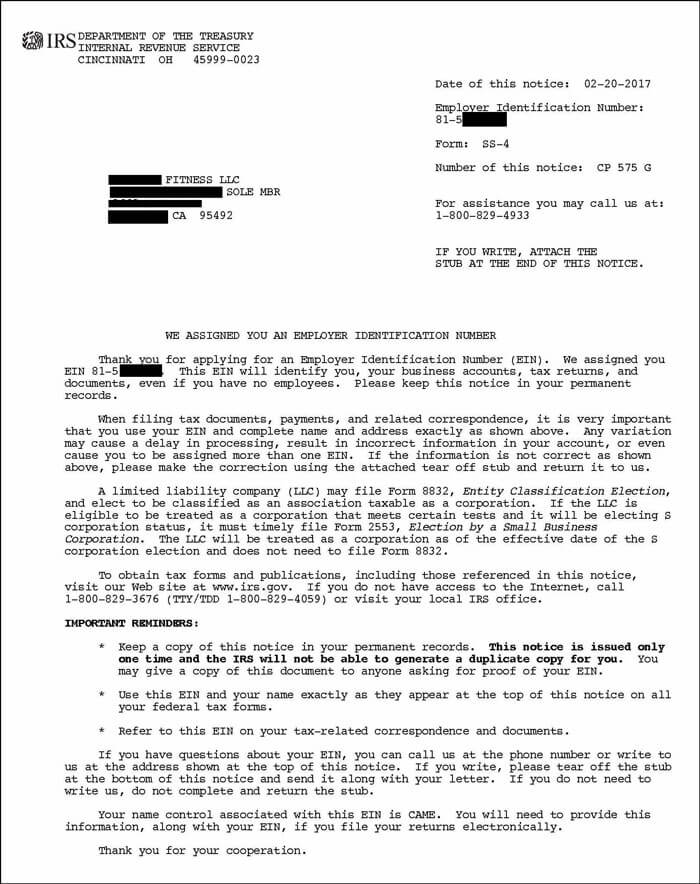
- Submission and Confirmation: Once all information is entered accurately, submit the application. If successful, you will receive your EIN on screen immediately. You will also be able to download and print a confirmation letter from the IRS.
Important Note for Texas Businesses: When prompted for the business address, use your physical Texas business address. If you operate solely online and don’t have a physical office, you can generally use a P.O. Box or a third-party mail forwarding service address in Texas, but ensure it’s a valid mailing address.
Application via Mail or Fax
While less common and significantly slower, you can also apply by mail or fax using Form SS-4, Application for Employer Identification Number.
- Download Form SS-4: Obtain the latest version of Form SS-4 from the IRS website.
- Complete the Form: Fill out the form accurately and completely. Pay close attention to all fields, especially those related to your business structure, Texas location, and the responsible party.
- Submit by Mail or Fax: Mail or fax the completed form to the appropriate IRS service center. The addresses and fax numbers are provided on the Form SS-4 instructions.
Processing Time: Applications submitted by mail or fax can take several weeks to process, which is why the online method is strongly recommended for Texas businesses seeking a timely start.
Key Considerations for Texas Businesses

While the EIN application itself is a federal process, understanding Texas-specific business landscapes can enhance your strategic approach.
Business Structure and EIN Implications
The choice of business structure significantly impacts your need for an EIN and how you operate.
- Sole Proprietorship: If you are a sole proprietor in Texas without employees or specific tax obligations, you might not need an EIN and can use your SSN. However, opening a business account often necessitates an EIN.
- Partnership: All partnerships in Texas must have an EIN.
- Limited Liability Company (LLC): A Texas LLC with multiple members will always need an EIN. A single-member LLC may need one if it chooses to be taxed as a corporation or has employees.
- Corporation: All corporations formed in Texas, whether C-corps or S-corps, require an EIN.
The Role of the Responsible Party
The responsible party is a critical element of the EIN application. This individual must be an individual (not an entity) who has a Social Security number (SSN) or Individual Taxpayer Identification Number (ITIN) and is a U.S. citizen, resident alien, or non-resident alien. They are responsible for the entity and the accuracy of the information provided on Form SS-4. For many Texas startups, this will be the founder or a principal owner.
Choosing the Right Business Address
Your Texas business address is important. It should be a physical location where the business operates. If you’re a home-based business in Texas, you can use your home address, but consider the implications for privacy. Using a virtual office or a registered agent service address in Texas is also an option, but ensure it meets IRS requirements for a mailing address.
State-Specific Requirements vs. Federal EIN
It’s vital to distinguish between federal requirements (like the EIN) and state requirements. While an EIN is obtained from the IRS, Texas has its own set of business registration and tax obligations. You will likely need to register your business with the Texas Secretary of State and comply with state tax laws, which may involve obtaining a Texas Taxpayer ID Number in addition to your federal EIN. The Texas Comptroller of Public Accounts is the relevant state agency for sales tax, franchise tax, and other state business taxes.
Post-EIN Acquisition: What Next?
Receiving your EIN is a significant milestone, but it’s just the beginning of your business’s compliance journey in Texas.
Opening Your Business Bank Account
With your EIN in hand, the next logical step is to visit your chosen bank in Texas to open your business bank account. You will need your EIN confirmation letter, along with your business formation documents (e.g., Articles of Incorporation for a corporation, Certificate of Formation for an LLC) and identification for the authorized signers.
Understanding Tax Obligations
Your EIN will be used for all federal tax filings. This includes:
- Employment Taxes: If you have employees in Texas, you’ll use your EIN to file Form 941, Employer’s Quarterly Federal Tax Return, and Form 940, Employer’s Annual Federal Unemployment (FUTA) Tax Return.
- Income Tax Returns: Depending on your business structure, you’ll file different income tax returns using your EIN (e.g., Form 1120 for corporations, Form 1065 for partnerships).
- Excise Taxes: If your business deals with specific goods or services subject to excise taxes, your EIN will be used.
Remember to also comply with all Texas state tax requirements, including franchise tax and sales tax, as managed by the Texas Comptroller of Public Accounts.
Maintaining Compliance
Once you have your EIN and have established your business operations in Texas, ongoing compliance is crucial. This involves:
- Accurate Record-Keeping: Maintain meticulous records of all business transactions.
- Timely Tax Filings: File all federal and state tax returns by their due dates.
- Updating Information: If there are significant changes to your business structure, ownership, or address in Texas, you may need to update your information with the IRS and the Texas Secretary of State.
Obtaining an EIN is a critical step for establishing a legitimate and compliant business in Texas. By understanding the requirements, utilizing the efficient online application process, and staying informed about ongoing tax obligations, Texas entrepreneurs can confidently navigate this essential business requirement.
LifeOutOfTheBox is a participant in the Amazon Services LLC Associates Program, an affiliate advertising program designed to provide a means for sites to earn advertising fees by advertising and linking to Amazon.com. Amazon, the Amazon logo, AmazonSupply, and the AmazonSupply logo are trademarks of Amazon.com, Inc. or its affiliates. As an Amazon Associate we earn affiliate commissions from qualifying purchases.