
Establishing a Limited Liability Company (LLC) in Nebraska is a strategic move for entrepreneurs seeking to protect their personal assets while operating a business. This business structure offers a blend of pass-through taxation, similar to a sole proprietorship or partnership, and the limited liability protection afforded by corporations. The process, while requiring attention to detail, is generally straightforward. This guide will walk you through the essential steps to successfully register your LLC in the Cornhusker State.
Understanding the Basics of an LLC in Nebraska
Before diving into the procedural aspects, it’s crucial to grasp what an LLC is and why it’s a popular choice for businesses of all sizes, from small startups in Omaha to established ventures across the state.
What is a Limited Liability Company?
An LLC is a hybrid business structure that combines the “pass-through” taxation of a partnership or sole proprietorship with the limited liability of a corporation. This means that the business itself is a separate legal entity from its owners, shielding their personal assets (such as homes, cars, and personal bank accounts) from business debts and lawsuits. If the business incurs debt or faces legal action, the owners’ personal assets are generally protected.
Benefits of Forming an LLC in Nebraska
- Limited Liability Protection: As mentioned, this is the primary advantage. Owners are not personally responsible for business debts or legal liabilities.
- Pass-Through Taxation: Profits and losses are passed through directly to the owners’ personal income without being taxed at the corporate level. This avoids the “double taxation” often associated with C-corporations.
- Flexibility in Management: LLCs can be managed by their members (owners) or by appointed managers. This flexibility allows for a structure that best suits the business’s needs.
- Simplified Operations: Compared to corporations, LLCs typically have fewer administrative burdens and less stringent record-keeping requirements.
- Credibility: Operating as an LLC can lend an air of legitimacy and professionalism to your business in the eyes of customers, suppliers, and potential investors.
Key Differences from Other Business Structures
- Sole Proprietorship/Partnership: In these structures, there is no legal distinction between the owner(s) and the business. Personal assets are at risk for business liabilities.
- Corporation (S-Corp/C-Corp): Corporations are more complex, with stricter regulations, required board meetings, and potential double taxation (for C-corps). LLCs offer a simpler alternative for many small to medium-sized businesses.
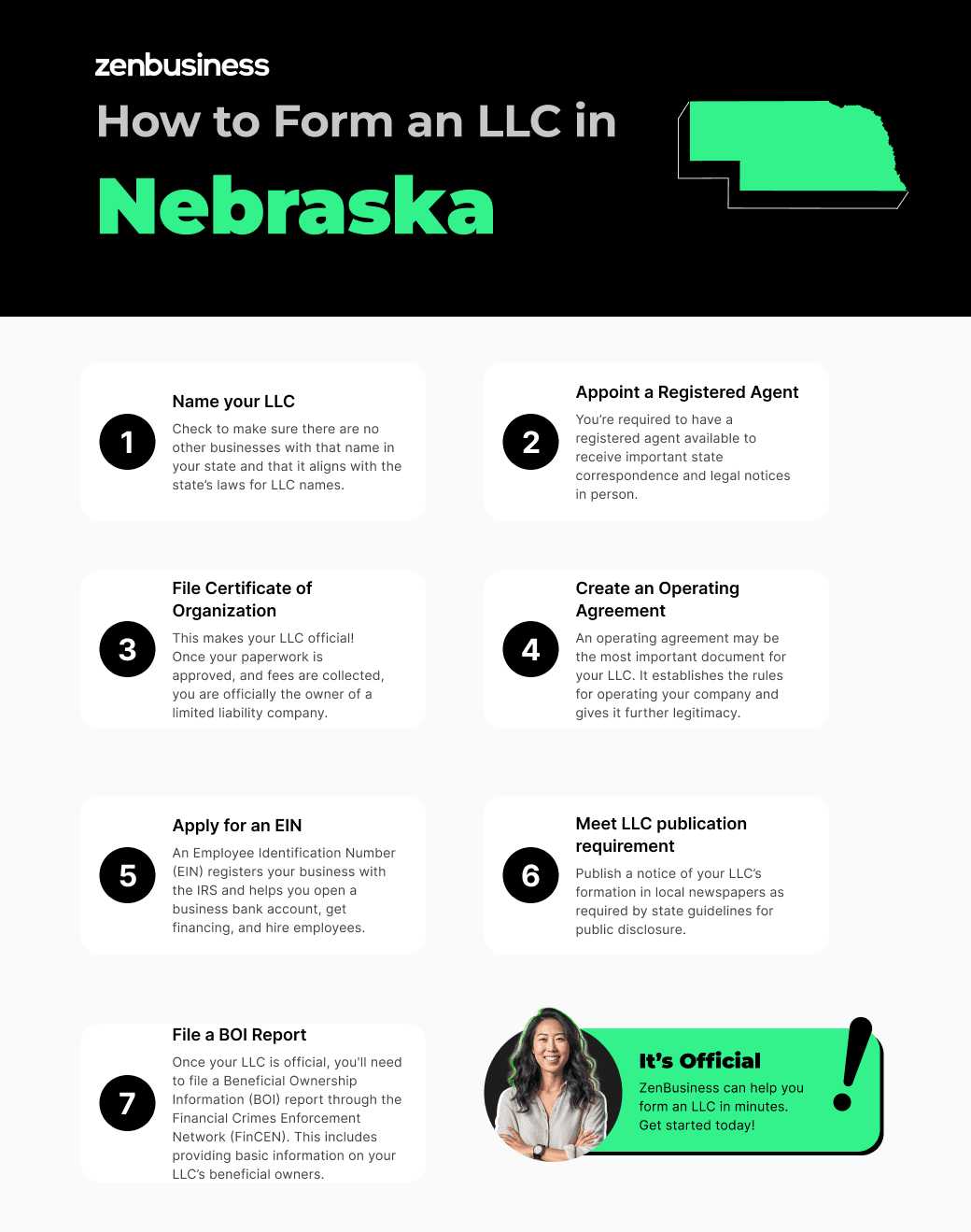
Step-by-Step Guide to Forming Your Nebraska LLC
Forming an LLC in Nebraska involves several key steps, each with specific requirements and considerations.
Step 1: Choose a Business Name for Your LLC
Selecting a distinctive and compliant business name is the foundational step. Your chosen name must adhere to Nebraska naming rules.
- Uniqueness: The name must be distinguishable from other registered business names in the state. You can check for name availability by searching the Nebraska Secretary of State Business Search database.
- Required Designators: Your LLC name must include a designator indicating it is a limited liability company. Common examples include “Limited Liability Company,” “LLC,” or “L.L.C.”
- Prohibited Words: Certain words or phrases that imply the company is a government agency or is engaged in an activity that is illegal or restricted are prohibited.
- Reserved Names: If you have a name in mind but are not ready to file, you can reserve it for a fee with the Secretary of State for a specified period.
Step 2: Appoint a Registered Agent
A registered agent is an individual or a business entity designated to receive official legal and government correspondence on behalf of your LLC.
- Nebraska Requirements: The registered agent must have a physical street address within Nebraska (not a P.O. Box) and be available during normal business hours to accept service of process.
- Who Can Be a Registered Agent:
- An individual resident of Nebraska.
- A business entity authorized to do business in Nebraska.
- You can serve as your own registered agent if you meet these requirements.
- Importance: Failing to maintain a registered agent can lead to the administrative dissolution of your LLC.
Step 3: File Articles of Organization with the Nebraska Secretary of State

This is the official document that creates your LLC in Nebraska.
- Content: The Articles of Organization, often referred to as the Certificate of Organization in other states, typically require the following information:
- The name of the LLC.
- The name and address of the registered agent.
- The principal office address of the LLC.
- The name and address of each organizer (the person(s) filing the document).
- Information about the management structure (member-managed or manager-managed).
- Filing Method: You can file your Articles of Organization online through the Nebraska Secretary of State website, by mail, or in person.
- Filing Fee: There is a filing fee associated with this document, which is subject to change. It’s advisable to check the current fee schedule on the Secretary of State’s website.
Step 4: Create an Operating Agreement
While not a mandatory filing requirement with the state for an LLC in Nebraska, an Operating Agreement is a critical internal document.
- Purpose: This agreement outlines the ownership structure, operational procedures, and member responsibilities of your LLC. It acts as a rulebook for how your business will be run.
- Key Provisions: A comprehensive Operating Agreement typically includes:
- Member contributions and ownership percentages.
- Distribution of profits and losses.
- Management roles and responsibilities.
- Procedures for admitting new members, member withdrawals, or dissolution.
- Voting rights.
- Benefits: It helps prevent disputes among members and clearly defines each person’s role and rights, reinforcing the limited liability protection by showing the LLC is a separate entity with its own governing documents.
Step 5: Obtain an Employer Identification Number (EIN)
An EIN, also known as a Federal Tax Identification Number, is like a Social Security number for your business.
- When You Need One: You will generally need an EIN if your LLC:
- Has more than one member.
- Plans to hire employees.
- Operates as a corporation or partnership for tax purposes.
- Is involved in certain types of businesses (e.g., trusts, estates, non-profits).
- How to Get One: You can apply for an EIN for free directly from the Internal Revenue Service (IRS) website. The process is usually quick and can be completed online.
Ongoing Compliance and Best Practices for Your Nebraska LLC
Once your LLC is formed, there are ongoing responsibilities to ensure it remains in good standing and continues to benefit from its legal structure.
Annual Reports and Fees
- Nebraska Filing: Unlike many states, Nebraska does not require annual reports for LLCs. However, it’s always prudent to double-check the Nebraska Secretary of State website for any updates to state laws or regulations.
- Tax Filings: You will still be responsible for filing federal, state, and local taxes as required by law.
Business Licenses and Permits
- Federal, State, and Local: Depending on your industry and location within Nebraska, you may need to obtain specific federal, state, or local licenses and permits to operate legally. This can include professional licenses, health permits, zoning permits, and more. Research the requirements for your specific business activities and geographic area.
Maintaining Separate Finances
- Crucial for Protection: To preserve your limited liability, it is essential to keep your LLC’s finances strictly separate from your personal finances.
- Best Practices:
- Open a dedicated business bank account for your LLC.
- Deposit all business income into this account.
- Pay all business expenses from this account.
- Avoid commingling personal and business funds.
Understanding Tax Obligations
- Federal Taxes: As mentioned, LLCs typically have pass-through taxation. This means the profits and losses are reported on the personal income tax returns of the members. You will file relevant schedules with your Form 1040.
- State Taxes: Nebraska has a state income tax. Your LLC’s profits will be subject to state income tax as well.
- Self-Employment Tax: Members of an LLC are generally considered self-employed and are responsible for paying self-employment taxes (Social Security and Medicare) on their share of the business’s net earnings.
- Sales Tax: If your business sells goods or taxable services in Nebraska, you will need to register for and collect sales tax.

Conclusion: Navigating Your Entrepreneurial Journey in Nebraska
Forming an LLC in Nebraska is a significant step that provides a robust legal framework for your business. By carefully following the outlined steps – from selecting a name and appointing a registered agent to filing your Articles of Organization and creating an Operating Agreement – you can establish a solid foundation for your entrepreneurial venture. Remember that ongoing compliance, diligent record-keeping, and maintaining the separation of business and personal finances are key to maximizing the benefits of your LLC. With these measures in place, you can confidently navigate the business landscape of Nebraska and focus on growing your enterprise.
LifeOutOfTheBox is a participant in the Amazon Services LLC Associates Program, an affiliate advertising program designed to provide a means for sites to earn advertising fees by advertising and linking to Amazon.com. Amazon, the Amazon logo, AmazonSupply, and the AmazonSupply logo are trademarks of Amazon.com, Inc. or its affiliates. As an Amazon Associate we earn affiliate commissions from qualifying purchases.