
Establishing a Limited Liability Company (LLC) in Texas is a strategic move for entrepreneurs looking to protect their personal assets while operating a business. This structure offers a blend of liability protection similar to a corporation and the pass-through taxation of a sole proprietorship or partnership. The process, while detailed, is designed to be accessible to new business owners. This guide will walk you through the essential steps to successfully form your LLC in the Lone Star State.
Understanding the Basics of an LLC
Before diving into the formation process, it’s crucial to understand what an LLC is and its implications for your business. An LLC is a business structure that combines the pass-through taxation of a partnership or sole proprietorship with the limited liability of a corporation.
Key Benefits of Forming an LLC
- Limited Liability Protection: This is arguably the most significant advantage. It separates your personal assets (like your house, car, and savings) from your business debts and liabilities. If your business is sued or incurs debt, your personal assets are generally protected.
- Pass-Through Taxation: Unlike corporations, LLCs are typically not taxed as a separate entity. Instead, profits and losses are “passed through” to the owners’ personal income tax returns. This avoids the “double taxation” that can affect C-corporations.
- Flexibility: LLCs offer considerable flexibility in management and operational structure. You can choose how your LLC will be managed, whether by members (owners) or by a manager.
- Credibility: Operating as an LLC can lend an air of professionalism and legitimacy to your business in the eyes of customers, suppliers, and potential investors.
LLC vs. Other Business Structures
- Sole Proprietorship/Partnership: In these structures, there is no legal distinction between the owner and the business. This means personal assets are at risk for business debts.
- Corporation (S-Corp/C-Corp): Corporations offer strong liability protection but can involve more complex regulations, reporting requirements, and the potential for double taxation (for C-corps). An LLC often provides a simpler and more tax-efficient alternative for many small to medium-sized businesses.
Step-by-Step Guide to Forming Your Texas LLC
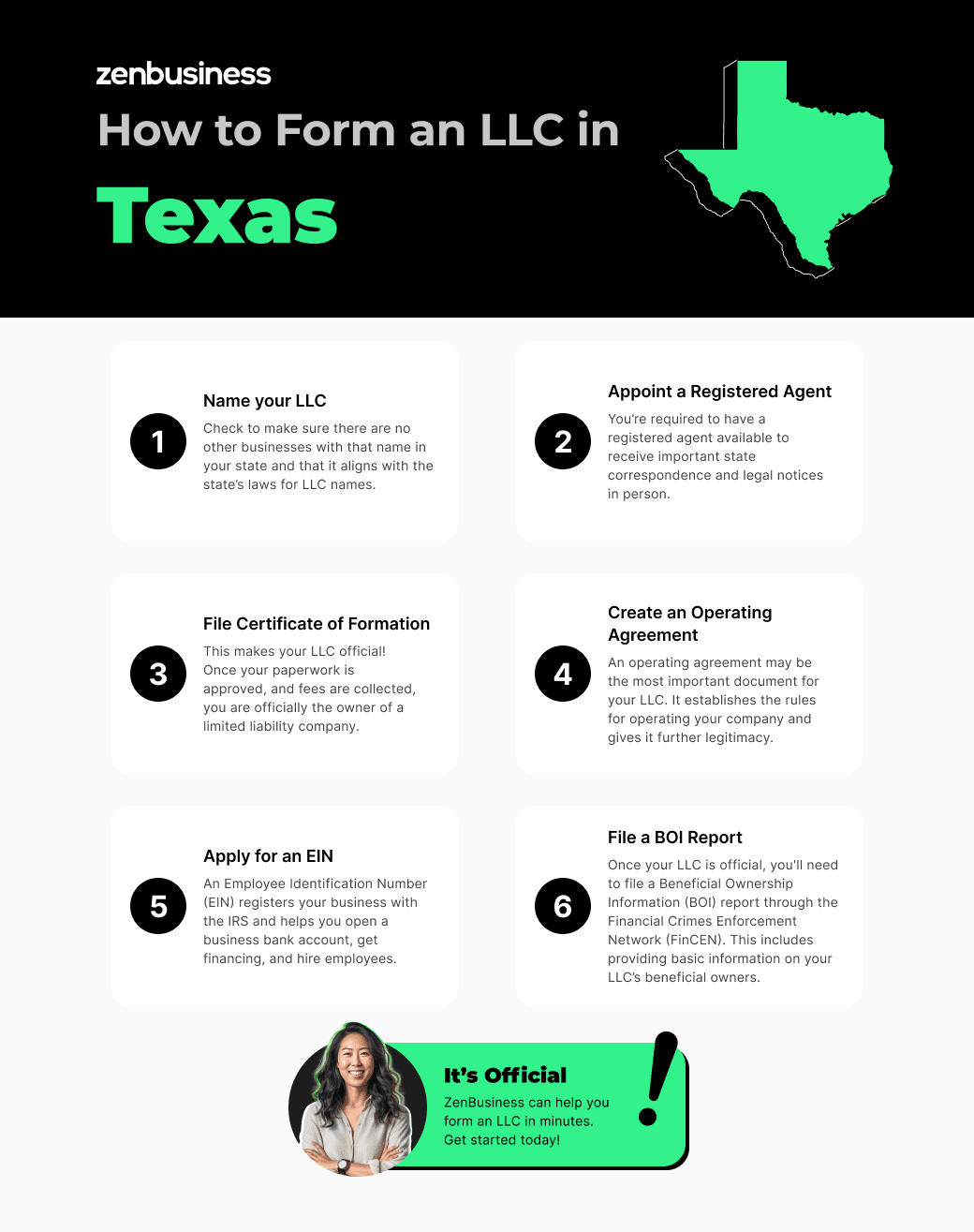
Forming an LLC in Texas involves several distinct steps, each requiring careful attention to detail.
Step 1: Choose a Business Name
Your LLC’s name is its identity. It must be unique and comply with Texas naming requirements.
Naming Requirements
- Must include an LLC designator: The name must contain one of the following: “Limited Liability Company,” “LLC,” or “L.L.C.”
- Must be distinguishable: The name cannot be the same as or deceptively similar to any other business entity already registered with the Texas Secretary of State.
- Prohibited words: Certain words, like “bank,” “trust,” “insurance,” or “university,” may be restricted or require special approval.
Checking Name Availability
Before committing to a name, it’s essential to check its availability. You can do this through the Texas Secretary of State’s website by searching their business database. It’s also advisable to check if the domain name you want for your website is available.
Registering a “Doing Business As” (DBA) Name
If you plan to operate your business under a name different from your LLC’s legal name, you will need to file a “Doing Business As” (DBA) or assumed name certificate with the county clerk in the county where your principal office is located. This is separate from registering your LLC name with the state.
Step 2: Designate a Registered Agent
A registered agent is a person or business entity that agrees to accept legal documents (like service of process) on behalf of your LLC. This agent must have a physical street address in Texas and be available during normal business hours.
Who Can Be a Registered Agent?
- An individual resident of Texas: This can be you, another member of your LLC, or an employee.
- A business entity: This can be another Texas-registered business, or a business authorized to do business in Texas.
- A commercial registered agent service: Many businesses offer this service, providing a reliable point of contact for legal notices.
Importance of a Registered Agent
The registered agent is crucial for maintaining good standing with the state and ensuring you receive important legal and tax notices. Failure to have a designated agent can lead to administrative dissolution of your LLC.
Step 3: File the Certificate of Formation
This is the official document that creates your LLC. In Texas, this document is called the Certificate of Formation.
What Information is Required?
The Certificate of Formation typically requires:
- The name of the LLC.
- The name and physical street address of the registered agent in Texas.
- The name and mailing address of the organizer (the person filing the certificate).
- A statement that the LLC is a professional limited liability company, if applicable.
- The effective date of the formation, if not immediate.
Filing with the Texas Secretary of State

The Certificate of Formation must be filed with the Texas Secretary of State. You can file this document online through their website, by mail, or in person. There is a filing fee associated with this process.
Filing Fee
As of [current year], the filing fee for a Certificate of Formation in Texas is $300. It’s always a good idea to check the Texas Secretary of State’s website for the most up-to-date fee information.
Step 4: Create an Operating Agreement
While not legally required by the Texas Secretary of State, an Operating Agreement is highly recommended for any LLC. This internal document outlines the ownership structure, management responsibilities, and operational procedures of your LLC.
Key Provisions in an Operating Agreement
- Ownership percentages: How ownership is divided among members.
- Member roles and responsibilities: Who does what.
- Profit and loss distribution: How income and losses will be allocated.
- Management structure: How decisions will be made.
- Procedures for admitting new members or withdrawing existing members.
- Dissolution procedures.
Why is it Important?
An Operating Agreement clarifies how your business will operate, preventing potential disputes among members and providing a clear roadmap for the LLC’s future. It also reinforces the separation between the business and its owners, further bolstering liability protection.
Step 5: Obtain an Employer Identification Number (EIN)
An Employer Identification Number (EIN), also known as a Federal Tax Identification Number, is like a Social Security number for your business. You’ll need it for various business activities, including opening a business bank account, filing taxes, and hiring employees.
How to Get an EIN
You can obtain an EIN for free from the Internal Revenue Service (IRS) website. The application process is straightforward and can usually be completed online in minutes.
When is an EIN Required?
- If your LLC has more than one member.
- If your LLC plans to hire employees.
- If your LLC elects to be taxed as a corporation.
- If your LLC is involved in certain types of businesses, such as those related to alcohol, tobacco, or firearms.
Step 6: Comply with Ongoing State Requirements
Once your LLC is formed, there are ongoing requirements to maintain its good standing with the state of Texas.
Annual Franchise Tax Report
In Texas, most LLCs are required to file an annual Franchise Tax Report (even if they owe no tax). This report is filed with the Texas Comptroller of Public Accounts. The due date is typically May 15th. Failure to file can result in penalties and interest.
Business Licenses and Permits
Depending on your industry and location, you may need to obtain specific federal, state, and local licenses and permits to operate your business legally. Research the requirements for your particular business type and geographic area.
Maintaining Your Texas LLC
Beyond the initial formation, ongoing compliance is key to ensuring your LLC remains in good standing and continues to offer its protective benefits.
Business Bank Account
It is crucial to open a separate business bank account for your LLC. Mixing personal and business finances can pierce the corporate veil, meaning your personal assets could become liable for business debts. This also simplifies accounting and tax preparation.
Record Keeping
Maintain accurate and organized financial records. This includes all income, expenses, invoices, and receipts. Good record-keeping is essential for tax purposes and for demonstrating the separateness of your business from your personal finances.

Understanding Tax Obligations
While LLCs generally enjoy pass-through taxation, you will still need to understand your federal, state, and local tax obligations. This may include federal income tax, self-employment tax, and Texas franchise tax. Consulting with a tax professional specializing in small businesses is highly recommended.
Forming an LLC in Texas is a foundational step for many entrepreneurs. By carefully following these steps and understanding your ongoing responsibilities, you can establish a solid legal structure for your business that provides protection and flexibility for years to come.
LifeOutOfTheBox is a participant in the Amazon Services LLC Associates Program, an affiliate advertising program designed to provide a means for sites to earn advertising fees by advertising and linking to Amazon.com. Amazon, the Amazon logo, AmazonSupply, and the AmazonSupply logo are trademarks of Amazon.com, Inc. or its affiliates. As an Amazon Associate we earn affiliate commissions from qualifying purchases.