
Navigating from Fort Lauderdale-Hollywood International Airport (FLL) to the vibrant heart of Miami is a common journey for countless travelers each year. Many visitors choose to fly into FLL due to potentially lower airfares compared to Miami International Airport (MIA), or simply because their flight route dictates an arrival in Fort Lauderdale. Regardless of the reason, bridging the approximately 25-30 mile gap between these two bustling South Florida cities requires a clear understanding of the available transportation options. This comprehensive guide will illuminate the most efficient, cost-effective, and convenient ways to make this transfer, ensuring a smooth start to your Miami adventure. From budget-friendly public transport to luxurious private car services, we will explore each avenue in detail, empowering you to make an informed decision based on your priorities, budget, and travel style.
Understanding Your Options: Public vs. Private Transportation
The decision of how to travel from Fort Lauderdale Airport to Miami often boils down to a fundamental choice: prioritize cost savings and local immersion with public transportation, or opt for speed and convenience with private services. Each category offers distinct advantages and disadvantages, making it crucial to assess your specific needs before embarking on your journey.
Public Transportation: Budget-Friendly and Accessible
For the budget-conscious traveler, public transportation presents a viable and often surprisingly efficient route. While it may involve more transfers and a longer travel time, it offers a glimpse into local life and significant savings compared to private options.
Tri-Rail: The Commuter Train Link
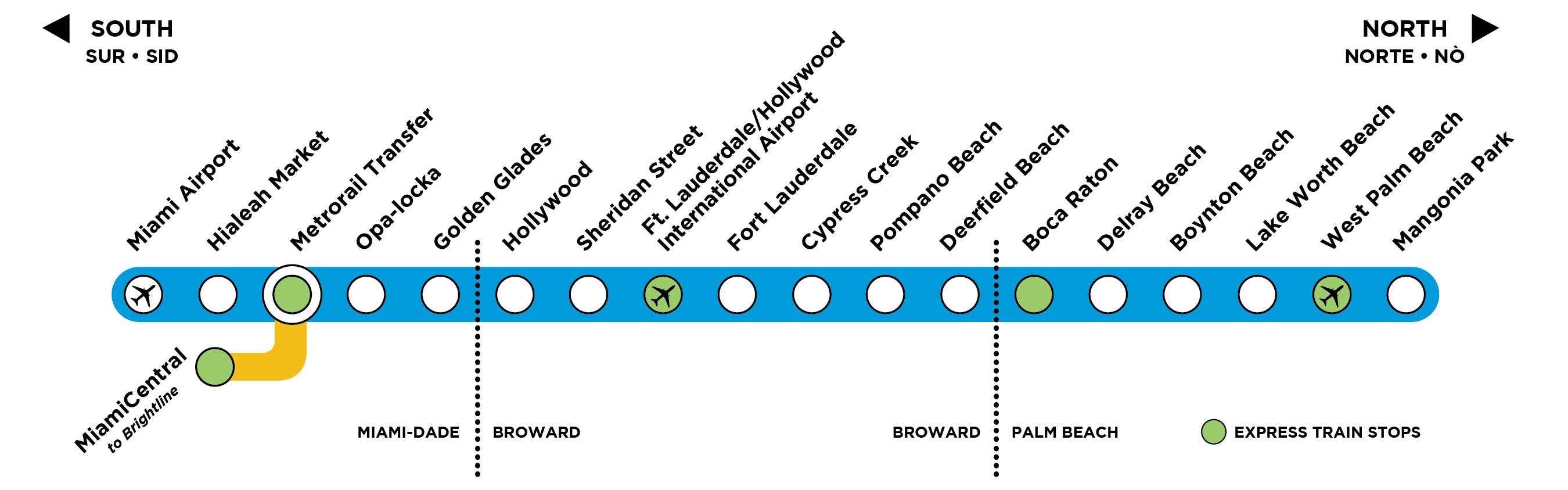
The Tri-Rail is the backbone of public transit between Fort Lauderdale and Miami. It’s a commuter rail line that connects Palm Beach, Broward, and Miami-Dade counties. To access it from FLL, you’ll need to take a free shuttle bus from the airport terminals to the FLL Airport Station. These shuttles run frequently, making the connection straightforward.
Once on the Tri-Rail, you’ll head southbound towards Miami. The final stop for Tri-Rail is the Miami Airport Station (also known as the Miami Intermodal Center, or MIC). From here, you can seamlessly transfer to Metrorail, Miami’s elevated rapid transit system, to reach various destinations within the city, including Downtown Miami, Brickell, and Dadeland. The total journey time, including shuttle and transfer, can range from 1.5 to 2 hours, depending on connections and your final destination in Miami. Fares are zone-based and generally very affordable, often under $10 for a one-way trip.
Bus Services: For the Utmost Budget Traveler
While less direct and more time-consuming than Tri-Rail, combining bus services from Broward County Transit and Miami-Dade Transit is another option. This typically involves taking a Broward County Transit bus from FLL to a transfer point, then another bus across county lines into Miami-Dade County, and finally a Miami-Dade Transit bus to your specific destination. This method is best suited for those with ample time, minimal luggage, and a strong desire to save money, as it often requires multiple transfers and detailed route planning.
Private and Semi-Private Transportation: Convenience and Speed
For those who prioritize comfort, speed, and door-to-door service, private and semi-private transportation options are highly recommended. These services eliminate the need for transfers and offer a more personalized travel experience.
Ride-Sharing Services (Uber/Lyft)
Uber and Lyft are immensely popular choices for transfers between FLL and Miami. Upon arrival, simply open your app, request a ride, and follow the in-app instructions to the designated ride-share pickup zone, typically located on the lower level of the terminals. The journey time typically ranges from 30 minutes to an hour, depending on traffic conditions, particularly during rush hour on I-95. Costs can vary significantly based on demand, time of day, and the type of vehicle requested (e.g., standard, XL, or premium). Expect prices to range from $40 to $70, excluding surge pricing.
Taxis
Traditional taxis are readily available at FLL, typically found at the ground transportation level outside baggage claim. Taxis offer a straightforward, on-demand service without the need for an app. Fares are usually metered, though some companies may offer flat rates for specific routes to Miami. It’s wise to inquire about an estimated fare before starting your journey. While generally more expensive than ride-sharing services, taxis can be a reliable option, especially if you prefer not to use a smartphone app or have specific accessibility needs.
Shuttle Services (Shared-Ride & Private)
Various shuttle companies operate between FLL and Miami, offering both shared-ride and private options. Shared-ride shuttles are a good compromise between cost and convenience; you’ll share the ride with other passengers heading in the same general direction, which can save money but may involve multiple stops and a longer journey. Private shuttles, on the other hand, offer direct, door-to-door service exclusively for your party, similar to a taxi or ride-share but often pre-booked. Many reputable companies allow online booking in advance, which can provide peace of mind upon arrival. Prices for shared rides are typically in the $20-$35 range per person, while private shuttles will be closer to the $80-$150 mark.
Private Car Services/Limousines
For the ultimate in luxury, comfort, and seamless travel, a private car service or limousine is an excellent choice. These services are pre-booked, with a professional chauffeur often meeting you inside the terminal with a sign. They offer premium vehicles, direct routes, and personalized service, making them ideal for business travelers, those with extensive luggage, or anyone seeking a stress-free, elegant transfer. This option is, understandably, the most expensive, with prices typically starting from $100 and going upwards, depending on the vehicle and service level.
Renting a Car: Freedom and Flexibility
For many travelers, particularly those planning to explore more of South Florida beyond Miami’s city limits, renting a car directly from Fort Lauderdale Airport offers unparalleled freedom and flexibility. This option allows you to set your own pace, detour to attractions, and have a vehicle readily available for the duration of your stay.
Advantages and Considerations
The primary advantage of a rental car is the complete independence it provides. You can drive directly to your accommodation in Miami and have the vehicle for day trips to places like the Florida Keys, the Everglades, or other coastal towns. All major car rental agencies have counters at FLL, typically located in a dedicated Rental Car Center accessible via shuttle from the terminals. It is highly recommended to book your rental car in advance, especially during peak travel seasons, to secure the best rates and ensure vehicle availability.
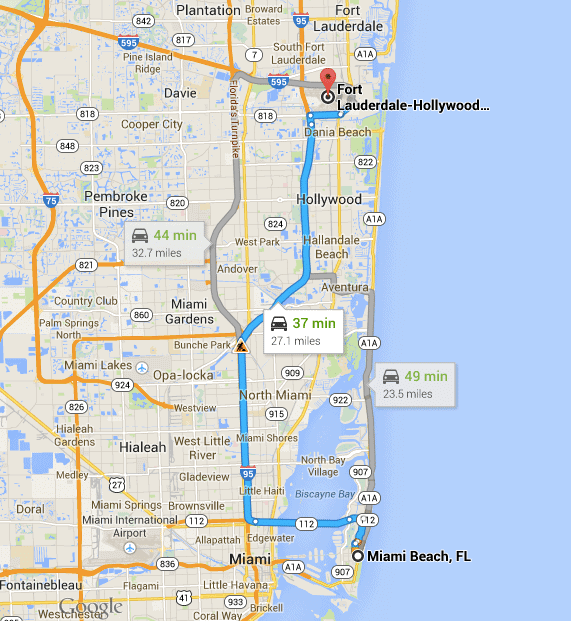
However, there are several important considerations. Traffic in South Florida can be notoriously heavy, especially during rush hours. The main routes connecting FLL to Miami are I-95 and Florida’s Turnpike. While both are direct, delays are common. Utilize navigation apps like Google Maps or Waze for real-time traffic updates.

Parking in Miami, particularly in popular areas like South Beach or Downtown, can be expensive and challenging to find. Factor in potential parking garage fees or hotel valet charges when budgeting for your trip. Additionally, South Florida has an extensive toll road system. Many rental cars come with a transponder (SunPass or similar) that automatically bills tolls to your credit card, often with a convenience fee. If you opt out of this, be prepared to pay cash at toll booths where available, or face “toll-by-plate” charges which can be higher. Understand your rental company’s policy on tolls before driving.
Factors Influencing Your Decision
Choosing the best way to get from FLL to Miami isn’t a one-size-fits-all decision. Several personal factors will heavily influence which option is most suitable for your specific travel scenario. Thoughtfully considering these aspects will lead to a more satisfactory and stress-free transfer experience.
Budget Constraints
Your budget is often the most significant deciding factor. Public transport options like Tri-Rail are by far the cheapest, ideal for backpackers or those on a tight budget. Ride-sharing services and shared shuttles offer a middle ground, while private taxis, car services, and rental cars represent increasingly higher cost investments. Remember to factor in potential hidden costs such as tolls, parking fees, and surge pricing for ride-shares.
Time Sensitivity
Are you in a hurry to get to Miami for a cruise departure, a business meeting, or simply eager to start your vacation? Private transportation options (taxi, ride-share, private shuttle, rental car) will almost always be faster, especially if traffic is light. Public transport, while reliable, involves transfers and fixed schedules, which inherently adds to the total travel time. If time is of the essence, paying a premium for direct service is often worthwhile.
Group Size and Luggage
Traveling solo with a carry-on is vastly different from a family of four with multiple large suitcases. For larger groups or those with excessive luggage, a private taxi, a larger ride-share vehicle (like UberXL or Lyft XL), a private shuttle, or a rental car will be far more comfortable and practical. Public transport can become cumbersome with a lot of bags, especially during transfers. The per-person cost of private services can also become more economical when split among a group.
Convenience vs. Cost
This is often the core trade-off. Do you prioritize door-to-door service, not having to worry about schedules, and personal space? Then private options are your best bet. Are you willing to navigate multiple transfers, potentially wait longer, and sacrifice some comfort to save money? Public transportation will serve you well. There’s no right or wrong answer, only the one that aligns best with your travel philosophy and immediate needs.
Arrival Time
Your flight’s arrival time can significantly impact your options. Public transportation, especially Tri-Rail and buses, typically operates during specific hours and less frequently in the late evenings or early mornings. If your flight lands very late at night or very early in the morning, private options like taxis, ride-shares, or pre-booked car services might be your only reliable choices. Always check the operating hours of public transport if you’re arriving at unconventional times.
Navigating the Journey: Tips for a Smooth Transfer
Once you’ve decided on your preferred mode of transportation, a few key tips can further enhance the smoothness and efficiency of your transfer from Fort Lauderdale Airport to Miami. Preparation is paramount to avoiding unnecessary stress and ensuring a pleasant start to your Miami experience.
Pre-Trip Planning
The golden rule of travel is to plan ahead. If opting for public transport, check the latest Tri-Rail and Metrorail schedules online (including weekend and holiday variations) to align with your arrival. For shuttle services or private car hires, booking in advance is crucial, not only to secure your ride but often to get a better rate. If renting a car, pre-booking and understanding the rental agency’s policies regarding tolls and insurance will save you time and potential headaches at the counter.
Airport Navigation
FLL is a well-signposted airport, but knowing where to go can still be helpful. Ground transportation services (taxis, ride-share pickups, shuttle stops) are typically located on the lower level (arrivals) of each terminal. The free shuttle to the Tri-Rail station is also clearly marked. Don’t hesitate to ask airport staff for directions if you’re unsure. Having the airport map downloaded or readily accessible on your phone can also be beneficial.
Traffic Awareness
South Florida’s traffic can be unpredictable. If traveling during peak commuting hours (typically 7-9 AM and 4-6 PM on weekdays), expect longer journey times, especially on I-95. Utilize real-time traffic apps like Google Maps or Waze on your phone to get accurate estimated travel times and potentially discover alternative routes if significant delays occur. Build in a buffer for your travel time, particularly if you have a connecting flight or a scheduled event in Miami.
Payment Methods
Ensure you have appropriate payment methods readily available. For public transport, a credit/debit card or exact change might be required. Tri-Rail and Metrorail often use reloadable transit cards. For taxis, ride-shares, and private services, credit cards are widely accepted, but it’s always good to have some cash for tips or in case of a rare card machine issue. If you’re renting a car, understand the toll payment system – consider getting a SunPass Mini or utilizing the rental car company’s toll program.
Safety Tips
When using any form of transportation, especially unfamiliar services, always prioritize your safety. If using ride-sharing, confirm the driver’s name, vehicle make/model, and license plate match what’s displayed in the app before entering the car. For taxis, ensure they are official, licensed vehicles. If meeting a pre-booked car service, confirm the driver’s identity. Keep your belongings secure and be aware of your surroundings, just as you would in any major metropolitan area.
In conclusion, the journey from Fort Lauderdale Airport to Miami offers a spectrum of transportation choices to suit every traveler’s needs and budget. Whether you opt for the economical yet efficient Tri-Rail, the convenience of a ride-share, the flexibility of a rental car, or the luxury of a private service, thorough planning and an understanding of your options will ensure a smooth and enjoyable transition. With this guide, you are now well-equipped to embark on your Miami adventure confidently and effortlessly.
LifeOutOfTheBox is a participant in the Amazon Services LLC Associates Program, an affiliate advertising program designed to provide a means for sites to earn advertising fees by advertising and linking to Amazon.com. Amazon, the Amazon logo, AmazonSupply, and the AmazonSupply logo are trademarks of Amazon.com, Inc. or its affiliates. As an Amazon Associate we earn affiliate commissions from qualifying purchases.