
California stands as a beacon for diverse lifestyles, from the vibrant urban centers of Los Angeles and San Francisco to the serene landscapes of its national parks and sprawling rural areas. For individuals choosing to make California their home, or for those deeply embedded in lifestyles that involve responsible firearm ownership for sport, hunting, or personal safety, understanding the state’s intricate gun laws is paramount. Acquiring a firearm in the Golden State is a multi-step process governed by some of the nation’s strictest regulations, reflecting a unique balance between individual rights and public safety concerns. This comprehensive guide outlines the essential steps and considerations for responsibly integrating firearm ownership into your Californian lifestyle.
Understanding California’s Unique Firearm Landscape
The decision to own a firearm in California requires a thorough understanding of its complex legal framework. Unlike many other states, California has implemented a robust set of laws designed to regulate the sale, possession, and use of firearms. For a lifestyle that includes hunting in the Sierra Nevada or participating in sport shooting events near San Diego, navigating these regulations is the first crucial step.
The Legal Framework for Ownership
California gun laws are comprehensive, covering everything from background checks and waiting periods to specific firearm features and storage requirements. These regulations are primarily enforced by the California Department of Justice (DOJ). Key legislative pieces include universal background checks for all firearm sales (including private party transfers), a mandatory 10-day waiting period, and a roster of approved handguns. The state also has strict “assault weapon” bans, magazine capacity limits, and laws concerning open and concealed carry. Embracing a lifestyle of responsible firearm ownership in California means adhering to these laws meticulously. Ignorance of the law is not a defense, and penalties for non-compliance can be severe, ranging from hefty fines to imprisonment.
Residency Requirements and Eligibility
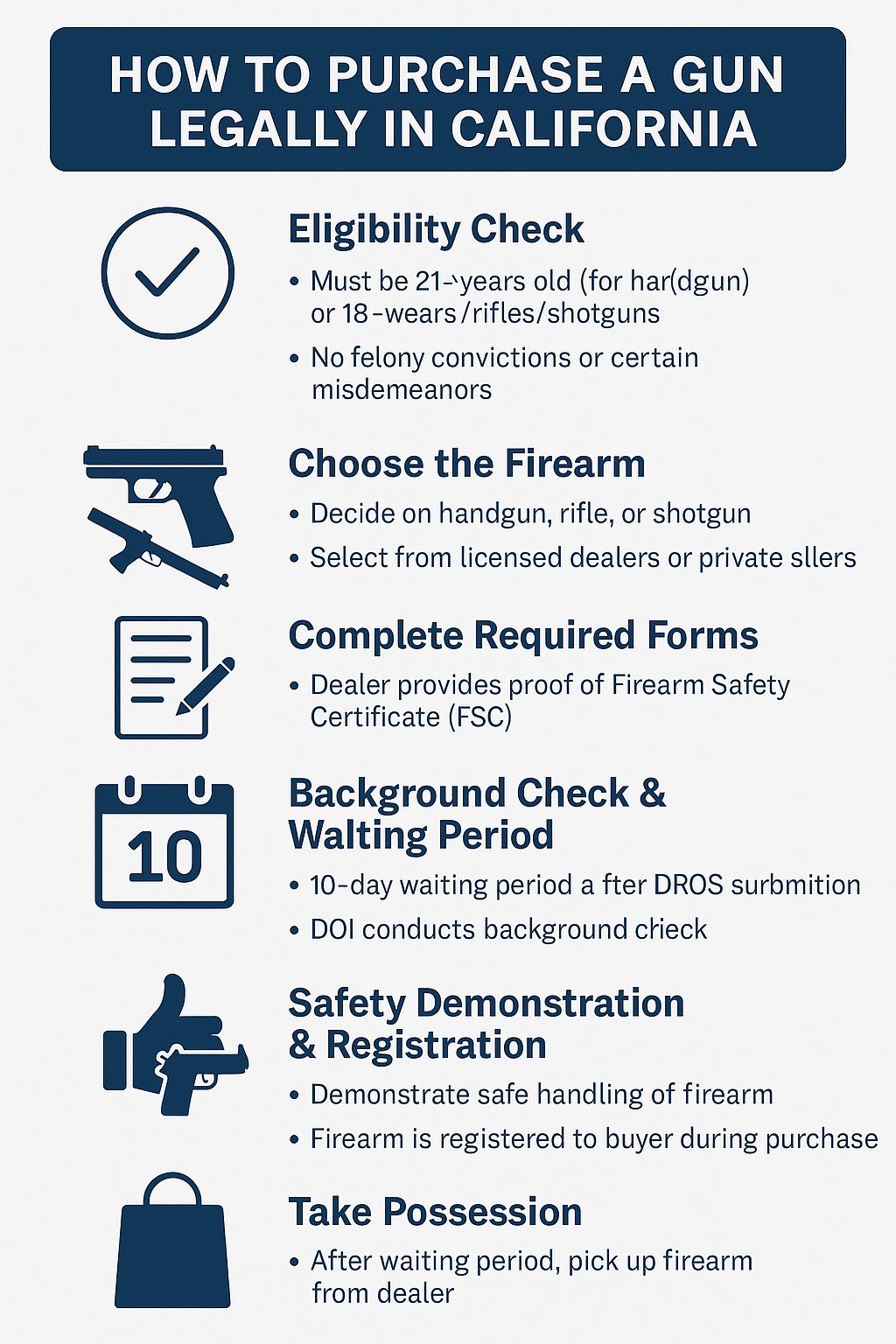
Before embarking on the process of firearm acquisition, prospective owners must first establish their eligibility and residency. To purchase a handgun, rifle, or shotgun in California, you must be a California resident and at least 21 years old, with limited exceptions for long guns for 18-20 year olds if certain conditions are met (e.g., active duty military). Proof of residency typically requires a valid California driver’s license or identification card, along with additional documentation like utility bills, vehicle registration, or a lease agreement. Furthermore, individuals must not be prohibited from possessing firearms under federal or state law. Prohibitions include felony convictions, certain misdemeanor convictions (such as domestic violence), active restraining orders, and specific mental health adjudications. These eligibility criteria are foundational to maintaining a lawful and responsible lifestyle within the state.
Navigating the Acquisition Process
Once eligibility is confirmed, the journey to firearm ownership involves several distinct steps, each designed to ensure compliance and promote safety. This process requires patience and attention to detail, but for those dedicated to a lifestyle that includes shooting sports or hunting, it’s a standard procedure.
Obtaining a Firearm Safety Certificate
A critical prerequisite for purchasing any firearm in California is the Firearm Safety Certificate (FSC). The FSC program ensures that prospective firearm owners possess a basic understanding of firearm safety laws and practices. To obtain an FSC, individuals must pass a written test administered by a certified instructor, often available at licensed firearm dealerships. The test covers topics such as safe gun handling, storage, transportation, and California firearm laws. The certificate is valid for five years. For those new to firearm ownership, preparing for the FSC provides an excellent opportunity to familiarize themselves with fundamental safety principles, integral to a responsible lifestyle.
The 10-Day Waiting Period
After selecting a firearm from a licensed dealer and completing all necessary paperwork, California mandates a non-waivable 10-day waiting period. During this time, the DOJ conducts a comprehensive background check through the Automated Firearms System to verify eligibility. This waiting period applies to all firearm purchases, including rifles, shotguns, and handguns, whether new or used, and private party transfers facilitated through a dealer. This waiting period is a cornerstone of California’s gun control efforts, aimed at providing a “cooling-off” period and allowing time for thorough background checks. For individuals accustomed to faster acquisition processes in other states, this is a significant adjustment, but it’s an essential part of the Californian firearm ownership lifestyle.
Approved Dealers and Transfers
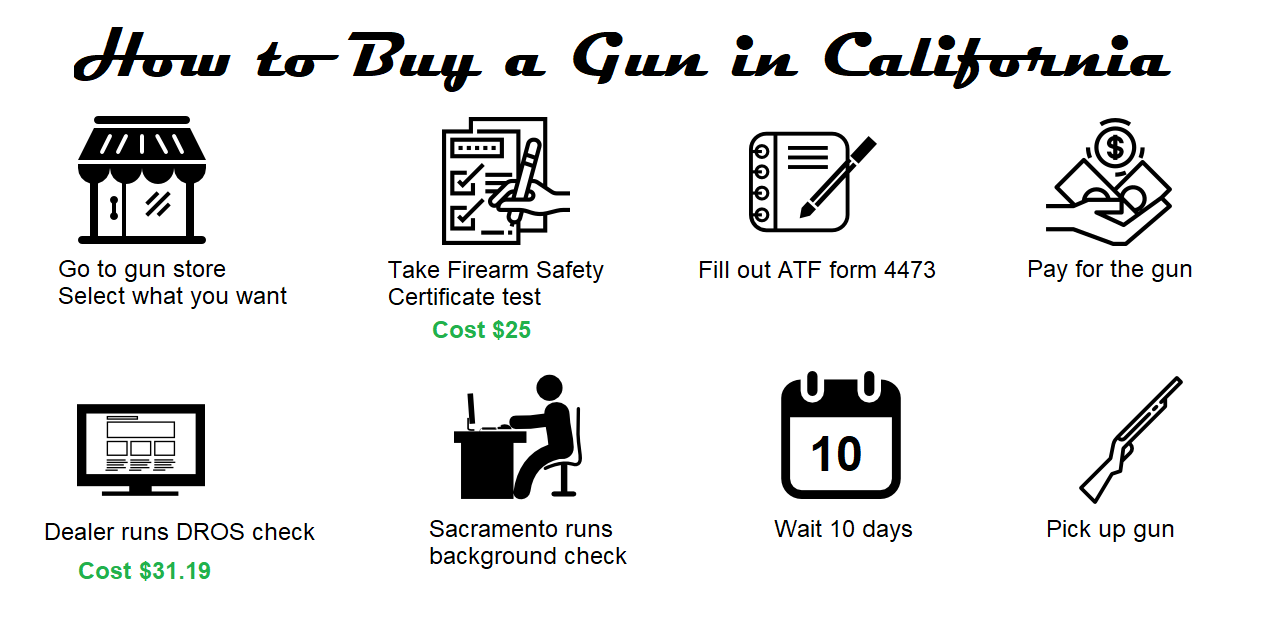
All firearm sales and transfers in California must occur through a licensed firearm dealer (FFL). This includes private party transfers, where two individuals agree to sell a firearm to each other. The transaction must be processed through an FFL, who will handle the necessary background checks, paperwork, and waiting period. This ensures that even firearms changing hands between private citizens comply with all state regulations. When choosing an FFL, look for reputable businesses with knowledgeable staff who can guide you through the process and answer any questions about California’s unique laws. Many firearm owners in California develop ongoing relationships with their local FFL as a trusted resource for new purchases, transfers, and general advice, integrating this network into their shooting lifestyle.
Types of Firearms and Restrictions
California’s rigorous firearm laws extend to the types of firearms that can be legally purchased and owned. Understanding these restrictions is vital for anyone whose lifestyle includes specific shooting disciplines or activities.
Handguns and the Roster of Approved Firearms
Perhaps one of California’s most distinctive regulations is the “Roster of Certified Handguns.” With limited exceptions for law enforcement, only handguns that have been tested and certified by the DOJ as meeting specific safety requirements can be sold to the public by licensed dealers. These requirements include microstamping technology, chamber load indicators, and magazine disconnect mechanisms. The roster is dynamic, with models being added and removed. This means that many popular handgun models available in other states are not legally purchasable in California. Prospective handgun owners must consult the current roster on the DOJ website before making a selection, ensuring their choice aligns with the state’s stringent lifestyle parameters for firearm acquisition.
Rifles, Shotguns, and “Assault Weapon” Laws
Long guns (rifles and shotguns) are also subject to specific regulations. While generally easier to acquire than handguns (as they don’t have the roster requirement), they are heavily impacted by California’s “assault weapon” laws. These laws define certain semi-automatic rifles and shotguns as “assault weapons” based on specific features like pistol grips, adjustable stocks, flash suppressors, and detachable magazines. Possession of such features can render a firearm illegal unless it is registered as an assault weapon (a process that is now closed to new registrations) or modified to comply with “featureless” configurations or fixed magazine designs. This significantly impacts the choices available for sport shooters, hunters, and those seeking firearms for home defense. Understanding these nuances is crucial for any Californian embracing a lifestyle that incorporates modern sporting rifles or tactical shotguns. Magazine capacity is also limited to 10 rounds for all firearms.
Responsible Ownership and Lifestyle Integration
Acquiring a firearm is only the first step. Responsible ownership, encompassing safe practices, proper storage, and adherence to legal use, is an ongoing commitment that defines a conscientious firearm owner’s lifestyle in California.
Training, Storage, and Safety
California places a strong emphasis on safe firearm handling and storage. While the FSC provides a basic understanding, ongoing training is highly recommended. Many ranges and private instructors across the state offer courses for all skill levels, from beginner safety to advanced tactical training. Proper storage is also legally mandated: firearms must be stored in a locked container or be equipped with a trigger lock when not in direct control. Ammunition should be stored separately. These measures are critical for preventing accidental shootings, especially involving children, and for deterring theft. Integrating secure storage practices into one’s home environment is a non-negotiable aspect of the responsible firearm ownership lifestyle in California.
Recreational Shooting and Hunting in California
For many, firearm ownership is intrinsically linked to recreational activities. California offers numerous opportunities for sport shooting at indoor and outdoor ranges, from the bustling metropolitan areas to more remote, scenic locations. These ranges provide a controlled environment for target practice, competitive shooting, and skill development. Hunting is another popular pursuit, with various seasons and game available across the state’s diverse ecosystems, from deer in the mountains to waterfowl in the wetlands. To hunt, a California hunting license is required, which often involves completing a hunter education course. Engaging in these activities responsibly and lawfully is a fulfilling aspect of the Californian outdoor lifestyle for many firearm owners. Always check local regulations, as rules can vary by county or city, particularly regarding open shooting areas.
Considerations for Self-Defense
While personal safety is a common reason for firearm ownership, California’s laws regarding self-defense are strict. The state operates under a “duty to retreat” principle in public spaces, meaning individuals must attempt to remove themselves from a dangerous situation before resorting to deadly force, though a “castle doctrine” applies in one’s home. Carrying a concealed firearm requires a Concealed Carry Weapon (CCW) permit, which is issued by local law enforcement agencies (sheriff’s departments or police departments). Issuance is often “may-issue,” meaning applicants must demonstrate “good cause” beyond general self-defense, a standard that varies widely by county. For individuals whose lifestyle includes personal protection, understanding the nuances of California’s self-defense laws and the challenges of obtaining a CCW is crucial. Seeking legal counsel to understand these complex laws is highly advisable for any firearm owner.
Embracing firearm ownership in California means committing to a lifestyle of diligent legal adherence, continuous safety education, and responsible practice. While the process may seem daunting, it ensures that those who choose to integrate firearms into their lives do so with the utmost respect for the law and the safety of their communities.
LifeOutOfTheBox is a participant in the Amazon Services LLC Associates Program, an affiliate advertising program designed to provide a means for sites to earn advertising fees by advertising and linking to Amazon.com. Amazon, the Amazon logo, AmazonSupply, and the AmazonSupply logo are trademarks of Amazon.com, Inc. or its affiliates. As an Amazon Associate we earn affiliate commissions from qualifying purchases.