
Establishing a Limited Liability Company (LLC) in Texas is a strategic move for entrepreneurs looking to protect their personal assets while enjoying the flexibility of a pass-through entity for taxation. This guide will walk you through the essential steps, considerations, and benefits of forming an LLC in the Lone Star State, ensuring you navigate the process with clarity and confidence. From choosing a business name to understanding ongoing compliance, we’ll cover everything you need to know to successfully launch your Texas LLC.
Understanding the Basics of a Texas LLC
An LLC is a popular business structure that combines the liability protection of a corporation with the tax advantages and operational simplicity of a partnership or sole proprietorship. In Texas, an LLC is formed by filing a document with the Texas Secretary of State.
Key Advantages of Forming an LLC in Texas
- Limited Liability Protection: This is the cornerstone of an LLC. It separates your personal assets (like your home, car, and personal savings) from your business debts and liabilities. If your business incurs debt or faces a lawsuit, your personal assets are generally protected.
- Pass-Through Taxation: By default, LLCs are treated as pass-through entities for tax purposes. This means the LLC itself does not pay federal income taxes. Instead, profits and losses are “passed through” to the owners (members) and reported on their individual income tax returns. This avoids the “double taxation” often associated with C-corporations.
- Flexibility in Management: LLCs can be managed by their members (member-managed) or by designated managers (manager-managed). This structure offers considerable flexibility in how the business is run.
- Fewer Formalities: Compared to corporations, LLCs typically have fewer ongoing compliance requirements, such as mandatory annual meetings and extensive record-keeping.
Common Business Structures to Consider Before Forming an LLC
While an LLC offers many benefits, it’s crucial to understand how it compares to other business structures:
- Sole Proprietorship: Owned and run by one person, with no legal distinction between the owner and the business. Offers no liability protection.
- Partnership: Similar to a sole proprietorship, but with two or more owners. Partners generally share in profits, losses, and liability.
- Corporation (S-Corp or C-Corp): A more complex structure that offers strong liability protection but can involve double taxation (C-corp) or stricter eligibility requirements (S-corp).
For most small to medium-sized businesses in Texas seeking a balance of protection and simplicity, an LLC is often the preferred choice.
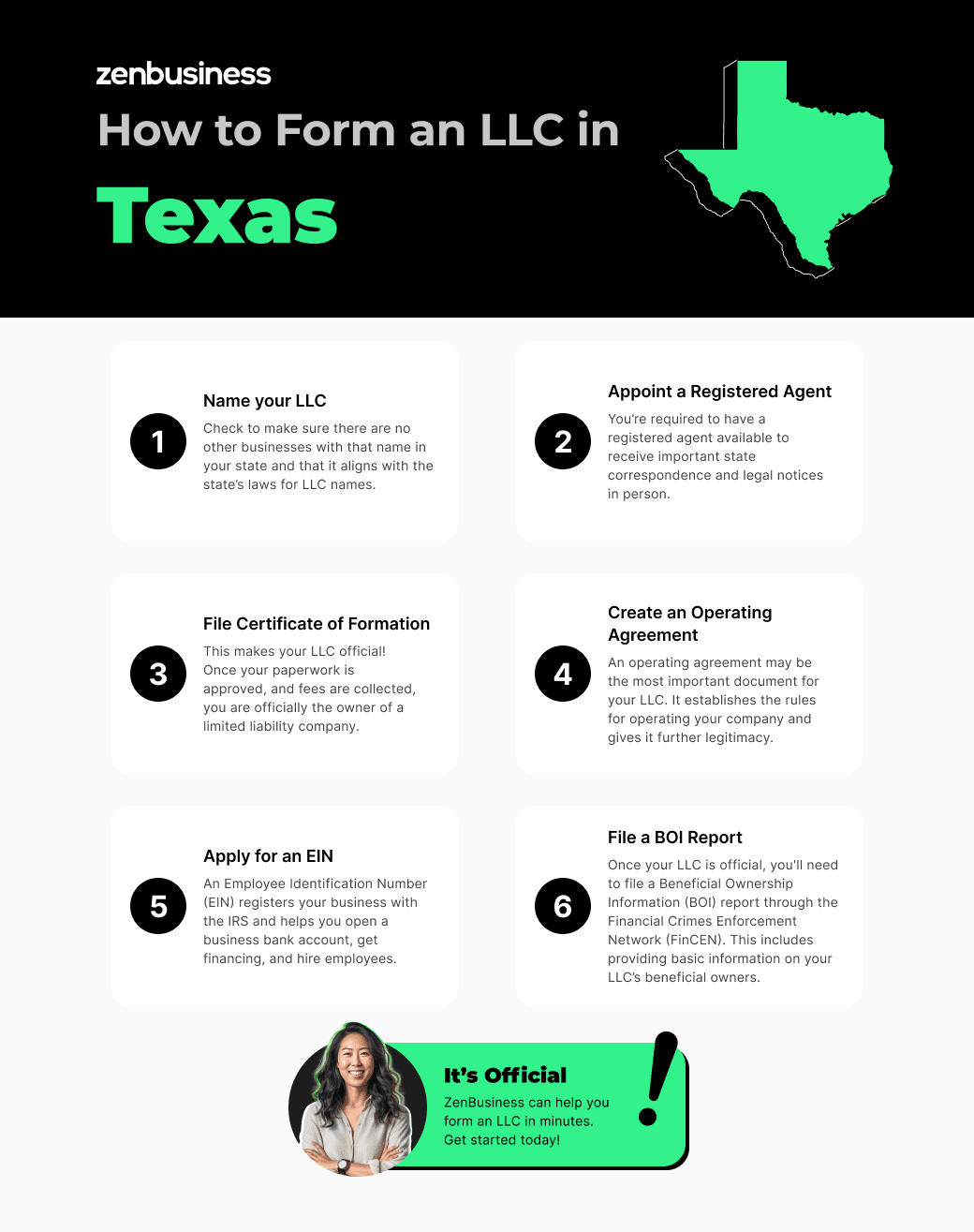
Step-by-Step Guide to Forming Your Texas LLC
Forming an LLC in Texas involves several distinct steps, each requiring careful attention to detail.
Step 1: Choose a Business Name
Your business name is a critical part of your brand identity and must comply with Texas state law.
Name Availability Search
Before you can officially register your business name, you must ensure it is available and not already in use by another entity in Texas. You can conduct a name availability search through the Texas Secretary of State’s website.
Naming Requirements
Your LLC name must include an appropriate designator, such as “Limited Liability Company,” “LLC,” or “L.L.C.” It also cannot contain certain words that might mislead the public into believing the business is a governmental agency or engaged in activities it is not permitted to conduct.
Reserve Your Business Name (Optional)
If you have a name in mind but are not yet ready to file your formation documents, you can reserve the name for a period by filing an Application for Reserved Name with the Texas Secretary of State. This can be a wise move for businesses in development.
Step 2: Appoint a Registered Agent
A registered agent is an individual or a business entity designated to receive official legal documents, such as service of process (lawsuit notifications), on behalf of your LLC.
Requirements for a Registered Agent in Texas
The registered agent must have a physical street address in Texas (a P.O. box is not sufficient) and be available during normal business hours to accept deliveries. You can appoint yourself as the registered agent, a business partner, or hire a commercial registered agent service.
Importance of the Registered Agent
Having a reliable registered agent is crucial for maintaining good standing with the state and ensuring you are properly notified of any legal actions against your business. Failure to maintain a registered agent can lead to the administrative dissolution of your LLC.
Step 3: File the Certificate of Formation
This is the official document that legally creates your LLC in Texas.
Information Required on the Certificate of Formation
The Certificate of Formation (Form 201) requires specific information, including:
- The name of the LLC.
- The name and street address of the registered agent.
- The name and address of each organizer (the person or entity filing the form).
- A statement of the LLC’s purpose (often a general statement like “to engage in any lawful act or activity for which an LLC may be organized under the Texas Business Organizations Code”).
- The term of the LLC (e.g., perpetual or a specific duration).
- Information on whether the LLC will be member-managed or manager-managed.
Filing Procedures
The Certificate of Formation must be filed with the Texas Secretary of State. You can file online through the SOSDirect portal, by mail, or in person. A filing fee is required.

Step 4: Create an Operating Agreement
While not legally required by the state of Texas, an Operating Agreement is a vital internal document that outlines the ownership structure, operating procedures, and member responsibilities of your LLC.
Key Components of an Operating Agreement
A well-drafted Operating Agreement typically includes:
- Members and Ownership Percentages: Details on who owns the LLC and their respective ownership stakes.
- Management Structure: Clarifies whether the LLC is member-managed or manager-managed and outlines the duties and powers of managers.
- Profit and Loss Distribution: Specifies how profits and losses will be allocated among members.
- Membership Changes: Procedures for admitting new members, member withdrawals, or the transfer of ownership interests.
- Dissolution Procedures: Outlines how the LLC will be dissolved and its assets distributed if it ceases operations.
Benefits of an Operating Agreement
An Operating Agreement provides a clear framework for your business operations, helps prevent disputes among members, and can be crucial in demonstrating to courts that your LLC is a separate legal entity, thereby reinforcing your liability protection.
Step 5: Obtain an Employer Identification Number (EIN)
An EIN, also known as a Federal Tax Identification Number, is like a Social Security number for your business. It is issued by the Internal Revenue Service (IRS).
When You Need an EIN
You will generally need an EIN if your LLC:
- Has more than one member.
- Plans to hire employees.
- Operates as a corporation or partnership for tax purposes.
- Files excise, alcohol, tobacco, or firearms tax returns.
- Is involved with certain types of organizations.
How to Apply for an EIN
Applying for an EIN is a free and straightforward process that can be done online through the IRS website. You will need to provide information about your LLC and its owners.
Ongoing Compliance and Best Practices for Your Texas LLC
Once your LLC is formed, maintaining its legal standing and operational efficiency requires ongoing attention to state and federal requirements.
Annual Franchise Tax Report
All Texas LLCs are subject to the state’s franchise tax. While many small businesses may qualify for an exemption based on revenue, you are still generally required to file an annual report.
Filing with the Texas Comptroller of Public Accounts
The annual report is filed with the Texas Comptroller of Public Accounts. It serves to update the state on your LLC’s information and confirm your eligibility for any tax exemptions. Even if no tax is owed, the filing is typically mandatory.
Deadlines and Penalties
Missing the filing deadline can result in significant penalties and interest, and repeated non-compliance can lead to the administrative dissolution of your LLC. It’s essential to stay informed about the annual due dates.
Maintaining Separate Business and Personal Finances
To preserve your limited liability protection, it is paramount to keep your business finances strictly separate from your personal finances.
Open a Business Bank Account
Immediately after forming your LLC, open a dedicated business bank account using your LLC’s name and EIN. All business income should be deposited into this account, and all business expenses should be paid from it.
Avoid Commingling Funds
Never use your business account for personal expenses, or vice-versa. Commingling funds can be a red flag for creditors and in legal proceedings, potentially piercing your corporate veil and exposing your personal assets.
Staying Informed About State Regulations
The business landscape and state regulations can evolve. It’s important to stay updated on any changes that may affect your LLC.

Resources for Business Owners
The Texas Secretary of State and the Texas Economic Development & Tourism Office provide valuable resources for businesses operating in the state. Consulting with a business attorney or accountant can also provide tailored advice for your specific situation.
Forming an LLC in Texas is a significant step towards building a secure and sustainable business. By diligently following these steps and adhering to ongoing compliance, you can successfully establish and maintain your Limited Liability Company, paving the way for your entrepreneurial success.
LifeOutOfTheBox is a participant in the Amazon Services LLC Associates Program, an affiliate advertising program designed to provide a means for sites to earn advertising fees by advertising and linking to Amazon.com. Amazon, the Amazon logo, AmazonSupply, and the AmazonSupply logo are trademarks of Amazon.com, Inc. or its affiliates. As an Amazon Associate we earn affiliate commissions from qualifying purchases.