
For many, the ability to protect oneself and loved ones is a fundamental aspect of personal freedom and peace of mind. In California, a state renowned for its diverse landscapes, vibrant cities like Los Angeles and San Francisco, and often stringent regulations, obtaining a Concealed Carry Weapon (CCW) permit is a process that requires careful navigation and a thorough understanding of the law. While California offers an unparalleled lifestyle, from the serene beaches of San Diego to the majestic redwoods, the legal framework surrounding firearms can be complex. This guide aims to demystify the journey to securing a CCW permit in the Golden State, touching on the essential steps, requirements, and the broader lifestyle implications for residents and those who travel within its borders.
The decision to pursue a CCW permit is often a deeply personal one, reflecting a desire for self-defense that integrates into one’s daily routine and travel habits. Unlike states with more permissive “permitless carry” or “shall-issue” laws, California operates under a more restrictive “may-issue” framework, where local law enforcement agencies have significant discretion in approving or denying applications. However, recent legal developments have begun to reshape this landscape, making the process more accessible for eligible individuals committed to responsible firearm ownership.
Navigating the Landscape of Concealed Carry in California
Understanding the unique legal environment surrounding CCW permits in California is the first crucial step. The state’s approach to firearms is among the most comprehensive in the United States, reflecting a balance between individual rights and public safety concerns. This has historically led to varying interpretations and application standards across different counties and issuing authorities.
Understanding California’s Unique Stance on CCW
Historically, California has maintained a cautious approach to concealed carry. Unlike many other states that are ‘shall-issue,’ meaning they must issue a permit if an applicant meets predefined criteria, California counties and cities have operated as ‘may-issue’ jurisdictions. This distinction granted considerable power to local sheriffs and police chiefs, allowing them to evaluate applications based on their discretion, often requiring a demonstrable “good cause” beyond general self-defense. This meant that obtaining a CCW in a more populous urban center like Los Angeles or San Francisco could be considerably more challenging than in a rural county, where perceived threats might be higher or law enforcement views on self-defense more expansive.
For instance, residents of Orange County might have faced different requirements or processing times than those in Riverside County or San Bernardino County, even though these counties are geographically proximate. This patchwork of regulations underscored the importance of understanding the specific requirements of one’s local issuing agency, whether it be the county Sheriff’s Department or the police department in cities like Sacramento or Fresno. The nuances of these local policies significantly influenced the CCW application journey, making it a truly localized endeavor within a broader state framework.
The “Good Cause” Requirement: A Shifting Legal Foundation
The “good cause” requirement has long been the most significant hurdle for CCW applicants in California. This stipulation demanded that applicants articulate a specific, compelling reason for needing to carry a concealed weapon for self-defense, beyond merely a general desire for personal protection. Examples of historically accepted “good cause” statements included threats to one’s life, carrying large sums of cash for business, or working in dangerous professions. However, what constituted “good cause” was often subjective and varied widely by jurisdiction, leading to inconsistencies and challenges for many applicants.
This landscape dramatically shifted with the United States Supreme Court’s landmark Bruen Decision in June 2022. This ruling struck down “good cause” requirements as unconstitutional, affirming that the Second Amendment protects an individual’s right to carry a handgun for self-defense outside the home. While the Bruen Decision did not eliminate all requirements for obtaining a CCW, it fundamentally altered California’s “may-issue” framework. Post-Bruen Decision, issuing authorities can no longer demand a specific “good cause” statement from applicants, bringing California more in line with other “shall-issue” states, albeit with new legislative responses from California itself. This pivotal change has significantly eased the burden for those seeking a CCW, refocusing the application process on eligibility criteria such as good moral character and comprehensive training, rather than a subjective need.
Eligibility and The Application Journey
The path to obtaining a CCW in California is meticulous, designed to ensure that only responsible and law-abiding citizens are granted the privilege. It involves meeting specific criteria, submitting detailed documentation, undergoing rigorous background checks, and completing mandatory training.
Core Requirements for Prospective Applicants
Before embarking on the application journey, it’s essential to confirm you meet the fundamental prerequisites set forth by the state and your local issuing agency.
Residency and Age
To be eligible for a California CCW permit, an applicant must generally be a resident of the county in which they are applying, or reside in an incorporated city within that county. For example, if you live in Long Beach, you would typically apply through the Long Beach Police Department. If you live in an unincorporated area of Los Angeles County, your application would go through the Los Angeles County Sheriff’s Department. Applicants must also be at least 21 years of age. These basic demographic requirements ensure that permits are issued to adults residing within the jurisdiction of the issuing authority.
Good Moral Character and Background Checks
A cornerstone of California’s CCW process is the requirement for “good moral character.” This is assessed through a comprehensive background investigation that delves into an applicant’s criminal history, mental health records, and overall conduct. The issuing agency will typically conduct a thorough review, including state and federal background checks through systems like Live Scan, which interfaces with the California Department of Justice (DOJ) and the FBI. Disqualifying factors often include felony convictions, certain misdemeanor convictions (such as domestic violence), active restraining orders, and specific mental health adjudications. The goal is to ensure that individuals entrusted with a concealed weapon do not pose a risk to public safety. This rigorous vetting is a critical component of maintaining a safe environment for all residents, from the bustling streets of San Jose to the quieter communities of Mendocino County.
Required Training and Competency

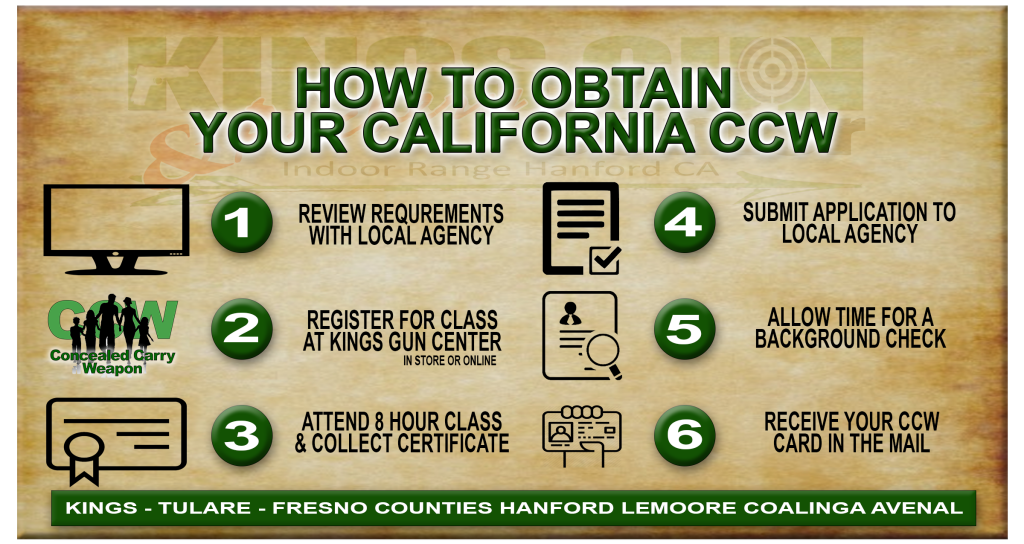
All applicants, whether new or renewing, must complete a mandatory firearms training course. The specific duration and content of this training can vary slightly by county, but it typically includes classroom instruction on firearm safety, the legal aspects of concealed carry, and practical live-fire qualification. For new applicants, the training generally ranges from 8 to 16 hours, while renewals may require a shorter course, often 4 hours. This training ensures that CCW holders are proficient in handling their firearms safely and understand the legal implications of using deadly force. Reputable training providers are widely available across the state, from Ventura County to Shasta County, offering courses specifically designed to meet California CCW requirements.
Step-by-Step Through the Application Process
Once you’ve confirmed your eligibility, the application process itself is a multi-stage journey that demands patience and attention to detail.
Initial Application Submission
The first step is to complete and submit the official CCW application, typically available online through your local sheriff’s department or police department website. This application will require personal information, a detailed history, and often a list of references. Be prepared to provide accurate and comprehensive information, as any discrepancies or omissions could delay or jeopardize your application. Many counties now use online portals like Permitium or similar systems to streamline this initial submission, guiding applicants through the required fields and documentation uploads. Ensure all fields are filled completely and truthfully.
The Interview and Documentation Phase
After submitting your initial application, you will typically be scheduled for an interview with a representative from the issuing agency. This interview is an opportunity for the agency to assess your character, discuss your reasons for wanting a CCW, and clarify any information provided in your application. During this phase, you may be required to present additional documentation, such as proof of residency, birth certificate, driver’s license, and potentially other supporting documents requested by the interviewer. This interaction is crucial for the agency to gain a holistic understanding of the applicant and ensure they meet the “good moral character” standard. Approaching this interview professionally and honestly is key to a smooth process.
Live Scan Fingerprinting and Background Verification
A critical part of the background check process involves Live Scan fingerprinting. This electronic fingerprint submission is sent directly to the California Department of Justice (DOJ) and the FBI for a thorough criminal history check. You will receive instructions on where to get your fingerprints taken, and it’s essential to complete this step promptly. The results of these background checks are a significant factor in the approval process, and any disqualifying criminal history will likely lead to a denial. The waiting period for background check results can vary, sometimes taking several weeks to months, adding to the overall timeline of the CCW application.
Beyond Approval: Responsibilities and Lifestyle Considerations
Securing a CCW permit in California is not merely about obtaining a piece of paper; it’s about embracing a new set of responsibilities and integrating safe, legal firearm practices into one’s lifestyle.
Adhering to Restrictions and Safe Carry Practices
A California CCW permit comes with significant responsibilities and a clear set of restrictions that must be rigorously followed. Permit holders must always adhere to state and federal laws regarding where they can and cannot carry a firearm. For example, carrying in “sensitive places” such as schools, government buildings, polling places, airports, and many private establishments (especially those posting “no firearms” signs) is strictly prohibited. Understanding these nuanced location restrictions is paramount. Violating these rules can lead to severe legal penalties, including permit revocation.
Beyond legal compliance, responsible concealed carry is a lifestyle choice that prioritizes safety above all else. This includes always carrying a firearm safely and securely, preventing unauthorized access, and continuously practicing safe drawing and re-holstering techniques. Many CCW holders opt for regular refresher training, even beyond state requirements, to maintain proficiency and stay updated on legal changes. Integrating these practices ensures that the permit holder is always prepared and operates within the bounds of both law and responsible gun ownership. For those who enjoy activities like exploring national parks (where federal rules apply) or visiting tourist attractions in cities like Santa Barbara, knowing these restrictions becomes an integral part of their planning.
Renewals and Maintaining Your Permit
A California CCW permit is not indefinite; it typically requires renewal every two years (or five years, depending on the issuing agency and specific circumstances). The renewal process, while less extensive than the initial application, still involves background checks and mandatory refresher training. It’s crucial to initiate the renewal process well in advance of your permit’s expiration date to avoid any lapse in your ability to carry. Many agencies recommend starting the renewal application several months before expiration. This ongoing commitment ensures that CCW holders remain current with their training, continue to meet the good moral character standard, and are up-to-date with any changes in California firearm laws. Maintaining your permit is an active responsibility, a continuous part of your chosen lifestyle of personal defense.

Traveling with a CCW: California-Specific Rules and Broader Implications
For individuals with a CCW, travel considerations are particularly important, both within and outside California. Within the state, your California CCW permit is generally valid statewide. However, remember that specific local ordinances and the policies of private establishments can still affect where you can carry. For instance, a hotel in San Francisco or a resort in Napa Valley might have a “no firearms” policy, which, if posted, must be respected. Understanding these localized rules is part of being a responsible permit holder, especially when exploring different destinations within the state.
When traveling outside California, reciprocity becomes a critical issue. California does not recognize CCW permits from any other state, nor do many states recognize California permits. This means that your California CCW is unlikely to be valid if you travel to states like Arizona, Nevada, or Texas. If you plan to travel interstate with a firearm, it is imperative to thoroughly research and understand the firearm laws of your destination state and any states you will pass through. This might involve disassembling the firearm and storing it in a locked container, separate from ammunition, in compliance with the laws of those jurisdictions. For avid travelers, especially those venturing beyond the scenic routes of Highway 1 or the bustling corridors of Interstate 5, comprehending these complex interstate carry laws is not just a recommendation but a necessity for legal and hassle-free travel.
In conclusion, obtaining a CCW permit in California is a detailed and demanding process, but one that has become more accessible following recent legal changes. It requires diligence, adherence to strict legal standards, and a commitment to ongoing responsibility. For those who choose this path, it represents a significant lifestyle decision, empowering them with the means for personal protection while navigating the unique legal landscape of the Golden State. Whether you’re a long-term resident or someone who frequently explores the diverse regions of California, understanding and respecting these laws is paramount to responsible concealed carry.
LifeOutOfTheBox is a participant in the Amazon Services LLC Associates Program, an affiliate advertising program designed to provide a means for sites to earn advertising fees by advertising and linking to Amazon.com. Amazon, the Amazon logo, AmazonSupply, and the AmazonSupply logo are trademarks of Amazon.com, Inc. or its affiliates. As an Amazon Associate we earn affiliate commissions from qualifying purchases.