
Navigating the legal and administrative landscape of establishing a business can be a complex undertaking, even within a single state. For entrepreneurs looking to operate under a business name different from their own legal name in Texas, obtaining a “Doing Business As” (DBA) designation, also known as a Certificate of Assumed Name, is a crucial step. This process ensures legal compliance, clarifies business identity, and protects personal assets. This guide will walk you through the essential steps and considerations for acquiring a DBA in the Lone Star State.
Understanding the DBA in Texas
A DBA in Texas is a legal tool that allows an individual or a business entity to operate under a trade name. This means that if you, as an individual, want to open a bakery named “Sweet Delights” and your legal name is Jane Doe, you would file for a DBA for “Sweet Delights.” Similarly, if an existing business entity, such as “Texas Holdings LLC,” wishes to operate a new venture called “Innovate Solutions” without creating a separate legal entity, they would also file for a DBA.
Why Obtain a DBA?
The reasons for obtaining a DBA are multifaceted and serve several important business functions:
- Legal Compliance: In Texas, operating under a business name that is not your legal name or the registered name of your business entity without a DBA is a violation of state law. This can lead to fines and legal complications.
- Brand Identity and Marketing: A DBA allows you to create a distinct brand identity that resonates with your target market, separate from your personal name or the broader corporate name. This is vital for marketing, advertising, and building brand recognition.
- Banking and Financial Transactions: To open a business bank account or conduct financial transactions under your assumed business name, financial institutions will require proof of your DBA filing. This prevents confusion and ensures that funds are correctly attributed.
- Contractual Agreements: When entering into contracts, leases, or other legal agreements, it is essential to use the legally recognized business name. A DBA provides this legal standing for your trade name.
- Credibility and Professionalism: Operating with a registered DBA lends an air of legitimacy and professionalism to your business, assuring customers and partners that you are operating within the bounds of the law.
DBA vs. Business Entity Formation
It’s important to distinguish a DBA from forming a formal business entity like a Sole Proprietorship, Partnership, Limited Liability Company (LLC), or Corporation.
- DBA: A DBA does not create a new legal entity. It simply allows an existing entity (an individual or a registered business) to use an alternative name. The legal liability remains with the individual owner or the underlying business entity. For instance, if you have a DBA for “Cool Gadgets” as an individual, you are still personally liable for the debts and actions of “Cool Gadgets.”
- Business Entity Formation: Forming an LLC or Corporation creates a separate legal entity distinct from its owners. This generally provides limited liability protection, shielding personal assets from business debts and lawsuits.
The Process of Obtaining a DBA in Texas
The process for obtaining a DBA in Texas is primarily managed at the county level. While the general steps are consistent, there can be minor variations in specific forms and fees depending on the county.
Step 1: Determine Your Business Name
The first and most critical step is choosing a business name. This name should be distinctive, memorable, and relevant to your business activities. However, you must ensure that the name is not already in use or too similar to an existing registered name.
- Name Availability Search: Before filing, conduct a thorough search to ensure your desired name is available. This typically involves searching the Texas Secretary of State database for existing business entities and checking with the relevant county clerk’s office. While the state primarily registers formal business entities, a DBA is filed at the county level. It’s advisable to also search online directories and conduct general web searches to avoid confusion with other businesses.
- Prohibited Names: Certain words are restricted or prohibited in business names. For example, names that imply affiliation with government agencies or suggest that the business is a bank or insurance company are usually not permitted.
Step 2: Identify the Correct Filing Authority
In Texas, DBAs are filed with the County Clerk in the county where your principal place of business is located.
- Principal Place of Business: This is the physical location from which you conduct the majority of your business operations. If you are an individual operating from home, it would be your home address. If you have a storefront or office, it’s that location.
- County Clerk’s Office: Each county has a County Clerk who is responsible for maintaining public records, including DBA filings. You will need to visit the website of or contact the County Clerk’s office for the specific county where your business is based.
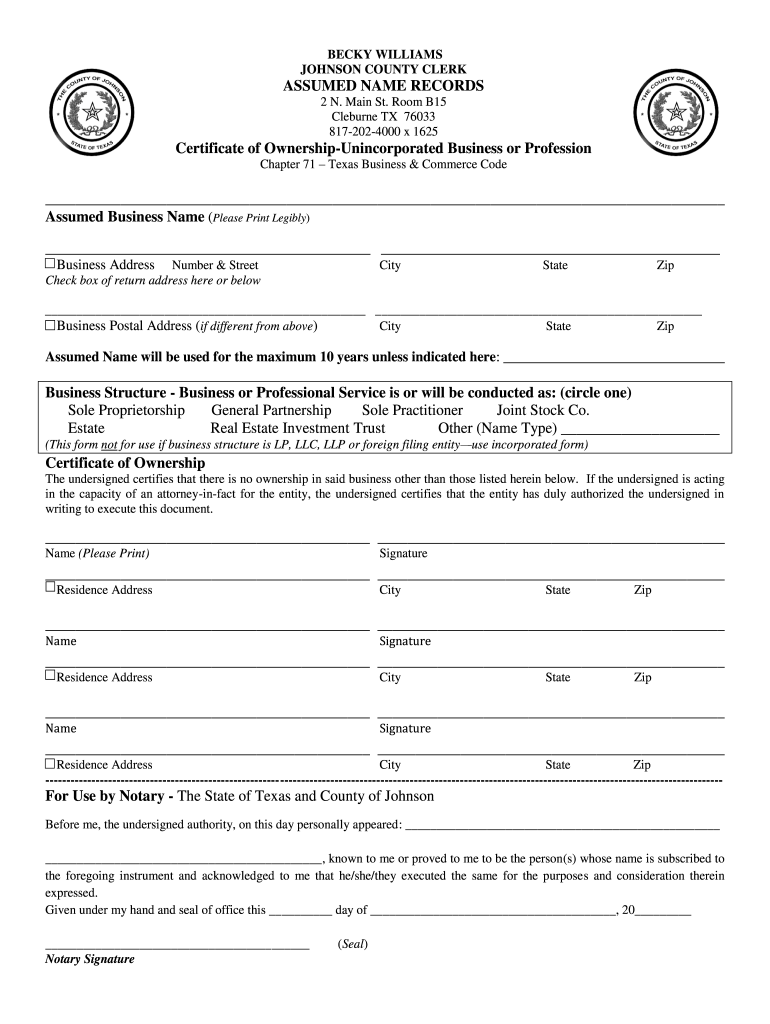
Step 3: Complete the Assumed Name Certificate Form
The County Clerk’s office will provide the necessary form, typically called a “Certificate of Assumed Name.” This form requires specific information, including:
- The Assumed Name: The DBA name you wish to register.
- The Legal Name of the Applicant:
- For an individual: Your full legal name.
- For a business entity: The exact legal name of the LLC, Corporation, or Partnership as registered with the Texas Secretary of State.
- The Address of the Applicant: The principal business address.
- The Nature of the Business: A brief description of the goods or services your business offers.
- The County of Primary Operations: The county where you are filing.
- Signatures: The form must be signed by the applicant or an authorized representative. For business entities, this might be an officer or manager.
Step 4: Filing the Certificate and Fees
Once the Certificate of Assumed Name is completed accurately, you will submit it to the County Clerk’s office along with the required filing fee.

- Filing Fees: Fees vary by county but are generally modest. It’s best to check the specific fee schedule with your county clerk’s office beforehand. Payment methods typically include cash, check, or money order.
- Submission: You can usually submit the form in person, by mail, or sometimes electronically through the county’s online portal, if available. Filing in person allows for immediate confirmation and clarification of any discrepancies.
- Public Record: Upon acceptance, the DBA filing becomes a public record, providing legal notice of your business name.
Step 5: Publication Requirement (for certain entities)
While Texas has largely eliminated the mandatory newspaper publication requirement for DBAs for most filers, it’s crucial to be aware of potential nuances. Historically, certain business structures might have had publication requirements. However, for most individual and entity DBA filings, the filing with the county clerk fulfills the legal notice requirement. It’s always prudent to confirm the current publication rules with your specific county clerk’s office or a legal advisor.
Maintaining Your DBA
Obtaining a DBA is not a one-time event. There are ongoing responsibilities to ensure your filing remains valid and compliant.
Renewal
In Texas, DBAs do not have a mandatory renewal period in the same way that some business registrations do. Once filed, the assumed name certificate remains effective as long as the underlying legal entity or individual continues to operate under that name and remains in good standing. However, if you cease using the assumed name, you should formally withdraw or abandon the DBA with the County Clerk’s office to avoid potential confusion.
Amendments and Withdrawals
- Amendments: If any information on your original Certificate of Assumed Name changes (e.g., your business address or the legal name of the underlying entity), you must file an Amendment to the Certificate of Assumed Name with the County Clerk’s office.
- Withdrawals: If you discontinue using the assumed name or dissolve the underlying business entity, you should file a Withdrawal of Assumed Name Certificate. This formally removes the DBA from public record, preventing future legal issues or confusion.
Staying Compliant
- Underlying Business Status: Ensure that your underlying business entity (if applicable) remains in good standing with the Texas Secretary of State. If an LLC or Corporation dissolves or loses its good standing, any associated DBAs will also become invalid.
- Tax Obligations: Properly account for all income and expenses under the DBA name for tax purposes. This includes obtaining an Employer Identification Number (EIN) from the IRS if you plan to hire employees or operate as a corporation or partnership, even if you are an individual filing a DBA.
- Renewing Licenses and Permits: Ensure that any required business licenses or permits are updated to reflect the DBA name if they were originally issued under your legal name.
Common Scenarios and Considerations
Understanding how DBAs apply in various situations can help entrepreneurs navigate the process more effectively.
For Individuals Operating as Sole Proprietors
If you are an individual running a business without forming a formal entity, a DBA is essential. For example, an independent graphic designer named Maria Garcia who wants to market her services as “Creative Designs Austin” would file a DBA for “Creative Designs Austin” under her legal name, Maria Garcia. This allows her to open a business bank account, issue invoices, and advertise under her brand name.
For Existing Business Entities
Established entities like LLCs or Corporations often use DBAs to launch new product lines, services, or distinct brands without the administrative burden of creating entirely new legal entities. For instance, “Texas Real Estate Group LLC” might file a DBA for “Luxury Estates of Dallas” to focus specifically on high-end properties in Dallas. This allows for targeted marketing and brand differentiation.
Partnership DBAs
General Partnerships or Limited Partnerships operating under a name different from the partners’ legal names will also need to file a DBA with the relevant County Clerk.
Out-of-State Businesses Operating in Texas
Businesses formed in other states that wish to operate under an assumed name in Texas must first register as a foreign entity with the Texas Secretary of State. Once registered, they would then proceed with filing a DBA in the Texas county where they intend to conduct business, using their foreign entity’s legal name.

Tips for a Smooth Process
- Double-Check All Information: Accuracy is paramount. Any errors on the Certificate of Assumed Name can lead to rejection or future legal complications.
- Keep Copies: Retain copies of your filed Certificate of Assumed Name, along with any amendments or withdrawal forms, for your business records.
- Consult with Professionals: If you are unsure about any aspect of the DBA process, or if your business structure is complex, consider consulting with a business attorney or a qualified business advisor in Texas. They can provide tailored guidance and ensure full compliance.
- Understand County Variations: While the core process is statewide, always confirm the specific forms, fees, and submission procedures with the County Clerk in your specific jurisdiction. For example, the filing process in Harris County might have slight differences from that in Travis County.
By understanding the requirements and diligently following the steps outlined above, entrepreneurs and business owners can successfully obtain and utilize a DBA in Texas, establishing a clear and legally recognized identity for their ventures. This foundational step is crucial for building a credible and compliant business operation within the state.
LifeOutOfTheBox is a participant in the Amazon Services LLC Associates Program, an affiliate advertising program designed to provide a means for sites to earn advertising fees by advertising and linking to Amazon.com. Amazon, the Amazon logo, AmazonSupply, and the AmazonSupply logo are trademarks of Amazon.com, Inc. or its affiliates. As an Amazon Associate we earn affiliate commissions from qualifying purchases.