
This guide delves into the process of establishing an S corporation in California, a strategic move for many businesses seeking pass-through taxation and enhanced liability protection. Understanding the nuances of this business structure is crucial for entrepreneurs aiming to optimize their financial and legal standing. While the term “S corporation” refers to a federal tax election, the initial steps involve forming a specific legal entity, typically a C corporation or an LLC, and then electing S corp status with the Internal Revenue Service (IRS). This article will focus on the formation within California and the subsequent federal election.
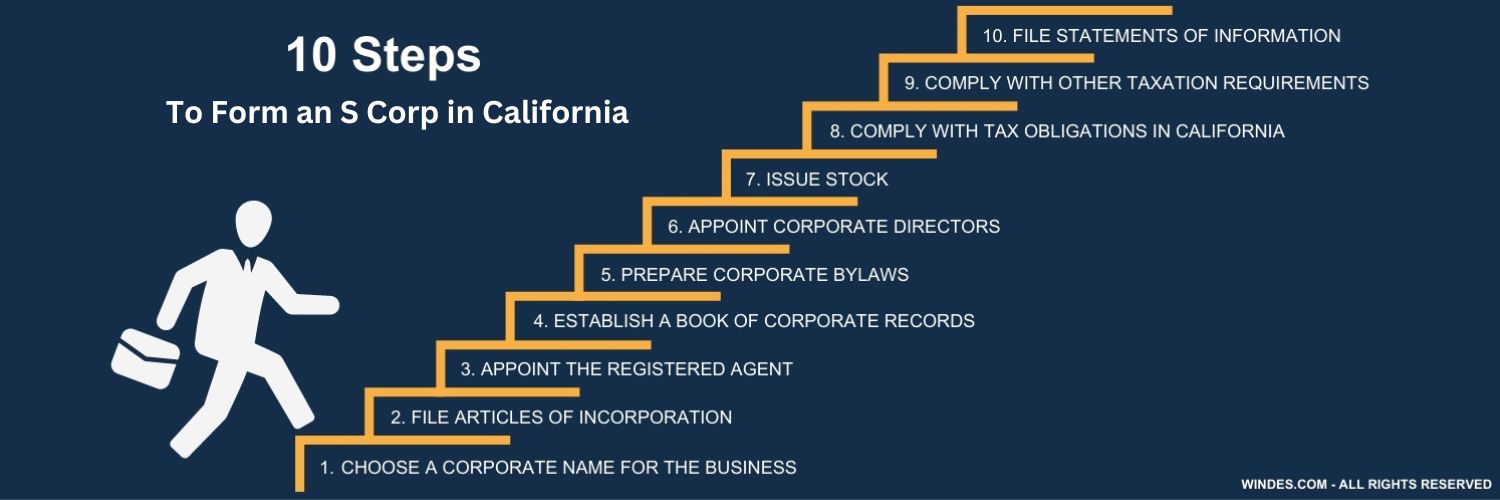
Understanding the S Corporation Structure
An S corporation, also known as an S corp, is a tax designation that allows profits and losses to be passed through directly to the owners’ personal income without being subject to the corporate tax rate. This avoids the “double taxation” often associated with traditional C corporations. The primary benefit lies in this pass-through taxation, which can significantly reduce the overall tax burden for profitable businesses.
Key Advantages of an S Corp
- Pass-Through Taxation: Profits and losses are reported on the shareholders’ personal income tax returns, avoiding corporate income taxes.
- Liability Protection: Shareholders are generally not personally liable for the debts and obligations of the business, separating personal assets from business liabilities.
- Deductible Expenses: Owners who work for the business can be treated as employees and take a salary, which is a deductible business expense. This can lead to tax savings compared to solely taking distributions.
- Credibility: Operating as a corporation can lend an air of legitimacy and professionalism to a business.
Disadvantages to Consider
- Stricter Regulations: S corps face more complex operational rules and compliance requirements than sole proprietorships or partnerships, including mandatory annual shareholder meetings and detailed record-keeping.
- Limited Shareholders: S corps are restricted to a maximum of 100 shareholders, who must be U.S. citizens or resident aliens, certain trusts, or estates. Certain types of corporations and partnerships cannot be S corp shareholders.
- Salaries vs. Distributions: Shareholders who actively work for the S corp must be paid a “reasonable salary” subject to employment taxes. Only the remaining profits can be distributed as dividends, which are not subject to self-employment taxes. Determining what constitutes a “reasonable salary” can be complex and is subject to IRS scrutiny.
- Valuation Challenges: If the business is later sold, the allocation of the purchase price between assets and goodwill can be more complicated for S corps.
Step 1: Form a Legal Entity in California
Before you can elect S corporation status, you must first establish a legal entity in California. The most common choices for this purpose are a C corporation or a Limited Liability Company (LLC).
Option A: Forming a California C Corporation
Forming a C corporation is a traditional route. This involves filing Articles of Incorporation with the California Secretary of State.
Filing Articles of Incorporation
- Choose a Name: Select a unique business name that complies with California naming rules. The name must contain an indicator of corporate status, such as “Corporation,” “Incorporated,” or “Limited,” or an abbreviation thereof. You can check name availability on the California Secretary of State website.
- Appoint a Registered Agent: A registered agent is a person or business entity designated to receive legal and official documents on behalf of the corporation. This agent must have a physical address in California.
- File Articles of Incorporation: This document, submitted to the California Secretary of State, includes the corporation’s name, the name and address of the registered agent, the number of shares the corporation is authorized to issue, and the name and address of the incorporator(s). There is a filing fee associated with this process.
- Appoint Directors and Issue Stock: After incorporation, the initial directors are appointed, and stock is issued to shareholders.
- Adopt Corporate Bylaws: Bylaws are the internal rules governing the corporation’s operations, including how meetings are conducted, officer duties, and other governance matters.
- Hold the First Board Meeting: The board of directors holds its initial meeting to adopt bylaws, elect officers, and authorize the issuance of stock.
Post-Incorporation Requirements for C Corps
- Statement of Information: Within 90 days of filing the Articles of Incorporation, and annually thereafter, a Statement of Information must be filed with the California Secretary of State.
- Employer Identification Number (EIN): Obtain an EIN from the IRS, even if you don’t plan to hire employees, as it’s required for tax purposes and opening a business bank account.
Option B: Forming a California Limited Liability Company (LLC)
An LLC offers flexibility and can also elect to be taxed as an S corporation. This often provides a simpler administrative structure.

Filing Articles of Organization for an LLC
- Choose a Name: Similar to corporations, LLC names must be unique and include an indicator like “Limited Liability Company” or “LLC.”
- Appoint a Registered Agent: An LLC also requires a registered agent with a physical California address.
- File Articles of Organization: This document, filed with the California Secretary of State, includes the LLC’s name, the name and address of the registered agent, and a statement that the LLC is managed by its members or by a manager. There is a filing fee.
- Create an Operating Agreement: While not filed with the state, an operating agreement is crucial for an LLC. It outlines the ownership structure, member responsibilities, profit and loss distribution, and management procedures.
- Obtain an EIN: Even for single-member LLCs, an EIN is typically needed.
Post-Formation Requirements for LLCs
- Statement of Information: Like corporations, LLCs must file a Statement of Information within 90 days of formation and then annually thereafter.
- Annual Franchise Tax: In California, LLCs are subject to an annual minimum franchise tax.
Step 2: Elect S Corporation Status with the IRS
Once your C corporation or LLC is properly formed and in good standing in California, you can elect to be treated as an S corporation for federal tax purposes.
Filing Form 2553, Election by a Small Business Corporation
- Eligibility Requirements: Before filing, ensure your entity meets the eligibility criteria for S corporation status:
- Must be a domestic eligible entity (C corp or LLC).
- Must have no more than 100 shareholders.
- Shareholders must be individuals, certain trusts, estates, or tax-exempt organizations. Partnerships and corporations cannot be shareholders.
- Shareholders must be U.S. citizens or resident aliens.
- Must have only one class of stock.
- Obtain the Form: Download Form 2553, “Election by a Small Business Corporation,” from the IRS website.
- Complete the Form: Fill out the form accurately, including:
- The corporation’s name, address, and EIN.
- The desired effective date of the S corp election.
- Information about each shareholder, including their name, address, Social Security number, number of shares owned, and the date they acquired the stock.
- Consent of all shareholders to the election.
- File Form 2553: The form must be filed with the appropriate IRS service center. Generally, the deadline for filing Form 2553 is the 15th day of the third month of the tax year the election is to take effect, or at any time during the tax year preceding the tax year it is to take effect. If you miss the deadline, you may be able to file for late election relief.
Important Considerations After Election
- State-Level Recognition: In California, there is no separate state-level S corporation election. California recognizes the federal S corporation status. However, California does impose an entity-level tax on S corporations, which is currently 1.5% of net income, with a minimum tax of $800 and a maximum tax of $100,000. This is a significant difference from federal treatment and needs careful consideration.
- Payroll and Reasonable Salary: If you are an owner-employee, you must pay yourself a reasonable salary. This salary is subject to federal and state payroll taxes (Social Security, Medicare, unemployment insurance, etc.). The remaining profits can be distributed as dividends, which are not subject to these employment taxes. Consult with a tax professional to determine an appropriate salary.
- Record Keeping: Maintain meticulous financial records, including detailed payroll records, shareholder distributions, and corporate expenses.
- Annual Filings: S corps must file an annual information return with the IRS (Form 1120-S, U.S. Income Tax Return for an S Corporation) and report income and losses on their personal tax returns. California also requires a California S corporation tax return (Form 100S, California S Corporation Franchise or Income Tax Return).
Step 3: Ongoing Compliance and Best Practices
Operating as an S corporation in California requires adherence to ongoing compliance mandates to maintain its legal and tax status.
Essential Compliance Tasks
- Annual Meetings and Minutes: Hold annual meetings for both shareholders and directors (if a corporation). Document these meetings with detailed minutes, which should be kept with the corporate records.
- Statement of Information Filings: As mentioned, filing the Statement of Information with the California Secretary of State annually is mandatory. Failure to do so can result in penalties and even the suspension of your business.
- Tax Filings: Timely file all federal and state tax returns, including Form 1120-S with the IRS and Form 100S with the California Franchise Tax Board.
- Business Licenses and Permits: Ensure all necessary local and state business licenses and permits are kept up-to-date.
- Separate Business Accounts: Maintain separate bank accounts for your S corporation to clearly delineate business and personal finances, which is crucial for liability protection.
Seeking Professional Guidance
The complexities of operating an S corporation, especially with the specific tax environment in California, make professional guidance invaluable.

When to Consult Professionals
- Choosing the Right Entity: A business attorney can help you decide whether a C corporation or an LLC is the best foundation for your S corp election, considering your specific business goals and circumstances.
- Forming the Entity: Legal professionals can assist with the accurate drafting and filing of all formation documents.
- S Corp Election: A CPA or tax advisor can guide you through the intricacies of Form 2553, ensure you meet all eligibility requirements, and advise on the best effective date for the election.
- Reasonable Salary Determination: Tax professionals are essential for establishing a “reasonable salary” for owner-employees, which can significantly impact your tax liability and minimize the risk of IRS challenges.
- Ongoing Tax Compliance: CPAs are vital for preparing and filing accurate federal and state tax returns, ensuring you take advantage of all eligible deductions and credits, and navigating the California S corporation tax structure.
- Business Law: An attorney can help draft operating agreements, bylaws, and advise on corporate governance, employment law, and other legal matters.
By diligently following these steps and engaging with qualified professionals, you can successfully open and operate an S corporation in California, positioning your business for strategic growth and financial efficiency.
LifeOutOfTheBox is a participant in the Amazon Services LLC Associates Program, an affiliate advertising program designed to provide a means for sites to earn advertising fees by advertising and linking to Amazon.com. Amazon, the Amazon logo, AmazonSupply, and the AmazonSupply logo are trademarks of Amazon.com, Inc. or its affiliates. As an Amazon Associate we earn affiliate commissions from qualifying purchases.