
Securing basic necessities is fundamental to a stable and dignified lifestyle. For many residents in Florida, the Supplemental Nutrition Assistance Program (SNAP), often referred to as food stamps, plays a crucial role in ensuring access to nutritious food. Understanding the qualification process for SNAP is essential for individuals and families seeking to bolster their financial well-being and maintain a healthy lifestyle. This comprehensive guide will illuminate the pathways to eligibility, demystify the application process, and outline how this vital program contributes to the broader lifestyle landscape of the Sunshine State.
Understanding SNAP: A Pillar of Household Financial Stability
At its core, SNAP is designed to combat food insecurity and alleviate hunger, providing low-income individuals and families with the means to purchase healthy food. In Florida, this program is administered by the Florida Department of Children and Families (DCF), acting as a critical safety net that directly influences the quality of life for countless households.
What is SNAP and Why Does it Matter for Your Lifestyle?
SNAP is a federal program that provides monthly benefits on an Electronic Benefits Transfer (EBT) card, which works like a debit card to buy groceries at authorized stores. For those struggling to make ends meet, SNAP transcends mere assistance; it becomes a cornerstone of financial stability. It frees up limited household income that would otherwise be spent on food, allowing families to allocate funds to other essential lifestyle expenses such as housing, utilities, transportation, or even educational opportunities. This ripple effect can reduce stress, improve overall health outcomes, and provide a foundation for a more secure and predictable daily life. It means less worrying about where the next meal will come from, enabling a focus on other aspects of personal growth and family well-being. From ensuring children have nutritious meals to empowering adults to pursue employment or training without the constant burden of food costs, SNAP directly enhances the lifestyle of its recipients.
Dispelling Myths and Understanding the Program’s Purpose
There are often misconceptions surrounding SNAP, sometimes seen as a handout rather than a critical investment in public health and economic stability. In reality, SNAP is an anti-poverty program that stimulates local economies. Every dollar of SNAP benefits spent generates additional economic activity within communities, supporting grocery stores, farmers, and related industries. Furthermore, studies consistently show that access to SNAP improves health outcomes, reduces healthcare costs, and enhances educational attainment among children. Understanding SNAP’s true purpose helps to destigmatize the program and highlights its profound positive impact on the overall lifestyle and vitality of Florida’s population. It’s a mechanism for ensuring basic human dignity and supporting individuals and families through challenging times, ultimately strengthening the social fabric.
Key Eligibility Criteria for Florida Residents
To qualify for SNAP benefits in Florida, applicants must meet specific requirements related to income, resources, residency, and citizenship status, among other factors. These criteria ensure that assistance is directed to those most in need, aligning with the program’s goal of fostering a better quality of life for vulnerable populations.
Income and Resource Limits: The Financial Gatekeepers
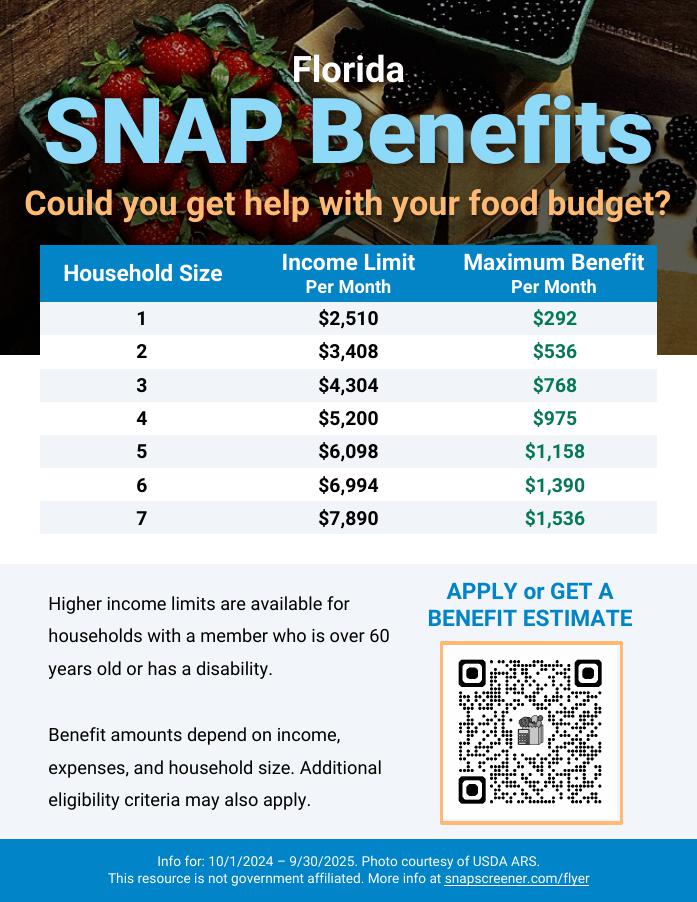
The primary determinants of SNAP eligibility are gross and net monthly income. Generally, households must meet both gross (before deductions) and net (after deductions) income limits. For most households, gross income must be at or below 130% of the federal poverty level, and net income must be at or below 100% of the federal poverty level. However, some households with elderly or disabled members may only need to meet the net income test. The specific dollar amounts for these limits are adjusted annually based on federal poverty guidelines and vary depending on household size.
Beyond income, Florida also considers certain resources, such as bank accounts, cash on hand, and accessible assets. As of current guidelines, households typically cannot have more than $2,750 in countable resources, or $4,250 if at least one household member is age 60 or older, or has a disability. Certain assets are excluded, such as the home in which you live, one vehicle per adult, and most retirement accounts. These limits are designed to ensure that assistance goes to individuals and families who genuinely lack the financial means to consistently afford adequate nutrition, thereby helping them maintain a basic standard of living.
Residency and Citizenship Requirements
To be eligible for SNAP in Florida, an applicant must be a resident of the state. This typically means having a fixed, regular nighttime residence in Florida and intending to reside there.
Regarding citizenship, eligible individuals must be a U.S. citizen or a qualified non-citizen. Qualified non-citizens generally include lawful permanent residents (green card holders), asylees, refugees, Cuban or Haitian entrants, victims of trafficking, and certain others who have resided in the United States for five years or more. Certain exceptions apply for children and individuals receiving disability benefits. These requirements are in place to align the program with federal immigration laws while still providing support to a broad range of individuals legally residing and contributing to the community’s lifestyle.
Work Requirements and Exemptions
Most able-bodied adults without dependents (ABAWDs) between the ages of 18 and 52 are subject to work requirements. This generally means they must be working or participating in a work program for at least 20 hours per week, or be registered for work. Failure to meet these requirements can lead to a time limit on benefits, typically three months in a 36-month period, unless an exemption applies.
Exemptions exist for various reasons, including pregnancy, caring for a child under six or an incapacitated person, receiving unemployment compensation, being a student enrolled at least half-time, or having a disability. Understanding these work requirements and potential exemptions is crucial for applicants to ensure continuous eligibility and to align their participation with their lifestyle circumstances. The goal is to encourage self-sufficiency while providing a necessary safety net.
The Application Process: Navigating Your Path to Assistance
Applying for SNAP in Florida involves several steps designed to verify eligibility and ensure that benefits are distributed accurately. Navigating this process effectively is key to accessing the support needed to enhance one’s lifestyle.
Gathering Necessary Documentation

Before starting the application, it’s wise to gather all necessary documents. This will significantly expedite the process. Key documents typically include:
- Proof of Identity: Driver’s license, state ID, or other government-issued identification.
- Proof of Residency: Utility bill, lease agreement, or mail with your Florida address.
- Proof of Income: Pay stubs, employer statements, benefit letters (e.g., Social Security, unemployment), or tax returns.
- Proof of Resources: Bank statements (checking and savings), and information on any other countable assets.
- Proof of Household Members: Birth certificates, social security cards for everyone applying in your household.
- Proof of Expenses: Rent/mortgage statements, utility bills, child care receipts, and medical bills (for elderly/disabled).
- Proof of Citizenship/Immigration Status: Birth certificate, U.S. passport, or documentation for qualified non-citizens.
Having these documents ready demonstrates preparedness and helps the Florida Department of Children and Families process your application efficiently, allowing you to quickly secure the food assistance that supports your lifestyle.
Submitting Your Application: Online, Mail, or In-Person
Florida offers several convenient ways to submit a SNAP application:
- Online: The most common and often quickest method is through the Florida Department of Children and Families MyFLFamilies portal. This online system allows applicants to complete and submit their application digitally, as well as upload supporting documents.
- Mail: You can download an application from the DCF website, print it, fill it out, and mail it to your local DCF office.
- In-Person: Applications can also be submitted at your local DCF service center. This option allows for direct interaction with staff who can answer questions, but it may involve wait times.
Choosing the method that best suits your comfort level and access to technology can make the application process less daunting, ensuring that you can take the necessary steps to improve your household’s lifestyle.
The Interview and Verification Stages
Once your application is submitted, a caseworker from the Florida Department of Children and Families will review it. You will typically be scheduled for an interview, which can be conducted by phone or in person. During this interview, the caseworker will verify the information provided in your application, ask follow-up questions, and explain your rights and responsibilities.
After the interview, the DCF will take steps to verify the information you’ve provided, which may include contacting employers, landlords, or other sources. This verification process is crucial for program integrity. If additional documentation is needed, you will be notified and given a deadline to submit it. Timely cooperation throughout these stages is vital for a successful outcome, paving the way for consistent food security and a more stable lifestyle. The entire process, from application submission to approval, generally takes up to 30 days.
Maximizing Your Benefits and Maintaining Eligibility
Receiving SNAP benefits is a continuous cycle of usage, reporting, and recertification. Understanding how to maximize these benefits and diligently maintain eligibility is key to leveraging the program for long-term lifestyle support.
Understanding Benefit Amounts and EBT Cards
The amount of SNAP benefits a household receives is calculated based on its size, income, and certain deductions (like rent, utilities, and medical expenses for the elderly/disabled). These benefits are then loaded monthly onto an EBT card. This card functions like a debit card and can be used at most grocery stores, farmers’ markets, and some online retailers to purchase eligible food items. It’s important to remember that SNAP benefits cannot be used for non-food items like alcohol, tobacco, vitamins, pet food, or hot, ready-to-eat meals (with limited exceptions in some disaster areas). Using the EBT card responsibly ensures that the program effectively supports your household’s nutritional needs and contributes positively to your daily lifestyle choices.
Reporting Changes and Recertification
Maintaining eligibility for SNAP requires active participation. Recipients are generally required to report certain changes in household circumstances to the Florida Department of Children and Families within a specific timeframe (usually 10 days). These changes include significant increases in income, changes in household size, or changes in residency. Failure to report changes can result in overpayments that must be repaid, or even temporary disqualification.
Additionally, SNAP benefits are not indefinite. Households must periodically recertify their eligibility, typically every 6 to 12 months. This involves submitting a new application and often undergoing another interview to verify current income, resources, and household composition. Promptly completing the recertification process is crucial to avoid any lapse in benefits and to ensure continuous support for your household’s lifestyle.
Resources and Support for SNAP Recipients in Florida
Beyond the benefits themselves, Florida offers various resources and support systems for SNAP recipients. These include nutrition education programs that teach healthy eating on a budget, connections to local food banks for supplemental assistance, and assistance with job searching or training programs for those subject to work requirements. Local community organizations and non-profits often provide assistance with filling out applications or navigating the recertification process. These complementary services aim to empower recipients to not only meet their immediate food needs but also to foster long-term self-sufficiency and an improved quality of life, demonstrating the comprehensive lifestyle support available.
SNAP’s Broader Impact on Florida Lifestyles
While SNAP directly assists individual households, its effects extend far beyond, positively influencing public health, local economies, and community resilience throughout Florida.
Promoting Health and Well-being
Access to consistent, nutritious food is a cornerstone of good health. SNAP helps reduce instances of diet-related diseases, improves birth outcomes for pregnant individuals, and enhances cognitive development and academic performance in children. By mitigating food insecurity, SNAP contributes to a healthier, more productive populace, which in turn leads to a more vibrant and resilient lifestyle for all Floridians. Children who receive SNAP benefits are less likely to experience stunted growth or developmental delays, setting them up for better long-term health and educational trajectories.
Supporting Local Economies
SNAP benefits are spent at authorized retail food stores, injecting significant federal dollars directly into Florida’s economy. This spending supports local businesses, creates jobs in grocery stores and related sectors, and strengthens the agricultural industry. Economists estimate that for every $5 in new SNAP benefits, as much as $9.00 in total economic activity is generated. This economic stimulus is particularly vital in rural areas and during economic downturns, helping to sustain local economies and thereby supporting the diverse lifestyles of communities across the state.
A Safety Net for Vibrant Communities
Ultimately, SNAP serves as a vital safety net, protecting millions of Florida residents from the devastating impacts of hunger and extreme poverty. By doing so, it contributes to more stable, equitable, and vibrant communities. When fewer people are struggling with basic food needs, communities experience reduced crime rates, better public health metrics, and increased social cohesion. This program allows individuals to participate more fully in their communities, contributing to a collective lifestyle that is both sustainable and compassionate. Understanding how to qualify for SNAP in Florida is not just about accessing benefits; it’s about understanding a critical component of personal and community well-being that underpins a thriving lifestyle for countless residents.
LifeOutOfTheBox is a participant in the Amazon Services LLC Associates Program, an affiliate advertising program designed to provide a means for sites to earn advertising fees by advertising and linking to Amazon.com. Amazon, the Amazon logo, AmazonSupply, and the AmazonSupply logo are trademarks of Amazon.com, Inc. or its affiliates. As an Amazon Associate we earn affiliate commissions from qualifying purchases.