
The California Statement of Information is a crucial document for any business entity registered and operating within the Golden State. It’s not merely a bureaucratic formality but a vital piece of compliance that ensures your business information is up-to-date with the California Secretary of State. Understanding how to properly file this statement is essential for maintaining good standing, avoiding penalties, and ensuring smooth business operations. This guide will walk you through the process, from understanding its purpose to completing and submitting the form.
Understanding the Statement of Information
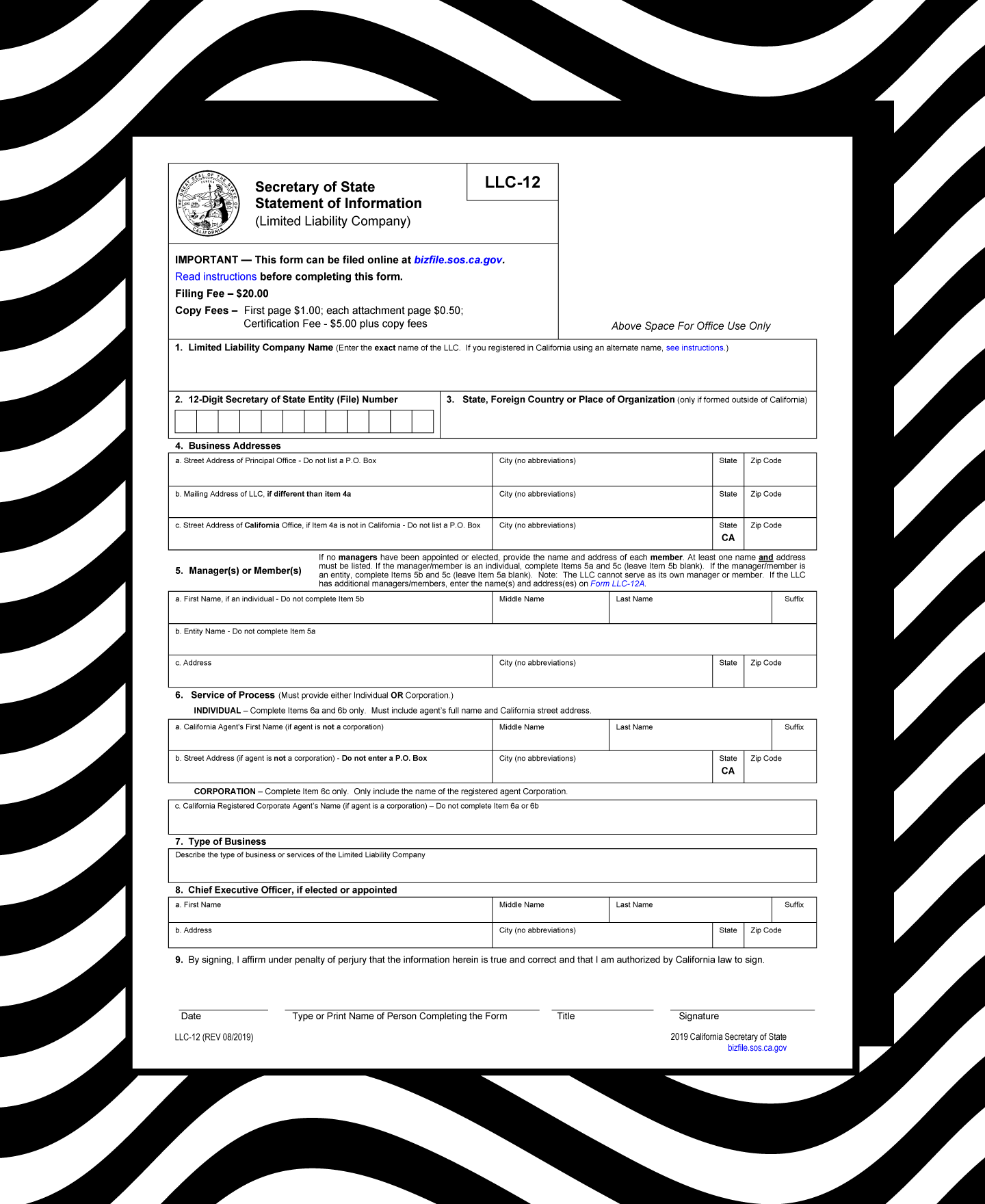
The Statement of Information (Form SI) serves as a periodic update to the California Secretary of State regarding key details of your business. It’s required for various business structures, including corporations, limited liability companies (LLCs), limited partnerships, and general partnerships. The primary goal is to keep the public record accurate, allowing stakeholders, customers, and regulatory bodies to identify the correct individuals associated with the business and its principal office.
Why Is It Important?
Filing the Statement of Information is not optional. There are several compelling reasons why it’s a critical aspect of business management in California:
- Maintaining Good Standing: Failure to file can result in your business being declared delinquent or suspended by the California Secretary of State. This suspension can have severe consequences, including the inability to conduct business legally, file lawsuits, or enter into contracts.
- Avoiding Penalties: The state imposes penalties for late filings. These penalties can be significant and add to your operating costs.
- Public Record Accuracy: The Statement of Information provides essential information to the public. This includes the names and addresses of officers, directors, agents for service of process, and the principal business address. This transparency is vital for legal and business transactions.
- Service of Process: The designated agent for service of process is the legal point of contact for your business. If your business is sued, legal documents will be served to this agent. An outdated or incorrect agent can lead to your business not receiving critical legal notices, potentially resulting in default judgments.
- Business Continuity: Proper filing demonstrates that your business is actively managed and compliant, which can be important for investors, lenders, and potential partners.
Who Needs to File?
The Statement of Information applies to a wide range of business entities registered in California. This includes:
- Corporations: Both for-profit and non-profit corporations.
- Limited Liability Companies (LLCs): Including both member-managed and manager-managed LLCs.
- Limited Partnerships (LPs): General and limited partners.
- General Partnerships: In certain circumstances, especially if a fictitious business name (DBA) is used.
Filing Frequency
The frequency of filing depends on the business entity type:
- Corporations and LLCs: Generally required to file annually. The initial Statement of Information is due within 90 days of filing the formation documents. Subsequent statements are due annually on or before the anniversary month of the business’s formation.
- Limited Partnerships and General Partnerships: Typically required to file every two years.
It is crucial to track your business’s formation date and adhere to the specified filing deadlines to avoid late fees and penalties.
Preparing to File Your Statement of Information
Before you begin filling out the form, gather all the necessary information. Having this readily available will streamline the process and reduce the likelihood of errors.
Key Information Required
The specific information required will vary slightly depending on the business entity type, but generally, you will need to provide:
- Entity Name: The legal name of your business as registered with the California Secretary of State.
- Entity Type: Clearly state whether you are a corporation, LLC, LP, etc.
- California Secretary of State File Number: This is a unique identifier assigned to your business upon registration.
- Principal Executive Office Address: This is the main business address. It cannot be a P.O. Box unless the P.O. Box is the only address available for mail delivery.
- Mailing Address (if different): If your principal executive office is not where you receive mail, provide a separate mailing address.
- Agent for Service of Process:
- Name: The name of the individual or registered corporate agent designated to receive legal documents on behalf of the business.
- Physical Address: The street address of the agent in California. This cannot be a P.O. Box.
- Acceptance of Appointment: The agent must have agreed to serve in this capacity.
- Officers and Directors (for Corporations):
- Names and addresses of all corporate officers (President, Vice President, Secretary, Treasurer).
- Names and addresses of all directors.
- Managers and Members (for LLCs):
- Names and addresses of managing members or managers.
- General Partners (for Limited Partnerships):
- Names and addresses of all general partners.
Identifying Your Agent for Service of Process
The agent for service of process is a critical role. This individual or entity must have a physical street address in California and be available during normal business hours to accept legal documents.

- Individual Agent: If you designate an individual, they must be a California resident or a business entity with a California office. They must formally agree to serve.
- Registered Corporate Agent: Many businesses choose a professional registered agent service. These services are specifically designed to act as agents for multiple businesses and have established processes for receiving and forwarding legal documents. This can be a reliable option, especially if your business owners or key personnel are not California residents or if you want to ensure consistent availability.
Crucially, ensure your chosen agent has consented to serve. Providing incorrect agent information or an agent who has not agreed to serve can invalidate the filing and leave your business vulnerable.
Filing the Statement of Information
California offers several convenient methods for filing your Statement of Information. Choose the method that best suits your needs and preference.
Online Filing
The California Secretary of State website provides an online portal for filing the Statement of Information. This is often the fastest and most efficient method.
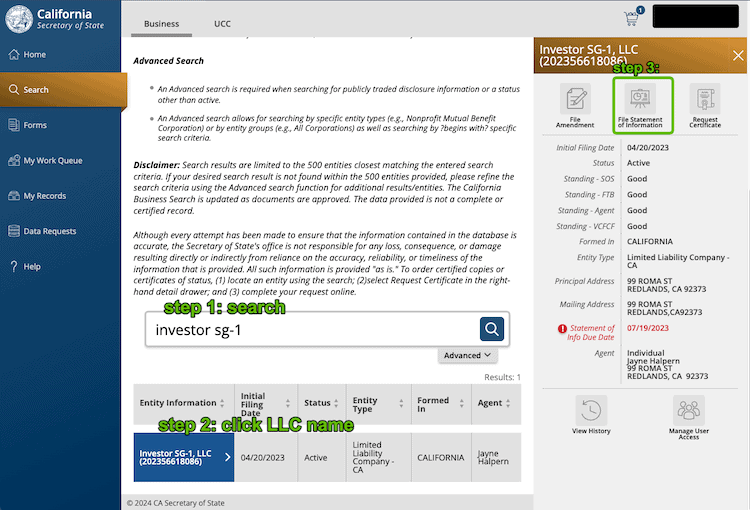
- Navigate to the SOS Website: Visit the official California Secretary of State website.
- Locate the Business Portal: Find the section dedicated to business filings or online services.
- Search for Your Business: You will typically need to search for your business by its name or file number.
- Select the Correct Form: Choose the Statement of Information form corresponding to your business entity type.
- Complete the Digital Form: Fill in all required fields accurately. The online system often provides prompts and validation to help prevent errors.
- Payment: You will be required to pay the filing fee electronically. Keep a record of your payment confirmation.
- Confirmation: Upon successful submission and processing, you should receive a confirmation, often via email.
Mail Filing
You can also file by mail. This method requires downloading the appropriate form from the California Secretary of State website, printing it, completing it by hand or typewriter, and mailing it along with the filing fee.
- Download the Form: Visit the California Secretary of State website and navigate to the forms section. Download the correct Statement of Information form for your entity type.
- Complete the Form: Fill out all sections legibly and accurately. Ensure all required signatures are obtained.
- Prepare Payment: Include a check or money order for the filing fee made payable to the “California Secretary of State.”
- Mail the Package: Send the completed form and payment to the address provided by the California Secretary of State for business filings. It’s advisable to send it via certified mail with return receipt requested to have proof of mailing and delivery.
In-Person Filing
In some cases, you may be able to file in person at one of the California Secretary of State offices. This can be useful if you need immediate assistance or want to ensure the filing is processed on the same day. However, processing times can vary, and it may involve waiting periods.
Filing Fees
There is a filing fee associated with the Statement of Information. The fee amount can change, so it’s essential to check the California Secretary of State website for the most current fee schedule.
Common Mistakes and Tips for Success
Navigating the Statement of Information filing process can be straightforward, but certain common pitfalls can lead to delays or penalties. Being aware of these can help you ensure a smooth and accurate submission.
Avoiding Common Errors
- Incorrect Entity Name: Ensure the name precisely matches the name on your California Secretary of State registration. Even minor discrepancies can cause issues.
- P.O. Box for Principal Address: As mentioned, P.O. Boxes are generally not acceptable for the principal executive office or the agent’s physical address. Use a valid street address.
- Outdated Agent Information: Always confirm with your agent for service of process that they are still willing and able to serve and that their contact information is current.
- Missing Signatures: Ensure all required individuals have signed the form.
- Incomplete Information: Double-check that all fields requiring information have been filled out, especially for officers, directors, or managers.
- Late Filing: Mark your calendar with the due date. Don’t wait until the last minute, as unexpected issues can arise.
Tips for a Smooth Filing Process
- Keep Records: Maintain copies of all filed Statements of Information. This is invaluable for future reference and in case of any disputes or inquiries.
- Use Online Resources: The California Secretary of State website is an excellent resource. It provides forms, fee information, and often has FAQs or guides to assist filers.
- Consider Professional Assistance: If you find the process complex or are unsure about any aspect, consider consulting with a business attorney or a registered agent service. They can ensure accuracy and compliance.
- Update Promptly: If there are any changes to your business’s principal address, agent for service of process, or officer/director/manager information between scheduled Statement of Information filings, you are generally required to file an amendment to your Statement of Information. While the statement itself is periodic, significant changes might necessitate a proactive update.
- Automate Reminders: Set up internal reminders well in advance of the filing deadline. Integrating this into your accounting or administrative calendar can prevent missed dates.
By understanding the purpose, gathering the correct information, and following the filing procedures carefully, you can effectively manage your California Statement of Information, ensuring your business remains in good standing and operates smoothly. This proactive approach to compliance is a cornerstone of responsible business ownership.
LifeOutOfTheBox is a participant in the Amazon Services LLC Associates Program, an affiliate advertising program designed to provide a means for sites to earn advertising fees by advertising and linking to Amazon.com. Amazon, the Amazon logo, AmazonSupply, and the AmazonSupply logo are trademarks of Amazon.com, Inc. or its affiliates. As an Amazon Associate we earn affiliate commissions from qualifying purchases.