
Navigating the process of selling a vehicle in the Sunshine State involves understanding specific regulations and best practices to ensure a smooth and legal transaction. Whether you’re a local resident or a visitor looking to part with your automobile before departing, this guide will walk you through the essential steps. From preparing your car for sale to finalizing the paperwork with the Florida Department of Highway Safety and Motor Vehicles (FLHSMV), we’ll cover all the crucial elements.
Understanding Florida’s Vehicle Sales Laws
Florida has a set of laws and procedures designed to protect both buyers and sellers during a private vehicle sale. Familiarity with these regulations is paramount to avoid potential legal issues and ensure a fair exchange.
The Importance of a Clear Title
The Certificate of Title is the most critical document when selling a vehicle. It serves as proof of ownership. In Florida, this document is issued by the FLHSMV. Before you can sell your car, you must have a clear title in your name.
Obtaining a Duplicate Title
If you have misplaced your original title, you will need to apply for a duplicate. This process involves completing Form HSMV 82040, “Application for Duplicate or Transfer of Title,” and submitting it to your local county tax collector’s office, along with a fee. It is crucial to have this document ready before listing your car.
Liens on the Title
If you have an outstanding loan on your vehicle, there will be a lienholder listed on the title. To sell the car with a clear title, you must pay off the loan completely. Once the loan is satisfied, the lienholder will release their interest, and you will receive a clear title or an updated title reflecting the lien release. This process can take time, so it’s advisable to start early if you know you need to sell.
Bill of Sale: A Necessary Document
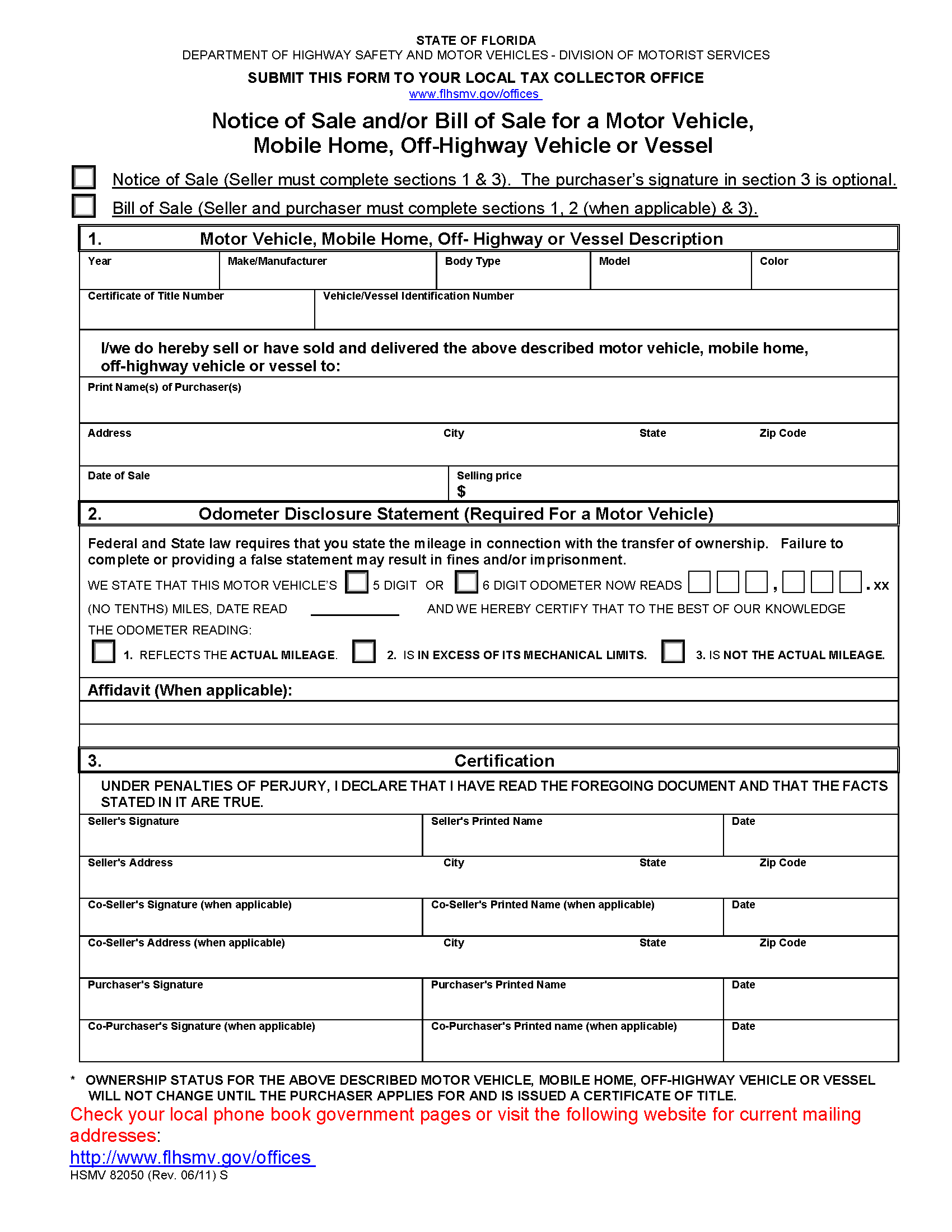
While not always strictly required by the FLHSMV for private sales where a title is transferred, a Bill of Sale is highly recommended. This document serves as a legal record of the transaction between the buyer and the seller, detailing the vehicle’s information, sale price, date of sale, and names and addresses of both parties.
What to Include in Your Bill of Sale
A comprehensive Bill of Sale should include:
- Vehicle Information: Year, Make, Model, Vehicle Identification Number (VIN), and odometer reading at the time of sale.
- Sale Price: The agreed-upon purchase price of the vehicle.
- Date of Sale: The exact date the transaction is completed.
- Buyer’s Information: Full name, address, and signature.
- Seller’s Information: Full name, address, and signature.
- “As-Is” Clause: It is common practice in private sales to include a clause stating the vehicle is sold “as-is,” meaning the seller is not providing any warranties, and the buyer accepts the vehicle in its current condition. This clause can help protect you from future claims.
- Signatures and Notarization: While notarization is not mandatory for a Bill of Sale in Florida for title transfers, it can add an extra layer of legal protection for both parties.
Odometer Disclosure
Florida law requires sellers to accurately disclose the vehicle’s mileage at the time of sale. This information is typically recorded on the Certificate of Title or a separate odometer disclosure statement if the title does not have a designated space. Tampering with or providing false odometer readings is a serious offense.
Preparing Your Car for Sale
Before you even list your vehicle, taking the time to prepare it will significantly enhance its appeal and potentially lead to a quicker sale at a better price.
Cleaning and Detailing
A clean car makes a lasting impression. Thoroughly clean the interior and exterior. Consider a professional detailing service for a polished finish. Pay attention to:
- Exterior: Washing, waxing, and cleaning wheels and tires. Address any minor scratches or dents if feasible.
- Interior: Vacuuming carpets and upholstery, cleaning dashboards and consoles, and removing all personal belongings.
- Engine Bay: A clean engine bay can suggest good maintenance.
Mechanical Inspection and Repairs
Address any minor mechanical issues before putting your car on the market. A potential buyer may have the vehicle inspected by a mechanic, and addressing obvious problems beforehand can instill confidence and avoid last-minute negotiations. If there are significant issues, be transparent about them.
Gathering Maintenance Records
Compile all maintenance and repair records you have. This documentation demonstrates responsible ownership and can be a major selling point for discerning buyers.
Marketing Your Vehicle
Once your car is prepped, it’s time to find a buyer. There are various avenues you can explore to market your vehicle effectively.

Setting the Right Price
Research the market value of your car based on its make, model, year, mileage, condition, and any optional features. Websites like Kelley Blue Book (KBB) and Edmunds can provide helpful pricing guides. Be realistic; overpricing can deter potential buyers.
Online Listing Platforms
Popular online platforms for selling cars include:
- Craigslist: A free platform widely used for local private sales.
- Facebook Marketplace: Offers broad reach and the ability to target local buyers.
- Dedicated Car Sales Websites: Sites like AutoTrader, Cars.com, and eBay Motors allow for more detailed listings and reach a national audience.
Crafting an Effective Listing
Your listing should be compelling and informative:
- High-Quality Photos: Include multiple clear, well-lit photos of the exterior from various angles, the interior, the engine bay, and the odometer.
- Detailed Description: Provide an honest and comprehensive description of the car, including its features, condition, any known issues, and recent maintenance. Highlight any unique selling points.
- Key Information: Ensure year, make, model, mileage, VIN, and desired price are clearly stated.
Local Advertising
Consider placing ads in local newspapers or community bulletin boards, especially if you’re targeting a specific demographic or local buyer.
The Sales Process: Negotiation and Transaction
Once you start receiving inquiries, the negotiation and transaction process begins.
Handling Inquiries and Showings
Respond promptly and professionally to interested buyers. Be prepared to answer questions honestly and schedule appointments for them to view and test drive the vehicle. Always accompany potential buyers on test drives and ensure you have a safe, public meeting place.
Negotiating the Price
Be prepared for negotiation. Have a minimum price in mind that you are willing to accept. Stay firm but polite during negotiations.
Accepting Payment
In Florida, it is advisable to accept payment in the form of a cashier’s check or bank draft from a reputable financial institution. Avoid personal checks, as they can bounce. If a buyer insists on cash, be extremely cautious and conduct the transaction at a bank. Ensure the funds are cleared before handing over the keys and title.
Completing the Paperwork and Title Transfer
This is the final and most critical stage of the sale. Proper completion of the necessary documents ensures that ownership is legally transferred and that you are no longer liable for the vehicle.
Transferring the Title with FLHSMV
The actual transfer of title occurs at your local county tax collector’s office. Both the buyer and seller will need to complete and sign the Certificate of Title.
Steps at the County Tax Collector’s Office:
- Both Parties Present: Ideally, both the buyer and seller should be present at the tax collector’s office to complete the transaction.
- Provide Identification: Both parties will need to present valid government-issued identification.
- Submit the Title: The original Certificate of Title, properly assigned by both parties, needs to be submitted.
- Odometer Disclosure: Ensure the odometer reading is accurately recorded on the title or a separate disclosure form.
- Pay Fees: The buyer will be responsible for paying sales tax, title fees, and registration fees.
- New Title Issued: The FLHSMV will then issue a new title in the buyer’s name.
Notifying the FLHSMV
Even after the title transfer at the tax collector’s office, it is a good practice for the seller to notify the FLHSMV of the sale. This can be done by submitting a “Notice of Sale” form. While not a legal requirement for title transfer, this can help protect you in situations where the buyer may not immediately register the vehicle, and you receive parking tickets or toll violations associated with it. You can typically find this form on the FLHSMV website.

Removing License Plates
In Florida, license plates are generally considered the property of the state. After the sale is complete and the title has been transferred, you should remove your license plates from the vehicle. You can then transfer these plates to another vehicle you own or surrender them to the county tax collector’s office.
By following these comprehensive steps, you can confidently sell your car in Florida, ensuring a legally sound and satisfactory transaction for both yourself and the new owner. Transparency, attention to detail, and adherence to state regulations are key to a successful sale.
LifeOutOfTheBox is a participant in the Amazon Services LLC Associates Program, an affiliate advertising program designed to provide a means for sites to earn advertising fees by advertising and linking to Amazon.com. Amazon, the Amazon logo, AmazonSupply, and the AmazonSupply logo are trademarks of Amazon.com, Inc. or its affiliates. As an Amazon Associate we earn affiliate commissions from qualifying purchases.