
California’s Proposition 19, enacted in November 2020, represents a significant overhaul of property tax rules, particularly concerning the transfer of a primary residence’s assessed value. For homeowners looking to downsize or relocate within the Golden State, understanding and utilizing these new provisions can lead to substantial property tax savings. This article delves into the intricacies of how to transfer your property tax base in California under Prop 19, exploring its benefits, eligibility requirements, and the procedural steps involved.
Understanding Proposition 19 and Its Impact on Property Tax
Prior to Proposition 19, California homeowners could benefit from property tax reassessment exclusions under Proposition 13 and Proposition 58. Proposition 13, passed in 1978, limited property tax increases by assessing property at its 1975 value, with subsequent increases capped at 2% annually. Proposition 58 allowed parents to transfer their primary residence and up to $1 million in other property value to their children without reassessment. Proposition 19 significantly alters these provisions, introducing new rules for intergenerational transfers and a statewide property tax portability system.
The core of Proposition 19’s impact on property tax transfers lies in two key areas:
- Intergenerational Transfers: While Proposition 58 offered broad reassessment exclusions for transfers to children, Proposition 19 narrows these exclusions. Now, only the primary residence can be transferred to a child or grandchild without reassessment, and even then, the new owner must use the property as their principal residence. For other properties, the exclusion is significantly limited or eliminated.
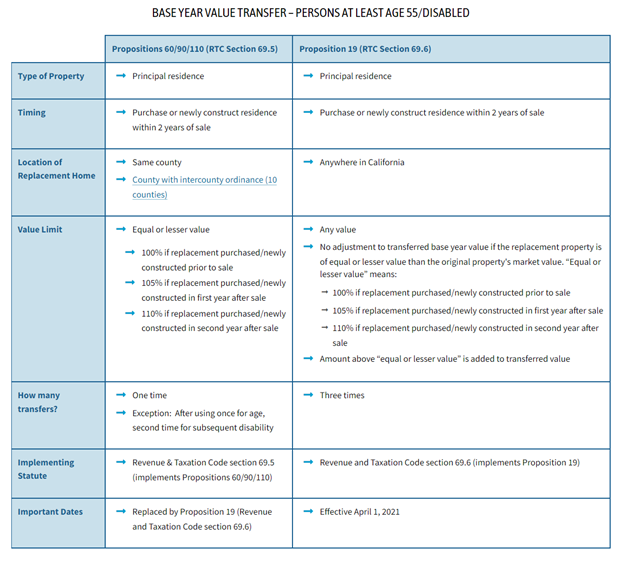
- Property Tax Portability: Proposition 19 introduces a statewide property tax portability system, allowing homeowners aged 55 and older (or those with severe disabilities) to transfer their current property tax assessment to a replacement property of equal or lesser value anywhere in California. This was previously limited to specific regions and had more restrictive conditions.
The aim of Proposition 19 is twofold: to increase property tax revenue for local governments and school districts by limiting reassessment exclusions and to encourage the sale of larger, older homes by providing tax relief for seniors and those with disabilities seeking to move.
Eligibility Criteria for Property Tax Base Transfers Under Prop 19
Navigating Proposition 19 requires a clear understanding of who qualifies for its benefits and under what conditions. The primary focus of this article is on the transfer of a primary residence’s tax base, often referred to as “tax portability” or “intergenerational transfer” depending on the specific scenario.
Transfers to Children or Grandchildren
Proposition 19 significantly modified the rules for transferring property to children or grandchildren. The key change is that the recipient must occupy the property as their principal residence.
- Primary Residence Exclusion: A parent or grandparent can transfer their principal residence to a child or grandchild without reassessment, provided the recipient moves into the property and claims it as their principal residence. This is a crucial distinction from the previous Proposition 58, which had broader exclusions.
- Disability/Illness Clause: There are provisions for transferring to a child who is severely disabled or was disabled prior to the transfer, even if they cannot move in immediately. However, specific documentation and adherence to strict timelines are required.
- Value Limitations and Additional Taxes: If the replacement property’s value exceeds the original property’s value, the excess value will be added to the taxable base of the replacement property. Furthermore, if the property is transferred to a child who does not make it their principal residence, it will be reassessed at current market value.
Property Tax Portability for Seniors and Disabled Individuals
Proposition 19 created a new, statewide system for property tax portability, benefiting seniors and individuals with severe disabilities who wish to downsize or relocate.
- Age and Disability Requirements: To qualify, the claimant must be at least 55 years old or have a severe and permanent disability. A physician’s verification is typically required for disability claims.
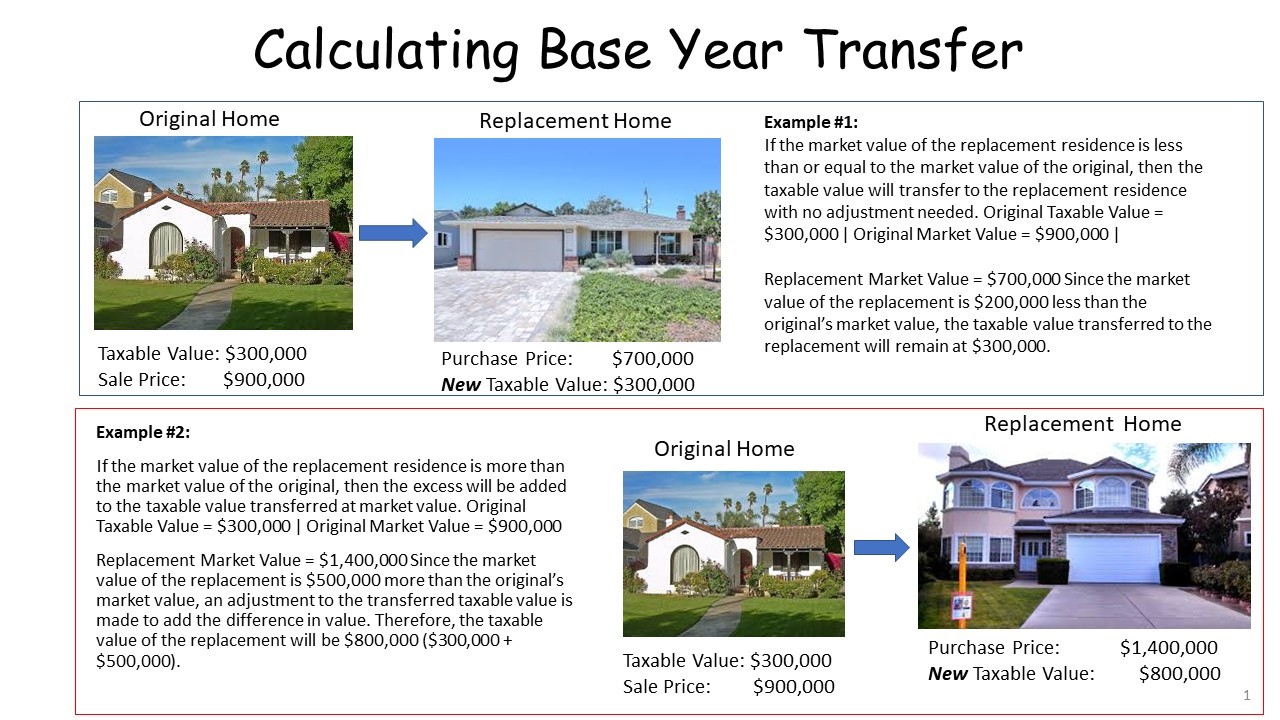
- Replacement Property Value: The portability benefit applies when the replacement property is of equal or lesser market value than the original primary residence.
- Equal or Lesser Value: If the replacement property’s market value is less than or equal to the original property’s market value, the taxable value of the original property is transferred to the replacement property.
- Higher Value: If the replacement property’s market value is greater than the original property’s market value, the taxable value of the replacement property will be its current market value, minus the value difference between the original and replacement property, plus the original taxable value. This effectively means a portion of the value difference is added to the tax base.
- Geographic Scope: This portability benefit is now available for replacement properties located anywhere in California, a significant expansion from previous regional limitations.
- Frequency of Use: A claimant can utilize this property tax portability benefit up to three times during their lifetime.
- Timeline: The replacement property must be purchased or newly constructed within two years of the sale of the original property.
It’s important to note that these provisions are complex and have specific requirements. Consulting with a qualified tax advisor or real estate attorney is highly recommended to ensure all conditions are met.
The Process of Transferring Your Property Tax Base
Successfully transferring your property tax base under Proposition 19 involves a series of procedural steps. Understanding these steps and adhering to deadlines is crucial to avoid any disruptions or unintended reassessments.
Step 1: Determine Eligibility
The first and most critical step is to ascertain your eligibility. This involves:
- Age/Disability Verification: For the senior or disabled portability, confirm you meet the age (55+) or disability criteria. For intergenerational transfers, identify the recipient and their intent to use the property as their principal residence.
- Property Status: Ensure the property you are transferring is indeed your principal residence and that the replacement property will also qualify as a principal residence (for intergenerational transfers) or your new primary residence (for portability).
- Property Value Assessment: Obtain current market value assessments for both the original and potential replacement properties. This will help determine how the portability rules regarding value differences will apply.
Step 2: The Sale of the Original Property

When selling your original primary residence:
- Timeline Awareness: Be mindful of the two-year window from the date of sale to purchase or build your replacement property.
- Documentation: Keep meticulous records of the sale, including the sale date, the sale price, and any associated closing documents. This documentation will be essential for your claim.
Step 3: Acquiring the Replacement Property
The acquisition of your new property is where the core of the transfer process takes place.
- Purchase or Construction: You must either purchase a new property or build a new home. For new construction, the “commencement of construction” date will be a key factor in the two-year timeframe.
- Principal Residence Requirement: For intergenerational transfers, the child or grandchild must move in and establish it as their primary residence. For portability, you must occupy the replacement property as your primary residence.
- Value Comparison: If you’re using the portability benefit, compare the market value of the replacement property to your original property. This comparison will dictate how your tax base is calculated for the new property.
Step 4: Filing the Claim with the County Assessor
This is the most critical administrative step.
- Claim Forms: You will need to file specific claim forms with the county assessor’s office in the county where your replacement property is located. The primary forms are typically:
- Claim for Homeowners’ Exemption: If you are moving into a new primary residence.
- Claim for Property Tax Reassessment Exclusion (Intergenerational Transfer): For transfers to children or grandchildren.
- Claim for Property Tax Reassessment Exclusion (Portability): For seniors and disabled individuals.
- Deadlines: Pay close attention to the filing deadlines. Generally, claims for portability must be filed within one year of the purchase or completion of new construction of the replacement property. Intergenerational transfer claims often have different but equally important deadlines. Missing these deadlines can result in forfeiture of the benefit.
- Required Documentation: Be prepared to submit supporting documents, which may include:
- Deeds for both the original and replacement properties.
- Proof of age (e.g., driver’s license, birth certificate).
- Physician’s letter (for disability claims).
- Sale documents for the original property.
- For new construction, permits and contractor information.
Step 5: Assessor’s Review and Determination
Once filed, the county assessor’s office will review your claim. They will verify your eligibility, the property values, and the timeliness of your filing.
- Notification: You will receive a notification from the assessor’s office regarding the approval or denial of your claim.
- Appeals: If your claim is denied, you typically have the right to appeal the decision. The process and timelines for appeals vary by county.
Maximizing Benefits and Avoiding Pitfalls
Proposition 19, while offering significant advantages, is a complex piece of legislation. Proactive planning and careful execution can help homeowners maximize their benefits and steer clear of common pitfalls.
Strategic Planning for Intergenerational Transfers
For families considering passing down a primary residence, strategic planning is paramount.
- Early Consultation: Discuss plans with your children or grandchildren well in advance. Understand their intentions and ability to meet the principal residence requirement.
- Legal and Tax Advice: Engage with estate planning attorneys and tax professionals early in the process. They can help structure the transfer to comply with Prop 19 and other relevant laws, potentially using trusts or other legal vehicles.
- Documentation of Intent: Ensure there is clear documentation of the recipient’s intent to occupy the property as their primary residence. This can be as simple as a signed letter of intent.
- Understanding Value Implications: Be aware that if the replacement property’s value exceeds the original, the difference will be added to the tax base. Consider whether this is financially feasible for the recipient.
Leveraging Property Tax Portability Effectively
Seniors and disabled individuals can significantly benefit from the portability provisions if managed correctly.
- Scouting Replacement Properties: Begin exploring replacement properties early. Understand the market and typical price points in areas where you might want to move.
- Financial Projections: Work with a financial advisor or tax professional to project the property tax implications of various replacement property values. This will help you make informed decisions about what you can afford.
- Understanding the “Equal or Lesser Value” Rule: This is a key aspect. If you find a property that is slightly more expensive, understand precisely how the additional value will impact your annual tax bill. The formula can be nuanced: [New Taxable Value] = [Original Taxable Value] + ([Replacement Property Market Value] – [Original Property Market Value]).
- New Construction Considerations: If you plan to build a new home, be aware of the timeline for commencement of construction and completion. Ensure this aligns with the two-year window from the sale of your original home. Permits and construction start dates are critical documentation.
- Third Transfer Limitations: Remember you can only use this benefit three times in your lifetime. Plan for future moves if necessary.
Common Pitfalls to Avoid
- Missing Deadlines: This is the most common and detrimental mistake. The claim forms must be filed with the county assessor within the stipulated timeframe. Missing the deadline often means losing the benefit entirely.
- Incorrect Property Classification: Failure to use the property as a principal residence as required by law can lead to reassessment. This applies to both intergenerational transfers and portability.
- Inaccurate Property Valuations: Relying on outdated or informal valuations can lead to disputes with the assessor’s office. Obtaining professional appraisals is advisable.
- Misunderstanding the Nuances of Value Differences: The calculation for higher-value replacement properties can be complex. Ensure you fully understand how the additional value is factored into your new tax base.
- Failing to Consult Professionals: The complexity of property tax laws and Proposition 19 means that attempting to navigate it alone can lead to costly errors. Seeking advice from qualified real estate attorneys, tax advisors, and Certified Public Accountants (CPAs) is highly recommended. They can provide tailored guidance based on your specific circumstances and ensure all legal and tax requirements are met.
By understanding the intricacies of Proposition 19 and approaching the transfer process with meticulous planning and professional guidance, California homeowners can effectively leverage these provisions to their financial advantage, securing their financial future and easing the transition to new living situations.
LifeOutOfTheBox is a participant in the Amazon Services LLC Associates Program, an affiliate advertising program designed to provide a means for sites to earn advertising fees by advertising and linking to Amazon.com. Amazon, the Amazon logo, AmazonSupply, and the AmazonSupply logo are trademarks of Amazon.com, Inc. or its affiliates. As an Amazon Associate we earn affiliate commissions from qualifying purchases.