
For many drivers, the allure of tinted windows is undeniable. They offer a sleek aesthetic, enhanced privacy, and a noticeable reduction in interior heat and UV exposure, a particularly appealing prospect under the radiant California sun. However, the pursuit of these benefits must always align with the state’s stringent regulations. The question, “Is 15 tint legal in California?” delves into a complex area of vehicle code that every resident and visitor considering window tinting needs to understand thoroughly. Failing to comply can lead to frustrating traffic stops, costly fines, and the inconvenience of removing non-compliant tint. This article provides an insightful and professional guide to California’s window tint laws, helping you navigate the regulations and make informed lifestyle choices about your vehicle’s appearance and functionality.
Understanding California’s Window Tint Laws: The Fundamentals
The California Vehicle Code is precise regarding aftermarket window tinting, prioritizing driver and passenger safety, as well as the visibility necessary for law enforcement officers to perform their duties. Unlike some states with more relaxed rules, California maintains strict guidelines, particularly for front-facing windows. These regulations are designed to ensure that drivers have an unobstructed view of the road and that officers can clearly see occupants inside a vehicle during a stop, reducing potential safety risks.
The California Vehicle Code Overview
The primary sections of the California Vehicle Code that govern window tinting are sections 26708, 26708.5, and 26708.2. These sections collectively outline what is permissible and what is strictly prohibited. The laws differentiate significantly between the windshield, front side windows, and the rear side and back windows, reflecting varying safety concerns for each area of the vehicle. It’s not a blanket rule that applies uniformly around the car, which is a common misconception among drivers.
Why These Laws Exist: Safety and Visibility
At the core of California’s tint laws are two paramount considerations: safety and visibility. Tinting, especially very dark tint, can impair a driver’s ability to see pedestrians, cyclists, and other vehicles, particularly at night or in adverse weather conditions. From the perspective of law enforcement, being able to clearly see into a vehicle is crucial for officer safety during traffic stops. A driver’s hands, for example, must be visible to officers to de-escalate potential threats. These regulations, therefore, are not arbitrary but are rooted in public safety and the orderly enforcement of traffic laws, playing a significant role in the overall driving lifestyle experience in the state.
Decoding VLT: What Does “15 Tint” Actually Mean?
To answer the question about 15 tint, it’s essential to understand the terminology used in window tinting: Visible Light Transmission, or VLT. This metric is the cornerstone of all tinting regulations, dictating how much light can pass through the tinted window.
Light Transmission Explained
VLT is expressed as a percentage, indicating the proportion of visible light that penetrates the window. A higher VLT percentage means more light passes through, resulting in a lighter tint. Conversely, a lower VLT percentage signifies a darker tint, as less light is transmitted. For instance, a 70% VLT tint allows 70% of visible light to pass through, making it very light, almost clear. A 5% VLT tint, often referred to as “limo tint,” is extremely dark, allowing only 5% of light to pass. When you hear “15 tint,” it refers to a VLT of 15%, meaning only 15% of visible light can penetrate that window. This makes 15% VLT a relatively dark tint.
Common Tint Percentages and Their Meanings
While 15% VLT is relatively dark, other common percentages include:
- 70% VLT: Often the lightest legal tint for front side windows in some states, offering minimal privacy but good UV and heat rejection.
- 50% VLT: A moderate tint, providing some privacy and glare reduction without being excessively dark.
- 35% VLT: A popular choice for a balance of privacy and visibility, commonly seen on many vehicles.
- 20% VLT: Noticeably dark, offering significant privacy, but often exceeding front window legal limits.
- 5% VLT: The darkest available, typically used only on rear windows where regulations allow.
Understanding these percentages is crucial for any driver in California, as the legal limits are defined by VLT.
Front vs. Rear: Specific Regulations for Different Windows
California’s window tint laws are not uniform across all windows of a vehicle. There’s a clear distinction between the windshield, front side windows, and the rear side and back windows, each with its own set of rules.
Windshield Restrictions
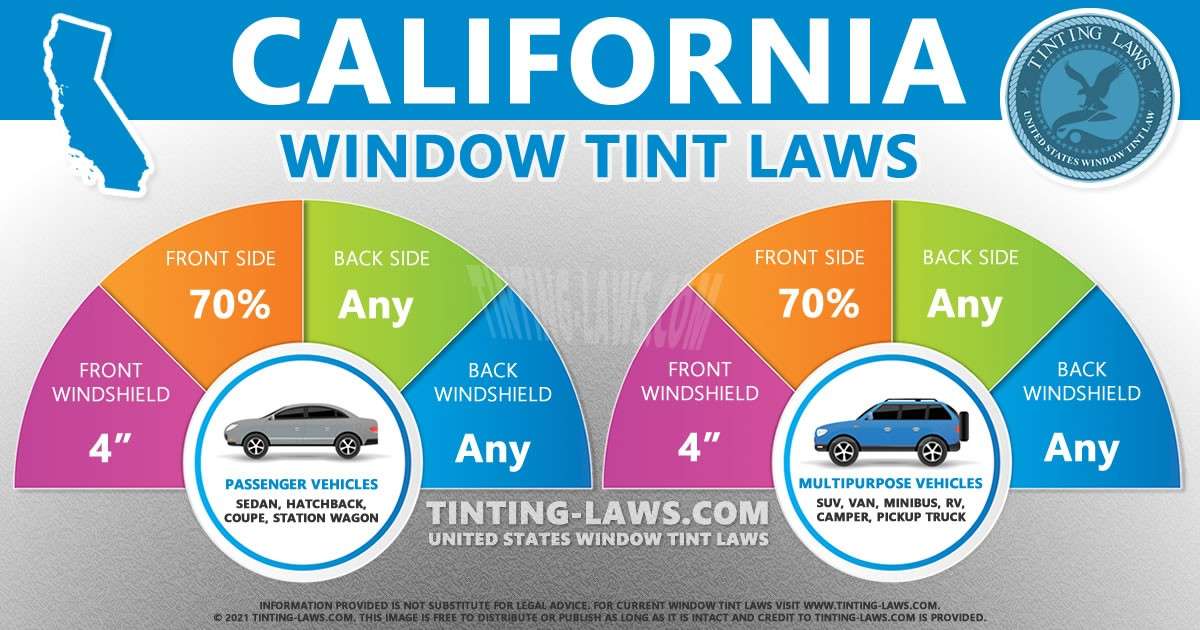
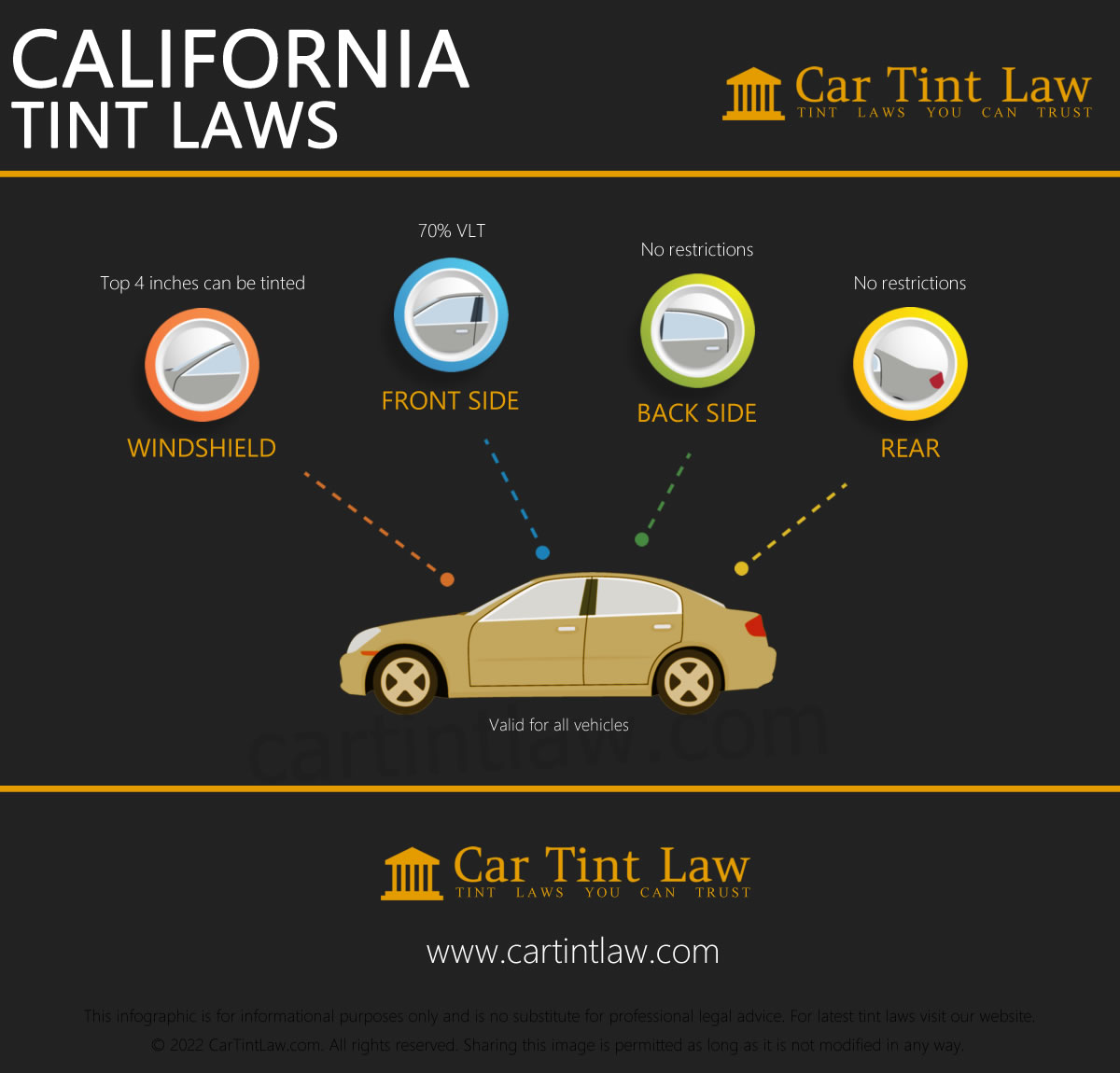
The windshield has the most stringent regulations. In California, non-reflective tint is permitted only on the topmost 4 inches of the windshield. Below this strip, the windshield must remain entirely untinted, allowing 100% of visible light to pass through. Any deviation from this rule is a violation and can lead to immediate citations. This ensures maximum visibility for the driver, critical for safe operation of the vehicle.
Front Side Windows: The Strict Rules
This is where the 15 tint question becomes directly relevant. For the front side windows – those to the immediate left and right of the driver – California law mandates that the tint must allow at least 70% of visible light to pass through. This means the tint must have a VLT of 70% or higher. Furthermore, the tint cannot be reflective, and it must be clear and colorless.
Given that 15 tint allows only 15% of visible light to pass through, it is unequivocally illegal for the front side windows in California. This percentage falls far below the mandated 70% VLT. Drivers with 15 tint on their front windows are at high risk of being pulled over and cited by law enforcement.

Rear Side and Rear Window: More Leniency (But Not Unlimited)
The regulations become significantly more lenient for the rear side windows (behind the driver) and the rear window (back glass). For these windows, there are no specific VLT limits. This means you can apply a tint of any darkness, including 15% VLT or even darker, provided it meets other criteria.
However, there are still important stipulations:
- Non-Reflective Material: The tint material used on rear windows must not be reflective.
- Dual Side Mirrors: If the rear window is tinted, the vehicle must be equipped with working dual side mirrors. This is a crucial safety measure to compensate for potentially reduced visibility through a dark rear window. Most modern vehicles come standard with dual side mirrors, but it’s a point to verify.
So, while 15 tint is illegal for front side windows, it is generally permissible for the rear side and rear windows in California, assuming the vehicle has functioning dual side mirrors and the tint is non-reflective.
Penalties and Enforcement: The Consequences of Non-Compliance
Driving with illegal window tint in California is not just a minor infraction; it can lead to various penalties and disruptions to your daily driving lifestyle. Law enforcement takes these violations seriously due to their direct impact on safety.
Fines and Fix-It Tickets
The most common consequence for illegal tint is a “fix-it ticket,” officially known as a “correction notice.” This requires the driver to remove the non-compliant tint and provide proof of correction to the court, typically by having an officer sign off on the remedied vehicle. While the initial base fine for a tint violation might seem modest, usually around $25, the total cost can escalate significantly. If you fail to get the tint removed and signed off by the due date, the fine can increase substantially, often reaching hundreds of dollars, plus court fees and administrative costs. This can quickly turn a minor issue into a major financial burden.
The Impact on Your Driving Record
While a tint violation is generally a non-moving infraction and does not typically add points to your driving record, repeated offenses or failure to address a fix-it ticket can lead to more severe consequences. It can also be an aggravating factor if you are pulled over for other violations, potentially leading to more scrutiny from law enforcement.
Insurance Implications
While direct insurance premium increases solely for tint violations are rare, having multiple vehicle code violations on your record, even minor ones, can sometimes influence your insurer’s perception of you as a risk. More importantly, if an accident were to occur and your illegal tint was deemed a contributing factor (e.g., obscuring your vision), it could potentially affect liability claims, although this is less common. The primary concern remains the direct fines and the inconvenience of compliance.
Practical Considerations and Lifestyle Choices for California Drivers
For those living and driving in California, understanding and adhering to tint laws is a practical aspect of vehicle ownership. It balances personal preference with legal requirements and safety.
Benefits of Window Tinting (Heat Reduction, Privacy, Aesthetics)
Despite the strict laws, legal window tinting still offers considerable benefits. A lighter, compliant tint can significantly reduce the amount of heat entering your vehicle, making your air conditioning more efficient and the cabin more comfortable during California’s warm months. It also provides excellent UV protection, safeguarding your skin and preventing interior fading. Even a 70% VLT tint can offer a subtle aesthetic upgrade and a degree of privacy without violating the law. For rear windows, where darker tints are allowed, the privacy and heat reduction benefits are even more pronounced, enhancing the overall driving experience.
Choosing the Right Tint for Your California Lifestyle
When selecting a tint, always prioritize compliance. For front side windows, stick to a high-quality, non-reflective tint that explicitly states it meets California’s 70% VLT requirement. Many professional tint shops are well-versed in these regulations and can guide you toward legal options. For rear windows, you have more freedom, allowing you to choose darker shades like 15% VLT for maximum privacy and heat control, provided you have dual side mirrors. Ceramic tints, while often more expensive, are an excellent choice as they offer superior heat rejection and UV protection without necessarily being extremely dark, making them a practical and compliant option for the front.
Medical Exemptions: A Niche Consideration
California Vehicle Code Section 26708.2 provides for medical exemptions in certain circumstances. If a driver or passenger has a medical condition that makes them unusually susceptible to sunlight (e.g., porphyria, severe photosensitivity), a physician can provide a letter of exemption. This letter may allow for a darker tint on specific windows than typically permitted. However, even with an exemption, there are often limitations on how dark the tint can be, and the exemption must always be carried in the vehicle and presented to law enforcement upon request. This is a specific and somewhat rare scenario, but it’s an important provision for those with legitimate medical needs.
Tips for Ensuring Compliance and Avoiding Issues
To ensure your window tint aligns with California law and to avoid unnecessary hassle:
- Professional Installation: Always have your tint installed by a reputable, experienced professional shop that is familiar with California’s specific regulations. They often use VLT meters to verify compliance.
- Know Your VLT: If you’re unsure about your current tint, many tint shops or even law enforcement agencies can measure the VLT for you.
- Resist the Darker Temptation: While a darker tint like 15% VLT on the front windows might look appealing, the legal risks in California outweigh the aesthetic benefits.
- Inspect Before Purchase: If buying a used car, check the window tint. If it’s too dark on the front windows, factor in the cost and effort of removal or replacement.
- Keep Documentation: If you have a medical exemption, keep the signed physician’s letter readily accessible in your vehicle.
In conclusion, while 15 tint offers significant darkness and privacy, it is definitively not legal for the front side windows or below the top 4 inches of the windshield in California. It is, however, generally permissible for the rear side and rear windows, provided the vehicle has dual side mirrors and the tint is non-reflective. Understanding these nuances is crucial for any driver in California to maintain a compliant, safe, and enjoyable driving experience, integrating this knowledge seamlessly into their automotive lifestyle choices.
LifeOutOfTheBox is a participant in the Amazon Services LLC Associates Program, an affiliate advertising program designed to provide a means for sites to earn advertising fees by advertising and linking to Amazon.com. Amazon, the Amazon logo, AmazonSupply, and the AmazonSupply logo are trademarks of Amazon.com, Inc. or its affiliates. As an Amazon Associate we earn affiliate commissions from qualifying purchases.