
For travelers planning a visit to the captivating landscapes of Arizona, a common point of confusion arises even before contemplating which natural wonders to explore: its time zone. Unlike most of the United States, Arizona maintains a unique relationship with time, particularly concerning Daylight Saving Time (DST). The straightforward answer is that Arizona predominantly observes Mountain Standard Time (MST) year-round. This distinction means that while many neighboring states “spring forward” and “fall back,” Arizona remains a constant, creating a temporal dance that requires a deeper understanding for seamless travel and interaction.
This article delves into the intricacies of Arizona’s time zone, exploring its historical context, practical implications for visitors, and the sole, significant exception that adds another layer of complexity. Understanding this temporal landscape is crucial for planning everything from flight arrivals in Phoenix or Tucson to guided tours of the Grand Canyon or business meetings across state lines.
Unraveling Arizona’s Unique Time Zone Status
At its core, Arizona’s time zone identity is defined by its steadfast adherence to Mountain Standard Time (MST) throughout the entire year. This choice sets it apart from the majority of the contiguous United States, which transitions between standard and daylight saving times.
The Core Rule: Mountain Standard Time (MST)
For the vast majority of Arizona, the clocks remain fixed on Mountain Standard Time. This means that during the winter months, from roughly early November to mid-March, Arizona’s time is indeed equivalent to that of other states observing Mountain Time. However, when those other states shift to Mountain Daylight Time (MDT) in the spring, Arizona does not adjust.
This creates an interesting dynamic:
- Winter Months (early November to mid-March): Arizona is on Mountain Standard Time, which is UTC-7. It aligns with states like Colorado, Utah, and New Mexico.
- Summer Months (mid-March to early November): While other Mountain Time states move to Mountain Daylight Time (UTC-6), Arizona remains on Mountain Standard Time (UTC-7). During this period, Arizona’s time effectively matches Pacific Daylight Time (PDT), making it one hour behind states observing MDT and one hour ahead of states observing Pacific Standard Time (PST).
This consistent approach simplifies daily life for residents, eliminating the bi-annual ritual of adjusting clocks. For travelers, however, it means being mindful of the calendar to understand whether Arizona is aligning with Mountain Time or effectively synchronizing with Pacific Time due to the DST exemption.
The Daylight Saving Time Exemption
The decision to opt out of Daylight Saving Time dates back to 1968. The primary rationale behind this choice is deeply rooted in Arizona’s climate. The state experiences intensely hot summers, with temperatures frequently soaring well above 100°F (38°C). Introducing an extra hour of daylight in the evening during these months would simply extend the period of extreme heat, pushing outdoor activities and energy consumption for air conditioning later into the night.
By maintaining Mountain Standard Time year-round, Arizona effectively shifts an hour of daylight from the evening to the morning during the summer, aligning with a more natural rhythm for its hot climate. This allows for earlier starts to the day, enabling outdoor activities, work, and errands to be completed before the peak heat sets in, and helps save energy by reducing the demand for air conditioning during the hottest part of the late afternoon and early evening. This practical approach reflects a local wisdom tailored to the unique environmental conditions of the desert Southwest.
The Navajo Nation Anomaly: A Puzzling Exception
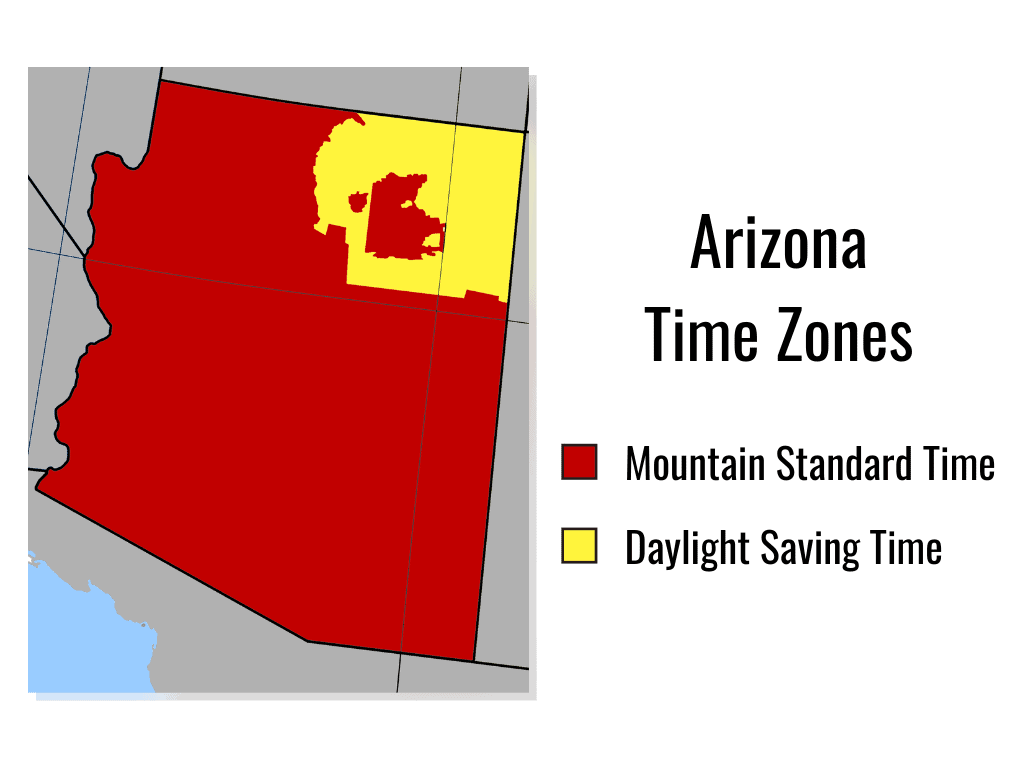
While the vast majority of Arizona observes Mountain Standard Time year-round, there is one significant and geographically substantial exception: the Navajo Nation. This autonomous tribal land, which spans parts of northeastern Arizona, New Mexico, and Utah, does observe Daylight Saving Time.
Why the Navajo Nation Observes DST
The Navajo Nation’s decision to observe Daylight Saving Time is primarily driven by practical and administrative reasons related to its multi-state jurisdiction. As its territory extends into Utah and New Mexico, both of which observe DST, maintaining a consistent time across the entire nation simplifies governance, commerce, and communication for its residents. If the Navajo Nation within Arizona did not observe DST, it would create three different time zones within the nation’s borders during the summer, leading to immense confusion and logistical challenges.
This means that from mid-March to early November, the Navajo Nation operates on Mountain Daylight Time (UTC-6), while the rest of Arizona remains on Mountain Standard Time (UTC-7). During the winter, when DST ends, the Navajo Nation reverts to Mountain Standard Time, aligning once again with the rest of Arizona.
Practical Implications for Visitors
For travelers exploring northeastern Arizona, particularly those visiting iconic sites within the Navajo Nation like Monument Valley or Canyon de Chelly, this time zone shift is critically important. A drive from Flagstaff (MST) into the Navajo Nation during summer months means “losing” an hour, even though you’re staying within the state’s geographical boundaries.
This distinction can impact:
- Tour Bookings: Guided tours, particularly those with fixed schedules, might be quoted in Navajo Nation time, requiring visitors to adjust their perception.
- Meeting Times: If engaging with local businesses or tribal services, always confirm the time zone.
- Travel Itineraries: Delays or early arrivals can occur if the time zone change isn’t factored into travel plans.
- Hopi Reservation: Further complicating matters, the Hopi Reservation, which is entirely surrounded by the Navajo Nation within Arizona, does not observe Daylight Saving Time, remaining on MST year-round, just like the rest of non-Navajo Arizona. This creates a unique “time island” within a “time zone within a time zone,” a true temporal puzzle for those navigating the region.
Always double-check the local time, especially when your itinerary involves crossing into or out of the Navajo Nation during the DST period.
Navigating Time Across Arizona: Practical Advice for Travelers
Understanding Arizona’s distinct approach to time is more than a trivial fact; it’s a vital piece of information for planning a smooth and enjoyable trip. Practical considerations span from initial bookings to daily activities.
Planning Your Itinerary: Flights, Check-ins, and Tours

When booking flights to Arizona, particularly to major airports like Phoenix Sky Harbor International Airport or Tucson International Airport, remember that all arrival and departure times will be listed in Mountain Standard Time (MST), regardless of the season. This means that during the summer, if you are flying in from a state observing Mountain Daylight Time, your clock will effectively “fall back” an hour upon arrival, even though Arizona isn’t “falling back” in the traditional sense. Conversely, coming from a state on Pacific Daylight Time will mean no time change upon arrival.
- Hotel Check-ins: Be aware of the time difference when coordinating check-in times, especially if your arrival involves crossing state lines or entering the Navajo Nation during DST.
- Tour Schedules: Confirm the local time zone for all scheduled tours, particularly those originating in different parts of the state or neighboring states. For instance, a Grand Canyon tour originating from Las Vegas, Nevada (PST/PDT), will operate on Pacific Time, requiring a time adjustment if you’re traveling from most of Arizona.
- Restaurant Reservations: Always clarify reservation times, especially if you’re traveling near the Navajo Nation or across state borders.
Communication Considerations: Business and Personal
For business travelers, the consistent MST year-round simplifies internal scheduling within the state but adds a layer of complexity for communications with external partners. During summer, when most of the United States is on daylight saving, Arizona will be:
- Three hours behind the East Coast (EDT)
- Two hours behind the Central Time Zone (CDT)
- One hour behind the Mountain Daylight Time Zone (MDT)
- The same time as the Pacific Daylight Time Zone (PDT)
This means that while it’s simpler to coordinate with California or Nevada in the summer, calls with the East Coast will be pushed even later into the Arizona afternoon. Personal calls to friends and family in other states will also require a quick mental calculation based on the season.
Understanding Border Towns and Neighboring States
Arizona’s unique time status is most keenly felt in border towns and when interacting with neighboring states.
- Utah, Colorado, New Mexico: These states observe Mountain Daylight Time in the summer. If you drive from Arizona into Utah during the summer, you will effectively jump forward an hour.
- California, Nevada: These states observe Pacific Daylight Time in the summer. During this period, Arizona’s MST aligns perfectly with their PDT, meaning there is no time change when crossing the border. However, in winter, when California and Nevada revert to Pacific Standard Time (PST), Arizona will be one hour ahead of them.
Areas like Lake Mead and the Colorado River near the Nevada border can be particularly confusing, as activities around the Hoover Dam might be scheduled in either Pacific Time or Arizona time depending on the specific location and the season. Always verify the local time and be prepared to adjust your watches and schedules accordingly.
Historical Context and Reasons Behind Arizona’s Choice
Arizona’s decision to forego Daylight Saving Time is not a recent whim but a deeply ingrained policy reflecting environmental, cultural, and energy-related considerations. The state experimented with DST briefly in 1918 and then again from 1967-1968, but ultimately decided against it due to significant local opposition.
The Hot Climate Argument
The most frequently cited and compelling reason for Arizona’s exemption is its extreme summer heat. Shifting daylight hours forward in the spring, as DST dictates, would mean that the sun would set an hour later. In a state where summer evenings are often the only tolerable time for outdoor activities, extending the period of intense heat further into the night would be counterproductive. Locals prefer to have sunlight earlier in the morning to start their days and finish outdoor tasks before the peak afternoon temperatures, and then have the sun set earlier to allow for a quicker cooldown. This preference for cooler evenings for recreation and comfort heavily influenced the decision.
Energy Conservation and Lifestyle
Related to the climate, energy conservation played a role. In the era when DST was first implemented and then widely adopted, one of its primary goals was to save energy by reducing the need for artificial lighting in the evenings. However, in Arizona, extending daylight into the evening would simply prolong the need for air conditioning, potentially leading to an increase in energy consumption rather than a decrease. The state’s fixed Mountain Standard Time schedule aligns better with a lifestyle that seeks to avoid the midday sun, allowing residents to enjoy cooler mornings and evenings without the added burden of an extended hot afternoon.
A Legacy of Independent Thinking
Beyond the practicalities of climate and energy, Arizona’s choice also reflects a streak of independence. The state has historically charted its own course on various policy matters, and the time zone decision is a testament to this self-determination. It’s a pragmatic choice tailored to the unique conditions of the region, prioritizing local needs and comfort over national standardization. This unique approach contributes to the distinctive character of the Arizona experience.
The Broader Impact of Arizona’s Time Zone on Travel and Daily Life
Arizona’s steadfast adherence to Mountain Standard Time year-round shapes more than just clock adjustments; it subtly influences daily rhythms, travel planning, and the overall identity of the state.
Syncing with Neighboring States
The most visible impact is the dynamic relationship with neighboring states. During the spring and summer, Arizona becomes effectively synchronized with California and Nevada (both on PDT), which simplifies travel and communication with these western neighbors. However, it creates a one-hour difference with Utah, Colorado, and New Mexico (all on MDT). This temporal oscillation requires residents and businesses in Arizona to be acutely aware of the calendar and the corresponding time differences when dealing with inter-state matters. For travelers, it means always checking the local time when crossing a state border, especially if relying on public transport schedules or meeting pre-arranged contacts.
Seasonal Adjustments and the Perpetual Clock
For those living within Arizona, the lack of bi-annual time changes is often seen as a blessing. It eliminates the disruptions to sleep patterns and daily routines that many elsewhere experience. The “perpetual clock” fosters a consistent daily rhythm throughout the year. For visitors, this means that once you understand the core rule and the Navajo Nation exception, navigating time within the state becomes straightforward. The consistency contributes to the laid-back, unhurried vibe that many find appealing in Arizona.

Enhancing the Arizona Experience
Ultimately, Arizona’s unique time zone policy contributes to its distinct character. It’s a subtle yet significant detail that underscores the state’s pragmatic approach to its environment and its independent spirit. For travelers, this insight into Arizona’s time-keeping adds to a richer understanding of the destination. It’s not just about what time it is, but why it is that time, reflecting the rhythm of life adapted to the desert sun. So, when you visit, remember that Arizona lives on Mountain Standard Time year-round, a decision deeply embedded in its landscape and lifestyle, creating a truly unique Arizona experience.
LifeOutOfTheBox is a participant in the Amazon Services LLC Associates Program, an affiliate advertising program designed to provide a means for sites to earn advertising fees by advertising and linking to Amazon.com. Amazon, the Amazon logo, AmazonSupply, and the AmazonSupply logo are trademarks of Amazon.com, Inc. or its affiliates. As an Amazon Associate we earn affiliate commissions from qualifying purchases.