
The question of whether California observes Pacific Time (PT) or Eastern Time (ET) is a common point of confusion for many, especially those planning travel or business operations across the United States. The answer, unequivocally, is Pacific Time (PT). However, understanding the nuances of time zones, particularly in a geographically diverse country like the United States, is crucial for seamless coordination and efficient planning. This exploration delves into the time zone conventions of California, the broader context of North American time zones, and the practical implications for travelers and businesses alike.
Understanding North American Time Zones
The United States is divided into several standard time zones, each reflecting the Earth’s rotation and astronomical noon. These zones are essential for standardizing time across vast distances, facilitating communication, transportation, and daily life. The primary time zones, moving from east to west, are:
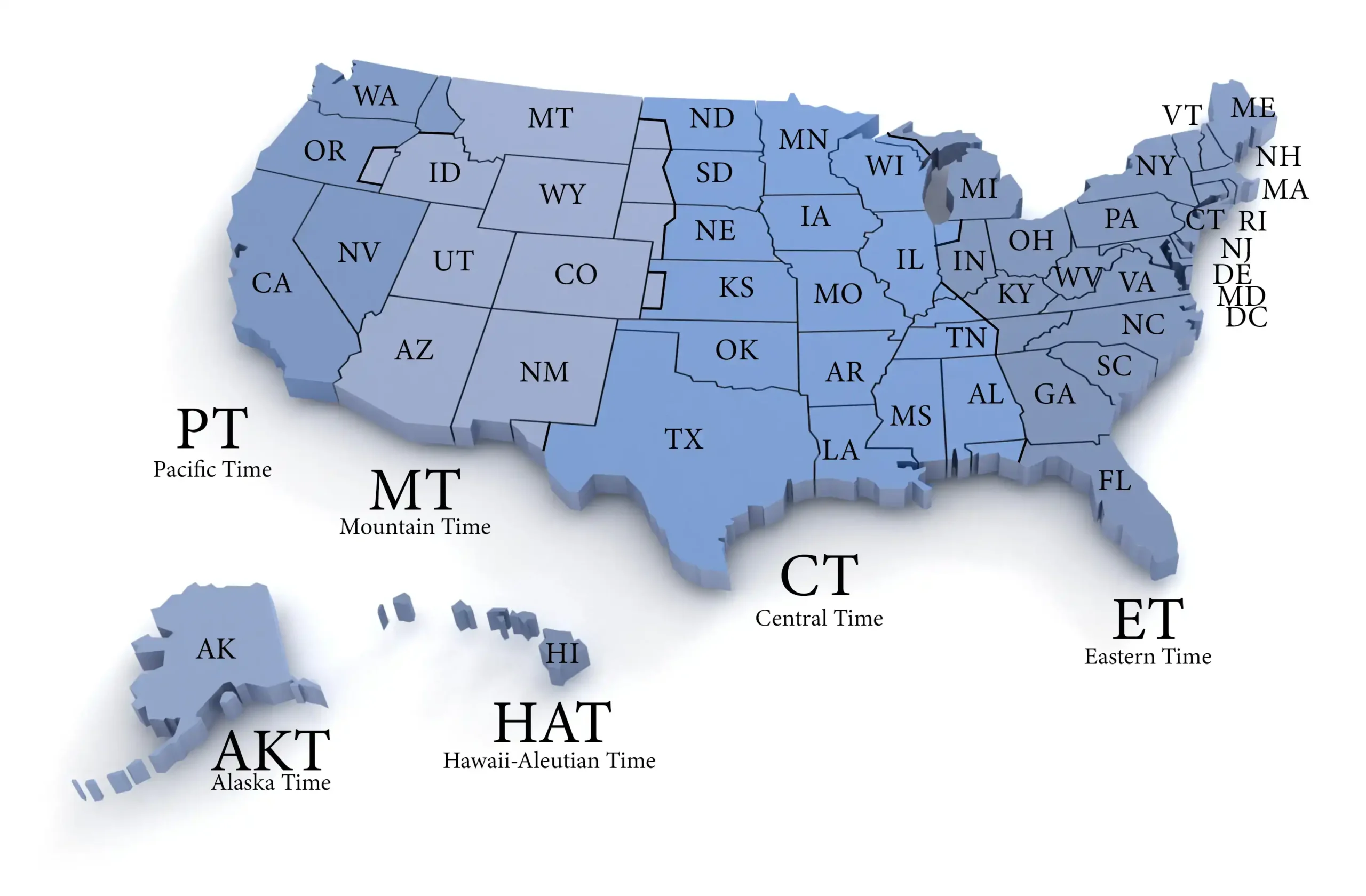
- Eastern Time (ET): This zone covers the easternmost parts of the United States, including major cities like New York City, Washington D.C., and Miami. It is the earliest time zone observed in the contiguous United States.
- Central Time (CT): Located west of the Eastern Time Zone, this zone includes states like Texas, Illinois, and Louisiana.
- Mountain Time (MT): This zone is found west of Central Time and encompasses states like Colorado, Arizona (though Arizona has unique daylight saving rules), and parts of Montana.
- Pacific Time (PT): This zone covers the westernmost contiguous states, including California, Oregon, and Washington.
- Alaska Time (AKT): This zone covers most of Alaska.
- Hawaii-Aleutian Time (HST): This zone includes Hawaii and the westernmost Aleutian Islands of Alaska.
The distinction between Standard Time and Daylight Saving Time (DST) further complicates these zones. During DST, clocks are typically moved forward by one hour. For example, Eastern Standard Time (EST) becomes Eastern Daylight Time (EDT), and Pacific Standard Time (PST) becomes Pacific Daylight Time (PDT). The observance of DST varies by state and even by county within a state, but for the most part, the continental United States follows this pattern.
Pacific Time in California
California, the most populous state in the United States, consistently operates on Pacific Time (PT). This means that when it is noon in New York City (ET), it is 9:00 AM in Los Angeles or San Francisco (PT). This three-hour difference is a significant factor for anyone planning to travel to, from, or within California.
During the period of Daylight Saving Time, California observes Pacific Daylight Time (PDT). This adjustment means that the time difference relative to other zones remains consistent. For instance, the three-hour gap between ET and PT persists, whether they are observing standard or daylight saving times. The decision to observe DST was codified in California through the Uniform Time Act of 1966, with subsequent state-level legislation refining its application.
Why Not Eastern Time?

The geographical location of California on the western coast of the North American continent dictates its time zone. Time zones are primarily determined by longitude, with each zone generally spanning about 15 degrees of longitude. As California is significantly west of the regions observing Eastern Time, it naturally falls into a later time zone. To adopt Eastern Time would mean that sunrise and sunset in California would occur drastically out of sync with the natural progression of daylight, leading to considerable societal and practical disruptions. For example, what would be 6 AM in the morning on the East Coast would be 3 AM in California, making waking hours for work and school impractical.
Practical Implications for Travel to California
For travelers planning a trip to the Golden State, understanding the PT designation is paramount. Whether you’re heading to the beaches of Southern California, the wine country of Napa Valley, or the vibrant city of San Francisco, all activities, flight schedules, and hotel check-ins will be based on Pacific Time.
Air Travel and Flight Schedules
When booking flights to or from California, always verify the local time of arrival and departure. A flight departing New York City at 10:00 AM ET might arrive in Los Angeles at 1:00 PM PT. While the flight duration itself is important, the time zone shift directly impacts your perceived arrival time. Jet lag can also be a factor, as crossing multiple time zones requires your body’s internal clock to adjust.
Accommodation and Activities
Hotels, resorts, and tour operators in California will operate on Pacific Time. This means that check-in and check-out times, as well as the timing of organized tours and activities, will adhere to PT. If you’re attending an event or booking a reservation in California while still on the East Coast, remember to subtract three hours from the stated ET to get the correct PT. For instance, a 7:00 PM ET reservation would correspond to a 4:00 PM PT reservation.
Business and Communication
For businesses operating with teams or clients in California, adhering to PT is non-negotiable. Conference calls, meetings, and project deadlines need to be meticulously coordinated to account for the time difference. Using world clocks or scheduling tools that automatically adjust for time zones can prevent miscommunications and ensure smooth operations. It’s often a good practice to confirm meeting times in both the sender’s and recipient’s local time zones.

California’s Time Zone: A Summary
In summary, California observes Pacific Time (PT). This includes both Pacific Standard Time (PST) during the winter months and Pacific Daylight Time (PDT) during the summer months when Daylight Saving Time is in effect. The three-hour difference between PT and ET is a constant consideration for anyone traveling between these regions or conducting business that spans across the country. By understanding and respecting these time zone differences, you can ensure a more organized and enjoyable experience, whether you are visiting California for leisure or engaging in professional activities within its borders. The consistent application of Pacific Time allows for a predictable daily rhythm across the entire state, from the northern forests to the southern deserts, and across its major metropolitan hubs like San Diego and San Jose.
LifeOutOfTheBox is a participant in the Amazon Services LLC Associates Program, an affiliate advertising program designed to provide a means for sites to earn advertising fees by advertising and linking to Amazon.com. Amazon, the Amazon logo, AmazonSupply, and the AmazonSupply logo are trademarks of Amazon.com, Inc. or its affiliates. As an Amazon Associate we earn affiliate commissions from qualifying purchases.