
Navigating the legal landscape of any activity while traveling or exploring a new locale is paramount. For those with a penchant for the unconventional or a need for resourcefulness, understanding the legality of dumpster diving in Oklahoma is crucial. This practice, often shrouded in a mix of societal judgment and legal ambiguity, has varying interpretations across jurisdictions. This article delves into the specific regulations, historical context, and practical considerations surrounding dumpster diving in the Sooner State, offering clarity for adventurers, urban explorers, or anyone curious about this often-misunderstood pursuit.
Understanding the Legal Framework: Beyond Trespassing
The legality of dumpster diving is not a straightforward “yes” or “no” answer in most places, and Oklahoma is no exception. The primary legal considerations revolve around two key areas: property rights and public health.
Private Property vs. Public Access
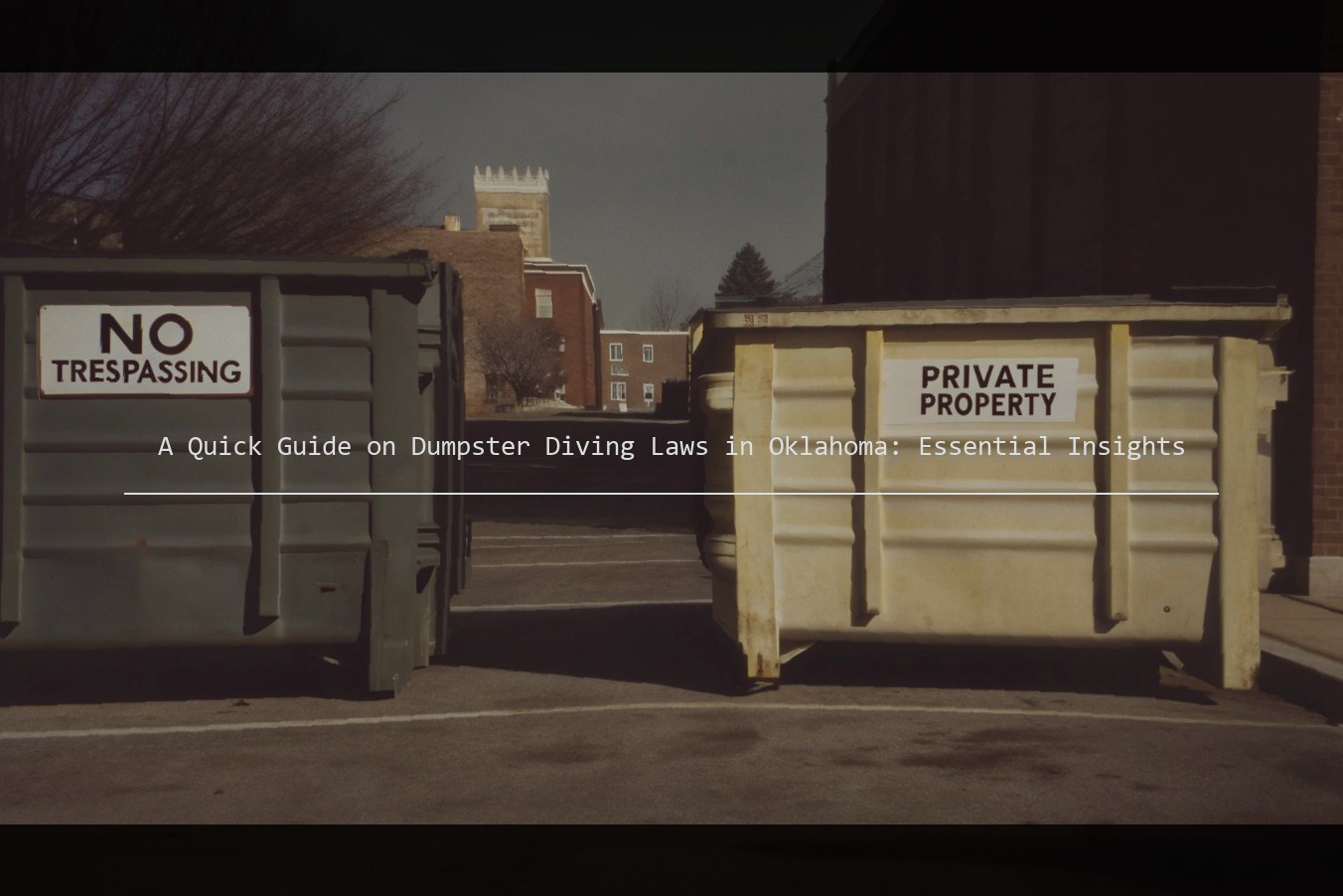
At its core, the issue often boils down to whether the dumpster is located on private property or public property. Dumpster diving on private property without explicit permission is almost universally considered trespassing. This applies to dumpsters situated behind private residences, businesses, or on privately owned land. Trespassing can lead to citations, fines, and in some cases, more severe legal consequences.
- Commercial Properties: Many businesses in Oklahoma, particularly larger retail chains and restaurants, often secure their dumpsters. This can involve locking them, placing them in fenced areas, or posting “No Trespassing” signs. Even if a dumpster appears accessible, entering a secured area or a fenced enclosure constitutes trespassing.
- Residential Properties: While less frequently enforced in residential areas, diving in dumpsters behind private homes is also legally problematic. Homeowners have a right to privacy and property, and unauthorized access to their waste disposal areas can be viewed as an invasion of that.
- Public Areas: Dumpsters located in public parks, city-owned lots, or on the immediate right-of-way of public streets are generally considered more accessible. However, even in these scenarios, local ordinances can come into play, and the intent behind the activity might be scrutinized.
The Supreme Court’s Stance and Its Echoes in Oklahoma
A landmark Supreme Court case, California v. Greenwood (1988), established that individuals do not have a reasonable expectation of privacy in garbage left out for collection. This ruling, concerning drug evidence found in trash bags left on the curb, has had a significant impact on how dumpster diving is viewed nationwide. The logic is that once trash is placed in a publicly accessible area for collection, it is considered abandoned property.
While California v. Greenwood primarily addressed privacy rights in relation to criminal investigations, its principle of “abandoned property” often informs the legal arguments surrounding dumpster diving. In Oklahoma, this means that if trash is left in a location where the public has access for collection, and it is not otherwise secured, it may be considered legally permissible to sort through. However, this is a nuanced interpretation and does not grant a blanket right.
Local Ordinances and City-Level Regulations
It is imperative to understand that state laws are often supplemented, or in some cases superseded, by local ordinances. Cities and towns within Oklahoma may have specific rules governing waste management, public health, and access to waste receptacles.
- Public Health Concerns: Some local regulations might prohibit tampering with trash due to public health and sanitation concerns. Dumpsters can harbor disease-carrying pests and bacteria, and authorities may wish to prevent individuals from coming into contact with potentially hazardous materials.
- Waste Management Policies: Many municipalities have contracts with specific waste management companies. Unauthorized interference with these services could be viewed as a violation of local waste management policies.
- Specific Prohibitions: A thorough review of municipal codes for cities like Oklahoma City or Tulsa would be necessary to identify any explicit bans or regulations on scavenging from dumpsters. These ordinances are often found in sections pertaining to public nuisances, sanitation, or property maintenance.
The Practical Realities and Potential Risks
Beyond the strict letter of the law, there are practical considerations and risks associated with dumpster diving in Oklahoma that prospective divers should be aware of.
Safety First: A Paramount Concern
Dumpster diving is not without its dangers. Even if legally permissible in a given location, the physical risks are significant.
- Sharp Objects and Hazardous Materials: Dumpsters can contain broken glass, sharp metal, syringes, chemicals, and decaying organic matter. These present risks of cuts, puncture wounds, infections, and exposure to hazardous substances.
- Unstable Environments: Dumpsters themselves can be unstable. Climbing into or reaching into a large commercial dumpster carries the risk of falling, getting trapped, or being injured by shifting contents.
- Biological Hazards: The decomposition of waste can lead to the growth of harmful bacteria and fungi. Inhaling airborne particles or coming into contact with contaminated materials can cause illness.
- Animal Encounters: Dumpsters can attract rodents, insects, and sometimes larger animals, posing a risk of bites or disease transmission.

Property Damage and Criminal Charges
Even in situations where the intent might be to scavenge abandoned goods, actions can be misinterpreted.
- Damaging Property: If a dumpster is locked, and an individual attempts to force it open, they could face charges for property damage, regardless of the legality of accessing the contents once inside.
- Loitering and Suspicion: Engaging in dumpster diving in areas or at times that might appear suspicious could lead to law enforcement intervention, even if no specific law is being broken. Individuals may be questioned for loitering or other offenses if their behavior draws undue attention.
- Civil Liability: While criminal charges are the primary concern, a property owner could potentially pursue civil action for damages or trespass if they can demonstrate harm caused by a dumpster diver.
The “Intent” Factor
In many legal interpretations, the intent behind entering private property or accessing a dumpster can be a deciding factor. If the intent is clearly to scavenge for personal use, it might be viewed differently than, for example, a business owner attempting to reclaim their discarded inventory. However, this is a gray area and not a guaranteed defense.
Case Studies and Local Enforcement Trends
While there are no widely publicized, high-profile legal battles specifically over dumpster diving in Oklahoma that set clear statewide precedents, the general trends in other states offer valuable insights. Many jurisdictions have moved towards stricter enforcement of trespassing laws rather than enacting outright bans on scavenging itself.
- Emphasis on Trespassing: Law enforcement often prioritizes responding to calls about trespassing. If a dumpster is on private property and secured, or if signs are posted, an individual found there could be cited for trespassing.
- Business Policies: Many businesses in Oklahoma have adopted a zero-tolerance policy for dumpster diving on their premises, often posting signs and instructing security or employees to report any observed activity to the police.
- Public vs. Private Distinction: The most significant factor in enforcement appears to be the clear distinction between public and private property. Dumpsters in well-trafficked public areas, if not secured, are less likely to draw immediate legal action compared to those in secluded alleys behind businesses.
Navigating the Ethical and Societal Landscape
Beyond the legalities, dumpster diving occupies a complex ethical and societal space.
Resourcefulness and Sustainability
For some, dumpster diving is a means of survival or a way to reduce waste and promote sustainability. Discovering usable items that would otherwise be discarded aligns with principles of a circular economy and conscious consumption. This perspective often clashes with the commercial interests of businesses and waste management companies.
Perceptions and Stigma
Societally, dumpster diving often carries a stigma, associated with poverty or desperation. This perception can influence how individuals engaging in the practice are viewed by others and, consequently, how local authorities might approach the situation.

Responsible Practices
Individuals who choose to engage in dumpster diving, regardless of the legal standing, are often advised to do so responsibly. This includes:
- Minimizing Disruption: Not leaving a mess or damaging property.
- Respecting Signage: Heeding “No Trespassing” signs and other warnings.
- Prioritizing Safety: Wearing protective gear and being aware of surroundings.
- Understanding Local Laws: Researching city and county ordinances before engaging in the activity.
In conclusion, while the Supreme Court’s ruling in California v. Greenwood suggests a legal basis for accessing abandoned trash in publicly accessible areas, the specific application in Oklahoma is heavily influenced by local ordinances, property ownership, and the practical considerations of safety and public health. Trespassing remains the most significant legal hurdle, and individuals should exercise caution and diligence to understand the specific regulations of any area they are considering exploring.
LifeOutOfTheBox is a participant in the Amazon Services LLC Associates Program, an affiliate advertising program designed to provide a means for sites to earn advertising fees by advertising and linking to Amazon.com. Amazon, the Amazon logo, AmazonSupply, and the AmazonSupply logo are trademarks of Amazon.com, Inc. or its affiliates. As an Amazon Associate we earn affiliate commissions from qualifying purchases.