
For travelers planning a trip to the Sunshine State, understanding its time zones is a fundamental step in ensuring a smooth and enjoyable experience. While much of Florida operates on Eastern Time, a significant western portion adheres to Central Time. This geographical split can lead to confusion if not properly addressed during itinerary planning, affecting everything from flight schedules to dinner reservations and synchronized activities with travel companions. Delving into this nuance is essential for any visitor aiming to maximize their time in this diverse destination.
The Dual Time Zones of the Sunshine State
Florida’s unique geographical shape and proximity to neighboring states (Alabama and Georgia) dictate its time zone distribution. The vast majority of the state, encompassing its most famous cities and attractions, falls within the Eastern Time Zone. This includes popular destinations like Miami, Orlando, Tampa, and Jacksonville. When observing Daylight Saving Time, these areas switch from Eastern Standard Time (EST) to Eastern Daylight Time (EDT).
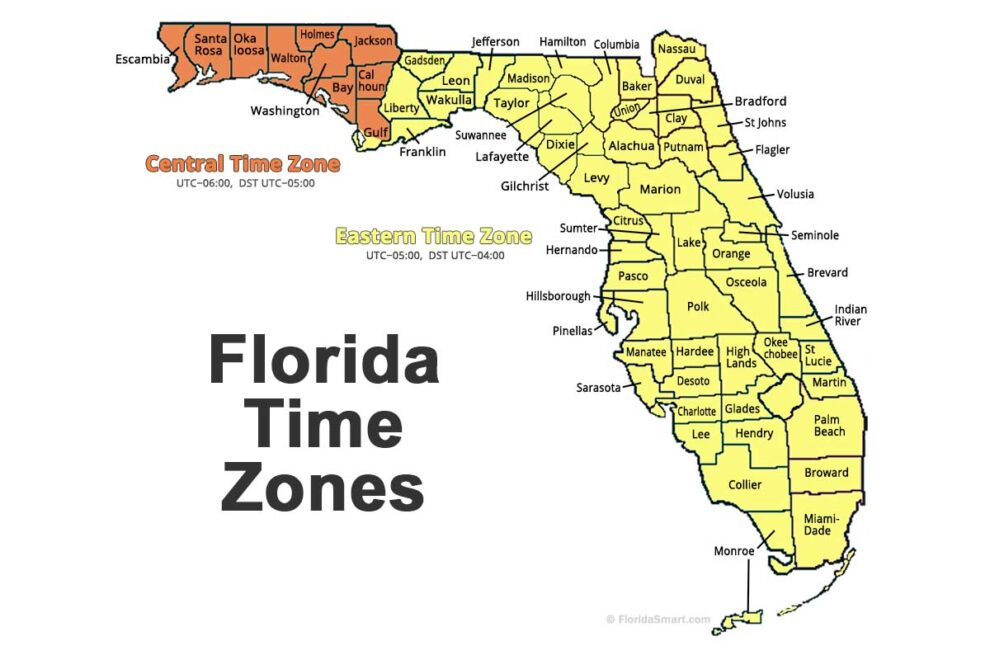
However, the westernmost part of the Florida Panhandle operates on Central Time. This region, bordering Alabama to the west, observes Central Standard Time (CST) and Central Daylight Time (CDT). The dividing line between the two time zones roughly follows the Apalachicola River and extends south through Gulf County. This means that cities west of this line, such as Pensacola, Destin, Fort Walton Beach, and Panama City Beach, are one hour behind the rest of Florida. East of this line, including places like Tallahassee, Port St. Joe, and Mexico Beach, the state reverts to Eastern Time. This time zone boundary can be particularly impactful for travelers moving across the Panhandle, requiring a conscious adjustment of watches and schedules.
Navigating Time Zones for Travel Planning
The existence of two time zones within Florida necessitates careful planning for travelers, especially those embarking on a multi-city tour or coordinating with others arriving from different regions. Overlooking this detail can lead to missed connections, late arrivals, or simply confusion.
Booking Flights and Ground Transportation
When booking flights into or out of Florida, always verify the local time for arrival and departure. Airports like Pensacola International Airport (PNS) and Northwest Florida Beaches International Airport (ECP) primarily serve the Central Time zone. Conversely, major hubs such as Orlando International Airport (MCO), Miami International Airport (MIA), and Tampa International Airport (TPA) are firmly in Eastern Time. A common mistake is assuming all arrival times listed on booking sites are in the traveler’s home time zone or the dominant Eastern Time of Florida. Always double-check the local time zone indication provided by airlines and ride-sharing apps. This also applies to bus or train schedules, where departure and arrival times across the time zone boundary require specific attention.
Synchronizing Itineraries and Appointments
For travelers venturing from Eastern Florida to the Panhandle, or vice-versa, remembering the one-hour shift is crucial for appointments, restaurant reservations, or tour bookings. A 7:00 PM dinner reservation in Destin (Central Time) would be 8:00 PM to someone arriving from Orlando (Eastern Time), potentially leading to a frustrating late arrival. Similarly, if coordinating with family or friends flying into different Florida airports, ensure everyone understands the correct local time for meeting points and activities. Use universal time formats (like military time or specifying EST/CST) when communicating across time zones to avoid ambiguity.
Impact on Attractions and Activities
The time zone difference can subtly influence the travel experience, particularly regarding sunrise, sunset, and attraction operating hours. While most major attractions like Walt Disney World Resort and Universal Orlando Resort are in Eastern Time, those visiting the Panhandle should consider how Central Time affects their perception of time.
Sunset and Daylight Hours

Travelers in the Florida Panhandle will experience sunsets one hour later by the clock than those in Eastern Florida. For those seeking stunning sunsets over the Gulf of Mexico, this means daylight hours extend further into the evening compared to their counterparts on the Atlantic coast. This can be a boon for evening activities, beach strolls, or outdoor dining. Conversely, sunrises will also occur later by the clock, potentially allowing for a more relaxed start to the day. For photographers or those planning specific outdoor activities tied to light conditions, this differential is an important consideration.
Park and Attraction Operating Hours
While many local businesses and attractions in the Panhandle will clearly state their hours in local Central Time, travelers should be mindful when moving between the two zones. A theme park, state park, or museum operating from 9 AM to 5 PM in Eastern Florida would functionally close at 4 PM for someone whose internal clock is still set to Central Time. Always confirm operating hours based on the local time zone of the attraction.
Practical Tips for Travelers
To minimize any time-related confusion during your Florida travels, adopt a few proactive strategies.
Adjusting Your Devices
Upon crossing into or out of the Panhandle region, ensure your smartphone and other electronic devices automatically update to the correct local time. Most modern smartphones have this feature enabled by default, but it’s wise to manually verify. Consider also setting a secondary clock on your device for the other Florida time zone if you plan frequent communication across the boundary.
Maps and GPS Awareness
When using GPS or mapping applications, pay close attention to estimated arrival times. These systems generally account for time zone changes, but a quick mental check can prevent surprises. If you are near the time zone boundary, your device might switch rapidly, which could briefly cause confusion. Familiarize yourself with the approximate location of the time zone line, which typically runs near the Apalachicola River for north-south travel, and along Highway 98 or other major routes in Gulf County.
Communication Clarity
When discussing plans with locals or other travelers, particularly if they are in a different Florida time zone, explicitly state the time zone you are referring to. For instance, instead of “Let’s meet at 6 PM,” say “Let’s meet at 6 PM Eastern Time” or “6 PM Central Time.” This simple clarification can prevent misunderstandings and keep your itinerary on track.

The Panhandle Exception: A Unique Travel Consideration
The Florida Panhandle offers a distinct travel experience, separate from the theme parks of Central Florida or the vibrant city life of South Florida. Known for its “Emerald Coast” beaches, charming coastal towns, and natural beauty, it attracts a different type of traveler. This area’s adherence to Central Time is part of its identity, often aligning more closely with its Alabama and Mississippi neighbors than with the rest of Florida.
For those specifically planning a trip to destinations like Pensacola, Destin, Panama City Beach, or the historic town of Apalachicola, mentally resetting your internal clock upon arrival is advisable. Embrace the fact that you are operating on a different schedule from Miami or the Florida Keys, and plan accordingly. This includes being mindful of when businesses open and close, the timing of local events, and the rhythm of daily life. For instance, coordinating a live online event with someone in Eastern Florida will always require a one-hour offset.
Whether you’re exploring the historic forts of St. Augustine, experiencing the magic of Walt Disney World Resort, launching into space at the Kennedy Space Center Visitor Complex, or relaxing on the pristine beaches of Key West, most of your Florida journey will be in Eastern Time. However, for those venturing into the scenic Panhandle and its vibrant coastal communities, the shift to Central Time is an important detail that savvy travelers will appreciate and prepare for, ensuring a seamless and fully immersive experience in every corner of this beautiful state.
LifeOutOfTheBox is a participant in the Amazon Services LLC Associates Program, an affiliate advertising program designed to provide a means for sites to earn advertising fees by advertising and linking to Amazon.com. Amazon, the Amazon logo, AmazonSupply, and the AmazonSupply logo are trademarks of Amazon.com, Inc. or its affiliates. As an Amazon Associate we earn affiliate commissions from qualifying purchases.