
The question of whether Florida belongs to the “West Coast” is a perennial point of playful debate and geographical curiosity. While on a map, its position might seem unambiguous, the cultural, historical, and even psychological definitions of American regions often defy strict cartographic boundaries. To understand why this question arises and how to definitively answer it, we must delve into the common perceptions of the West Coast, examine Florida’s unique characteristics, and consider the various lenses through which we define regional identity.
Defining the “West Coast”
When most Americans speak of the “West Coast,” they are almost invariably referring to the contiguous United States’ westernmost states that border the Pacific Ocean. This geographical definition primarily includes California, Oregon, and Washington. These states share a distinct coastal identity, shaped by their proximity to the vast Pacific, their historical development often linked to westward expansion and the Gold Rush, and a perceived set of shared cultural traits.

Culturally, the West Coast is often associated with a certain laid-back lifestyle, innovation (particularly in technology with Silicon Valley in California), a strong emphasis on outdoor activities, and a progressive social outlook. The climate, while varied, often conjures images of mild winters and sunny summers, especially in the southern portions of California. The economic landscape is heavily influenced by ports, agriculture, entertainment (Hollywood), and technology.
Beyond the contiguous states, some might stretch the definition to include Alaska and Hawaii, both of which definitively lie on the Pacific coastline and possess their own unique Western identities. However, the commonly understood “West Coast” typically remains rooted in the mainland Pacific states.
Florida’s Geographic and Cultural Placement
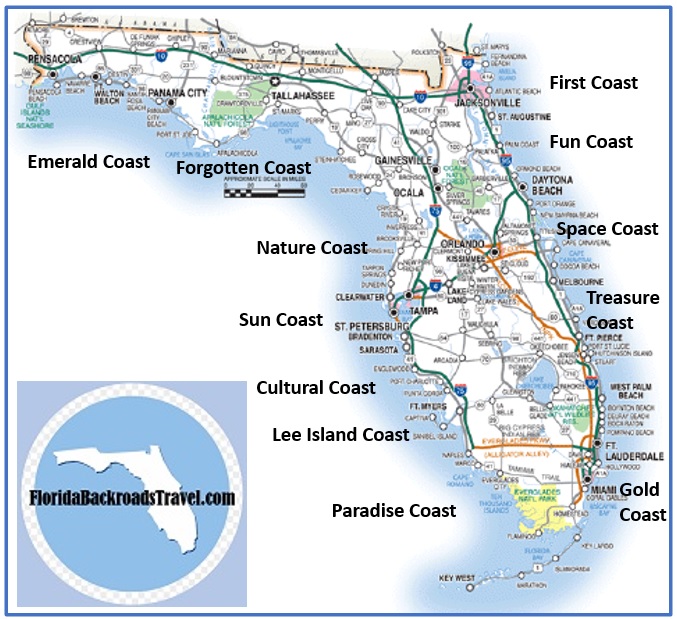
Florida, on the other hand, is a peninsula situated in the southeastern corner of the United States. It is bordered by the Atlantic Ocean to the east and the Gulf of Mexico to the west and south. Geographically, its eastern coast faces the Atlantic, aligning it with the Eastern Seaboard, while its western and southern coasts touch the Gulf, a body of water that connects it more readily to the Southern United States and the Caribbean.
Historically, Florida’s development was deeply intertwined with the colonial powers of Spain and later Great Britain, followed by its acquisition by the United States in 1819. Its early settlements, such as St. Augustine, are among the oldest in the United States, predating many settlements further north on the Atlantic coast. This historical trajectory firmly places it within the context of the American South and the Eastern Seaboard’s colonial past.
Culturally, Florida exhibits a rich tapestry of influences. It has strong ties to the Southern United States, with a distinct Southern charm evident in its panhandle and northern regions. However, its significant Hispanic population, particularly in South Florida with its strong Cuban, Puerto Rican, and other Latin American influences, gives it a decidedly Caribbean and Latin American flavor. This demographic diversity, coupled with its status as a major retirement destination and a hub for theme parks like Walt Disney World and Universal Orlando Resort, creates a cultural mosaic unlike any other state.

Why the Confusion?
The confusion, if it can be called that, likely stems from a few key factors:
The “Gulf Coast” Perception
Florida does possess an extensive coastline along the Gulf of Mexico. For those who experience or understand regional identity through the lens of major water bodies, the “Gulf Coast” of Florida might feel distinct from the “Atlantic Coast” and, by extension, could lead to questions about its broader regional categorization. However, the “Gulf Coast” itself is typically understood as a region encompassing parts of Texas, Louisiana, Mississippi, Alabama, and Florida, and it is generally considered part of the Southern United States, not the West Coast.
Tourism and Marketing
Florida’s identity as a premier tourist destination, particularly Orlando and the South Florida metropolitan areas like Miami, often emphasizes its beaches, warm climate, and entertainment offerings. These characteristics might evoke a sense of a desirable, sun-drenched destination, similar to some perceptions of the West Coast. However, the underlying cultural narratives and historical contexts are vastly different. For instance, the architecture of Miami’s Art Deco Historic District speaks to a different history than that of Hollywood in California.
A Playful Misunderstanding
Often, the question “Is Florida in the West Coast?” is posed with a degree of humor or as a lighthearted geographical riddle. It’s a way to highlight how regional identities can sometimes be perceived in flexible or informal ways, especially when casual descriptions of “coastal” living or “sunshine states” are used without precise geographical context.
The Definitive Answer
Geographically and historically, Florida is unequivocally not part of the “West Coast.” The “West Coast” refers to the states bordering the Pacific Ocean, primarily California, Oregon, and Washington. Florida, situated on the southeastern tip of the United States and bordering the Atlantic Ocean and the Gulf of Mexico, is firmly situated within the realm of the Southern United States and the Eastern Seaboard.
While Florida shares some superficial similarities with the West Coast in terms of climate (sunshine) and its appeal as a vacation destination with beautiful beaches like those found along the Emerald Coast or the Florida Keys, its cultural heritage, historical development, and geographical orientation place it in an entirely different regional category. Therefore, while the question might spark interesting conversations about regional identity, the answer remains a clear and resounding no. Florida is a jewel of the Southeast, offering a unique blend of Southern charm, Latin American vibrancy, and tropical allure, distinctly separate from the Pacific-bound states.
LifeOutOfTheBox is a participant in the Amazon Services LLC Associates Program, an affiliate advertising program designed to provide a means for sites to earn advertising fees by advertising and linking to Amazon.com. Amazon, the Amazon logo, AmazonSupply, and the AmazonSupply logo are trademarks of Amazon.com, Inc. or its affiliates. As an Amazon Associate we earn affiliate commissions from qualifying purchases.