
The question of whether Florida resides on the “West Coast” is a common point of curiosity, often arising from a general understanding of continental geography. While intuitively the name “West Coast” brings to mind iconic destinations like California, Oregon, and Washington, [Florida]’s unique geographical position and its distinct cultural and environmental characteristics warrant a closer examination. This exploration delves into the geographical realities, the perception versus reality of coastal classifications, and why, despite its extensive coastline, [Florida] is definitively situated on the eastern seaboard of the United States.
Geographical Realities: Defining the Coasts
The primary factor in determining a state’s coastal affiliation is its geographical longitude relative to the continent. The United States is broadly divided into eastern and western regions by the Mississippi River, with states east of it generally considered “East Coast” and those west, “West Coast.” However, a more precise definition often relies on the immediate proximity to the Atlantic Ocean or the Pacific Ocean.

The Atlantic Seaboard and the Eastern Time Zone
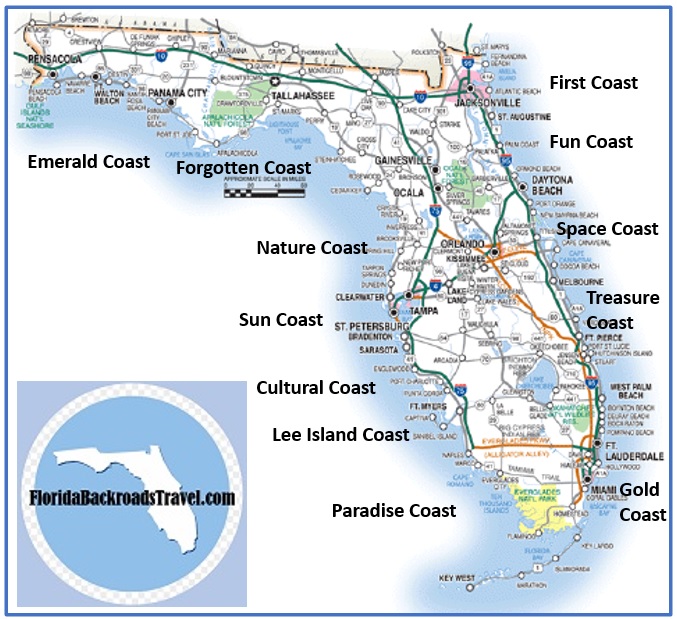
Florida is bordered by the Atlantic Ocean to its east and the Gulf of Mexico to its west. The Atlantic Ocean coastline is the defining characteristic of the eastern seaboard of the United States. States that share a direct border with the Atlantic Ocean are universally recognized as East Coast states. These include familiar names like Maine, Massachusetts, New York, Virginia, the Carolinas, and, indeed, Florida.
Furthermore, the vast majority of Florida observes the Eastern Time Zone, a temporal demarcation that aligns it with other established East Coast states. While the westernmost portion of the Florida Panhandle observes the Central Time Zone, this is a geographical quirk dictated by proximity to the central time meridian rather than an indicator of a westward orientation. The dominant temporal zone reinforces the state’s eastern identity.
The Gulf of Mexico: A Nuance, Not a Shift
The presence of the Gulf of Mexico along [Florida]’s western and southern shores introduces a layer of complexity, but it does not reclassify the state. The Gulf of Mexico is an arm of the Atlantic Ocean, thus its coastal states are still fundamentally considered part of the Eastern Seaboard. States like Alabama, Mississippi, Louisiana, and Texas also border the Gulf of Mexico, yet they are not typically categorized as “West Coast” states in the same vein as those on the Pacific. Their coastal identities are more nuanced, often referred to as Gulf Coast states, a sub-classification within the broader eastern region.
Perceptions Versus Geographical Definitions
The perception of [Florida] as potentially being on the “West Coast” might stem from several factors, including its elongated shape, its significant latitude range, and its vibrant, often sun-drenched, vacation-centric image, which can be superficially similar to some Western destinations.
The “Sunshine State” Image
[Florida]’s moniker, the “Sunshine State,” evokes images of perpetual summer, beaches, and an outdoor lifestyle. This association with a warm, sunny climate is also a strong characteristic of the traditional West Coast states, particularly California. However, the presence of sunshine and a desirable climate is not a geographical determinant of coastal location. Many East Coast states, from South Carolina to Georgia and down through Florida, enjoy significant sunshine and warm weather for much of the year.Latitudinal Extent and the Florida Panhandle
Florida stretches over 1,000 miles from its northern border to the remote Florida Keys. This extensive latitudinal range means that different parts of the state experience varying climates and are geographically positioned differently within the continental landmass. The Florida Panhandle, a narrow strip of land extending westward, juts out towards the mainland. Its geographical orientation, coupled with its adherence to the Central Time Zone in its westernmost reaches, can sometimes create a visual or temporal illusion of being further west than the rest of the state. However, geographically, it remains firmly east of the continental divide and on the eastern seaboard.

Tourism and Cultural Similarities
The popular perception of coastal states is often shaped by tourism and cultural narratives. Both [Florida] and the traditional West Coast states are magnets for tourists seeking beaches, theme parks, and a relaxed atmosphere. Cities like Miami, with its art deco architecture and vibrant nightlife, or the theme park mecca of Orlando, attract millions. Similarly, the allure of Los Angeles, San Diego, and Seattle on the Pacific coast draws considerable global attention. These shared tourism appeals can, for some, blur the lines of geographical distinction.
The Distinct Identity of Florida’s Coastline
While sharing some superficial similarities in tourism appeal with the West Coast, [Florida]’s coastal experiences and identity are distinctly rooted in its eastern location and its unique Atlantic and Gulf influences.
Atlantic Coast Experiences
[Florida]’s Atlantic coastline offers a diverse range of experiences. From the historic charm of St. Augustine, the oldest continuously inhabited European-established settlement in the United States, to the bustling metropolis of Miami and the space exploration hub of Cape Canaveral, the eastern seaboard of Florida is a dynamic region. The beaches here are known for their varying sand types, wave conditions suitable for surfing, and proximity to major urban centers. The cultural influences along the Atlantic coast are a blend of Southern charm and a strong Latin American and Caribbean flavor, particularly in South Florida.Gulf Coast Charm
The Gulf Coast of Florida presents a different, yet equally captivating, coastal environment. The waters of the Gulf of Mexico are typically calmer and warmer than the Atlantic Ocean, making its beaches renowned for their powdery white sand and tranquil turquoise waters. Destinations like Clearwater Beach, Siesta Key, and the natural beauty of the Everglades (though not strictly coastal, its marine influence is significant) draw visitors seeking relaxation and aquatic activities. While these experiences might evoke a sense of paradise, they are geographically situated on the southeastern edge of the North American continent, firmly within the eastern domain.
The Eastern Perspective
From an international perspective, particularly when traveling from Europe, Florida is undeniably an East Coast destination. It is one of the first major gateways into the United States from across the Atlantic Ocean. This vantage point further solidifies its classification as an eastern state. The historical trajectory of settlement, trade, and cultural development in Florida is intrinsically linked to its Atlantic orientation, with early colonial powers establishing their presence along this seaboard.
Conclusion: Florida’s Eastern Identity
In conclusion, while the vastness of Florida, its tropical allure, and the existence of the Gulf of Mexico on its western flank might spark geographical queries, the state’s position is unambiguous. Florida is an East Coast state, bordered by the Atlantic Ocean and embracing the Gulf of Mexico as part of its eastern seaboard identity. Its geographical coordinates, its time zone alignment, and its historical development all firmly place it within the eastern regions of the United States. The perception of a “West Coast” is reserved for those states that face the Pacific Ocean, a geographical reality that Florida does not share.
Understanding Coastal Classifications
The terms “East Coast” and “West Coast” are more than just geographical labels; they often carry cultural and historical connotations. The East Coast, with its older cities, colonial history, and proximity to Europe, has a distinct identity. The West Coast, defined by its Pacific frontier, its pioneering spirit, and its closer ties to Asia, possesses a different set of cultural markers. Florida, while having its own unique cultural tapestry influenced by Latin America and the Caribbean, is fundamentally a part of the East Coast’s narrative. Its rich history, its bustling port cities, and its role in the nation’s development all stem from its position on the eastern edge of the continent.
Embracing Florida’s Unique Position
Rather than trying to fit Florida into a preconceived geographical box, it is more insightful to appreciate its distinctiveness. It is the southernmost state on the continental East Coast, offering a subtropical and tropical climate that sets it apart from its northern counterparts. Its dual coastlines provide a unique blend of oceanic experiences, from the powerful waves of the Atlantic Ocean to the calm, warm waters of the Gulf of Mexico. This geographical advantage has shaped its economy, its culture, and its appeal as a premier travel destination. Visitors to Florida are experiencing the vibrant southeastern edge of the United States, a location that, by any standard definition, is on the East Coast.
LifeOutOfTheBox is a participant in the Amazon Services LLC Associates Program, an affiliate advertising program designed to provide a means for sites to earn advertising fees by advertising and linking to Amazon.com. Amazon, the Amazon logo, AmazonSupply, and the AmazonSupply logo are trademarks of Amazon.com, Inc. or its affiliates. As an Amazon Associate we earn affiliate commissions from qualifying purchases.