
Navigating the intricate web of automotive regulations can be a challenging aspect of vehicle ownership, especially when it comes to personalizing your ride. For many drivers in the Golden State, California presents a unique set of rules regarding vehicle modifications. One common query revolves around the legality of tinting the front windshield. This article delves into the specifics of California’s tint laws, focusing specifically on the front window, to ensure drivers remain compliant and informed. Understanding these regulations is crucial not only for avoiding citations but also for maintaining optimal visibility and safety on the road.
Understanding California’s Window Tint Laws
California’s Vehicle Code, specifically sections pertaining to window tinting, aims to strike a balance between driver comfort, privacy, and, most importantly, public safety. The primary concern for lawmakers is ensuring that law enforcement officers and other drivers have clear visibility into vehicles. This is why the regulations are particularly stringent regarding windshields.
The “VLT” Standard Explained
The cornerstone of California’s tint laws is the concept of Visible Light Transmission (VLT). VLT is a measurement of how much light passes through a window. It is expressed as a percentage. A lower VLT percentage means less light can pass through, resulting in a darker tint. Conversely, a higher VLT percentage indicates more light can pass through, meaning a lighter tint.
California law sets specific VLT limits for different windows on a vehicle:
- Windshield: This is where the strictest rules apply.
- Front Side Windows: These also have defined limits.
- Rear Side Windows and Rear Window: These typically have more lenient regulations.
It is vital to understand that these percentages are enforced by law enforcement using specialized meters that measure VLT.
Front Windshield Tinting: The Strict Prohibition
In California, the law explicitly prohibits the application of any aftermarket tinting film to the front windshield, with very limited exceptions. This means that the tint applied by the manufacturer is generally the only tint allowed. The primary reason for this blanket prohibition is to ensure unobstructed visibility for the driver. A heavily tinted windshield can significantly impair a driver’s ability to see pedestrians, cyclists, other vehicles, and road hazards, especially during low-light conditions or adverse weather.
The California Vehicle Code § 26708(d)(1) states, in essence, that no person shall drive any motor vehicle with any object or material placed, displayed, installed, affixed, or applied upon the windshield which obstructs the driver’s clear view. While “tint” isn’t explicitly mentioned as an “object or material,” aftermarket tinting film falls under this purview due to its obstructive nature.
Permitted Exceptions for Windshield Tint
While the general rule is no tint on the front windshield, there are specific, legally recognized exceptions that drivers with certain medical conditions may be able to utilize.
Medical Exemptions
California law does allow for medical exemptions for windshield tinting. However, these are not granted lightly and require a formal process to be followed.
- Physician’s Certification: A licensed physician must certify that the driver or a passenger has a medical condition that necessitates the use of sunscreening or UV-filtering film on the windshield. This condition must be documented and verifiable. Examples might include severe light sensitivity (photophobia) or certain skin conditions aggravated by sun exposure.
- Specific Film Requirements: Even with a medical exemption, the type of film used is regulated. It must be a sunscreening or UV-filtering film, and its VLT cannot be excessively low. The law generally requires that the film must have a VLT of no less than 35%. This ensures that at least 35% of the ambient light can still pass through, maintaining a reasonable level of visibility.
- Documentation: Drivers who have obtained a medical exemption must carry a copy of the physician’s certification and, if applicable, a specific windshield sticker issued by the Department of Motor Vehicles (DMV) in their vehicle at all times. This documentation must be presented to law enforcement if requested.
It is crucial to understand that a “medical exemption” is not a free pass to tint your windshield however you please. The exemption is specific to the diagnosed condition and the approved type and darkness of the film.
Penalties for Non-Compliance
Driving with an illegally tinted windshield in California can lead to several penalties.
- Fix-It Ticket: The most common outcome is a “fix-it ticket,” also known as a Notice to Appear or a correction notice. This requires the driver to have the illegal tint removed within a specified timeframe and present proof of compliance to the court or a law enforcement agency.
- Infraction and Fine: Failure to rectify the tint violation can result in a citation for an infraction, accompanied by a monetary fine. The amount of the fine can vary depending on the jurisdiction and whether it is a repeat offense.
- Increased Scrutiny: A vehicle with obviously illegal tint may also attract increased attention from law enforcement, potentially leading to other traffic stops and inspections.
Beyond the Windshield: Other Tinting Regulations in California
While the front windshield is the primary focus of strict prohibition, it’s beneficial to understand the tinting rules for other windows to have a complete picture of California’s automotive appearance laws.
Front Side Windows
For the front driver and passenger side windows, California law permits tinting, but with specific VLT limitations.
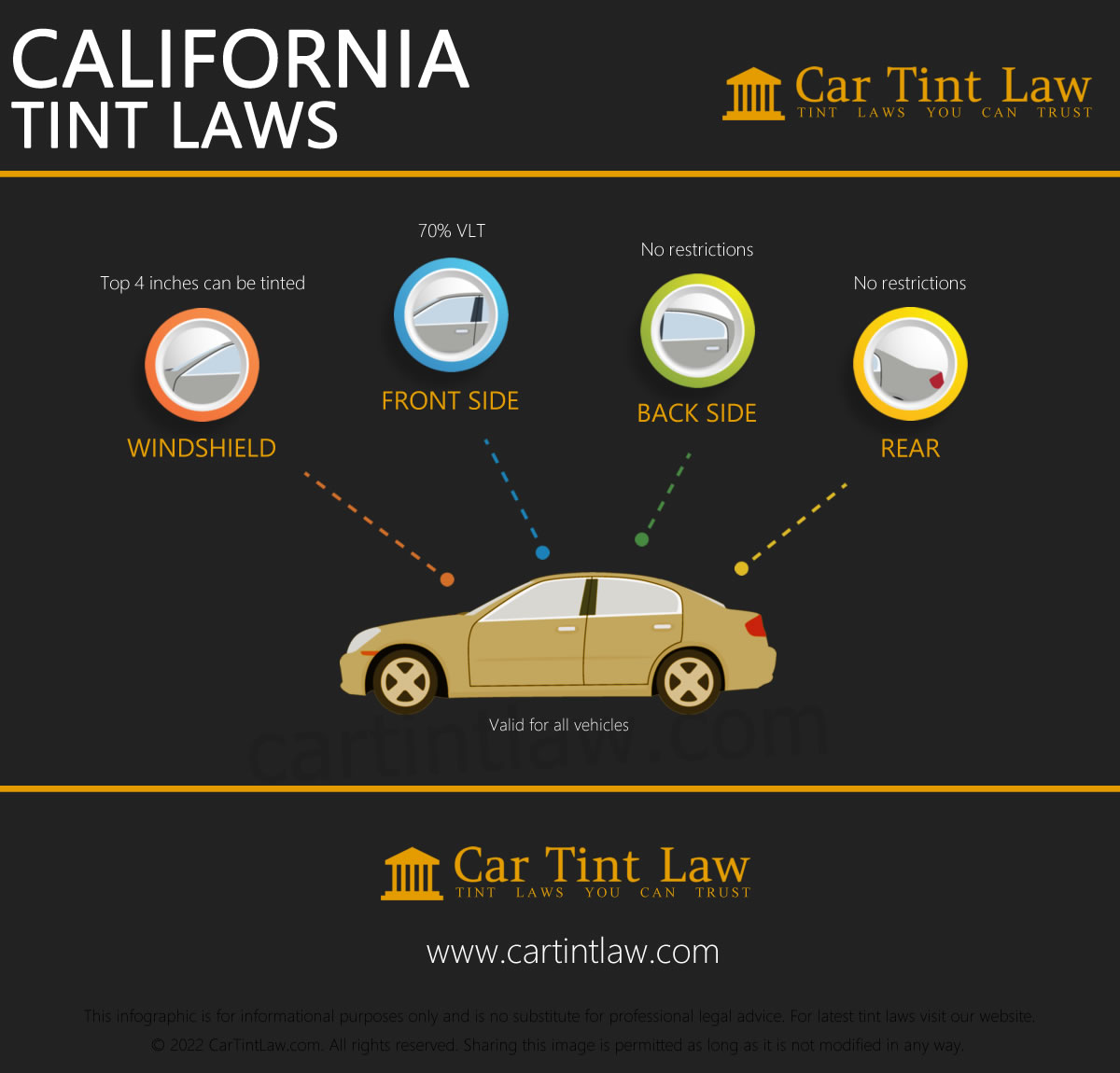
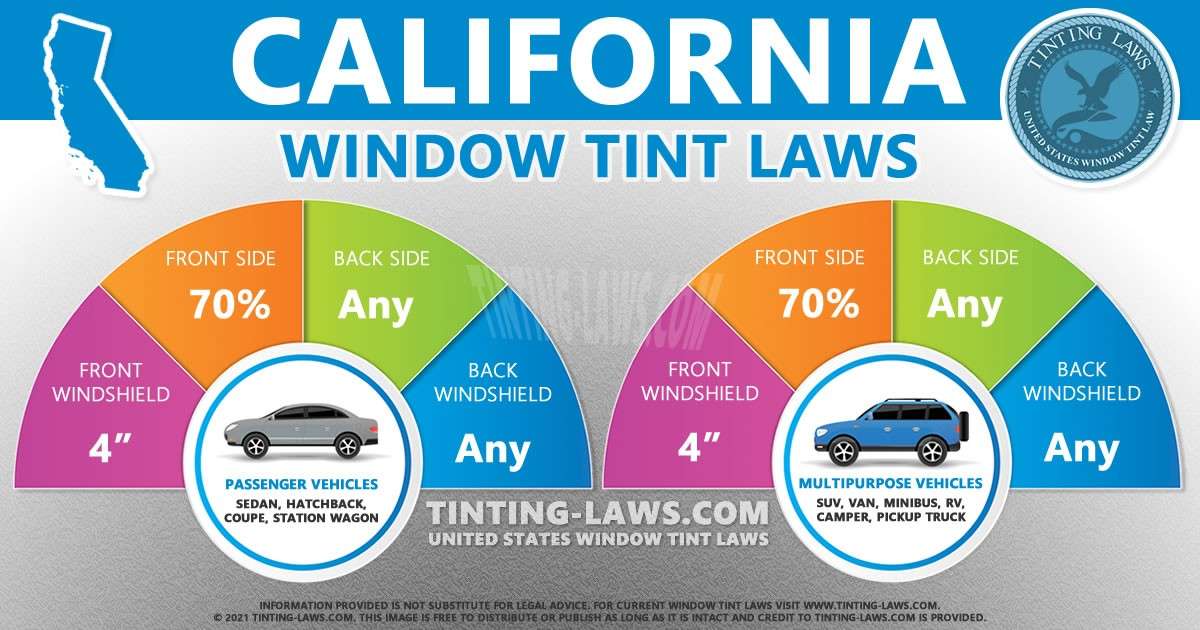
- 35% VLT Minimum: The California Vehicle Code § 26708(a)(1) stipulates that window tint applied to the front side windows must have a VLT of no less than 70%. This means that at least 70% of the light must be able to pass through. This is a relatively light tint and is often barely perceptible to the naked eye.
- Purpose of the Rule: This 70% VLT rule for front side windows is designed to allow for some reduction in glare and heat while still ensuring that law enforcement can clearly see into the vehicle and identify the occupants.
Rear Side Windows and Rear Window
The regulations become more permissive for the rear side windows (behind the front seats) and the rear windshield.
- No VLT Restriction: In California, there is generally no VLT restriction for the rear side windows and the rear windshield. This means drivers can apply a darker tint to these windows for increased privacy and heat reduction.
- Reflectivity: However, there is a limit on reflectivity. Window tinting is prohibited from having a reflectivity level exceeding 35%. Highly reflective tints can cause glare to other drivers, especially during daylight hours.
Important Considerations for All Window Tinting
Regardless of which windows you intend to tint, several overarching principles apply:
- Professional Installation: It is highly recommended to have any window tinting professionally installed by a reputable shop. They will be knowledgeable about the legal VLT percentages for your specific state and can ensure the film is applied correctly, without bubbles or imperfections, which could also lead to citations.
- Sticker Requirements: Some states require a small sticker on the tinted window indicating the VLT percentage and the installer’s information. While California does not mandate this for the permitted tints, it can be helpful to have documentation from the installer. For medical exemptions, specific DMV documentation is required.
- Dual-VLT Films: Be aware that some films have different VLT ratings for the inside versus the outside of the glass. California law refers to the VLT as measured from the outside of the vehicle.
- Tinted Reflective Material: The prohibition against objects or materials obstructing the driver’s view also extends to any decorative or functional items placed on the windows, including some types of windshield banners or stickers that extend too far down.
The Rationale Behind California’s Strict Tint Laws
The approach taken by California regarding vehicle tinting, particularly concerning the windshield, is rooted in a strong emphasis on public safety.
Officer Safety and Crime Prevention
One of the primary justifications for limiting window tint, especially on the front windshield and front side windows, is officer safety. When officers approach a vehicle, they need to be able to see the occupants clearly and assess any potential threats. Heavily tinted windows can create a barrier to this crucial visual assessment, potentially putting officers at risk. Additionally, overly dark tints can be used to conceal illegal activities, making it harder for law enforcement to detect and prevent crime.
Road Safety and Visibility
Beyond officer safety, the laws are designed to ensure the safety of all road users. A driver with severely restricted vision due to dark tints poses a significant risk to themselves and others. The ability to see and be seen is paramount in preventing accidents. This is especially critical in a state like California, with its high population density and extensive road networks, including popular tourist routes like the Pacific Coast Highway and areas around major cities such as Los Angeles and San Francisco.
Balancing Comfort and Legality
While California is known for its sunny climate, necessitating features like window tint for comfort and UV protection, the state prioritizes safety above these conveniences for the front windshield. The regulations are structured to allow for some level of comfort through tinting on rear windows, while maintaining clear visibility from the driver’s perspective. For those seeking respite from the sun’s glare or heat, especially on the front windshield, exploring alternatives such as high-quality, clear UV-blocking films that do not reduce VLT significantly, or utilizing the sun visor, are the legally compliant routes.

Conclusion: Stay Informed and Compliant
In California, the question of “Is Front Window Tint Legal?” has a clear and generally prohibitive answer: no, unless you have a documented medical exemption. The state’s commitment to road safety and officer visibility dictates a strict stance on windshield tinting. For other windows, while more leniency exists, adherence to VLT percentages for front side windows and reflectivity limits for all windows is paramount.
Drivers planning to tint their vehicles in California should thoroughly research the current laws and consult with reputable tinting professionals. Understanding and complying with these regulations ensures a safe driving experience, avoids costly citations, and contributes to the overall safety of the roadways for everyone. Remember, the goal is to enjoy the benefits of tinting without compromising visibility and adhering to the law.
LifeOutOfTheBox is a participant in the Amazon Services LLC Associates Program, an affiliate advertising program designed to provide a means for sites to earn advertising fees by advertising and linking to Amazon.com. Amazon, the Amazon logo, AmazonSupply, and the AmazonSupply logo are trademarks of Amazon.com, Inc. or its affiliates. As an Amazon Associate we earn affiliate commissions from qualifying purchases.